1900s (20th Century) Maps of Peanut, California
Explore 7 historic maps of Peanut from the 1900s (20th Century). These maps offer a rare glimpse into what life looked like during the 1900s — showing old roads, neighborhoods, homes, and landmarks that have changed or disappeared over time.
Whether you're researching your family's past, planning a metal detecting trip, or studying how Peanut's landscape evolved across the 1900s, these high-resolution maps are a powerful tool for exploring the history of this region.
- Focus on a specific era: All maps on this page are from the 1900s, giving you a focused view of this time period.
- See what’s changed: Compare century-old streets, trails, and buildings to today's modern landscape using overlays and satellite layers.
- Research with precision: Use these maps for genealogy, historical research, land use analysis, or educational projects.
- View, download, or print: Maps are fully viewable online in high resolution, and can be downloaded or printed for your own records.
Start exploring Peanut's history through authentic maps from the 1900s. This is your window into the past.
Peanut, CA maps
(7)- 1931 Map of Hoaglin
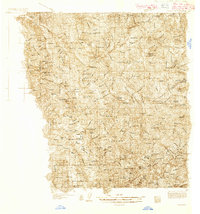 1931 Hoaglin1931 Print · USGSThe Trinity and Van Duzen river systems define this high country during the early 1930s, when remote ranches and forest stations provided the primary human footprint. Researchers can trace family-named sites like Haine Ranch and Blossom Cabin, or locate the isolated Lake Mtn Sch.
 - 1935 Map of Hoaglin
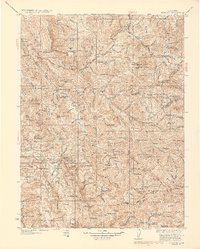 1935 Hoaglin1935 Print · USGSTrinity and Mendocino counties are captured here in the mid-1930s, documenting a landscape of isolated valleys and mountain ranches. Researchers can trace family homesteads like Russ Place and Shannon Place or locate early schools including Cover Sch and Lake Mtn Sch.3 unique versions available
 - 1954 Map of Dubakella Mtn, 1956 Print
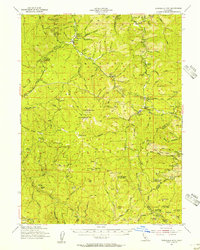 1954 Dubakella Mtn1956 Print · USGSMid-century Trinity County comes into focus in this survey of the mountainous terrain where Six Rivers National Forest meets the Shasta border. Researchers can trace old homesteads and mountain outposts like Peanut, Shiell Ranch, and the Old Bill Mine.3 unique versions available
 - 1958 Map of Redding
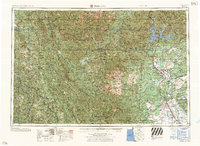 1958 Redding1958 Print · USGSNorthern California's valley and mountain landscapes are captured in the late fifties, showing the region as new reservoirs reshaped the river systems. Genealogists and historians can trace rail-side towns like Cottonwood, the military presence at Red Bluff Air Force Station, and mountain outposts like Weaverville.5 unique versions available
 - 1979 Map of Garberville, 1996 Print
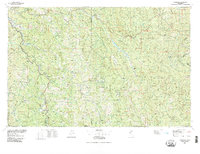 1979 Garberville1996 Print · USGSThe redwood forests and river canyons of Humboldt and Trinity counties are shown here in the late seventies. Genealogists and historians can trace rail-side life along the Northwestern Pacific RR or locate small settlements like Fort Seward, Alderpoint, and Zenia.
 - 1981 Map of Dubakella Mtn
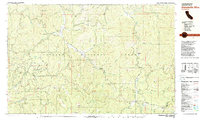 1981 Dubakella Mtn1981 Print · USGSThe Trinity and Shasta County borderlands are mapped here in the early 1980s, showcasing a network of forest roads and remote settlements. Researchers can locate the Wildwood Sch, trace the Blue Point Ditch, and find the Shiell Ranch (Site).2 unique versions available
 - 1998 Map of Dubakella Mountain, 2003 Print
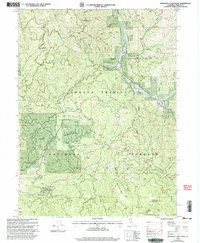 1998 Dubakella Mountain2003 Print · USGSThe Shasta Trinity National Forest landscape near the turn of the millennium shows a remote mountain region defined by timber and recreation. Researchers can trace the water path of the Blue Point Ditch or locate Peanut and the Plummer Peak Lookout Tower.
End of results
Showing maps 1-7 of 7
Top cities near Peanut
Frequently asked questions
- What are the different types of historical maps available for Peanut?
- What is the oldest map of Peanut?
- Where can I purchase historical maps of Peanut for my home or office?
- Where can I download high-res historical maps of Peanut?
- Are there historical topographic maps available for Peanut?
- Is there historical aerial imagery available for Peanut?
- Where are historical maps of Peanut sourced from?