1900s (20th Century) Maps of Ultra, California
Explore 12 historic maps of Ultra from the 1900s (20th Century). These maps offer a rare glimpse into what life looked like during the 1900s — showing old roads, neighborhoods, homes, and landmarks that have changed or disappeared over time.
Whether you're researching your family's past, planning a metal detecting trip, or studying how Ultra's landscape evolved across the 1900s, these high-resolution maps are a powerful tool for exploring the history of this region.
- Focus on a specific era: All maps on this page are from the 1900s, giving you a focused view of this time period.
- See what’s changed: Compare century-old streets, trails, and buildings to today's modern landscape using overlays and satellite layers.
- Research with precision: Use these maps for genealogy, historical research, land use analysis, or educational projects.
- View, download, or print: Maps are fully viewable online in high resolution, and can be downloaded or printed for your own records.
Start exploring Ultra's history through authentic maps from the 1900s. This is your window into the past.
Ultra, CA maps
(12)- 1936 Map of White River
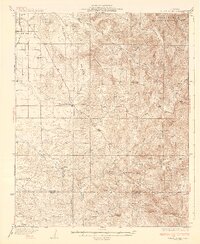 1936 White River1936 Print · USGSIn the foothills of the Sierras during the 1930s, this area shows the transition from valley settlements to upland mines. You can locate rural schools like Grandview Sch and trace the paths to the Last Chance Mine and Fountain Springs.3 unique versions available
 - 1936 Map of Tobias Peak, 1955 Print
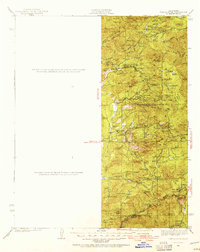 1936 Tobias Peak1955 Print · USGSThe Southern Sierra Nevada and Kern River country are shown here in the mid-1930s as a landscape of remote mining camps and forest stations. Genealogists can locate family names at Oak Grove Cem or trace old workings at the Lone Star Mine and Havilah.
 - 1943 Map of Tobias Peak
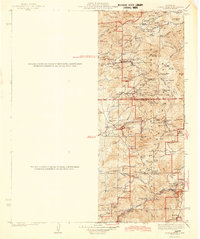 1943 Tobias Peak1943 Print · USGSThe southern Sierra Nevada foothills in the early 1940s are defined by high-elevation meadows and a legacy of mountain ranching. Researchers can locate early schools and mines, including Greenhorn Sch, the Tungsten Mine, and the historic mining camp of Keysville.2 unique versions available
 - 1948 Map of Bakersfield
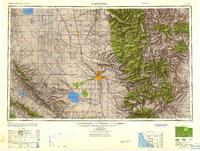 1948 Bakersfield1948 Print · USGSBakersfield and the southern San Joaquin Valley appear in the late 1940s, showing a landscape of burgeoning oil towns, rail junctions, and early irrigation canals. Genealogists and historians can trace the foundations of local industry through Gardner Field, the Sunset Railway, and the shores of Buena Vista Lake.2 unique versions available
 - 1952 Map of White River, 1953 Print
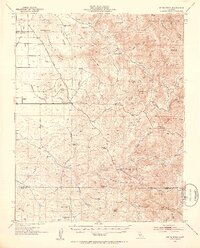 1952 White River1953 Print · USGSThe foothills of the southern Sierra Nevada come into focus in the early 1950s, showing a landscape defined by ranching and old travel corridors. Genealogists can trace family holdings and early infrastructure like the White River Cem and the historic Old Stockton Los Angeles Stage Road.4 unique versions available
 - 1955 Map of Bakersfield
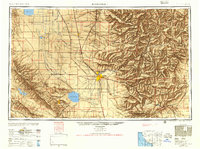 1955 Bakersfield1955 Print · USGSThe southern San Joaquin Valley in the mid-fifties shows an era of massive oil production and industrial irrigation. Trace family roots in Allensworth, the oil fields of Oildale, or the shorelines of Tulare Lake and Buena Vista Lake.
 - 1956 Map of Bakersfield
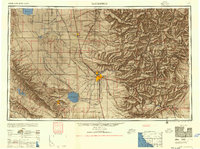 1956 Bakersfield1956 Print · USGSThe southern San Joaquin Valley and High Sierra come alive in the mid-fifties, showing the region's complex agricultural and rail networks. Genealogists and historians can trace family roots in towns like Bakersfield, Taft, and Delano, or locate early infrastructure along the Sunset Railway.
 - 1960 Map of Bakersfield
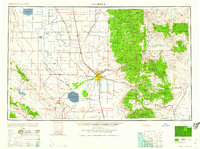 1960 Bakersfield1960 Print · USGSThe Southern San Joaquin Valley at mid-century reveals a complex landscape of petroleum development and massive irrigation projects. Researchers can trace the rail lines of the Southern Pacific, explore oil-era landmarks like Oil City, and locate early settlements including Allensworth and Pixley.2 unique versions available
 - 1962 Map of Bakersfield, 1969 Print
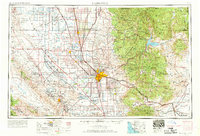 1962 Bakersfield1969 Print · USGSThe Southern San Joaquin Valley is shown in the 1960s as a bustling intersection of petroleum production, irrigation agriculture, and mountain recreation. Researchers can trace the rail lines of the Southern Pacific through the valley or locate early desert developments like California City and Tehachapi.4 unique versions available
 - 1965 Map of Fountain Springs, 1966 Print
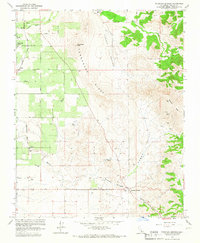 1965 Fountain Springs1966 Print · USGSTulare County's foothills come into focus in the 1960s as the agricultural grid meets the rising Sierra Nevada slopes. Genealogists and historians can trace the Atchison Topeka and Santa Fe rail line, the Deer Creek Colony, and landmarks like the Dennis Ranch.4 unique versions available
 - 1966 Map of Bakersfield
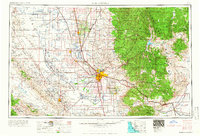 1966 Bakersfield1966 Print · USGSThe southern San Joaquin Valley in the mid-sixties reveals a massive industrial and agricultural landscape shaped by water and oil. Genealogists and historians can trace the growth of Bakersfield and Oildale, or locate remote airfields like Minter Field and Mojave-Kern County No. 7 Airport.
 - 1978 Map of Isabella Lake, 1994 Print
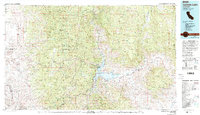 1978 Isabella Lake1994 Print · USGSKern County's high country and the central reservoir system are detailed here during the late seventies. Researchers can trace historical sites like Havilah and Long Tom Mine, or explore the development around Isabella Lake and Wofford Heights.2 unique versions available
End of results
Showing maps 1-12 of 12
Top cities near Ultra
- Porterville historical maps
- Delano historical maps
- Terra Bella historical maps
- Richgrove historical maps
- Strathmore historical maps
- Poplar-Cotton Center historical maps
See more
Frequently asked questions
- What are the different types of historical maps available for Ultra?
- What is the oldest map of Ultra?
- Where can I purchase historical maps of Ultra for my home or office?
- Where can I download high-res historical maps of Ultra?
- Are there historical topographic maps available for Ultra?
- Is there historical aerial imagery available for Ultra?
- Where are historical maps of Ultra sourced from?