Old Maps of Federal Heights, Colorado for Academic Research
Study the evolution of Federal Heights with 38 high-resolution historic maps. Whether you're teaching, researching, or modeling changes in land use, these maps provide essential visual documentation of urban, environmental, and geographic change.
- Analyze long-term change: Track patterns in development, transportation, and natural features.
- Ideal for environmental or urban studies: Support academic projects with primary historical map data.
- Use in the classroom or lab: Educators and researchers rely on these maps to bring historical context to life.
These maps are a powerful tool for teaching, research, and visualizing how Federal Heights has changed over the decades.
Federal Heights, CO maps
(38)- 1890 Map of East Denver
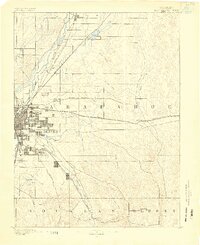 1890 East Denver1890 Print · USGSDenver and the surrounding plains are captured in the late frontier era as a complex web of irrigation canals and iron rails. Researchers can trace early water systems like the High Line Ditch or locate early settlements such as Parker's and Scranton.
 - 1899 Map of West Denver
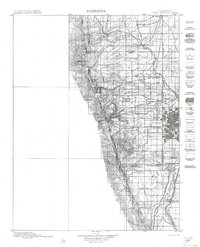 1899 West Denver1899 Print · USGSThe Denver metropolitan area and its western foothills appear in the late Victorian era as a burgeoning rail and irrigation hub. Researchers can trace the early footprints of Denver, Golden, and Littleton, alongside industrial sites like the Louisville Coal Mine and the grounds of Fort Logan.
 - 1938 Map of Derby, 1955 Print
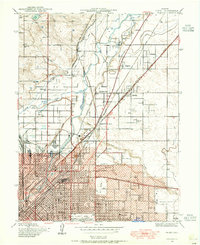 1938 Derby1955 Print · USGSThe industrial and aviation landscape north of Denver is captured here during the late Depression era, showing a transition from dense urban rail hubs to irrigated farmland. Researchers can trace the legacy of the Stockyards, the Riverside Cemetery, and early runways at the Municipal Airport.
 - 1940 Map of Lafayette
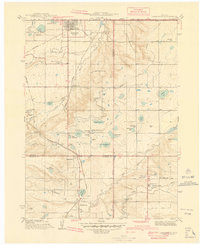 1940 Lafayette1940 Print · USGSLafayette and the northern Colorado coalfields are captured in the late 1930s as mining and rail transport shaped the local economy. Genealogists can trace family roots through named landmarks like Mandalay Sch, Lakeview Cem, and the Centennial Mine.
 - 1940 Map of Derby
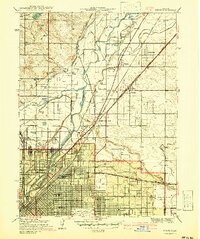 1940 Derby1940 Print · USGSAdams County and north Denver appear here on the eve of World War II, showing a landscape of irrigation ditches, heavy rail, and early aviation. Researchers can trace the legacy of the Stockyards, the sprawling Denver City and Co Airport, and vanished local schools like Mapleton Sch.2 unique versions available
 - 1941 Map of Arvada
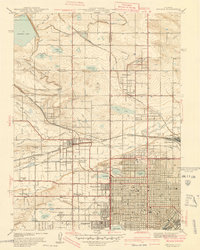 1941 Arvada1941 Print · USGSThe Arvada and Westminster areas of the Colorado Front Range appear here in the early 1940s, showing a landscape defined by irrigation and rail. Researchers can trace historic institutions like Bellevue College, early settlements at Utah Junction, and the Leyden Narrow Gage railroad.
 - 1944 Map of Arvada
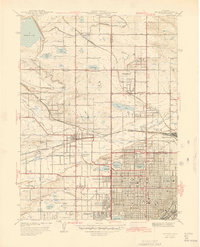 1944 Arvada1944 Print · USGSThe northwest Denver suburbs appear as a series of distinct rail-connected towns in the 1940s. Genealogists can locate family landmarks like Arvada Cem, Semper Sch, and the grounds of Regis College.
 - 1944 Map of Lafayette
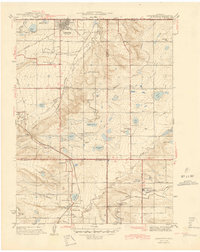 1944 Lafayette1944 Print · USGSThe northern Front Range in the years following the Great Depression was a landscape of coal mines and intricate irrigation reservoirs. You can trace the early footprints of Lafayette and Broomfield while locating industrial landmarks like the Centennial Mine and Burn Lee Sch.
 - 1947 Map of Derby
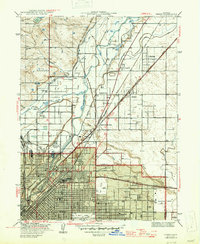 1947 Derby1947 Print · USGSDenver's northern periphery at the end of the 1930s reveals a landscape defined by industry and irrigation. Trace family roots at Riverside Cemetery or locate early landmarks like the Stockyards, Argo, and the Fish Hatchery.2 unique versions available
 - 1950 Map of Derby
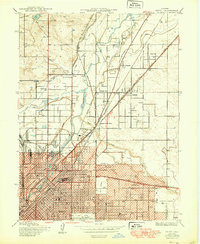 1950 Derby1950 Print · USGSThe northern reaches of Denver and Adams County are captured here at mid-century as industry and rail lines shaped the river valley. Researchers can trace the early footprints of Adams City, the Stockyards, and family history at Riverside Cemetery or Rose Hill Cem.
 - 1950 Map of Arvada
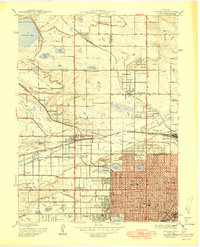 1950 Arvada1950 Print · USGSMid-century Jefferson County comes to life as Denver’s western edge begins its suburban transformation from a landscape of irrigation ditches and small farms. Researchers can trace the original footprints of Arvada, Wheatridge, and local landmarks like the Crown Hill Cemetery and Regis College.
 - 1953 Map of Denver, 1964 Print
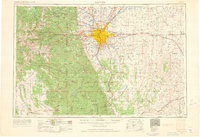 1953 Denver1964 Print · USGSDenver and the Colorado Front Range are captured here during a decade of post-war growth and military expansion. Researchers can trace the sprawling rail lines of the Union Pacific, locate the State Capitol, and explore historic mountain mining hubs like Central City.6 unique versions available
 - 1956 Map of Lafayette, 1958 Print
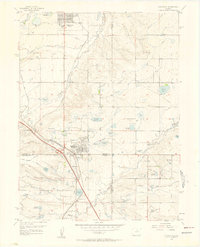 1956 Lafayette1958 Print · USGSBoulder County experiences a post-war transition in the mid-fifties as the new turnpike and traditional mining industries coexist. Researchers can trace early suburban expansion in Broomfield Heights while locating the Centennial Mine and local landmarks like Ruston Heights Airport.
 - 1957 Map of Denver
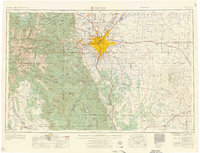 1957 Denver1957 Print · USGSDenver and the Colorado Front Range are seen here during a mid-century period of intense military and urban expansion. Trace the footprints of the Rocky Mountain Arsenal, the early United States Air Force Academy, and the Lowry AF Base.
 - 1957 Map of Derby, 1958 Print
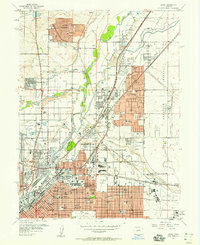 1957 Derby1958 Print · USGSNortheast of Denver during the late fifties, this area was a bustling hub of rail transport, aviation, and emerging suburbs. Genealogists and historians can trace the foundations of Thornton or locate family plots in Riverside Cemetery and Rose Hill Cem.3 unique versions available
 - 1957 Map of Arvada, 1958 Print
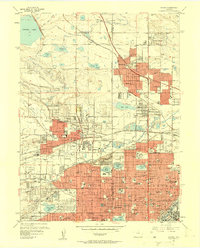 1957 Arvada1958 Print · USGSThe northwest Denver suburbs are caught in a moment of post-war transformation, balancing old canal-fed agriculture with new residential growth. Local historians can trace established landmarks like Elitch Gardens, Regis College, and the sprawling Crown Hill Cemetery.3 unique versions available
 - 1958 Map of Denver
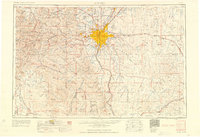 1958 Denver1958 Print · USGSDenver and the Colorado Front Range are captured here during the mid-century suburban boom. Trace the footprints of military installations like Buckley Air Force Base alongside the established rail networks of the Colorado & Southern Ry.
 - 1960 Map of Denver
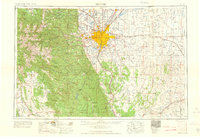 1960 Denver1960 Print · USGSDenver and the Colorado Front Range are seen here at a pivotal moment of postwar expansion into the plains and foothills. Researchers can trace the mid-century rail network of the Denver & Rio Grande Western RR and locate historic institutional landmarks like Buckley Field and the Colorado School of Mines.
 - 1965 Map of Arvada, 1967 Print
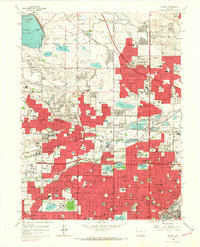 1965 Arvada1967 Print · USGSThe northern Denver suburbs were undergoing a massive post-war expansion in the mid-sixties, filling the spaces between long-standing irrigation canals and rail lines. You can trace the development of local neighborhoods through landmarks like Regis College, Crown Hill Cemetery, and Belleview College.6 unique versions available
 - 1965 Map of Commerce City, 1967 Print
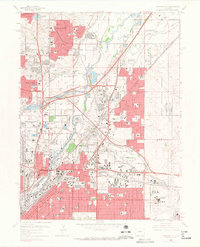 1965 Commerce City1967 Print · USGSNorth Denver and its neighboring industrial suburbs come alive in the mid-1960s, showing a landscape defined by rail yards and aviation. Genealogists and historians can trace families near the Denver Union Stockyards, Riverside Cemetery, and schools like Clayton College for Boys.7 unique versions available
 - 1965 Map of Lafayette, 1967 Print
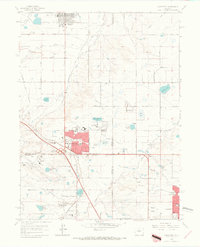 1965 Lafayette1967 Print · USGSLafayette and Broomfield are captured here in the mid-1960s as suburban growth began to reshape the old mining and agricultural landscape. Genealogists and local historians can trace early schools like Kohl Sch, the Louisville Cem, and old settlements such as Morgan and Wallace Village.5 unique versions available
 - 1981 Map of Denver East
 1981 Denver East1981 Print · USGSEastern Colorado comes alive in the early eighties as the Front Range urban corridor pushes into the plains. Genealogists and historians can trace the growth of Aurora and Brighton alongside the historic Union Pacific line and the massive Rocky Mountain Arsenal.2 unique versions available
 - 1983 Map of Denver West
 1983 Denver West1983 Print · USGSThe Front Range and Denver's western suburbs meet in the early 1980s, documenting the era's growth from the mountain peaks to the valley floor. Genealogists and historians can trace the foundations of Lakewood and Golden, or locate high-altitude landmarks like the Moffat Tunnel and Mount Olivet Cem.2 unique versions available
 - 2010 Map of Commerce City, 2010 Print
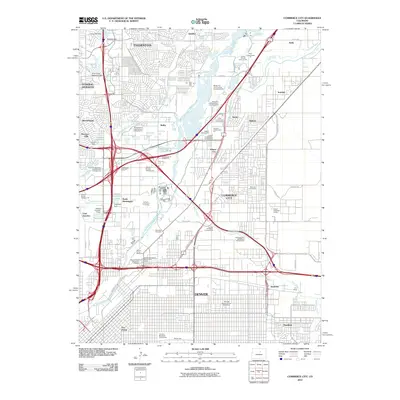 2010 Commerce City2010 Print · USGSThe industrial heart of the Front Range comes into focus as it appeared in the early 21st century. Trace historical burial grounds at Riverside Cemetery and the sprawling livestock history of the Denver Union Stockyard or the Stapleton district.
 - 2010 Map of Lafayette, 2010 Print
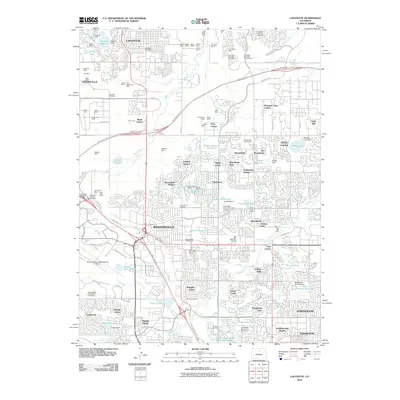 2010 Lafayette2010 Print · USGSThe Front Range corridor near Lafayette and Broomfield is shown here at the turn of the decade. Genealogists can locate family sites near Louisville Cemetery and trace the area's industrial past through named sites like the Centennial Mine and Imperial Mine.
Showing maps 1-25 of 38
Top cities near Federal Heights
- Denver historical maps
- Aurora historical maps
- Lakewood historical maps
- Thornton historical maps
- Arvada historical maps
- Westminster historical maps
See more
Frequently asked questions
- What are the different types of historical maps available for Federal Heights?
- What is the oldest map of Federal Heights?
- Where can I purchase historical maps of Federal Heights for my home or office?
- Where can I download high-res historical maps of Federal Heights?
- Are there historical topographic maps available for Federal Heights?
- Is there historical aerial imagery available for Federal Heights?
- Where are historical maps of Federal Heights sourced from?