Old Maps of Lafayette, Colorado for Genealogy
Trace your family roots with 48 historic maps of Lafayette. These high-res maps reveal old neighborhoods, homesites, landmarks, and streets — helping you uncover where your ancestors lived and how the area evolved over time.
- Explore historic neighborhoods: Identify where your relatives may have lived in the 1800s or 1900s.
- Compare maps over time: Trace the changes in streets, buildings, and landmarks for multi-generational research.
- Perfect for genealogy & ancestry research: Used by family historians and researchers to map out lineage and migration.
These maps are an incredible resource for exploring your personal connection to Lafayette's past.
Lafayette, CO maps
(48)- 1899 Map of West Denver
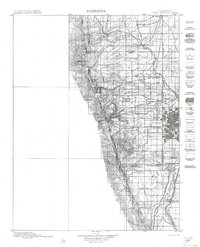 1899 West Denver1899 Print · USGSThe Denver metropolitan area and its western foothills appear in the late Victorian era as a burgeoning rail and irrigation hub. Researchers can trace the early footprints of Denver, Golden, and Littleton, alongside industrial sites like the Louisville Coal Mine and the grounds of Fort Logan.
 - 1904 Map of Niwot
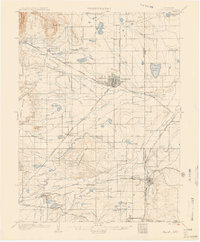 1904 Niwot1904 Print · USGSThe northern Colorado plains come alive in the early 1900s, showcasing a landscape shaped by coal mining and extensive irrigation. Genealogists and historians can trace family roots through settlements like Hygiene, Niwot, and Erie, or locate industrial sites such as Dixon Mill and the Gladstone Mine.3 unique versions available
 - 1940 Map of Lafayette
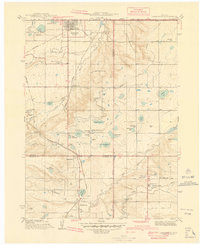 1940 Lafayette1940 Print · USGSLafayette and the northern Colorado coalfields are captured in the late 1930s as mining and rail transport shaped the local economy. Genealogists can trace family roots through named landmarks like Mandalay Sch, Lakeview Cem, and the Centennial Mine.
 - 1942 Map of Louisville
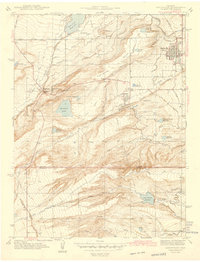 1942 Louisville1942 Print · USGSLouisville and the high plains of Boulder County are captured here just before the mid-century expansion. Genealogists and historians can trace the early footprints of Superior, Marshall, and Louisville, or locate rural landmarks like the Sacred Heart Ch and Shamrock Sch.3 unique versions available
 - 1944 Map of Lafayette
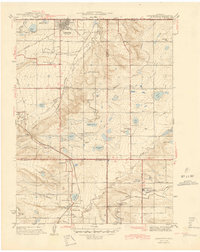 1944 Lafayette1944 Print · USGSThe northern Front Range in the years following the Great Depression was a landscape of coal mines and intricate irrigation reservoirs. You can trace the early footprints of Lafayette and Broomfield while locating industrial landmarks like the Centennial Mine and Burn Lee Sch.
 - 1950 Map of Louisville, 1955 Print
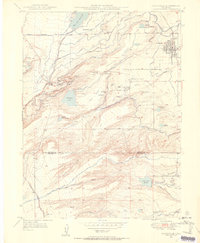 1950 Louisville1955 Print · USGSThe Boulder Valley coal fields and irrigation networks are on full display in the mid-twentieth century. Researchers can trace dozens of mining sites like the Eldorado Mine, find the Superior Cemetery, and locate rural schools including Marshall Sch.
 - 1950 Map of Erie, 1956 Print
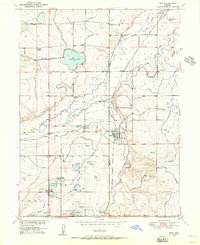 1950 Erie1956 Print · USGSIn the mid-century landscape of the Colorado plains, coal mining and irrigation dictate the growth of towns and transport. Genealogists can trace family roots through markers like the Columbine Mine, Gooding School, and Erie Cem.
 - 1950 Map of Niwot, 1957 Print
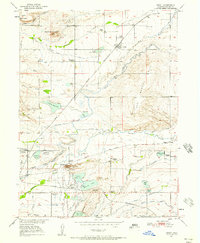 1950 Niwot1957 Print · USGSThe Boulder Valley in the early fifties is captured here as a landscape of irrigation ditches, rural schoolhouses, and heavy industry. Genealogists can locate family landmarks like the Niwot Cemetery, the Batchelder School, and the industrial Fluorspar Mill near Valmont.4 unique versions available
 - 1951 Map of Niwot
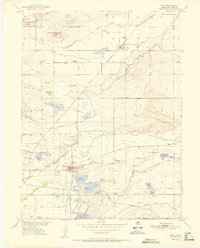 1951 Niwot1951 Print · USGSBoulder County in the early fifties reveals a landscape shaped by irrigation ditches and the early industrial hub of Valmont. Genealogists and historians can trace family roots through numerous rural school sites like Niwot School and historic burial grounds including Valmont Cemetery.
 - 1951 Map of Erie
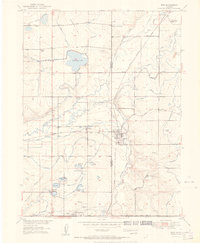 1951 Erie1951 Print · USGSThe mining and agricultural corridor of Weld and Boulder counties is captured here in the early 1950s. Researchers can trace dozens of individual operations like the Morrison Mine and Erie Mine, or locate family sites near the Gooding School and Erie Cemetery.
 - 1953 Map of Denver, 1964 Print
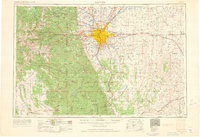 1953 Denver1964 Print · USGSDenver and the Colorado Front Range are captured here during a decade of post-war growth and military expansion. Researchers can trace the sprawling rail lines of the Union Pacific, locate the State Capitol, and explore historic mountain mining hubs like Central City.6 unique versions available
 - 1954 Map of Greeley, 1966 Print
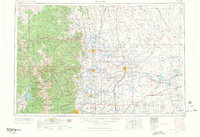 1954 Greeley1966 Print · USGSNorthern Colorado transitions from high-alpine peaks to the irrigated South Platte valley during this mid-century period of growth. Genealogists and historians can trace rail-connected hubs like Greeley and Longmont alongside landmarks like Horsetooth Reservoir and Estes Park.3 unique versions available
 - 1956 Map of Lafayette, 1958 Print
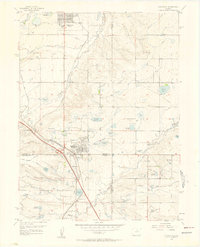 1956 Lafayette1958 Print · USGSBoulder County experiences a post-war transition in the mid-fifties as the new turnpike and traditional mining industries coexist. Researchers can trace early suburban expansion in Broomfield Heights while locating the Centennial Mine and local landmarks like Ruston Heights Airport.
 - 1957 Map of Denver
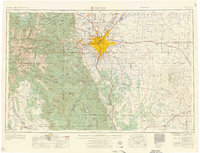 1957 Denver1957 Print · USGSDenver and the Colorado Front Range are seen here during a mid-century period of intense military and urban expansion. Trace the footprints of the Rocky Mountain Arsenal, the early United States Air Force Academy, and the Lowry AF Base.
 - 1957 Map of Greeley
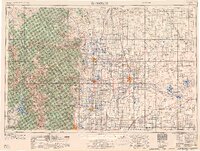 1957 Greeley1957 Print · USGSNorthern Colorado in the mid-fifties is captured here as the agricultural plains of Weld County meet the high peaks of the Front Range. Genealogists and historians can trace rail-linked towns like Keenesburg and Roggen or locate early water features such as Boyd Lake and Fossil Creek Reservoir.
 - 1957 Map of Louisville, 1958 Print
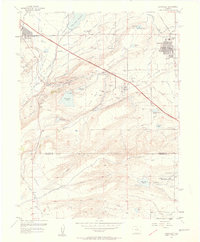 1957 Louisville1958 Print · USGSThe northern Colorado coalfields and rural landscapes are captured here during a period of industrial transition. Researchers can trace numerous historic coal operations like the Cracker Jack Mine and Industrial Mine, alongside the early Denver Boulder Turnpike.2 unique versions available
 - 1958 Map of Greeley
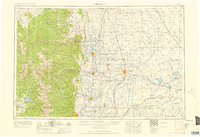 1958 Greeley1958 Print · USGSNorthern Colorado and the high peaks of the Front Range appear here in the mid-fifties as the region's agricultural and rail networks were fully established. Genealogists can locate family homes near Virginia Dale, Waverly, or Kuner, and trace the path of the Union Pacific Railroad through Greeley.
 - 1958 Map of Denver
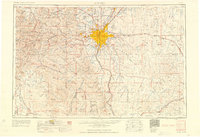 1958 Denver1958 Print · USGSDenver and the Colorado Front Range are captured here during the mid-century suburban boom. Trace the footprints of military installations like Buckley Air Force Base alongside the established rail networks of the Colorado & Southern Ry.
 - 1960 Map of Denver
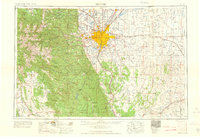 1960 Denver1960 Print · USGSDenver and the Colorado Front Range are seen here at a pivotal moment of postwar expansion into the plains and foothills. Researchers can trace the mid-century rail network of the Denver & Rio Grande Western RR and locate historic institutional landmarks like Buckley Field and the Colorado School of Mines.
 - 1961 Map of Greeley
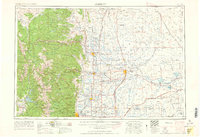 1961 Greeley1961 Print · USGSNorthern Colorado's transition from high mountain peaks to irrigated plains is captured here just as the post-war population boom reached the Front Range. Researchers can trace early water infrastructure and rail lines like the Great Western RR connecting sugar beet hubs from Fort Collins to Greeley.
 - 1964 Map of Greeley
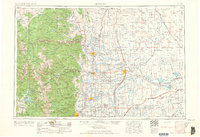 1964 Greeley1964 Print · USGSThe Front Range corridor and high peaks of the Rockies appear here in the mid-1960s, showing the intersection of mountain wilderness and plains agriculture. Trace the rail routes of the Great Western RR or locate landmarks like Longs Peak and Horsetooth Reservoir.
 - 1965 Map of Greeley
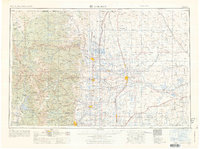 1965 Greeley1965 Print · USGSNorthern Colorado in the mid-sixties shows a landscape defined by high mountain summits and the growing irrigation networks of the plains. Genealogists and historians can trace rail-side towns like Wellington or follow the early tracks of the Union Pacific Railroad past Longs Peak.
 - 1965 Map of Louisville, 1967 Print
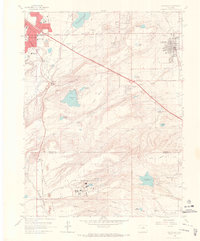 1965 Louisville1967 Print · USGSIn the mid-1960s, the plains south of Boulder balanced emerging suburban sprawl with secretive federal industry. Researchers can trace the massive Rocky Flats Plant, local landmarks like Marshall Lake, and the path of the Denver Boulder Turnpike.7 unique versions available
 - 1965 Map of Lafayette, 1967 Print
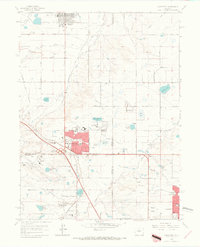 1965 Lafayette1967 Print · USGSLafayette and Broomfield are captured here in the mid-1960s as suburban growth began to reshape the old mining and agricultural landscape. Genealogists and local historians can trace early schools like Kohl Sch, the Louisville Cem, and old settlements such as Morgan and Wallace Village.5 unique versions available
 - 1967 Map of Erie, 1968 Print
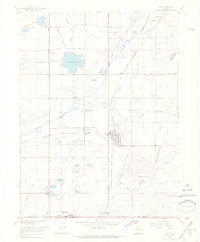 1967 Erie1968 Print · USGSThe northern Front Range comes alive in this late 1960s survey of the coal and rail corridors between Weld and Boulder Counties. Genealogists and historians can trace the early footprints of Erie and Lafayette, alongside landmarks like the Columbine Mine and the Mountain View Drag Strip.6 unique versions available
Showing maps 1-25 of 48
Top cities near Lafayette
- Aurora historical maps
- Thornton historical maps
- Arvada historical maps
- Westminster historical maps
- Boulder historical maps
- Longmont historical maps
See more
Top neighborhoods of Lafayette
- Trails at Coal Creek historical maps
- Nyland Cohousing Community historical maps
- Autumn Meadows historical maps
- Trails at Coal Creek historical maps
Frequently asked questions
- What are the different types of historical maps available for Lafayette?
- What is the oldest map of Lafayette?
- Where can I purchase historical maps of Lafayette for my home or office?
- Where can I download high-res historical maps of Lafayette?
- Are there historical topographic maps available for Lafayette?
- Is there historical aerial imagery available for Lafayette?
- Where are historical maps of Lafayette sourced from?