Old Maps of Bare Hills City, Colorado
Explore 17 old maps of Bare Hills City, spanning from 1894 to today. These high-resolution historic maps reveal how streets, neighborhoods, landmarks, and natural features evolved over time — perfect for genealogy, metal detecting, research, and local history exploration.
What you can do with these maps:
- See how Bare Hills City changed over time: Compare historical maps to modern-day views to trace roads, homesites, rail lines & more.
- View detailed metadata: Each map includes creators, publishers, year, scale, and archive source.
- Overlay maps with satellite & LiDAR: Visualize the past alongside modern tools to explore terrain & human change.
- Trusted historical sources: Maps sourced from the USGS, Library of Congress, and other archives.
- Access maps your way: View online, download high-res files, or order prints for personal or research use.
Start exploring old maps of Bare Hills City to uncover forgotten places, hidden landmarks, and the deep history beneath your feet.
Bare Hills City, CO maps
(17)- 1894 Map of Pikes Peak
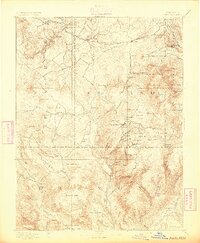 1894 Pikes Peak1894 Print · USGSThe Cripple Creek mining district is in its golden prime in the 1890s, caught here just as the mountain rail network was expanding. Researchers can trace early mining camps like Barry and Alnwick or locate the original path of the Colorado Midland Railroad through Florissant.2 unique versions available
 - 1901 Map of Pikes Peak
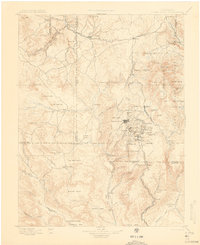 1901 Pikes Peak1901 Print · USGSThe Cripple Creek mining district is in its golden age on this turn-of-the-century sheet. Genealogists and historians can trace the rail lines and mountain camps that defined the rush, from Victor and Goldfield to the Fossil Beds at Florissant.6 unique versions available
 - 1942 Map of Cover Mtn., 1972 Print
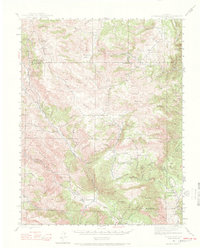 1942 Cover Mtn.1972 Print · USGSHigh mountain ranching and feldspar mining dominate this Fremont County landscape during the early 1940s. Genealogists and historians can trace family-named sites like F L Rowe Ranch and Stahl Ranch, alongside rural landmarks like the Twelvemile Sch.
 - 1948 Map of Cover Mtn.
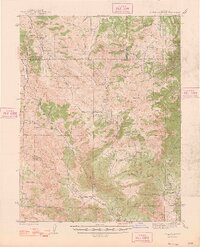 1948 Cover Mtn.1948 Print · USGSFremont and Park Counties at the close of the 1940s show a high-altitude ranching and mining landscape defined by the Colorado Feldspar Company Mine. Genealogists can trace legacy holdings like the Nash Ranch or locate local landmarks like the Twelvemile Sch and Wilson Creek Sch.3 unique versions available
 - 1954 Map of Pueblo, 1966 Print
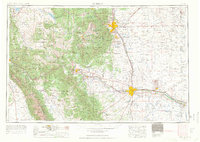 1954 Pueblo1966 Print · USGSMid-century Colorado comes alive in this survey of the Front Range and the high plains as the region expanded after the war. Genealogists and historians can trace family roots through rural landmarks like Hanover Church, Pioneer Cemetery, and the Grandview School.3 unique versions available
 - 1957 Map of Pueblo
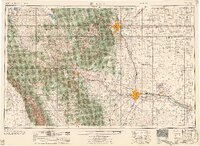 1957 Pueblo1957 Print · USGSMid-century Colorado comes alive as the Front Range urban centers expand alongside massive Cold War military installations. Genealogists and historians can trace the foundations of Stone City, rural sites like Hanover School, and the industrial Canon Imperial Mine.
 - 1958 Map of Pueblo
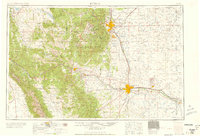 1958 Pueblo1958 Print · USGSColorado's Front Range and Arkansas River Valley come alive in the late fifties, showing the transition from historic mining districts to major military and rail hubs. Genealogists and historians can trace family roots in ranching communities and find landmarks like Cripple Creek, Manitou, and the Hanover School.
 - 1962 Map of Pueblo
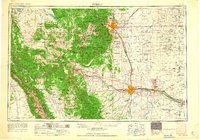 1962 Pueblo1962 Print · USGSThe Front Range and high plains meet in the early sixties as military installations and industrial mining shape the corridor from Colorado Springs to Pueblo. Genealogists can trace family names through rural landmarks like the Columbine School, Hanover Church, and Fairview Cem.
 - 1966 Map of Pueblo
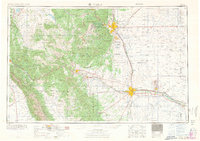 1966 Pueblo1966 Print · USGSThe Front Range and Arkansas River Valley are captured here in the mid-1960s, showing a landscape shaped by mining, military expansion, and rail. Researchers can locate numerous country schools and mines, such as the Lytle School, Pioneer Cem, and Empire Zinc Mine.
 - 1983 Map of High Park
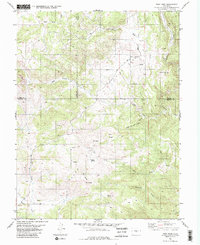 1983 High Park1983 Print · USGSThe high-country terrain of central Colorado appears here in the early 1980s, showing a landscape shaped by mining and water rights. Researchers can trace numerous Prospects and remote landmarks like Big Baldy and Booger Red Hill.2 unique versions available
 - 1983 Map of Pikes Peak
 1983 Pikes Peak1983 Print · USGSIn the early eighties, the high-altitude mining districts of Teller County remained deeply etched into the mountain landscape. Researchers can trace the legacy of the Gold Belt through sites like the Stratton Mine and vanished rail stops near Cripple Creek or Altman.
 - 1989 Map of Pueblo
 1989 Pueblo1989 Print · USGSIn the late eighties, the Colorado Front Range balanced its deep mining history with massive military expansion and water development. Researchers can trace the rail lines of the AT & SF RR or locate remote high-altitude settlements like Rosita and Querida.
 - 2010 Map of High Park, 2010 Print
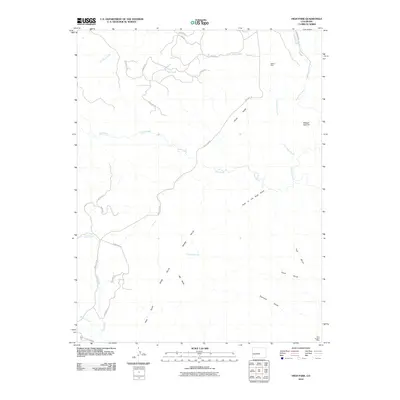 2010 High Park2010 Print · USGSFremont County's high country is captured here during a period of modern rural development and legacy mining. Researchers can trace historic extraction at the Albany Mine and Blue Nugget Mine or locate landmarks like Big Baldy and Booger Red Hill.
 - 2013 Map of High Park, 2013 Print
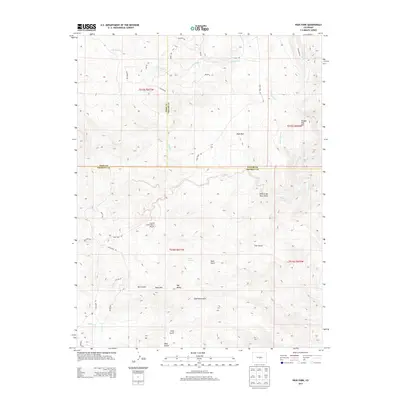 2013 High Park2013 Print · USGSThe convergence of Park, Teller, and Fremont counties in the early 21st century reveals a landscape of high-elevation gulches and remote ranchlands. Genealogists and local historians can trace family-named sites and landmarks like Bare Hills City, Sheep Springs, and Booger Red Hill.
 - 2016 Map of High Park, 2016 Print
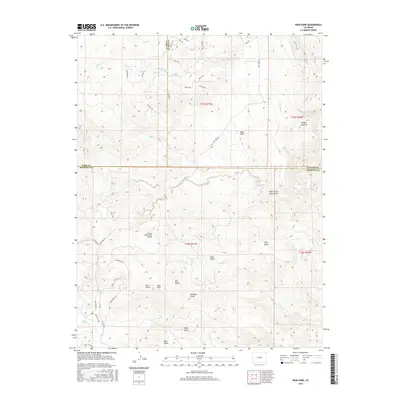 2016 High Park2016 Print · USGSHigh mountain terrain at the junction of Park, Teller, and Fremont counties is captured here in the mid-2010s. Trace the remote landscape through landmarks like Booger Red Hill, the Coyote Creek Ranch Airport, and the winding Espinosa Gulch.
 - 2019 Map of High Park, 2019 Print
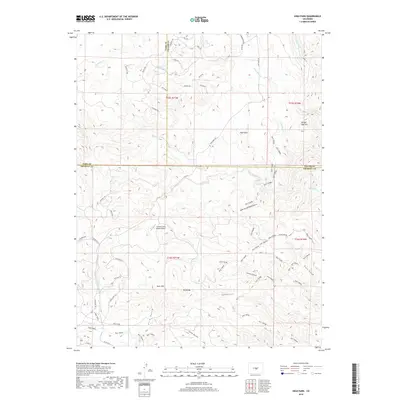 2019 High Park2019 Print · USGSThe high country of Park, Teller, and Fremont counties comes into focus in this late 2010s survey. Historians can trace rural mountain routes like Cherokee Trl and investigate geographic landmarks such as Big Baldy and the Coyote Creek Ranch Airport.
 - 2022 Map of High Park, 2022 Print
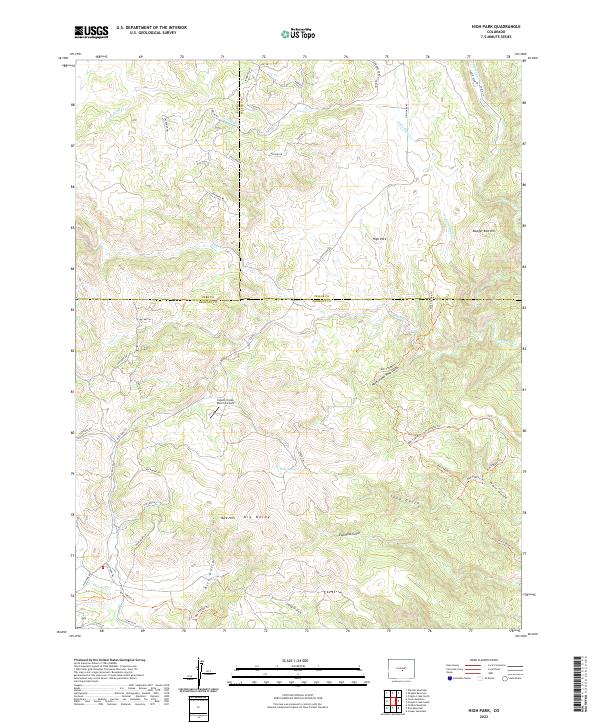 2022 High Park2022 Print · USGSThe tri-county meeting point of Park, Teller, and Fremont counties comes alive in this 2022 survey of High Park. Local historians can trace the network of BLM trails and named terrain features like Booger Red Hill, Big Baldy, and the Coyote Creek Ranch Airport.
End of results
Showing maps 1-17 of 17
Top cities near Bare Hills City
Frequently asked questions
- What are the different types of historical maps available for Bare Hills City?
- What is the oldest map of Bare Hills City?
- Where can I purchase historical maps of Bare Hills City for my home or office?
- Where can I download high-res historical maps of Bare Hills City?
- Are there historical topographic maps available for Bare Hills City?
- Is there historical aerial imagery available for Bare Hills City?
- Where are historical maps of Bare Hills City sourced from?