1960s Maps of Capitol Planning Region, Connecticut
Explore 21 historic maps of Capitol Planning Region from the 1960s. These maps offer a rare glimpse into what life looked like during the 1960s — showing old roads, neighborhoods, homes, and landmarks that have changed or disappeared over time.
Whether you're researching your family's past, planning a metal detecting trip, or studying how Capitol Planning Region's landscape evolved across the 1960s, these high-resolution maps are a powerful tool for exploring the history of this region.
- Focus on a specific era: All maps on this page are from the 1960s, giving you a focused view of this time period.
- See what’s changed: Compare century-old streets, trails, and buildings to today's modern landscape using overlays and satellite layers.
- Research with precision: Use these maps for genealogy, historical research, land use analysis, or educational projects.
- View, download, or print: Maps are fully viewable online in high resolution, and can be downloaded or printed for your own records.
Start exploring Capitol Planning Region's history through authentic maps from the 1960s. This is your window into the past.
Capitol Planning Region, CT maps
(21)- 1961 Map of Hartford
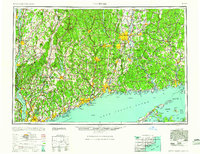 1961 Hartford1961 Print · USGSSouthern New England and the Hudson Valley are shown here in the mid-fifties, capturing a landscape of booming coastal cities and interior hill towns. Researchers can trace the legacy of the New York New Haven and Hartford rail corridor and find strategic sites like Camp Shanks and Fort Michie.
 - 1962 Map of Albany
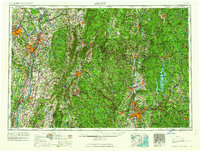 1962 Albany1962 Print · USGSThe Hudson and Connecticut River valleys meet the Green Mountains and Berkshires in this mid-century overview of the Northeast. Genealogists and historians can trace the industrial hearts of Albany and Springfield or locate features like Quabbin Reservoir and Westover Air Force Base.
 - 1962 Map of Hartford, 1971 Print
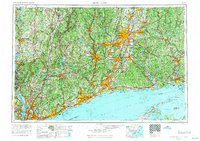 1962 Hartford1971 Print · USGSSouthern New England and the Hudson Valley are shown in the early sixties, as suburban growth reached into the foothills. Trace the path of the New York New Haven & Hartford RR and find landmarks like Camp Nathan Hale and Gillette Castle State Park.3 unique versions available
 - 1963 Map of Manchester, 1965 Print
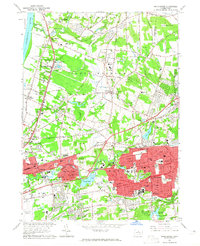 1963 Manchester1965 Print · USGSHartford County's eastern suburbs were in a period of rapid growth during the early sixties, as seen in this survey of Manchester and South Windsor. Researchers can locate family landmarks such as St James Cemetery, Mayberry Village, and Wapping Sch.5 unique versions available
 - 1964 Map of Glastonbury, 1965 Print
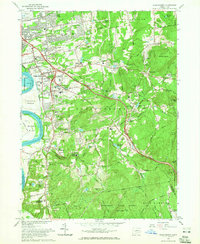 1964 Glastonbury1965 Print · USGSGlastonbury and East Hartford are shown in the mid-sixties during a period of significant suburban growth along the Connecticut River. Genealogists and local historians can trace legacy sites like Old Church Cemetery, the old Hopewell School, and the aviation footprint of Rentschler Airport.6 unique versions available
 - 1964 Map of Broad Brook, 1965 Print
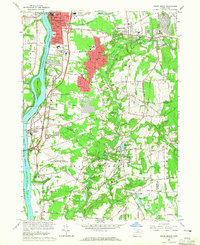 1964 Broad Brook1965 Print · USGSThe Connecticut River valley thrives in the mid-1960s as industrial towns and riverside villages expand. Genealogists can locate family plots at Enfield St Cem or trace the early suburban growth near the Harriet Beecher Stowe Sch.3 unique versions available
 - 1964 Map of Hartford South, 1966 Print
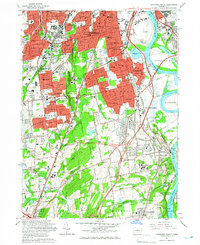 1964 Hartford South1966 Print · USGSThe Hartford suburbs and Connecticut River valley are shown in detail during the mid-sixties growth period. Genealogists can trace family plots in Cedar Hill Cemetery and locate landmarks like Trinity College or the State Veterans Home.5 unique versions available
 - 1964 Map of Windsor Locks, 1966 Print
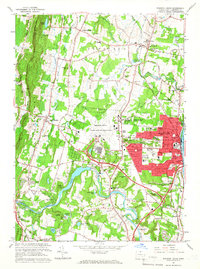 1964 Windsor Locks1966 Print · USGSMid-century Hartford County is defined here by the industrial pulse of the river and the expanding aviation hub at Bradley Field. Genealogists and historians can locate family plots at Woodlawn Cem or trace the early roots of Suffield Academy and the infamous Old Newgate Prison.3 unique versions available
 - 1964 Map of Hartford North, 1966 Print
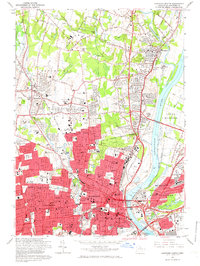 1964 Hartford North1966 Print · USGSGreater Hartford is captured here in the mid-sixties, showing the capital's dense urban core and the rapid postwar expansion into the surrounding Connecticut River valley. Researchers can find many landmarks including the State Capitol, Mount St Benedict Cemetery, and the historic Loomis Institute.6 unique versions available
 - 1965 Map of Hartford
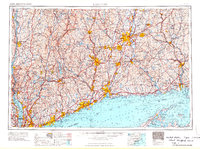 1965 Hartford1965 Print · USGSSouthern New England and the Hudson Valley are shown here during the mid-sixties expansion of the Interstate era. Trace the path of the New York New Haven & Hartford RR or locate historic landmarks like West Point Military Reservation and the Merritt Parkway.2 unique versions available
 - 1965 Map of Middletown, 1968 Print
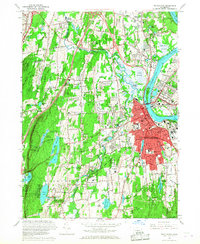 1965 Middletown1968 Print · USGSMiddletown and its riverfront neighbors are captured here in the mid-sixties, showcasing a landscape of academic prestige and industrial legacy. Genealogists and historians can trace institutional roots at Wesleyan University or find family markers in Indian Hill Cemetery and St Johns Cem.5 unique versions available
 - 1966 Map of New Britain, 1968 Print
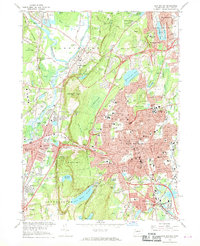 1966 New Britain1968 Print · USGSThe mid-century Hartford County suburbs were defined by industrial centers and burgeoning residential neighborhoods. Genealogists and local historians can trace family roots through numerous sites like Fairview Cem, Osgood Hill, and the State Teachers College campus.6 unique versions available
 - 1966 Map of Bristol, 1968 Print
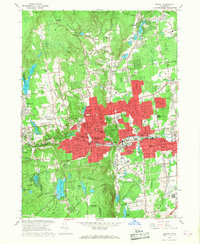 1966 Bristol1968 Print · USGSMid-century Bristol and Farmington show a landscape of growing suburbs and industrial heritage along the Pequabuck River. Genealogists and historians can trace neighborhood development near Forestville, local recreation at Lake Compounce, and parish schools like St Josephs Sch.4 unique versions available
 - 1967 Map of Ellington, 1969 Print
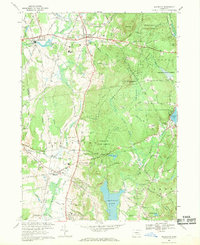 1967 Ellington1969 Print · USGSTolland County during the late 1960s shows a landscape of rising ridges and quiet valley settlements. Genealogists and researchers can locate family-named landmarks like Paulk Hill, several schools including Longview Sch, and historical burial sites such as North Cem.3 unique versions available
 - 1967 Map of Rockville, 1969 Print
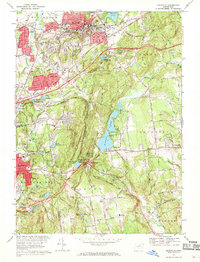 1967 Rockville1969 Print · USGSTolland and Hartford Counties are captured during a period of transition in the late sixties as suburban development meets historic mill towns. Researchers can trace ancestral roots at St Bernards Cem or follow the old rail lines through Bolton Notch and past Paper Mill Pond.5 unique versions available
 - 1967 Map of Monson, 1969 Print
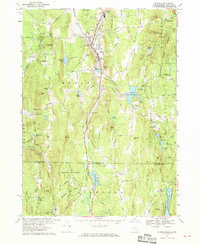 1967 Monson1969 Print · USGSAcross the Massachusetts-Connecticut line in the 1960s, this area shows a landscape of deep forests and narrow rail-side valleys. Researchers can locate family landmarks like Hillside Cem, trace the Central Vermont tracks, or explore the Staffordville Reservoir shoreline.5 unique versions available
 - 1967 Map of Moodus, 1969 Print
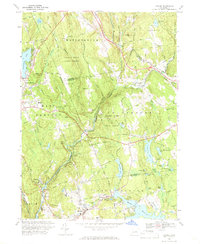 1967 Moodus1969 Print · USGSMiddlesex County hill country and river valleys are captured here in the late sixties, showing a landscape shaped by the Salmon River and its deep forests. Researchers can trace historic cemeteries, the Old Railroad Grade, and local landmarks like the Old Comstock Bridge and Colchester Airfield.4 unique versions available
 - 1967 Map of Marlborough, 1969 Print
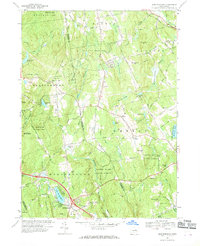 1967 Marlborough1969 Print · USGSCentral Connecticut's wooded uplands appear here during the late sixties, showing the integration of state forests and established rural towns. Researchers can locate numerous family burial grounds like Gay Cem and Burrows Hill Cem, alongside landmarks such as Mary Hall Sch and Diamond Lake.4 unique versions available
 - 1967 Map of Wales, 1970 Print
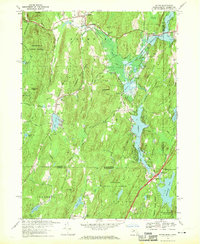 1967 Wales1970 Print · USGSThe Massachusetts-Connecticut borderlands are captured here in the late sixties, showing the sprawling state forests and new reservoirs of the era. Genealogists can trace family names across Haynes Hill and Blake Hill or locate landmarks like the Springfield Boys Camp.5 unique versions available
 - 1967 Map of Meriden, 1970 Print
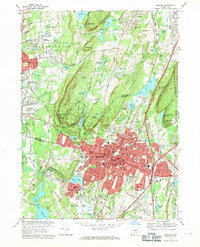 1967 Meriden1970 Print · USGSMeriden and Southington are shown in detail during the late sixties, a time of suburban expansion and industrial transition. Genealogists and historians can trace family roots through sites like Walnut Grove Cemetery and the Undercliff Sanatorium.6 unique versions available
 - 1968 Map of Southington, 1970 Print
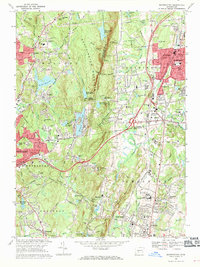 1968 Southington1970 Print · USGSThe industrial valleys and reservoir-laden hills of central Connecticut are shown here in the late sixties, as suburban growth expanded around Southington and Wolcott. Genealogists and local historians can trace the Olde Burying Ground, the Penn Central rail line, and landmarks like the State Reformatory.5 unique versions available
End of results
Showing maps 1-21 of 21
Top cities of Capitol Planning Region
- Hartford historical maps
- New Britain historical maps
- West Hartford historical maps
- Manchester historical maps
- East Hartford historical maps
- Enfield historical maps
See more
Frequently asked questions
- What are the different types of historical maps available for Capitol Planning Region?
- What is the oldest map of Capitol Planning Region?
- Where can I purchase historical maps of Capitol Planning Region for my home or office?
- Where can I download high-res historical maps of Capitol Planning Region?
- Are there historical topographic maps available for Capitol Planning Region?
- Is there historical aerial imagery available for Capitol Planning Region?
- Where are historical maps of Capitol Planning Region sourced from?