Old Maps of Thompson, Connecticut for Genealogy
Trace your family roots with 54 historic maps of Thompson. These high-res maps reveal old neighborhoods, homesites, landmarks, and streets — helping you uncover where your ancestors lived and how the area evolved over time.
- Explore historic neighborhoods: Identify where your relatives may have lived in the 1800s or 1900s.
- Compare maps over time: Trace the changes in streets, buildings, and landmarks for multi-generational research.
- Perfect for genealogy & ancestry research: Used by family historians and researchers to map out lineage and migration.
These maps are an incredible resource for exploring your personal connection to Thompson's past.
Thompson, CT maps
(54)- 1889 Map of Webster
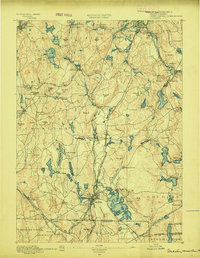 1889 Webster1889 Print · USGSSouthern Worcester County and the Connecticut borderlands are shown here in the 1880s, when textile power and steam rail defined the region. Local historians can trace the early layouts of Webster, Oxford, and Rochdale, along with family landmarks like Mugget Hill.
 - 1889 Map of Putnam
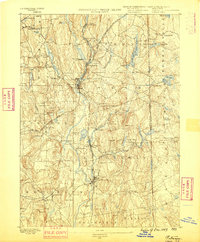 1889 Putnam1889 Print · USGSThe industrial Quinebaug Valley comes alive in the late 1880s, showcasing a landscape of riverside mill towns and critical rail junctions. Genealogists can trace family roots through specific locales like Danielsonville, Putnam Heights P.O., and Thompson Station.
 - 1892 Map of Webster
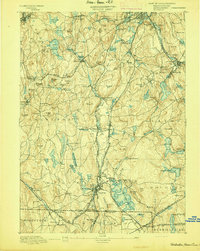 1892 Webster1892 Print · USGSWorcester County mill towns and rail junctions thrive in the 1890s as industrial centers along the French River. Genealogists and historians can trace the early footprints of Webster and Oxford, including vanished clusters like Merino Village and Chaseville.9 unique versions available
 - 1893 Map of Putnam
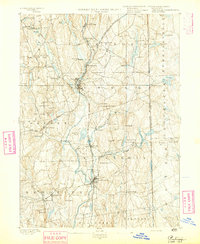 1893 Putnam1893 Print · USGSNortheastern Connecticut and the Rhode Island borderlands are documented here in the 1890s as the rail-and-river economy reached its peak. Researchers can trace historic mill villages like Ballouville, follow the New York and New England Railroad, or locate family sites near Danielsonville.8 unique versions available
 - 1908 Map of Quinsigamond
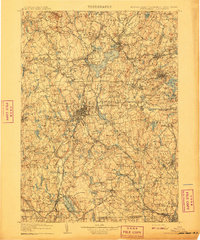 1908 Quinsigamond1908 Print · USGSCentral Massachusetts and its bordering states are seen here in the early twentieth century as industry and transit reshaped the Blackstone Valley. Genealogists and historians can trace the early footprints of Worcester, the expansion of the Wachusett Reservoir, and rail lines like the Boston and Albany Railroad.3 unique versions available
 - 1919 Map of Putnam
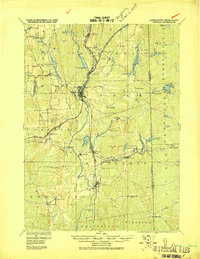 1919 Putnam1919 Print · USGSWindham County and the Rhode Island borderlands are captured here during a period of heavy rail reliance and mill town growth. Researchers can trace the New York and New England Railroad through Pomfret Station or locate local landmarks like Cooke Store and Poutis Landing.
 - 1921 Map of Webster
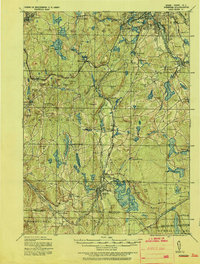 1921 Webster1921 Print · USGSThe industrial valleys and hill towns of southern Worcester County are seen here just after the Great War. Genealogists can trace the rail-centered growth of Webster and Auburn Sta. or locate old village centers like Cherry Valley and Rochdale.
 - 1943 Map of Quinsigamond
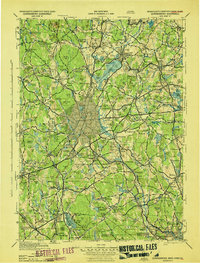 1943 Quinsigamond1943 Print · USGSCentral Massachusetts and its bordering states appear here during the Second World War as a powerhouse of rail infrastructure and public institutions. Researchers can trace the legacy of the region through landmarks like Grafton State Hospital, the Wachusett Reservoir, and the deep industrial roots of the Blackstone River.
 - 1943 Map of Putnam, 1944 Print
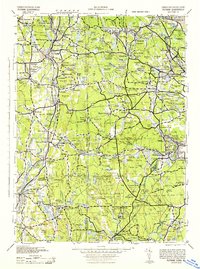 1943 Putnam1944 Print · USGSThe Connecticut and Rhode Island borderlands are captured here during the wartime era, showing a landscape defined by textile river towns and sprawling state forests. Trace the industrial rail corridor of the New York New Haven and Hartford through Putnam, Danielson, and Moosup.
 - 1945 Map of Webster
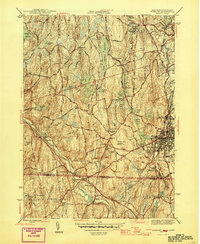 1945 Webster1945 Print · USGSThe borderlands of Massachusetts and Connecticut come alive in this mid-century survey of a thriving industrial river valley. Researchers can trace the heritage of mill towns and educational landmarks like Nichols College, West Dudley, and Perryville.2 unique versions available
 - 1945 Map of Putnam
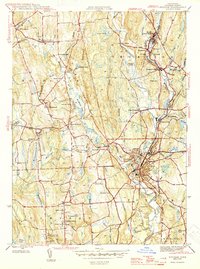 1945 Putnam1945 Print · USGSWindham County at the close of the Second World War shows a landscape of busy river towns and prominent private academies. Researchers can trace the New York New Haven and Hartford rail line past Putnam Academy and Annhurst College.2 unique versions available
 - 1946 Map of Oxford
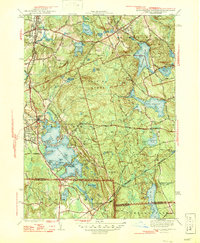 1946 Oxford1946 Print · USGSThe Massachusetts and Rhode Island borderlands are captured here in the mid-forties, showing the complex shorelines of Lake Chaubunagungamaug. Researchers can trace the CENTRAL TURNPIKE, early lakeside colonies at Colonial Park, and the wooded expanse of the Douglas Cedar Swamp.2 unique versions available
 - 1947 Map of Providence, 1948 Print
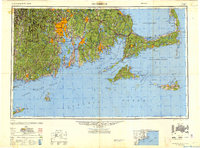 1947 Providence1948 Print · USGSSouthern New England is captured in the mid-1940s, showing a landscape defined by busy industrial ports and expanding military installations. Researchers can trace the rail lines of the N.Y. N.H. & H. RR or locate coastal defenses like Fort Adams and Quonset Point.5 unique versions available
 - 1948 Map of Boston
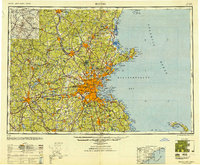 1948 Boston1948 Print · USGSEastern Massachusetts and southern New Hampshire appear at an industrial peak in the late 1940s, just as suburban growth began to accelerate. Genealogists and historians can trace rail lines like the Boston and Albany RR or locate coastal landmarks like Graves Lighthouse and Fort Devens.2 unique versions available
 - 1948 Map of Providence, 1951 Print
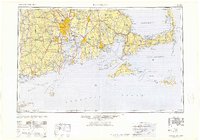 1948 Providence1951 Print · USGSSouthern New England’s coastal reaches are captured here in the late 1940s, from the industrial heart of Providence to the tip of Provincetown. Genealogists and historians can trace rail lines like the Central Vermont Railway and locate active military sites such as Otis Air Force Base and Fort Rodman.
 - 1953 Map of Oxford, 1954 Print
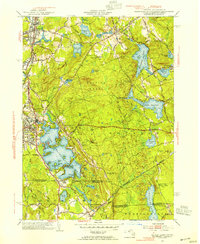 1953 Oxford1954 Print · USGSSouthern Worcester County was a busy intersection of industry and nature in the early fifties. Trace the rail lines of the New York New Haven and Hartford and locate landmarks like the St Joseph Cem and the sprawling Lake Chaubunagungamaug.3 unique versions available
 - 1953 Map of Webster, 1955 Print
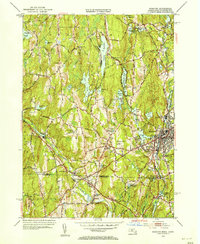 1953 Webster1955 Print · USGSThe Massachusetts and Connecticut borderlands thrive during the early fifties, anchored by the industrial hub of Webster. Researchers can trace the rail lines of the New York New Haven and Hartford RR or locate Nichols College, Fabyan, and South Charlton.3 unique versions available
 - 1955 Map of Putnam, 1956 Print
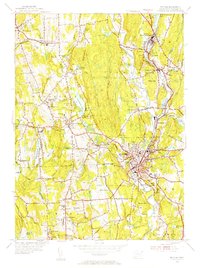 1955 Putnam1956 Print · USGSWindham County communities thrive along the Quinebaug River at mid-century as industry and education shape the landscape. Genealogists and historians can trace the legacy of local institutions like Woodstock Academy and the New York New Haven and Hartford rail corridor.6 unique versions available
 - 1955 Map of Thompson, 1957 Print
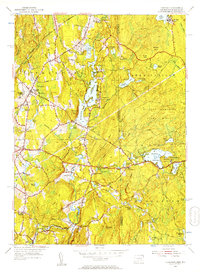 1955 Thompson1957 Print · USGSNortheastern Connecticut and the Rhode Island border are captured here in the mid-fifties, showing a landscape of scattered mill villages and expansive state forests. Genealogists and local historians can trace family roots at Dike Cem or locate old community hubs like East Putnam and Ballouville.2 unique versions available
 - 1956 Map of Boston, 1967 Print
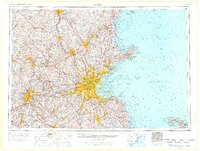 1956 Boston1967 Print · USGSThe Massachusetts coastline and industrial interior are seen here during the mid-century peak of suburban and highway expansion. Researchers can trace historic harbor defenses like Fort Revere, local landmarks such as Faneuil Hall, and the vast Parker River National Wildlife Refuge.6 unique versions available
 - 1957 Map of Providence
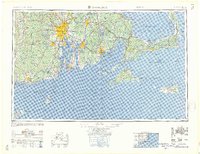 1957 Providence1957 Print · USGSCoastal New England at the height of the mid-century era shows a landscape shaped by maritime industry and Cold War defense. Genealogists and historians can trace the reach of the New York, New Haven & Hartford RR and locate legacy sites like Fort Adams and Quonset Point Naval Air Station.
 - 1958 Map of Boston
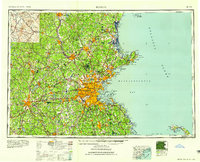 1958 Boston1958 Print · USGSEastern Massachusetts and southern New Hampshire are shown at the height of the industrial era, before the full expansion of the interstate system. Trace coastal defenses at Fort Warren, historic rail lines like the Boston and Maine, and the development of the Mass. 128 corridor.2 unique versions available
 - 1958 Map of Providence
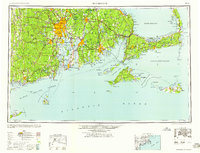 1958 Providence1958 Print · USGSThe Rhode Island and Massachusetts coastlines are shown in detail during the late 1950s, from the urban cores to the tips of the islands. Researchers can trace the mid-century footprint of Quonset Point Naval Air Station, the defense works at Fort Adams, and the rail network of the New York, New Haven and Hartford RR.
 - 1961 Map of Boston
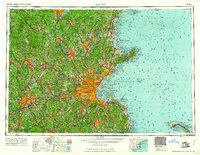 1961 Boston1961 Print · USGSThe Massachusetts coastline and its industrial interior are detailed here in the mid-twentieth century, from the Monadnock highlands to Cape Cod. Researchers can trace the rail routes of the Boston and Maine or locate landmarks like Fort Devens and the Wachusett Reservoir.2 unique versions available
 - 1963 Map of Providence
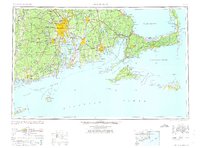 1963 Providence1963 Print · USGSSouthern New England's coastal and industrial heartland is captured here in the early sixties, from the Rhode Island mainland to the far reaches of the Cape. Researchers can trace mid-century growth in Providence or locate landmarks on Marthas Vineyard and Nantucket Island.
Showing maps 1-25 of 54
Top cities near Thompson
- Webster historical maps
- Grafton historical maps
- Killingly historical maps
- Southbridge historical maps
- Northbridge historical maps
- Auburn historical maps
See more
Top neighborhoods of Thompson
- North Grosvenordale historical maps
- West Thompson historical maps
- Quaddick historical maps
- Fabyan historical maps
- Grosvenordale historical maps
- Mechanicsville historical maps
See more
Frequently asked questions
- What are the different types of historical maps available for Thompson?
- What is the oldest map of Thompson?
- Where can I purchase historical maps of Thompson for my home or office?
- Where can I download high-res historical maps of Thompson?
- Are there historical topographic maps available for Thompson?
- Is there historical aerial imagery available for Thompson?
- Where are historical maps of Thompson sourced from?