1900s (20th Century) Maps of Compo, Westport
Explore 11 historic maps of Compo from the 1900s (20th Century). These maps offer a rare glimpse into what life looked like during the 1900s — showing old roads, neighborhoods, homes, and landmarks that have changed or disappeared over time.
Whether you're researching your family's past, planning a metal detecting trip, or studying how Compo's landscape evolved across the 1900s, these high-resolution maps are a powerful tool for exploring the history of this region.
- Focus on a specific era: All maps on this page are from the 1900s, giving you a focused view of this time period.
- See what’s changed: Compare century-old streets, trails, and buildings to today's modern landscape using overlays and satellite layers.
- Research with precision: Use these maps for genealogy, historical research, land use analysis, or educational projects.
- View, download, or print: Maps are fully viewable online in high resolution, and can be downloaded or printed for your own records.
Start exploring Compo's history through authentic maps from the 1900s. This is your window into the past.
Compo, Westport maps
(11)- 1947 Map of Sherwood Point
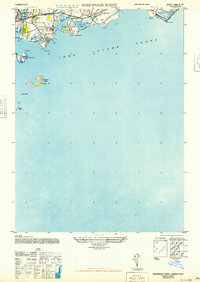 1947 Sherwood Point1947 Print · USGSCoastal Connecticut at the end of the 1940s reveals a shoreline of growing seaside communities and preserved marshlands. Researchers can trace the development of Saugatuck Shores, the historic Compo Beach, and the offshore reaches of Cockenoe Island.
 - 1947 Map of Hartford, 1955 Print
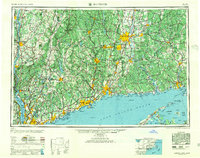 1947 Hartford1955 Print · USGSSouthern New England and the Hudson Valley are shown in detail during the post-war expansion era. Genealogists and researchers can trace local landmarks from the State Capitol and Yale University to the Stratford Lighthouse and Woodlawn Cem.2 unique versions available
 - 1948 Map of Hartford
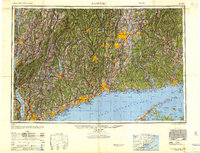 1948 Hartford1948 Print · USGSSouthern New England is captured here in the late 1940s, showcasing a landscape of thriving industrial cities and developing parkways. Genealogists and historians can trace the rail networks of the New York New Haven and Hartford RR or locate coastal defense sites like Fort Terry and Camp Shanks.2 unique versions available
 - 1951 Map of Westport, 1952 Print
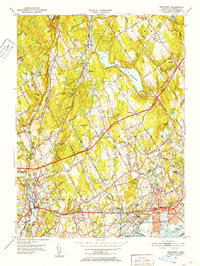 1951 Westport1952 Print · USGSFairfield and Westport appear here in the early fifties, showing a refined coastal landscape of established estates and watershed reservoirs. Genealogists and researchers can locate several burial grounds, including Gilbertown Cem and Old West Cem, alongside early academic sites like Fairfield University.5 unique versions available
 - 1951 Map of Sherwood Point, 1952 Print
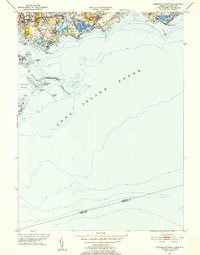 1951 Sherwood Point1952 Print · USGSThe Connecticut coast at the start of the 1950s shows a landscape of growing seaside neighborhoods and maritime heritage. Genealogists and local historians can trace family-named landmarks from Hale Court and Compo Hills to the shores of Sherwood Millpond.4 unique versions available
 - 1960 Map of Westport, 1962 Print
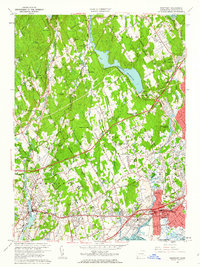 1960 Westport1962 Print · USGSFairfield and Westport appear here during the mid-century expansion of coastal Connecticut. Researchers can trace the infrastructure of the New York New Haven and Hartford Railroad and locate community anchors like Fairfield University and Aspetuck Cem.5 unique versions available
 - 1960 Map of Sherwood Point, 1962 Print
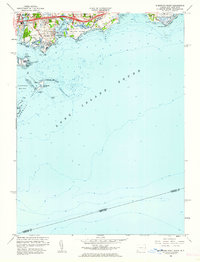 1960 Sherwood Point1962 Print · USGSThe Fairfield County coast at the start of the sixties shows a landscape of tidal inlets and growing shoreline communities. Genealogists and local historians can trace the foundations of Saugatuck, identify plots near St Marys Cem, and explore the layout of Sherwood Island State Park.2 unique versions available
 - 1961 Map of Hartford
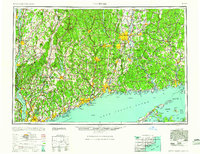 1961 Hartford1961 Print · USGSSouthern New England and the Hudson Valley are shown here in the mid-fifties, capturing a landscape of booming coastal cities and interior hill towns. Researchers can trace the legacy of the New York New Haven and Hartford rail corridor and find strategic sites like Camp Shanks and Fort Michie.
 - 1962 Map of Hartford, 1971 Print
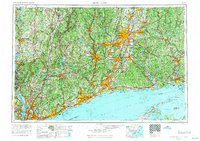 1962 Hartford1971 Print · USGSSouthern New England and the Hudson Valley are shown in the early sixties, as suburban growth reached into the foothills. Trace the path of the New York New Haven & Hartford RR and find landmarks like Camp Nathan Hale and Gillette Castle State Park.3 unique versions available
 - 1965 Map of Hartford
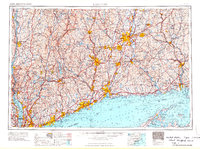 1965 Hartford1965 Print · USGSSouthern New England and the Hudson Valley are shown here during the mid-sixties expansion of the Interstate era. Trace the path of the New York New Haven & Hartford RR or locate historic landmarks like West Point Military Reservation and the Merritt Parkway.2 unique versions available
 - 1986 Map of Bridgeport
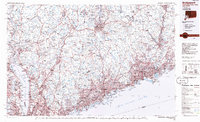 1986 Bridgeport1986 Print · USGSSpanning the New York and Connecticut border in the mid-eighties, this survey shows the dense rail and parkway network connecting the Hudson to the Sound. Researchers can trace the massive New Croton Reservoir system or locate landmarks like the West Point U.S. Military Academy.3 unique versions available
End of results
Showing maps 1-11 of 11
Top cities near Compo
- Brookhaven historical maps
- Oyster Bay historical maps
- North Hempstead historical maps
- Huntington historical maps
- Bridgeport historical maps
- Stamford historical maps
See more
Top neighborhoods of Compo
Frequently asked questions
- What are the different types of historical maps available for Compo?
- What is the oldest map of Compo?
- Where can I purchase historical maps of Compo for my home or office?
- Where can I download high-res historical maps of Compo?
- Are there historical topographic maps available for Compo?
- Is there historical aerial imagery available for Compo?
- Where are historical maps of Compo sourced from?