Old Maps of Douglas County, Georgia for Metal Detecting
Plan your next treasure hunt with 81 historic maps of Douglas County. Find old homesites, ghost towns, trails, and gathering spots that may be lost to time — perfect for identifying promising metal detecting locations.
- Locate forgotten sites: Uncover places like long-lost settlements, abandoned rail lines, or gathering spots.
- Plan better hunts: Use map overlays combined with LiDAR or satellite views to narrow in on historically rich areas.
- Made for detectorists: Thousands of hobbyists use these maps to discover relics, coins, and hidden history.
Use these historic maps to boost your research and find new opportunities beneath the surface of Douglas County.
Douglas County, GA maps
(81)- 1891 Map of Marietta
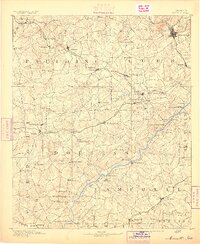 1891 Marietta1891 Print · USGSNorth Georgia at the close of the nineteenth century is captured here as the railroad began to reshape the river-dependent landscape. Genealogists can locate family-named landmarks like Allens Mills or trace historic river crossings at Campbellton Fy and Hutchinsons Ferry.
 - 1895 Map of Marietta
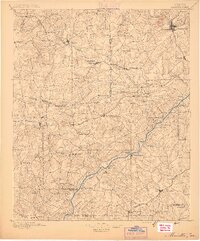 1895 Marietta1895 Print · USGSNorthwest Georgia in the 1890s appears as a landscape defined by the winding Chattahoochee River and the rapid expansion of iron rails. Genealogists can trace early family-named river crossings like Morris Ferry or explore the origins of Old Villarica and Bright Star.
 - 1897 Map of Marietta
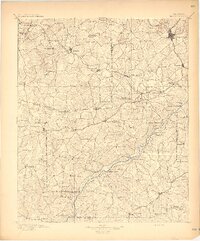 1897 Marietta1897 Print · USGSNorthwest Georgia in the late nineteenth century was a landscape defined by river crossings and expanding rail lines. Genealogists and historians can trace defunct river crossings like Pumpkintown Ferry and old industrial sites like Daniels Mills or Beatty Switch.
 - 1901 Map of Marietta
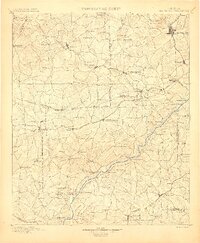 1901 Marietta1901 Print · USGSNorthwest Georgia at the turn of the century is a landscape of growing rail towns and vital river crossings. Researchers can trace early rural life through features like Old Villarica, Pumpkintown Ferry, and the Mount Zion Church.4 unique versions available
 - 1953 Map of Atlanta, 1965 Print
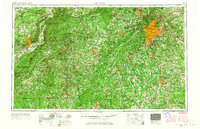 1953 Atlanta1965 Print · USGSThe growing Atlanta metro and the industrial corridors of Eastern Alabama are captured here during the mid-century transition. Researchers can trace the rail-to-road shift through hubs like Anniston and La Grange or locate sites within Fort McClellan.2 unique versions available
 - 1954 Map of Palmetto, 1955 Print
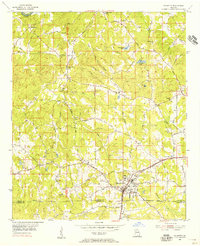 1954 Palmetto1955 Print · USGSThe Palmetto area and the Chattahoochee riverfront appear here in the mid-fifties, just as the local rural character began to meet postwar growth. Researchers can locate family landmarks like Friendship Ch, Cedar Grove Sch, and the Landing Field.4 unique versions available
 - 1954 Map of Campbellton, 1956 Print
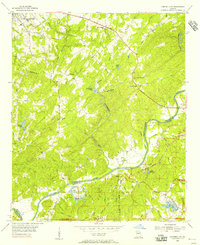 1954 Campbellton1956 Print · USGSDouglas and Fulton counties meet along the winding river corridor in the mid-1950s. Family historians can trace rural roots near the Chattahoochee River, finding landmarks like Holly Springs Cem, Mount Carmel Sch, and the community of Campbellton.4 unique versions available
 - 1954 Map of Mableton, 1956 Print
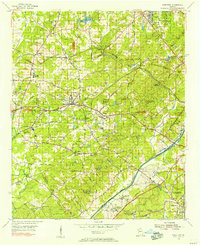 1954 Mableton1956 Print · USGSNorthwest of Atlanta in the mid-fifties, this area shows a landscape transitioning between its rural roots and suburban growth. Researchers can trace family history through sites like Mable Cemetery or locate early industrial landmarks such as Orange Hill Mill and Cobb Airfield.5 unique versions available
 - 1954 Map of Austell, 1956 Print
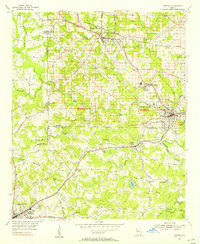 1954 Austell1956 Print · USGSCobb and Douglas Counties are shown here during the mid-fifties, captured just as the industrial rail network and rural school districts were at their peak. Researchers can locate family landmarks like Smith Chapel and Pleasant Hill Ch or trace the early paths of the Seaboard Air Line.5 unique versions available
 - 1954 Map of Ben Hill, 1956 Print
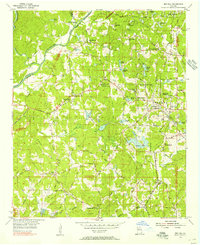 1954 Ben Hill1956 Print · USGSFulton County south of the river is caught in transition during the mid-fifties, balancing historic rural churches with the approaching reach of Atlanta. Researchers can locate family landmarks like the Mt Gilead Campground, Sandtown Sch, and the Atlantic Coast Line railroad.6 unique versions available
 - 1957 Map of Atlanta
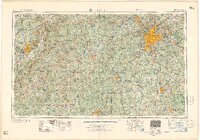 1957 Atlanta1957 Print · USGSAtlanta and the Alabama borderlands appear here in the mid-fifties, capturing the region's post-war suburban and industrial transition. Trace the development of early transport hubs and military sites like Fort McPherson, Anniston, and the Kennesaw Mountain National Battlefield Park.
 - 1958 Map of Rico
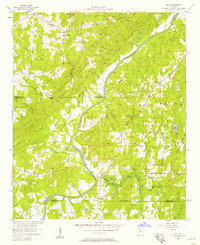 1958 Rico1958 Print · USGSThe rural borders of Fulton and Douglas counties come alive in the late fifties along the banks of the Chattahoochee River. Genealogists and historians can trace community landmarks like Providence Ch, Fairplay Sch, and the winding Yellow Ferry Road.3 unique versions available
 - 1958 Map of Atlanta
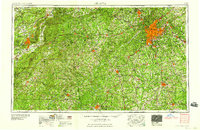 1958 Atlanta1958 Print · USGSMid-century Georgia and Alabama are shown in this regional study of the corridor between the Chattahoochee River and the Appalachian foothills. Local historians can trace the development of suburban Atlanta alongside vital landmarks like Stone Mountain, Dobbins AFB, and the Seaboard Air Line rail routes.
 - 1958 Map of Villa Rica, 1960 Print
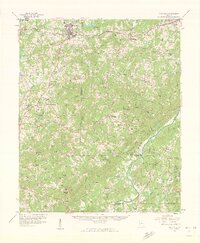 1958 Villa Rica1960 Print · USGSThe West Georgia countryside in the late fifties centered on the Chattahoochee River and the industrial activity at Banning Mills. Genealogists can trace family-named crossroads and rural landmarks like Hickory Level, Fouts Mill, and Bright Star Ch.2 unique versions available
 - 1958 Map of Dallas, 1960 Print
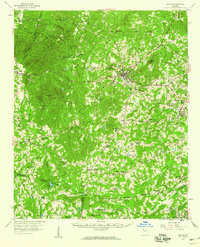 1958 Dallas1960 Print · USGSPaulding County and parts of Carroll and Douglas emerge in the late 1950s as a landscape of rail-junction towns and rural church communities. Researchers can trace family roots at Willow Springs Ch, locate the old Drive-in Theater, or follow the SEABOARD rail lines.2 unique versions available
 - 1973 Map of Hulett, 1975 Print
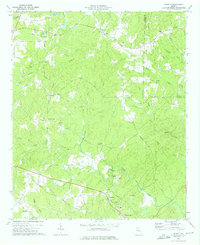 1973 Hulett1975 Print · USGSCarroll and Douglas Counties are captured in the early 1970s, showing a landscape of traditional creek-side industry and rural parish life. Genealogists and historians can trace family locations near Mars Hill Cem, Banning Mills, or along the Central of Georgia tracks.2 unique versions available
 - 1973 Map of Nebo, 1975 Print
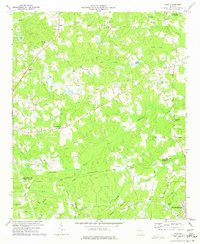 1973 Nebo1975 Print · USGSPaulding and Douglas Counties are captured here in the early 1970s, showing a rural landscape before the rapid expansion of the Atlanta metro area. Genealogists and local historians can locate several country churches and settlements, including Sudie, Brownsville, and the Callie Harbin Ch.3 unique versions available
 - 1973 Map of Villa Rica, 1975 Print
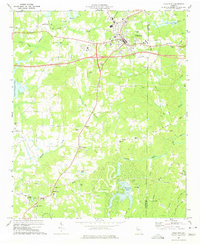 1973 Villa Rica1975 Print · USGSVilla Rica and its rural surroundings are captured here in the early seventies, showing a period of modern transit growth along the Southern rail line. Genealogists and local historians can trace family locations near Old Carrollton, Ithaca, and churches like Macedonia Ch and Ephesus Church.3 unique versions available
 - 1973 Map of Winston, 1975 Print
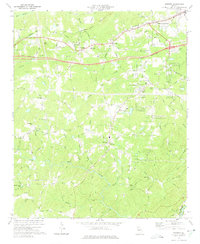 1973 Winston1975 Print · USGSDouglas County was undergoing significant change in the early seventies as the new interstate corridor was cut through the countryside. Researchers can trace family sites and community landmarks like Bill Arp, Fouts Mill, and several historic congregations including Old Mtn Top Ch.3 unique versions available
 - 1973 Map of New Georgia, 1975 Print
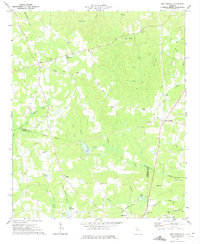 1973 New Georgia1975 Print · USGSGeorgia's Piedmont region in the 1970s shows a landscape of growing rural communities and deep-rooted local history. Genealogists and researchers can trace family landmarks like Wesley Chapel, Pine Log Cem, and the settlement of New Georgia near the Little Tallapoosa River.2 unique versions available
 - 1981 Map of Atlanta, 1982 Print
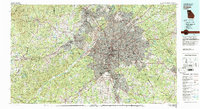 1981 Atlanta1982 Print · USGSThe Atlanta metro area is shown during its late-century boom, following the completion of the beltway and the rise of its major international airport. Trace the growth of suburbs from Mableton to Tucker and the footprints of Fort McPherson and Stone Mtn.
 - 1992 Map of Austell
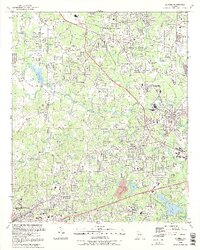 1992 Austell1992 Print · USGSThe western edges of the Atlanta metro area are captured here in the early nineties as Cobb and Douglas counties continued their suburban expansion. Genealogists and local historians can trace family roots through several rural burial sites like Coker-Elliott Cem and numerous local churches including Praise Tabernacle and County Line Ch.2 unique versions available
 - 1992 Map of Mableton
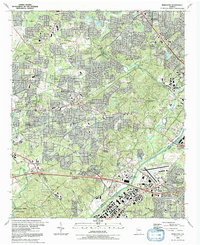 1992 Mableton1992 Print · USGSMableton and Austell are shown in the early nineties as the suburban landscape of Cobb County expanded toward the river. Genealogists and researchers can locate numerous community landmarks, including Gann Cem, South Cobb High Sch, and the Southern Railway corridor.2 unique versions available
 - 1999 Map of Ben Hill, 2002 Print
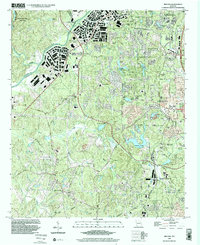 1999 Ben Hill2002 Print · USGSFulton County at the turn of the millennium shows the transition from rural Georgia to the expanding Atlanta suburbs. Researchers can trace local heritage through sites like Owl Rock Ch, Sandtown Sch, and the community of Ben Hill.
 - 1999 Map of Austell, 2003 Print
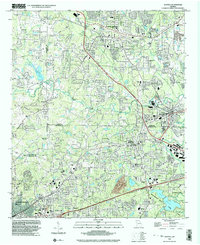 1999 Austell2003 Print · USGSThe growing suburban corridor west of Atlanta is captured here at the end of the millennium, showing a landscape defined by rail lines and winding creeks. You can trace family roots through numerous local landmarks like Rose Hill Cem, Souls Arbor Tabernacle, and Newman Bridge.
Showing maps 1-25 of 81
Top cities of Douglas County
Frequently asked questions
- What are the different types of historical maps available for Douglas County?
- What is the oldest map of Douglas County?
- Where can I purchase historical maps of Douglas County for my home or office?
- Where can I download high-res historical maps of Douglas County?
- Are there historical topographic maps available for Douglas County?
- Is there historical aerial imagery available for Douglas County?
- Where are historical maps of Douglas County sourced from?