Old Maps of Harris County, Georgia for Genealogy
Trace your family roots with 105 historic maps of Harris County. These high-res maps reveal old neighborhoods, homesites, landmarks, and streets — helping you uncover where your ancestors lived and how the area evolved over time.
- Explore historic neighborhoods: Identify where your relatives may have lived in the 1800s or 1900s.
- Compare maps over time: Trace the changes in streets, buildings, and landmarks for multi-generational research.
- Perfect for genealogy & ancestry research: Used by family historians and researchers to map out lineage and migration.
These maps are an incredible resource for exploring your personal connection to Harris County's past.
Harris County, GA maps
(105)- 1907 Map of Talbotton
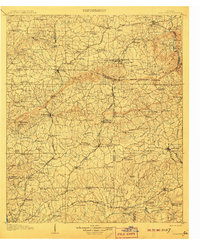 1907 Talbotton1907 Print · USGSWest-central Georgia at the turn of the century is a landscape of ridges and rail-lines, dominated by the thermal waters of Warm Springs. Local historians can trace the foundations of Talbotton and rural life at Turntime Crossroads, Cataula Camp Ground, and Greens Mill.3 unique versions available
 - 1907 Map of Opelika, 1963 Print
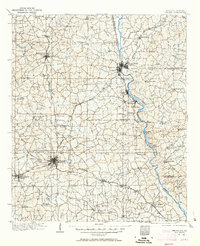 1907 Opelika1963 Print · USGSEastern Alabama and western Georgia come alive in this early 1900s survey of the rail-and-river economy. Genealogists can trace family names at Mitchell Crossroads, find rural landmarks like the Poor Farm, and locate historic river crossings like Dixon Ferry.
 - 1909 Map of Opelika
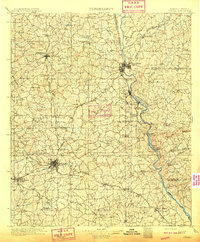 1909 Opelika1909 Print · USGSEastern Alabama and western Georgia are seen here in the first decade of the twentieth century as the river-and-rail economy reached its peak. Genealogists and historians can trace old river crossings like Blanton Ferry, rural post offices such as Antioch Church Huckabee P O, and the path of the Chattahoochee Valley railroad.4 unique versions available
 - 1934 Map of Warm Springs, 1958 Print
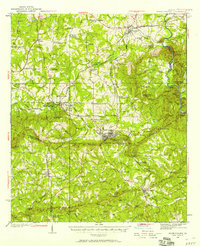 1934 Warm Springs1958 Print · USGSWest-central Georgia at the height of the New Deal era reveals a landscape of therapeutic springs, mountain gaps, and busy rail junctions. Genealogists and historians can locate family landmarks like Williams Chapel, the Warm Springs Foundation, and Chalybeate Springs along the rugged Pine Mountain ridge.7 unique versions available
 - 1936 Map of Warm Springs
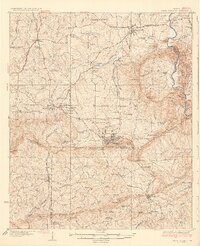 1936 Warm Springs1936 Print · USGSWest-central Georgia at the height of the New Deal era centers on the therapeutic and institutional development of Warm Springs. Researchers can trace the rail-and-road network connecting Manchester and Woodbury or locate landmarks like the Warm Springs Foundation and Ebenezer Cem.4 unique versions available
 - 1949 Map of Midland
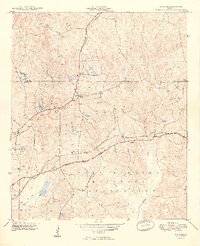 1949 Midland1949 Print · USGSMuscogee and Harris Counties appear here just after the war, showing the expansion of the Fort Benning Military Reservation. Researchers can trace the Southern rail lines connecting Midland and Schatulga.2 unique versions available
 - 1949 Map of Upatoi
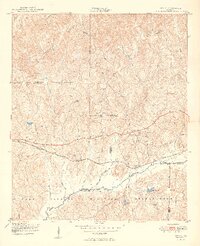 1949 Upatoi1949 Print · USGSThe Fort Benning boundary and the Central of Georgia railroad define this corner of Georgia in the late forties. Researchers can trace family landmarks like Mt Carmel Church and the rural settlements at Upatoi and Box Springs.2 unique versions available
 - 1950 Map of Fortson, 1953 Print
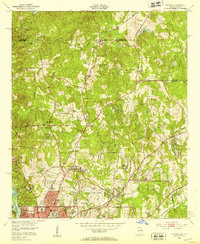 1950 Fortson1953 Print · USGSThe northern suburbs of Columbus were beginning to take shape in the early fifties, while rural outposts like Fortson and Nankipooh remained distinct. Genealogists can locate family landmarks such as Mealing Cem and Double Churches or trace the early layout of the Muscogee County Airport.2 unique versions available
 - 1950 Map of Mulberry Grove, 1953 Print
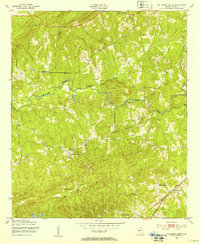 1950 Mulberry Grove1953 Print · USGSHarris County at the mid-century shows a landscape of rural churches and creek-side industry before modern development changed the character of the Georgia countryside. Genealogists and historians can trace local landmarks like Hudson Mill, Bingham Chapel, and the settlement at Mulberry Grove.
 - 1950 Map of Waverly Hall, 1953 Print
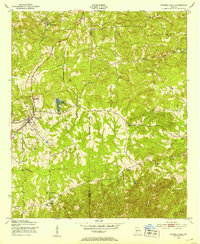 1950 Waverly Hall1953 Print · USGSMid-century Harris County comes into focus as the railroad era meets the expanding post-war road network. Researchers can trace family sites near Waverly Hall Cem, the Mt McCatherine Sch, and the rail station at Cleola.
 - 1950 Map of Cataula, 1953 Print
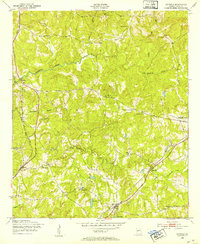 1950 Cataula1953 Print · USGSIn the early fifties, the Harris County landscape was a network of rail-side villages and rural crossroads centers. Genealogists and historians can trace family-named landmarks like Clowers Sch and Turntime Crossroads or follow the path of the Southern railroad.
 - 1950 Map of Talbotton, 1955 Print
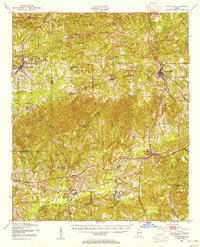 1950 Talbotton1955 Print · USGSWestern Georgia at the start of the fifties reveals a landscape of rural railroad towns and numerous country churches. Genealogists can trace family connections at Waverly Hall Cem or locate old community centers like Box Springs, Geneva, and Matthews Chapel.
 - 1950 Map of Ellerslie, 1955 Print
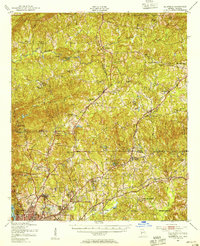 1950 Ellerslie1955 Print · USGSThe Muscogee and Harris County borderlands appear here in the mid-twentieth century as the city of Columbus begins its northward expansion. Researchers can trace the rural roots of the region through landmarks like Turntime Crossroads, Double Churches, and the Columbus Speedway Racetrack.
 - 1955 Map of Mulberry Grove, 1959 Print
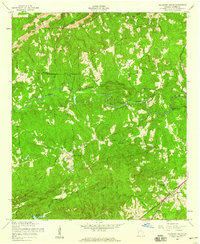 1955 Mulberry Grove1959 Print · USGSHarris County, Georgia, is captured here in the mid-1950s as a landscape of small rural settlements and creekside landmarks. Researchers can trace family history through sites like Binghams Chapel and Richardson Cem or follow the path of the Central of Georgia railroad near Rehobeth.4 unique versions available
 - 1955 Map of Waverly Hall, 1959 Print
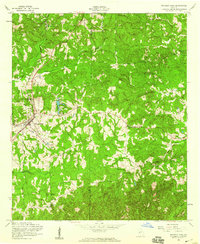 1955 Waverly Hall1959 Print · USGSWestern Georgia's rural landscape is captured here in the mid-fifties as the railroad and small-town congregations defined community life. Genealogists and local historians can trace the exact locations of Matthews Chapel, Bangsville, and the St Johns Cem.3 unique versions available
 - 1955 Map of Cataula, 1959 Print
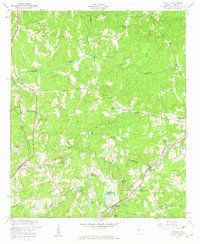 1955 Cataula1959 Print · USGSMid-century Harris County is captured here during a period of rural stability and local expansion. Genealogists and researchers can trace the locations of family landmarks and community centers like Clowers Cem, Cataula Sch, and Turntime Crossroads.3 unique versions available
 - 1955 Map of Midland, 1959 Print
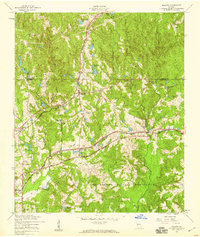 1955 Midland1959 Print · USGSThe Muscogee and Harris County borderlands in the mid-fifties show a landscape of rail-fed settlements and expanding military borders. Genealogists can find legacy sites like Lynch Road Sch, Pitts Chapel, and the intersection of the SOUTHERN and CENTRAL OF GEORGIA rail lines.4 unique versions available
 - 1955 Map of Fortson, 1959 Print
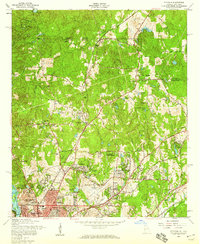 1955 Fortson1959 Print · USGSMuscogee County is shown in the mid-fifties as the northern edge of Columbus begins its post-war expansion into the countryside. Researchers can trace old family roots and rural landmarks at Double Churches, Pierce Chapel Cemetery, and the historic settlement of Nankipooh.5 unique versions available
 - 1955 Map of Upatoi, 1959 Print
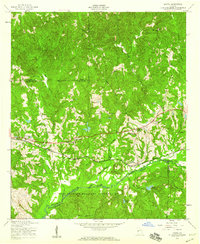 1955 Upatoi1959 Print · USGSThe rural borderlands of Talbot and Muscogee counties are captured here in the mid-1950s, split between timbered creeks and federal land. Genealogists can locate family landmarks like Phillips Cem, Mt Paron Ch, and the Crossroads Sch along the Central of Georgia line.3 unique versions available
 - 1955 Map of Ellerslie, 1961 Print
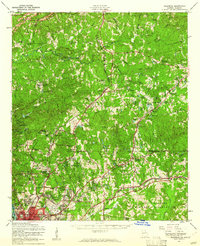 1955 Ellerslie1961 Print · USGSMid-century Harris and Muscogee counties were defined by rural crossroads and the northward expansion of Columbus. Genealogists and researchers can trace family landmarks like Turntime Crossroads, Pierce Chapel, and the Good Samaritan Home for Aged.
 - 1955 Map of Talbotton, 1961 Print
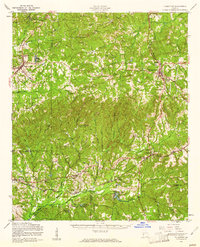 1955 Talbotton1961 Print · USGSTalbot County and its neighboring parishes are captured here in the mid-fifties, showing the transition between traditional rail-town life and the expanding military presence to the south. Genealogists can trace family roots through numerous rural landmarks like Olive Branch Ch, the Geneva Sch, and Box Springs.2 unique versions available
 - 1955 Map of Phenix City, 1964 Print
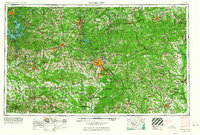 1955 Phenix City1964 Print · USGSPost-war Alabama and Georgia meet along the Chattahoochee River as industry and military installations expand. Trace the rail lines of the Central of Georgia through towns like Opelika, Tuskegee, and Alexander City.3 unique versions available
 - 1957 Map of Phenix City
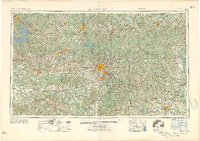 1957 Phenix City1957 Print · USGSThe Alabama-Georgia borderlands are captured here in the mid-fifties, centered on the bustling river crossing at Phenix City and Columbus. Researchers can trace the mid-century footprint of the Fort Benning Military Reservation or locate smaller textile and railroad towns like Langdale and Camp Hill.
 - 1958 Map of Phenix City
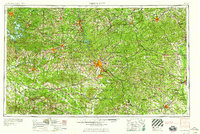 1958 Phenix City1958 Print · USGSThe Alabama-Georgia borderlands thrive during the late fifties, anchored by the river-driven industry of Columbus and Phenix City. Researchers can trace the mid-century footprints of Fort Benning, Auburn, and the textile towns of Fairfax and Lanett.
 - 1964 Map of Whitesville, 1965 Print
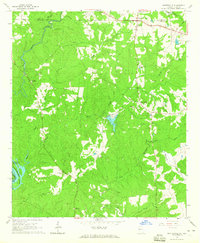 1964 Whitesville1965 Print · USGSThe Georgia-Alabama border along the Chattahoochee River comes to life in the mid-1960s. Researchers can trace rural lineages through family landmarks like Billingslea Cem, Jones Crossroads, and Flat Shoal Ch.3 unique versions available
Showing maps 1-25 of 105
Top cities of Harris County
- Pine Mountain historical maps
- Waverly Hall historical maps
- Hamilton historical maps
- Shiloh historical maps
Frequently asked questions
- What are the different types of historical maps available for Harris County?
- What is the oldest map of Harris County?
- Where can I purchase historical maps of Harris County for my home or office?
- Where can I download high-res historical maps of Harris County?
- Are there historical topographic maps available for Harris County?
- Is there historical aerial imagery available for Harris County?
- Where are historical maps of Harris County sourced from?