1950s Maps of Thomas County, Georgia
Explore 16 historic maps of Thomas County from the 1950s. These maps offer a rare glimpse into what life looked like during the 1950s — showing old roads, neighborhoods, homes, and landmarks that have changed or disappeared over time.
Whether you're researching your family's past, planning a metal detecting trip, or studying how Thomas County's landscape evolved across the 1950s, these high-resolution maps are a powerful tool for exploring the history of this region.
- Focus on a specific era: All maps on this page are from the 1950s, giving you a focused view of this time period.
- See what’s changed: Compare century-old streets, trails, and buildings to today's modern landscape using overlays and satellite layers.
- Research with precision: Use these maps for genealogy, historical research, land use analysis, or educational projects.
- View, download, or print: Maps are fully viewable online in high resolution, and can be downloaded or printed for your own records.
Start exploring Thomas County's history through authentic maps from the 1950s. This is your window into the past.
Thomas County, GA maps
(16)- 1953 Map of Dothan, 1966 Print
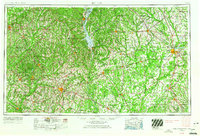 1953 Dothan1966 Print · USGSSoutheast Alabama and Southwest Georgia are captured during a period of massive hydraulic and military expansion in the mid-fifties. Genealogists and historians can trace rural landmarks like Antioch Church and School, the Andrew Jackson Monument, and the early footprint of Fort Rucker Military Reservation.3 unique versions available
 - 1953 Map of Waycross, 1967 Print
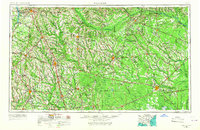 1953 Waycross1967 Print · USGSSouth Georgia's agricultural and rail heartland is captured here in the mid-1950s, showing a vast network of timber and farming towns. Researchers can trace the rail lines connecting Waycross and Tifton or locate landmarks like Jefferson Davis State Park and Lake Blackshear.2 unique versions available
 - 1954 Map of Dothan
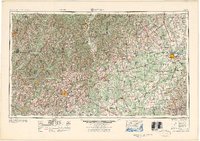 1954 Dothan1954 Print · USGSSoutheast Alabama and Southwest Georgia are seen here in the mid-fifties, during a decade of military expansion and rural transition. Genealogists can trace the location of country schools like Little Zion School or the grounds of Kolomoki Mounds State Park.
 - 1954 Map of Valdosta, 1967 Print
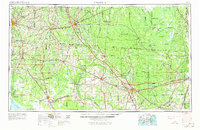 1954 Valdosta1967 Print · USGSThe South Georgia and North Florida borderlands are captured here in the mid-fifties, showing the deep timber and wetland networks of the coastal plain. Researchers can trace the path of the Atlantic Coast Line through Valdosta or explore the interior of the Okefenokee Swamp.2 unique versions available
 - 1954 Map of Tallahassee, 1967 Print
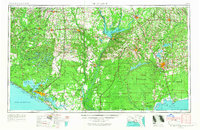 1954 Tallahassee1967 Print · USGSThe Florida Panhandle and South Georgia are captured here during a period of mid-century growth and military expansion. Researchers can trace the development of Panama City, the footprint of Tyndall Air Force Base, and the rail lines of the Atlantic Coast Line.4 unique versions available
 - 1955 Map of Dothan
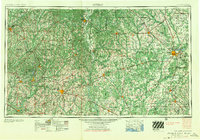 1955 Dothan1955 Print · USGSSoutheast Alabama and Southwest Georgia are captured here in the mid-fifties, showing a landscape of river-port history and growing military bases. Researchers can trace rural life via the Andrew Jackson Monument, Bauxite mines, and the Central of Georgia RR.
 - 1956 Map of Grooverville, 1957 Print
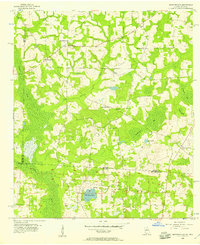 1956 Grooverville1957 Print · USGSThe Georgia-Florida borderlands in the mid-fifties reveal a quiet rural landscape of family cemeteries and timbered bays. Researchers can pinpoint the locations of local schools like Grooverville Sch and the grounds of Simmons Hill Ch Cem.2 unique versions available
 - 1956 Map of Monticello NE, 1957 Print
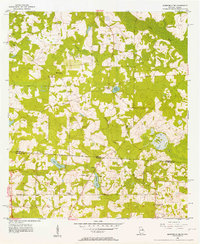 1956 Monticello NE1957 Print · USGSThe Georgia-Florida borderlands come to life in the mid-fifties, showing a rural landscape defined by the Watson Line and timbered creek bottoms. Genealogists can trace family roots through numerous local landmarks like Mallette Cem, Little Flock Cem, and Olive Ch.3 unique versions available
 - 1956 Map of Cairo, 1957 Print
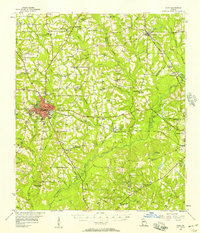 1956 Cairo1957 Print · USGSMid-century Grady and Thomas Counties are defined here by a network of rural churches and the busy rail corridor of the Atlantic Coast Line. Researchers can locate family landmarks like Pierce Chapel, the Silica Strip Mines, and the vanished Midway Sch campus.2 unique versions available
 - 1956 Map of Metcalf, 1957 Print
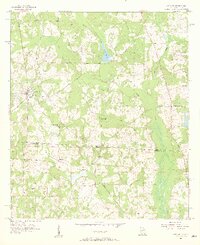 1956 Metcalf1957 Print · USGSCrossing the state line in the mid-fifties, this survey traces the rural settlements and rail siding towns of South Georgia and North Florida. Genealogists can locate family-named landmarks like Hicks Cemetery and the Galilee School.3 unique versions available
 - 1957 Map of Miccosukee NE, 1958 Print
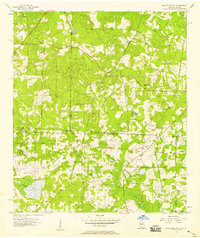 1957 Miccosukee NE1958 Print · USGSThe Georgia-Florida borderlands come to life in the late fifties, showing a rural landscape defined by family cemeteries and country churches. Genealogists can trace roots at Copeland Cem or locate historic meeting places like Trinity Ch and New Hope Ch.2 unique versions available
 - 1957 Map of Thomasville, 1959 Print
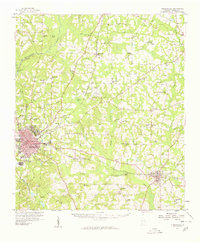 1957 Thomasville1959 Print · USGSThomas County during the late fifties shows a landscape of growing towns and established rail corridors. Genealogists and historians can trace numerous rural communities and landmarks like Merrillville, the Confederate Bridge, and Bethlehem Cem.
 - 1958 Map of Valdosta
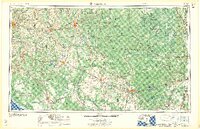 1958 Valdosta1958 Print · USGSSouth Georgia and North Florida are captured here in the mid-fifties, showing the vast Okefenokee Swamp and the vital timber and rail corridors connecting the two states. Researchers can locate the footprint of Moody Air Force Base, trace the Live Oak Perry and Gulf railroad, or find early community sites like Bakers Mill and Paradise Church.
 - 1958 Map of Waycross
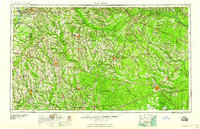 1958 Waycross1958 Print · USGSSoutheast Georgia in the late fifties remains a landscape of deep river basins and vital rail junctions. Genealogists and historians can trace family-named landmarks and rural hubs like Union Church, South Georgia College, and the sprawling Okefenokee Swamp.2 unique versions available
 - 1959 Map of Tallahassee
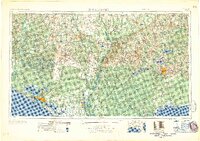 1959 Tallahassee1959 Print · USGSFlorida's Panhandle and the Big Bend region appear here in the mid-fifties, showing a landscape defined by its great river systems and developing coast. Trace the early layout of Panama City, the expansive Apalachicola National Forest, and the coastal St Marks Lighthouse.
 - 1959 Map of Valdosta
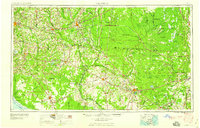 1959 Valdosta1959 Print · USGSThe Georgia-Florida borderlands in the mid-fifties reveal a landscape of massive blackwater swamps and emerging military aviation hubs. Genealogists and historians can trace rail-stop towns like Fargo and Stockton or explore the interior reaches of the Okefenokee Swamp and Billys Island.
End of results
Showing maps 1-16 of 16
Top cities of Thomas County
- Thomasville historical maps
- Boston historical maps
- Meigs historical maps
- Ochlocknee historical maps
- Coolidge historical maps
Frequently asked questions
- What are the different types of historical maps available for Thomas County?
- What is the oldest map of Thomas County?
- Where can I purchase historical maps of Thomas County for my home or office?
- Where can I download high-res historical maps of Thomas County?
- Are there historical topographic maps available for Thomas County?
- Is there historical aerial imagery available for Thomas County?
- Where are historical maps of Thomas County sourced from?