Old Maps of Honolulu, Hawaii for Hiking & Exploration
Hike through history with 42 historic maps of Honolulu. Explore old trails, ghost towns, and forgotten backroads — perfect for outdoor adventurers and local explorers.
- Rediscover forgotten places: Map out old mining camps, roads, and footpaths that no longer exist on modern maps.
- Layer with modern tools: Combine with LiDAR or satellite views to plan hikes through historical terrain.
- Made for exploration: Popular among hikers, overlanders, and local history lovers.
Use these maps to find adventure and explore the hidden past of Honolulu.
Honolulu, HI maps
(42)- 1952 Map of Koko Head, 1954 Print
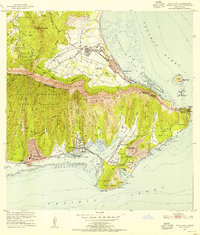 1952 Koko Head1954 Print · USGSSoutheast Oahu's ridgelines and coastal plains are captured here in the early fifties, just as suburban expansion began reaching toward Koko Head. Researchers can trace early residential tracts like Aina Haina and the original footprint of Kuapa Pond or Waimanalo Village.
 - 1953 Map of Honolulu, 1956 Print
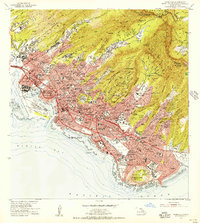 1953 Honolulu1956 Print · USGSMid-century Honolulu is captured here during a time of rapid urban expansion, from the bustling waterfront to the residential ridges. Researchers can trace the footprints of Fort Shafter, the historic Oahu Railway, and the early layout of the University of Hawaii.
 - 1953 Map of Puuloa, 1956 Print
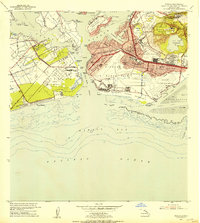 1953 Puuloa1956 Print · USGSHonolulu and Pearl Harbor are documented here during a period of significant military and aviation expansion. Researchers can trace the mid-century footprints of the Damon Tract, locate Nimitz Sch, and explore the layout of Ford Island.
 - 1954 Map of Oahu
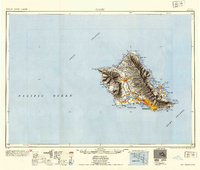 1954 Oahu1954 Print · USGSMid-century Oahu is caught between its plantation roots and its growing role as a Pacific military hub. Trace the OR and L Co rail lines and explore the 1950s footprints of Pearl Harbor, Libbyville, and Waipahu.
 - 1954 Map of Kaneohe, 1956 Print
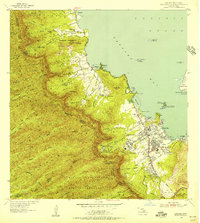 1954 Kaneohe1956 Print · USGSWindward Oahu in the mid-fifties shows a landscape of mountain homesteads and expanding coastal settlements. Trace family land in the Waiahole Homesteads or locate local landmarks like the Territorial Hospital and the Heeia Radio Station.
 - 1959 Map of Koko Head, 1960 Print
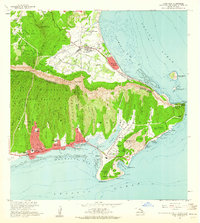 1959 Koko Head1960 Print · USGSSoutheastern Oahu in the late fifties shows a landscape of military bases and coastal growth before the major transformation of its ancient fishponds. Trace early neighborhood developments in Aina Haina and Portlock, or locate landmarks like Kuapa Pond and Koko Crater.
 - 1959 Map of Kaneohe, 1961 Print
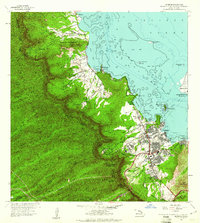 1959 Kaneohe1961 Print · USGSCoastal Oahu in the late fifties shows a mix of growing residential communities and traditional Hawaiian fishponds. Genealogists and historians can trace family roots through the Kokokahi Homesteads, locate old landmarks like St Anns Sch, or study the footprint of the State Hospital.
 - 1959 Map of Honolulu, 1961 Print
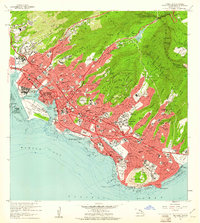 1959 Honolulu1961 Print · USGSMid-century Honolulu is captured here during a transition toward modern statehood, showing a dense city bounded by the Koolau peaks and the Pacific. Trace the footprints of the Oahu Railway and Land Co, Iolani Palace, and Diamond Head.
 - 1959 Map of Puuloa, 1961 Print
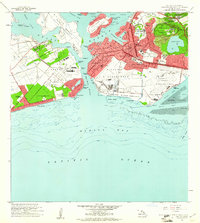 1959 Puuloa1961 Print · USGSThe Pearl Harbor vicinity in the late fifties showcases a landscape transformed by global aviation and defense. Researchers can trace the mid-century footprints of Hickam Village, the Honolulu Observatory, and the historic Salt Evaporators.2 unique versions available
 - 1961 Map of Oahu
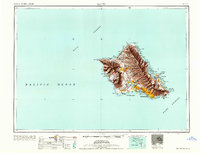 1961 Oahu1961 Print · USGSOahu's strategic landscape is captured here during the early statehood era, showing the balance between burgeoning urban centers and massive military installations. Trace the path of the Oahu Railway and Land Co or locate historical sites like Schofield Barracks and Punchbowl Hill.
 - 1965 Map of Oahu
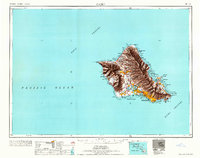 1965 Oahu1965 Print · USGSOahu in the mid-sixties reveals a landscape defined by significant military installations and growing coastal communities. Researchers can trace the infrastructure of Pearl Harbor, Schofield Barracks, and landmarks like Diamond Head.2 unique versions available
 - 1968 Map of Puuloa, 1970 Print
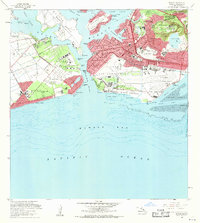 1968 Puuloa1970 Print · USGSThe southern coast of Oahu in the late sixties shows the deep integration of military and civilian life around the harbor. Trace the footprints of Hickam Air Force Base, find the memorial sites for the USS Arizona and USS Utah, or locate neighborhood landmarks like Campbell High Sch and Ewa Beach.2 unique versions available
 - 1968 Map of Kaneohe, 1970 Print
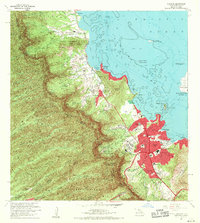 1968 Kaneohe1970 Print · USGSWindward Oahu's coastline and valleys are captured here in the late sixties as traditional homesteads and modern developments meet. Trace family roots and land use through the Waiahole Homesteads, the Byodo-In Temple, and Puohala Village.2 unique versions available
 - 1969 Map of Honolulu, 1971 Print
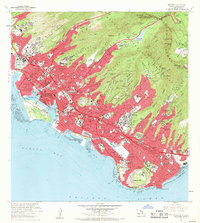 1969 Honolulu1971 Print · USGSIn the late 1960s, Honolulu’s modern skyline was rising against the backdrop of ancient volcanic craters and steep emerald ridges. Researchers can trace the mid-century city layout, identifying landmarks like Diamond Head, the Punchbowl, and the Aloha Tower.2 unique versions available
 - 1969 Map of Koko Head, 1971 Print
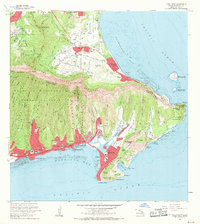 1969 Koko Head1971 Print · USGSSoutheastern Oahu undergoes a period of rapid suburban transformation in the late sixties as new coastal developments take root. Researchers can trace the early footprint of Hawaii Kai, the grounds of the Kawailoa Girls Home, and landmarks like Makapuu Point.
 - 1970 Map of Oahu, 1973 Print
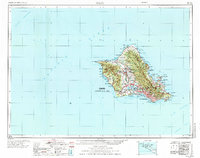 1970 Oahu1973 Print · USGSOahu was entering a new era of suburban and military expansion in the early seventies. Trace the growth of Mililani Town and Pearl City, or locate historic sites like Schofield Barracks and Diamond Head State Monument.2 unique versions available
 - 1978 Map of Koko Head, 1981 Print
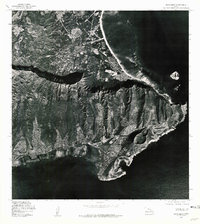 1978 Koko Head1981 Print · USGSSoutheastern Oahu in the late seventies reveals a landscape of rapid suburban growth set against ancient volcanic landmarks. Researchers can trace development patterns around Maunalua Bay and study the terrain of Koko Head and Olomana Peak.
 - 1978 Map of Honolulu, 1981 Print
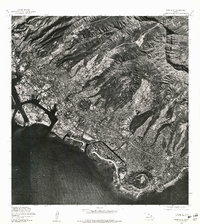 1978 Honolulu1981 Print · USGSThe city of Honolulu is captured in sharp aerial detail during the mid-seventies, showing the urban landscape from the harbor to the mountains. Researchers can trace development patterns around the iconic DIAMOND HEAD crater and the heights of KONAHUANUI.
 - 1981 Map of Puuloa
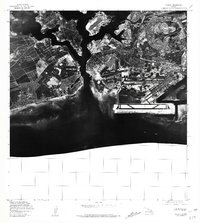 1981 Puuloa1981 Print · USGSThe coastal interface of Honolulu comes into sharp focus in the late 1970s through this aerial orthophotoquad. Researchers can trace the massive scale of 20th-century coastal engineering around Ahua Pt and the rugged shoreline at Keahi Point.
 - 1983 Map of Koko Head
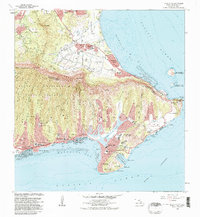 1983 Koko Head1983 Print · USGSSoutheastern Oahu in the early eighties shows a landscape of rapid coastal change and suburban expansion. Researchers can trace the development of Hawaii Kai and locate historical institutions like the Kawailoa Girls Home and Bellows Air Force Station.
 - 1983 Map of Kaneohe
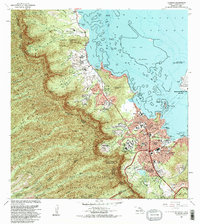 1983 Kaneohe1983 Print · USGSCoastal Oahu in the early 1980s reveals a transition from traditional homesteads to modern suburban centers along the windward shore. Researchers can trace the development of Kaneohe and Puoala Village alongside landmarks like the Byodo-In Temple and Hoomaluhia Park.2 unique versions available
 - 1983 Map of Pearl Harbor, 1984 Print
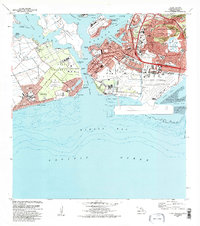 1983 Pearl Harbor1984 Print · USGSPearl Harbor and Honolulu's coast are shown here in the early eighties as a dense network of military installations and suburban growth. Researchers can locate the USS Arizona and USS Utah memorials, or trace the development of Ewa Beach and Aliamanu.2 unique versions available
 - 1983 Map of Honolulu, 1986 Print
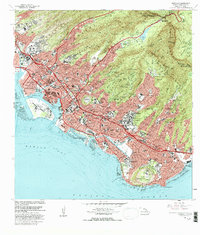 1983 Honolulu1986 Print · USGSHonolulu in the early eighties shows a dense urban sprawl climbing into the volcanic ridges of the Koolau Range. Genealogists and historians can trace the footprints of Kamehameha Schools, Punahou School, and landmark cemeteries like Oahu Cem.
 - 1998 Map of Kaneohe, 2000 Print
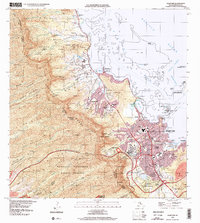 1998 Kaneohe2000 Print · USGSWindward Oahu at the close of the century reveals a landscape where suburban Kaneohe meets historic coastal homesteads and mountain reserves. Trace local genealogy and land use through the Waiahole Homesteads, Byodo-In Temple, and Pu‘ohala Village.
 - 1998 Map of Honolulu, 2000 Print
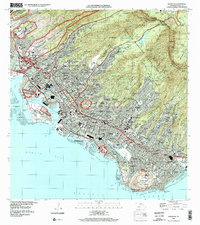 1998 Honolulu2000 Print · USGSHonolulu is captured in the late nineties, showcasing the city's unique geography where volcanic craters like Diamond Head meet a sprawling urban grid. Genealogists and historians can trace institutional landmarks and local neighborhoods from the Royal Mausoleum and Oahu Cemetery to Alewa Heights and Waialae.
Showing maps 1-25 of 42
Top cities near Honolulu
- Waipahu historical maps
- East Honolulu historical maps
- Mililani historical maps
- Pearl City historical maps
- Kailua historical maps
- Kaneohe historical maps
See more
Top neighborhoods of Honolulu
- East Honolulu historical maps
- Kalihi Kai historical maps
- Sand Island historical maps
- Moanalua Gardens historical maps
- Āliamanu historical maps
- Kahala historical maps
See more
Frequently asked questions
- What are the different types of historical maps available for Honolulu?
- What is the oldest map of Honolulu?
- Where can I purchase historical maps of Honolulu for my home or office?
- Where can I download high-res historical maps of Honolulu?
- Are there historical topographic maps available for Honolulu?
- Is there historical aerial imagery available for Honolulu?
- Where are historical maps of Honolulu sourced from?