1900s (20th Century) Maps of Scales Mound Township, Illinois
Explore 15 historic maps of Scales Mound Township from the 1900s (20th Century). These maps offer a rare glimpse into what life looked like during the 1900s — showing old roads, neighborhoods, homes, and landmarks that have changed or disappeared over time.
Whether you're researching your family's past, planning a metal detecting trip, or studying how Scales Mound Township's landscape evolved across the 1900s, these high-resolution maps are a powerful tool for exploring the history of this region.
- Focus on a specific era: All maps on this page are from the 1900s, giving you a focused view of this time period.
- See what’s changed: Compare century-old streets, trails, and buildings to today's modern landscape using overlays and satellite layers.
- Research with precision: Use these maps for genealogy, historical research, land use analysis, or educational projects.
- View, download, or print: Maps are fully viewable online in high resolution, and can be downloaded or printed for your own records.
Start exploring Scales Mound Township's history through authentic maps from the 1900s. This is your window into the past.
Scales Mound Township, IL maps
(15)- 1902 Map of Mineral Point
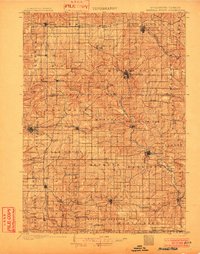 1902 Mineral Point1902 Print · USGSSouthwest Wisconsin and Northern Illinois are mapped here at the height of the regional mining era. Genealogists and historians can trace the rail lines of the Illinois Central to vanished junctions and local landmarks like Meekers Grove, Calamine, and Elk Grove.4 unique versions available
 - 1911 Map of Elizabeth
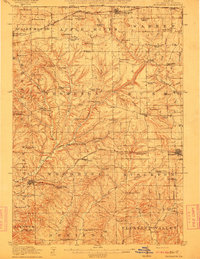 1911 Elizabeth1911 Print · USGSNorthwestern Illinois at the start of the century was a landscape of ridge-top schools and valley-floor mines. Genealogists can trace early homesteads near Salem Church or locate historic mining operations like the Illinois Mines and Skene Mine.2 unique versions available
 - 1911 Map of Galena, 1953 Print
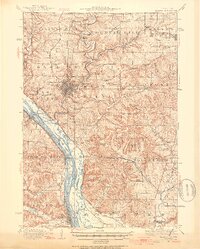 1911 Galena1953 Print · USGSBefore the decline of the local lead industry, this area was a hub of mining and river commerce. Genealogists can trace family names through dozens of rural schools and mines like Blackjack Mine, or locate long-lost river crossings like Gears Ferry.3 unique versions available
 - 1913 Map of Galena
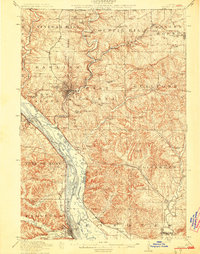 1913 Galena1913 Print · USGSThe mining and river districts of Jo Daviess County are captured here just before the First World War. Genealogists and researchers can locate family-named landmarks like Horseshoe Mound, local schools such as Miners School, and industrial sites like the Hoskin Mine.3 unique versions available
 - 1936 Map of Elizabeth, 1957 Print
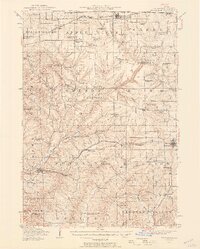 1936 Elizabeth1957 Print · USGSNorthwest Illinois is shown in the mid-1930s as a landscape of isolated mounds and active lead mines. Genealogists can trace rural communities through dozens of local schoolhouses like Equal Rights School and small mining sites such as the Illinois Mine.2 unique versions available
 - 1952 Map of Shullsburg, 1954 Print
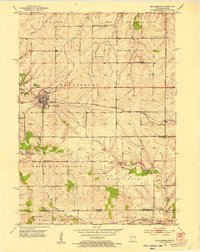 1952 Shullsburg1954 Print · USGSShullsburg and the surrounding driftless area are shown in the early fifties during a period of transition for its lead and zinc mining industry. Researchers can trace historic family burial sites at St Matthews Cem and Monticello Cem or locate rural landmarks like Dunbarton Sch.2 unique versions available
 - 1952 Map of New Diggings, 1954 Print
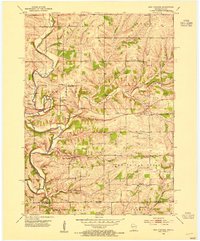 1952 New Diggings1954 Print · USGSLead and zinc mining dominates the landscape of Lafayette County during the early fifties, where extraction sites are woven into a network of rural schools and churches. Genealogists and historians can trace family-named landmarks like Sullivan Sch, O'Brien Sch, and the Shawnee Cem.
 - 1959 Map of Dubuque, 1982 Print
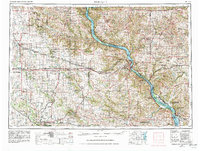 1959 Dubuque1982 Print · USGSThe Tri-State region comes alive in the mid-twentieth century as a hub of river commerce and rail transit. Genealogists and historians can trace the paths of the Illinois Central Gulf through Dubuque or locate the Savanna Ordnance Depot and Lock and Dam No 11.
 - 1961 Map of Dubuque
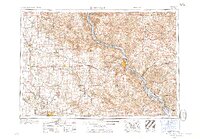 1961 Dubuque1961 Print · USGSThe Tri-State region's river-and-rail landscape is captured here during the early sixties, showing the convergence of Iowa, Illinois, and Wisconsin. Trace mid-century rail lines like the Chicago Great Western Ry and explore sites like the Savanna Ordnance Depot and Backbone State Park.
 - 1962 Map of Dubuque
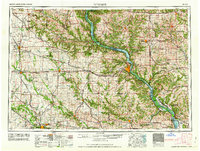 1962 Dubuque1962 Print · USGSThe Tri-State region's river-and-rail economy is captured here in the early sixties, centered on the Mississippi River bluffs. Genealogists and historians can locate Numerous lead and zinc mines, the New Melleray Abbey Monastery, and rural hubs like Saint Olaf.2 unique versions available
 - 1968 Map of Scales Mound West, 1970 Print
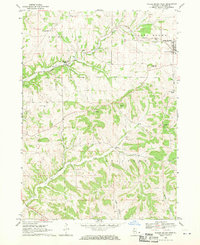 1968 Scales Mound West1970 Print · USGSThe upland ridges and deep hollows of northern Illinois are captured here in the late sixties, where the Illinois Central rail line winds through the valleys. Trace local history through the many rural landmarks like Miners Chapel Cem, Council Hill Station, and Guilford.
 - 1968 Map of Scales Mound East, 1971 Print
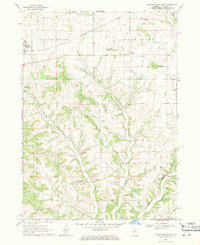 1968 Scales Mound East1971 Print · USGSJo Daviess County in the late sixties shows a landscape of high ridges and driftless valleys defined by the Illinois Central railroad. Genealogists can trace the rural community of Schapville and several unnamed cemeteries near Hells Branch.2 unique versions available
 - 1976 Map of Dubuque
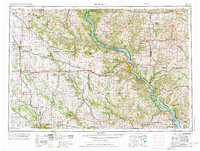 1976 Dubuque1976 Print · USGSThe tri-state borderlands of Iowa, Wisconsin, and Illinois come alive during the mid-seventies, showing a region built on river commerce and mining. Genealogists and historians can trace the paths of the Illinois Central railroad or locate heritage sites like the New Melleray Abbey Monastery and Backbone State Park.
 - 1984 Map of Dubuque North, 1985 Print
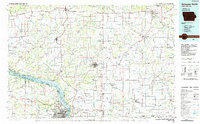 1984 Dubuque North1985 Print · USGSThis Tri-State region was a hub of Midwestern mining and river commerce in the mid-eighties. Researchers can trace the legacy of the Lead District through specific sites like Annie Mine or locate early civic centers such as First Capitol State Park.2 unique versions available
 - 1984 Map of Dubuque South, 1985 Print
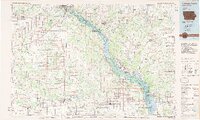 1984 Dubuque South1985 Print · USGSEastern Iowa and Northwest Illinois meet along the Mississippi in the mid-eighties, a landscape defined by river industry and limestone bluffs. Trace the rail lines of the Illinois Central Gulf or explore notable sites like the Savanna Army Depot and Maquoketa Caves State Park.4 unique versions available
End of results
Showing maps 1-15 of 15
Top cities near Scales Mound Township
- Galena historical maps
- Bellevue historical maps
- Darlington historical maps
- Cuba City historical maps
- Stockton historical maps
- Shullsburg historical maps
See more
Top neighborhoods of Scales Mound Township
Frequently asked questions
- What are the different types of historical maps available for Scales Mound Township?
- What is the oldest map of Scales Mound Township?
- Where can I purchase historical maps of Scales Mound Township for my home or office?
- Where can I download high-res historical maps of Scales Mound Township?
- Are there historical topographic maps available for Scales Mound Township?
- Is there historical aerial imagery available for Scales Mound Township?
- Where are historical maps of Scales Mound Township sourced from?