1900s (20th Century) Maps of Hornsby, Illinois
Explore 6 historic maps of Hornsby from the 1900s (20th Century). These maps offer a rare glimpse into what life looked like during the 1900s — showing old roads, neighborhoods, homes, and landmarks that have changed or disappeared over time.
Whether you're researching your family's past, planning a metal detecting trip, or studying how Hornsby's landscape evolved across the 1900s, these high-resolution maps are a powerful tool for exploring the history of this region.
- Focus on a specific era: All maps on this page are from the 1900s, giving you a focused view of this time period.
- See what’s changed: Compare century-old streets, trails, and buildings to today's modern landscape using overlays and satellite layers.
- Research with precision: Use these maps for genealogy, historical research, land use analysis, or educational projects.
- View, download, or print: Maps are fully viewable online in high resolution, and can be downloaded or printed for your own records.
Start exploring Hornsby's history through authentic maps from the 1900s. This is your window into the past.
Hornsby, IL maps
(6)- 1915 Map of Mount Olive
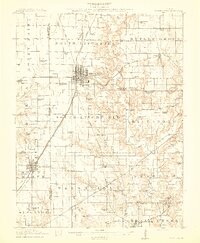 1915 Mount Olive1915 Print · USGSCentral Illinois at the height of the steam era reveals a landscape shaped by competing railroads and dense rural school districts. Genealogists can trace family footprints through numerous local landmarks like Ritchie School, Robbs Mound, and the many lines of the Illinois Traction.3 unique versions available
 - 1944 Map of Mount Olive, 1965 Print
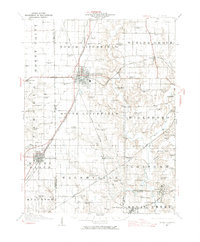 1944 Mount Olive1965 Print · USGSCentral Illinois during the mid-forties reveals a landscape defined by industrial rail junctions and dozens of rural school districts. Genealogists can locate family-named landmarks like Hardenburg School, Ware Grove School, and the community of Walshville along the Chicago and Northwestern tracks.
 - 1958 Map of Decatur, 1971 Print
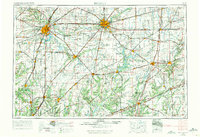 1958 Decatur1971 Print · USGSCentral Illinois in the mid-twentieth century shows a landscape defined by industrial rail hubs and the creation of large reservoirs. Researchers can trace historic corridors like the Penn Central or locate landmarks such as Lincoln Log Cabin State Park and Lake Springfield.3 unique versions available
 - 1961 Map of Decatur
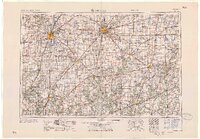 1961 Decatur1961 Print · USGSCentral Illinois in the late fifties was a bustling corridor of rail lines and prairie commerce centered on the state capital. Genealogists and historians can trace the intricate connections between Springfield, Decatur, and dozens of smaller settlements like Nokomis and Arcola.2 unique versions available
 - 1974 Map of Litchfield, 1977 Print
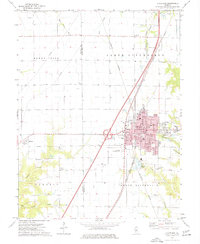 1974 Litchfield1977 Print · USGSLitchfield and its surrounding townships are captured in the mid-seventies, showing the intersection of heavy rail lines and the growing interstate system. Researchers can trace family sites at Karnes Cem and Trinity Ch, or locate local landmarks like the Drive-in Theater and the Litchfield Municipal Airport.
 - 1982 Map of Litchfield
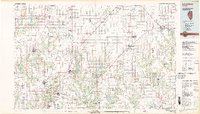 1982 Litchfield1982 Print · USGSThe coal and rail corridors of Central Illinois are captured here in the early eighties as the region balanced industrial mining with its agricultural roots. Researchers can trace family history through sites like Zelmer Memorial Cemetery or the grounds of Blackburn College and the Crown Mine No 1.
End of results
Showing maps 1-6 of 6
Top cities near Hornsby
- Litchfield historical maps
- Carlinville historical maps
- Staunton historical maps
- Gillespie historical maps
- Mount Olive historical maps
- Bunker Hill historical maps
See more
Frequently asked questions
- What are the different types of historical maps available for Hornsby?
- What is the oldest map of Hornsby?
- Where can I purchase historical maps of Hornsby for my home or office?
- Where can I download high-res historical maps of Hornsby?
- Are there historical topographic maps available for Hornsby?
- Is there historical aerial imagery available for Hornsby?
- Where are historical maps of Hornsby sourced from?