1900s (20th Century) Maps of Exeter, Illinois
Explore 11 historic maps of Exeter from the 1900s (20th Century). These maps offer a rare glimpse into what life looked like during the 1900s — showing old roads, neighborhoods, homes, and landmarks that have changed or disappeared over time.
Whether you're researching your family's past, planning a metal detecting trip, or studying how Exeter's landscape evolved across the 1900s, these high-resolution maps are a powerful tool for exploring the history of this region.
- Focus on a specific era: All maps on this page are from the 1900s, giving you a focused view of this time period.
- See what’s changed: Compare century-old streets, trails, and buildings to today's modern landscape using overlays and satellite layers.
- Research with precision: Use these maps for genealogy, historical research, land use analysis, or educational projects.
- View, download, or print: Maps are fully viewable online in high resolution, and can be downloaded or printed for your own records.
Start exploring Exeter's history through authentic maps from the 1900s. This is your window into the past.
Exeter, IL maps
(11)- 1924 Map of Winchester
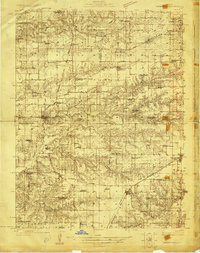 1924 Winchester1924 Print · USGSScott and Morgan counties are shown here during the early twenties as a thriving network of small-town rail stops and rural schools. Genealogists can locate dozens of local landmarks like Oak Grove School, Seminary School, and the junction at Winchester.3 unique versions available
 - 1924 Map of Griggsville, 1959 Print
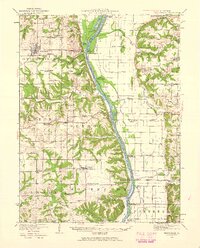 1924 Griggsville1959 Print · USGSPike and Scott counties are captured during the mid-1920s as the Illinois River and Wabash RR defined local commerce. Researchers can trace rural life through dozens of named landmarks like Brush College School, Bethel Church, and Sleight Pond.2 unique versions available
 - 1926 Map of Griggsville
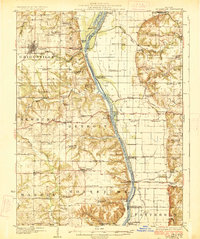 1926 Griggsville1926 Print · USGSThe Illinois River valley in the 1920s is captured here at the height of its rail-and-river economy. Genealogists and historians can trace dozens of rural schools and landmarks including Brush College School, Bethel Church, and the Wabash RR corridor.2 unique versions available
 - 1926 Map of Winchester
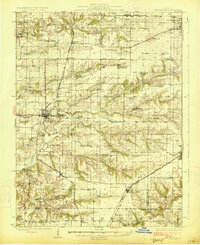 1926 Winchester1926 Print · USGSScott and Morgan counties are shown in the mid-twenties, revealing a landscape of small agricultural villages and decentralized country schools. Genealogists can trace family footprints near Strawns Grove School, the Poor Farm, or the rail depot at Alsey.
 - 1948 Map of Quincy
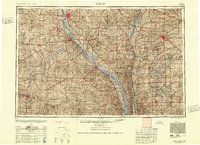 1948 Quincy1948 Print · USGSThe Mississippi and Illinois River valleys are captured at a post-war crossroads as rail and river travel met the expanding highway system. Genealogists can trace family settlements from Quincy to Hannibal and smaller towns like Vandalia and Jerseyville.2 unique versions available
 - 1956 Map of Quincy, 1967 Print
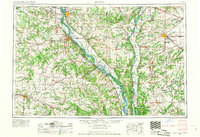 1956 Quincy1967 Print · USGSThe river and rail corridors of the Illinois-Missouri border are documented here during the mid-1950s. Researchers can trace historic river landings and regional transit hubs from Quincy and Hannibal to smaller settlements like Meredosia and Roodhouse.3 unique versions available
 - 1980 Map of Florence, 1981 Print
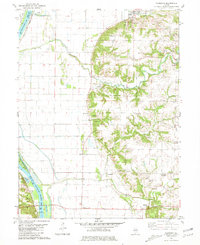 1980 Florence1981 Print · USGSThe Illinois River valley in the early 1980s shows a landscape of river-and-rail commerce and deep-rooted family history. Genealogists can trace numerous family-named landmarks including Hill-Crest Cem, Browns Mound, and West Rutledge Baker Cem.
 - 1983 Map of Winchester
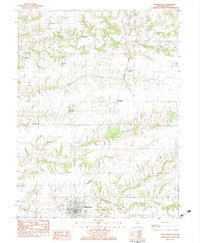 1983 Winchester1983 Print · USGSScott County agriculture and small-town life define this region in the early eighties. Genealogists and historians can trace family plots at Bean Cem or St Mark Cem and follow the Burlington Northern line through Merritt.
 - 1985 Map of Meredosia, 1988 Print
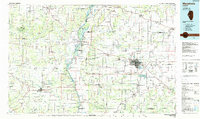 1985 Meredosia1988 Print · USGSWest Central Illinois in the mid-eighties was a landscape of deep-rooted river towns and historic educational institutions. Genealogists and historians can trace family ties through Diamond Grove Cem, locate MacMurray College in Jacksonville, or study the river engineering at La Grange Lock and Dam.
 - 1990 Map of Meredosia
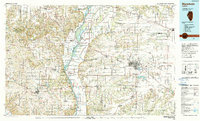 1990 Meredosia1990 Print · USGSThe Illinois River valley and its surrounding farm towns are captured here in the 1990s. Trace the intricate rail lines of the Norfolk Southern Railway and find local landmarks like Diamond Grove Cem or the Meredosia National Wildlife Refuge.
 - 1998 Map of Florence, 2003 Print
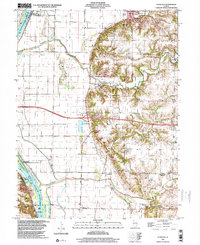 1998 Florence2003 Print · USGSIn the late nineties, the Illinois River valley south of Naples remained a landscape of protective levees and scattered upland hamlets. Researchers can trace numerous family burial sites like Exeter Cem and landmarks such as Browns Mound or the Norfolk Southern rail corridor.
End of results
Showing maps 1-11 of 11
Top cities near Exeter
- Jacksonville historical maps
- Winchester historical maps
- Griggsville historical maps
- Meredosia historical maps
- Bluffs historical maps
- Chapin historical maps
See more
Frequently asked questions
- What are the different types of historical maps available for Exeter?
- What is the oldest map of Exeter?
- Where can I purchase historical maps of Exeter for my home or office?
- Where can I download high-res historical maps of Exeter?
- Are there historical topographic maps available for Exeter?
- Is there historical aerial imagery available for Exeter?
- Where are historical maps of Exeter sourced from?