1900s (20th Century) Maps of Paulton, Illinois
Explore 12 historic maps of Paulton from the 1900s (20th Century). These maps offer a rare glimpse into what life looked like during the 1900s — showing old roads, neighborhoods, homes, and landmarks that have changed or disappeared over time.
Whether you're researching your family's past, planning a metal detecting trip, or studying how Paulton's landscape evolved across the 1900s, these high-resolution maps are a powerful tool for exploring the history of this region.
- Focus on a specific era: All maps on this page are from the 1900s, giving you a focused view of this time period.
- See what’s changed: Compare century-old streets, trails, and buildings to today's modern landscape using overlays and satellite layers.
- Research with precision: Use these maps for genealogy, historical research, land use analysis, or educational projects.
- View, download, or print: Maps are fully viewable online in high resolution, and can be downloaded or printed for your own records.
Start exploring Paulton's history through authentic maps from the 1900s. This is your window into the past.
Paulton, IL maps
(12)- 1909 Map of West Frankfort
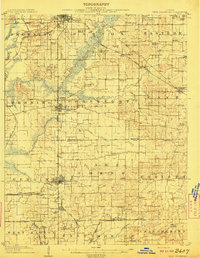 1909 West Frankfort1909 Print · USGSSouthern Illinois at the peak of the coal and rail boom is captured here across Franklin and Williamson counties. Genealogists can locate family landmarks like Coon Ridge School, Mormon Church, and small settlements such as Smothersville or Deering City.2 unique versions available
 - 1941 Map of West Frankfort, 1959 Print
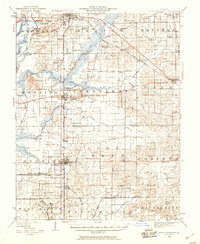 1941 West Frankfort1959 Print · USGSSouthern Illinois coal country is shown here just before the mid-century, where a dense rail network connects thriving mining towns. Genealogists can trace family roots through numerous country landmarks like Coon Ridge School, Williams Prairie Church, and Brush Prairie School.
 - 1949 Map of Paducah
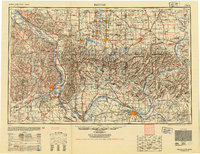 1949 Paducah1949 Print · USGSThe confluence of the Ohio, Mississippi, Tennessee, and Cumberland rivers at the close of the 1940s reveals a region bound by water and rail. Researchers can trace historic river landings, timberlands in the Shawnee National Forest, and the coal-mining infrastructure around West Frankfort and Herrin.2 unique versions available
 - 1950 Map of Paducah
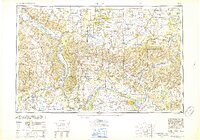 1950 Paducah1950 Print · USGSThe confluence of the great midwestern rivers defines this mid-century landscape at the intersection of Illinois, Kentucky, and Missouri. Genealogists and historians can trace the rail-and-river economy through the hubs of Paducah, Cairo, and Metropolis or locate family roots near the Wildcat Hills.
 - 1954 Map of Paducah
 1954 Paducah1954 Print · USGSSouthern Illinois and Western Kentucky intersect at the great river confluences during this mid-century era of rail and river industry. Genealogists and historians can trace family roots and commerce through river towns like Cairo, Metropolis, and Golconda, or along the tracks of the Illinois Central Railroad.2 unique versions available
 - 1961 Map of Paducah
 1961 Paducah1961 Print · USGSThe Lower Ohio Valley at mid-century is a landscape defined by its great rivers and newly formed reservoirs. Researchers can trace the riverfronts of Paducah and Metropolis, or locate smaller settlements like Old Shawneetown and Cave in Rock along the banks.2 unique versions available
 - 1963 Map of Pittsburg, 1964 Print
 1963 Pittsburg1964 Print · USGSSouthern Illinois at the dawn of the sixties shows a landscape of coal mining and scattered farming communities. Researchers can trace family sites at Williams Prairie Ch, locate the Freeman No 4 Mine, or follow the Missouri Pacific rail line.
 - 1963 Map of West Frankfort, 1966 Print
 1963 West Frankfort1966 Print · USGSSouthern Illinois coal country is caught at a mid-century peak in this survey of Franklin and Williamson counties. Researchers can trace vanished rail spurs, family-named plots like Rea Cem, and mining sites from the Orient No 5 Mine to White Ash.
 - 1964 Map of Paducah
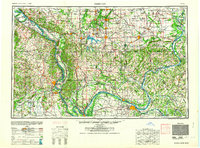 1964 Paducah1964 Print · USGSThe river-and-rail corridor of Southern Illinois and Western Kentucky is captured here during the height of the mid-century industrial era. Genealogists and researchers can trace local landmarks across several counties, from the rail yards of Paducah to the waters of Crab Orchard Lake and Kentucky Reservoir.2 unique versions available
 - 1984 Map of West Frankfort, 1985 Print
 1984 West Frankfort1985 Print · USGSSouthern Illinois at the peak of late-century coal and oil production reveals a complex landscape of industry and conservation. Genealogists and historians can trace rail-served mining hubs like Orient No. 3 Mine and the historic riverfront at Old Shawneetown.
 - 1987 Map of West Frankfort
 1987 West Frankfort1987 Print · USGSSouthern Illinois in the late eighties shows a landscape defined by the coal and river economies. Researchers can trace the extensive Strip Mine works and historic settlements like Shawneetown and Carriers Mills along the Illinois Central Railroad.
 - 1987 Map of Paducah, 1988 Print
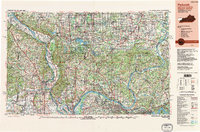 1987 Paducah1988 Print · USGSThe Lower Ohio Valley and the Illinois Ozarks come alive in this late twentieth-century regional survey. Genealogists and local historians can trace river-town roots and state park landmarks from Metropolis to Cape Girardeau and Trail of Tears State Park.
End of results
Showing maps 1-12 of 12
Top cities near Paulton
- Marion historical maps
- Herrin historical maps
- West Frankfort historical maps
- Benton historical maps
- Johnston City historical maps
- Carrier Mills historical maps
See more
Frequently asked questions
- What are the different types of historical maps available for Paulton?
- What is the oldest map of Paulton?
- Where can I purchase historical maps of Paulton for my home or office?
- Where can I download high-res historical maps of Paulton?
- Are there historical topographic maps available for Paulton?
- Is there historical aerial imagery available for Paulton?
- Where are historical maps of Paulton sourced from?