Old Maps of Allen County, Indiana
Explore 146 old maps of Allen County, spanning from 1914 to today. These high-resolution historic maps reveal how streets, neighborhoods, landmarks, and natural features evolved over time — perfect for genealogy, metal detecting, research, and local history exploration.
What you can do with these maps:
- See how Allen County changed over time: Compare historical maps to modern-day views to trace roads, homesites, rail lines & more.
- View detailed metadata: Each map includes creators, publishers, year, scale, and archive source.
- Overlay maps with satellite & LiDAR: Visualize the past alongside modern tools to explore terrain & human change.
- Trusted historical sources: Maps sourced from the USGS, Library of Congress, and other archives.
- Access maps your way: View online, download high-res files, or order prints for personal or research use.
Start exploring old maps of Allen County to uncover forgotten places, hidden landmarks, and the deep history beneath your feet.
Allen County, IN maps
(146)- 1914 Map of Bryan, 1942 Print
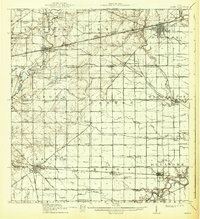 1914 Bryan1942 Print · USGSNorthwest Ohio at the height of the steam era reveals a landscape of thriving rail towns and dense country school districts. Researchers can trace the original routes of the Wabash RR and Electric R R through Bryan and Hicksville, while locating vanished rural sites like Crazy School and Ziegler.
 - 1943 Map of Bryan
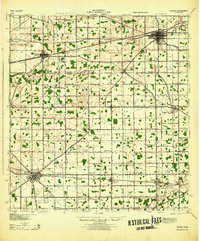 1943 Bryan1943 Print · USGSNorthwest Ohio during the mid-century is captured here as a landscape of grid-roads, small hamlets, and heavy rail traffic. Genealogists and local historians can trace family roots through numerous rural landmarks like Bethel Ch, Bratton Sch, and the hamlet of Farmer.
 - 1953 Map of Fort Wayne, 1963 Print
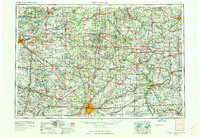 1953 Fort Wayne1963 Print · USGSNortheast Indiana and its neighboring borderlands in Michigan and Ohio appear here during a peak era of rail and road expansion. Researchers can trace the massive rail networks of the Nickel Plate Road and Wabash or locate lakeside landmarks like Lake Wawasee and Clear Lake.4 unique versions available
 - 1953 Map of Muncie, 1966 Print
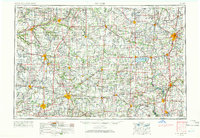 1953 Muncie1966 Print · USGSIndiana and Ohio borderlands thrive in the early fifties, showing a landscape defined by manufacturing cities and an intensive railroad network. Genealogists can trace family roots across the Indiana-Ohio line through Muncie, Celina, and Portland via the Pennsylvania railroad.5 unique versions available
 - 1955 Map of Ege, 1957 Print
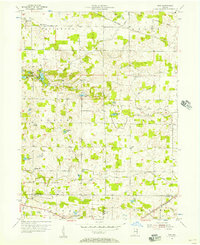 1955 Ege1957 Print · USGSNoble County's glacial landscape is captured here in the mid-1950s, showing a rural network of small farming communities and rail-side settlements. Researchers can trace family history through sites like Bakerstown, Rehoboth Ch, and cemeteries including Hooper Cem and Grays Cem.
 - 1956 Map of Muncie
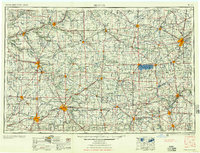 1956 Muncie1956 Print · USGSEastern Indiana and western Ohio are shown at a peak of rail-driven industry in the mid-fifties. Genealogists and rail historians can trace the paths of the Pennsylvania RR through Muncie or locate landmarks like Lake Saint Marys (Grand Lake Reservoir) and Frances Slocum State Forest.
 - 1956 Map of Fort Wayne
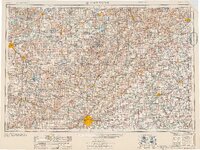 1956 Fort Wayne1956 Print · USGSThe tri-state borderlands of Indiana, Michigan, and Ohio are captured here in the mid-fifties, centered on the growing industrial hub of Fort Wayne. Researchers can trace the heavy rail lines of the New York Central and Pennsylvania alongside prominent water features like Lake Wawasee and the Maumee River.2 unique versions available
 - 1956 Map of Fort Wayne West, 1958 Print
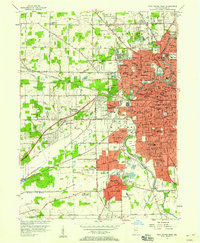 1956 Fort Wayne West1958 Print · USGSFort Wayne and its western suburbs thrive in the mid-fifties at the historic meeting of the three rivers. Researchers can trace the development of Indian Village, locate ancestral plots in Lindenwood Cemetery, or identify vanished landmarks like St Vincents Orphan Home.
 - 1956 Map of Fort Wayne East, 1958 Print
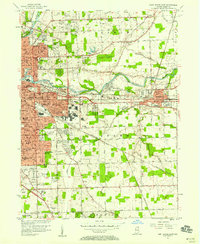 1956 Fort Wayne East1958 Print · USGSFort Wayne's eastern suburbs and industrial corridors expanded rapidly during the mid-fifties, centered on the convergence of the three rivers. Researchers can find numerous parochial institutions like Martini Ch and St Peter Sch alongside landmarks like Zollner Stadium.
 - 1956 Map of Cedarville, 1958 Print
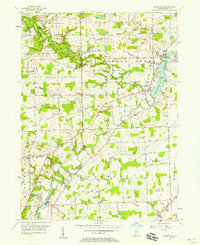 1956 Cedarville1958 Print · USGSAllen County’s river valleys and growing suburbs come into focus during the mid-fifties as infrastructure like the Cedarville Reservoir transformed the local landscape. Genealogists and historians can trace institutional sites like Sr Concordia College and old family-named landmarks like Viberg Ch Cem.
 - 1957 Map of Auburn, 1959 Print
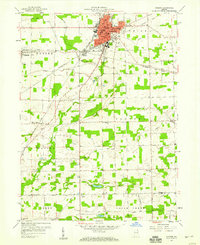 1957 Auburn1959 Print · USGSDeKalb County in the late fifties is a landscape defined by its vital rail junctions and organized farm townships. Genealogists can trace family names and sites across Auburn Junction, Roselawn Cem, and rural schoolhouses like Harrison Sch.
 - 1957 Map of Maples, 1959 Print
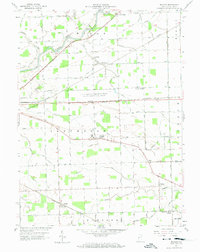 1957 Maples1959 Print · USGSEastern Allen County was a crossroads of major rail lines and military logistics during the late fifties. You can trace the perimeter of the Casad Ordnance Depot or locate early community centers like St Louis Academy and Maples.3 unique versions available
 - 1957 Map of Huntertown, 1959 Print
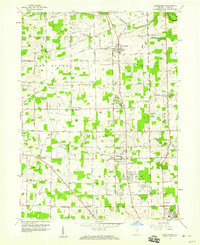 1957 Huntertown1959 Print · USGSNorthern Allen County in the late fifties shows a rural landscape transitioning toward urban growth. Genealogists and historians can locate old rural settlements like Royville, the site of Dunn Mill, and the grounds of the Byron Sanatorium.
 - 1957 Map of Garrett, 1959 Print
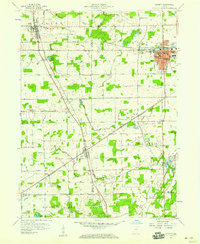 1957 Garrett1959 Print · USGSDeKalb and Noble County landscapes converge here in the late fifties, showcasing a robust railroad economy centered on Garrett. Genealogists and local historians can trace rural family roots through landmarks like Bethlehem Ch, Fitch, and the Swan Cem.
 - 1957 Map of Churubusco, 1959 Print
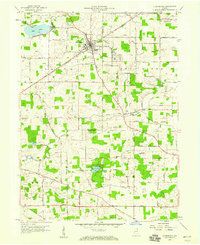 1957 Churubusco1959 Print · USGSWhitley and Allen counties in the late fifties center on the rail-and-highway crossroads at Churubusco. Researchers can trace family history at Jeffries Cem or explore riverside history at the La Balme Monument and Eet River Fort Monument.
 - 1958 Map of Hicksville, 1959 Print
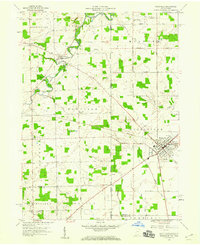 1958 Hicksville1959 Print · USGSThe Indiana-Ohio borderlands at the end of the 1950s showcase a landscape of river-bend settlements and cross-state rail traffic. Genealogists can trace family footprints at Wartenbe Cem and Evergreen Cem, or locate mid-century landmarks like the County Fairgrounds and Coburn Corners Ch.4 unique versions available
 - 1958 Map of Grabill, 1959 Print
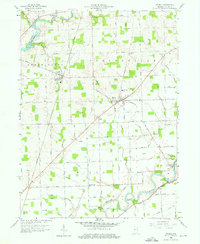 1958 Grabill1959 Print · USGSAllen County farm country and small-town life are documented here in the late fifties. Genealogists and researchers can trace family roots through Grabill, Harlan, and the Salem Cem Ch, or follow the path of the old Wabash and Erie Canal.3 unique versions available
 - 1958 Map of Woodburn North, 1960 Print
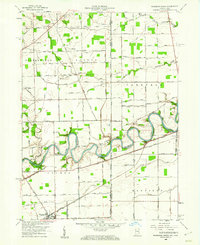 1958 Woodburn North1960 Print · USGSThe Indiana-Ohio borderlands come into focus in the late 1950s, showing a landscape defined by the winding Maumee River and the Wabash Railroad. Genealogists and local historians can locate early landmarks like Bluecast Spring, Hurstown, and Diehl Cem.4 unique versions available
 - 1958 Map of Saint Joe, 1960 Print
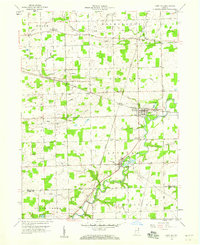 1958 Saint Joe1960 Print · USGSDeKalb County and northern Allen County are shown in the late fifties as the St. Joseph River valley maintained its rural character. Genealogists can locate family names at Cosper Cem and Watson Cem or trace the Baltimore and Ohio rail line through Saint Joe.3 unique versions available
 - 1958 Map of Woodburn South, 1960 Print
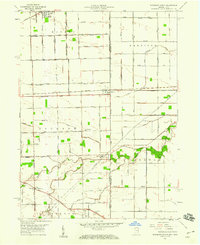 1958 Woodburn South1960 Print · USGSSettled farmland along the Indiana-Ohio border in the late fifties reveals a landscape defined by rail and drainage. Trace the New York Chicago and St Louis line through Woodburn and Edgerton, or locate the Township Sch and Sugar Ridge Cem.3 unique versions available
 - 1960 Map of Dixon, 1961 Print
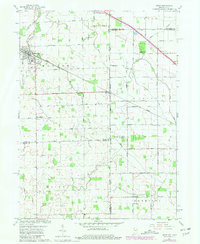 1960 Dixon1961 Print · USGSThe Indiana-Ohio borderlands come into focus in the early sixties, showing a landscape shaped by rural townships and the CONRAIL railroad. Local historians can trace family roots at Odd Fellows Cem and Alpha Cem or locate old community centers like Mentzer Ch.5 unique versions available
 - 1961 Map of Arcola, 1963 Print
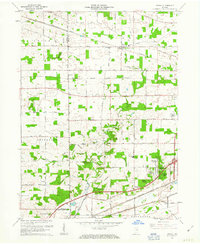 1961 Arcola1963 Print · USGSAllen County in the early sixties showcases a rural landscape evolving with new residential developments and established rail corridors. Genealogists can trace family heritage at St Patricks Cem, Bayliss Cem, or through the early settlement of Arcola and Dunfee.2 unique versions available
 - 1961 Map of Zanesville, 1963 Print
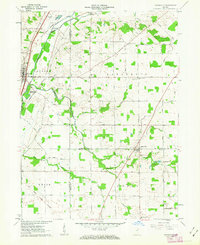 1961 Zanesville1963 Print · USGSZanesville and Roanoke are documented in the early sixties at a fascinating intersection of colonial-era surveying and mid-century rail infrastructure. Genealogists and historians can locate the Old Indian Treaty Boundary and several family landmarks like Shank Cem and Monson Chapel.
 - 1961 Map of Hoagland, 1963 Print
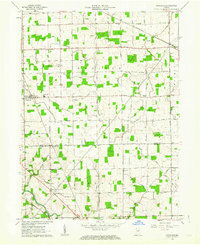 1961 Hoagland1963 Print · USGSNortheast Indiana's agricultural heartland is documented here in the early sixties, centered on the village of Hoagland. Researchers can trace family history through numerous rural landmarks like Massilon Cem, St Johns Sch, and the Marquardt Ch.3 unique versions available
 - 1962 Map of Poe
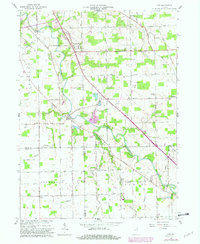 1962 Poe1962 Print · USGSSouthern Allen County was a landscape of fertile drainage and river crossings in the early sixties. Researchers can trace family roots at Hessen Cassel, locate burial sites like Bethel Cem, and see the St Marys River before modern expansion.4 unique versions available
Showing maps 1-25 of 146
Top cities of Allen County
- Fort Wayne historical maps
- Aboite historical maps
- New Haven historical maps
- Leo-Cedarville historical maps
- Huntertown historical maps
- Woodburn historical maps
See more
Frequently asked questions
- What are the different types of historical maps available for Allen County?
- What is the oldest map of Allen County?
- Where can I purchase historical maps of Allen County for my home or office?
- Where can I download high-res historical maps of Allen County?
- Are there historical topographic maps available for Allen County?
- Is there historical aerial imagery available for Allen County?
- Where are historical maps of Allen County sourced from?