Old Maps of Clark County, Indiana
Explore 110 old maps of Clark County, spanning from 1905 to today. These high-resolution historic maps reveal how streets, neighborhoods, landmarks, and natural features evolved over time — perfect for genealogy, metal detecting, research, and local history exploration.
What you can do with these maps:
- See how Clark County changed over time: Compare historical maps to modern-day views to trace roads, homesites, rail lines & more.
- View detailed metadata: Each map includes creators, publishers, year, scale, and archive source.
- Overlay maps with satellite & LiDAR: Visualize the past alongside modern tools to explore terrain & human change.
- Trusted historical sources: Maps sourced from the USGS, Library of Congress, and other archives.
- Access maps your way: View online, download high-res files, or order prints for personal or research use.
Start exploring old maps of Clark County to uncover forgotten places, hidden landmarks, and the deep history beneath your feet.
Clark County, IN maps
(110)- 1905 Map of Prospect, 1962 Print
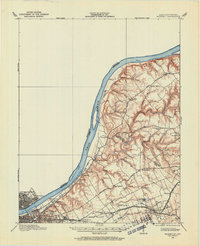 1905 Prospect1962 Print · USGSThe Ohio River corridor north of Louisville comes alive in the early 1900s, showing a landscape of river landings and new electric railways. Researchers can find old landmarks like the Lakeland Asylum, the Kentucky Military Institute, and the Antioch Church.
 - 1912 Map of Prospect
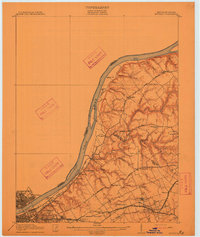 1912 Prospect1912 Print · USGSThe northeastern outskirts of Louisville and the riverbanks of the Ohio River appear here in the early twentieth century. Researchers can trace the development of suburban settlements like Anchorage and St Matthews or locate the sprawling grounds of the Lakeland Asylum.3 unique versions available
 - 1932 Map of La Grange
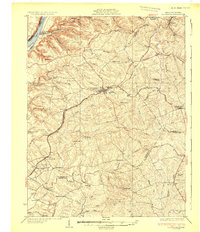 1932 La Grange1932 Print · USGSThe Bluegrass region in the early thirties reveals a landscape defined by the Louisville and Nashville Railroad and the Ohio River. Genealogists can locate family landmarks like Henrysville Cemetery and several rural schoolhouses including Sweeney Sch.
 - 1937 Map of Jeffersonville
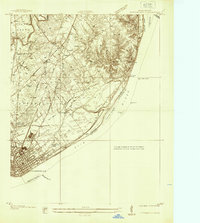 1937 Jeffersonville1937 Print · USGSJeffersonville and the northern banks of the Ohio River appear here in the late 1930s, documenting a landscape shaped by early industry and river trade. Researchers can trace the path of the Indiana Railroad (Electric Line) and locate landmarks like Asbury Chapel and Walnut Ridge Cemetery.
 - 1937 Map of Charlestown
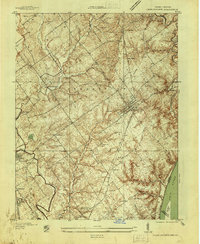 1937 Charlestown1937 Print · USGSClark County during the late thirties shows a landscape of rail-connected towns and rural institutions. Genealogists and historians can trace Crab College, the Clark Co Asylum, and family sites like Bottorff Cem and Tunnel Mill.
 - 1938 Map of Owen
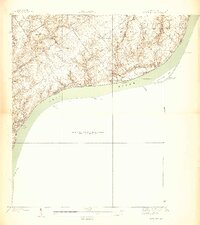 1938 Owen1938 Print · USGSThe Indiana riverfront near Charlestown in the late thirties is defined by active river landings and the sprawling Clark Military Grant. Genealogists can trace family footprints through community sites like Salem Ch, Rose Island, and the Golden Valley Sch.
 - 1938 Map of Speed
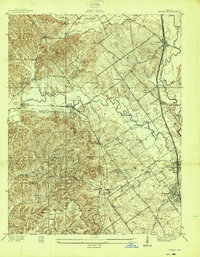 1938 Speed1938 Print · USGSSouthern Indiana was a busy junction of steam and electric rail at the close of the 1930s. Researchers can trace the dual paths of the Pennsylvania Railroad and Indiana Railroad (Electric) through Sellersburg, Speed, and Memphis.
 - 1939 Map of Bethlehem
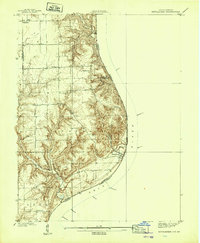 1939 Bethlehem1939 Print · USGSSouthern Indiana river life and upland farming are frozen in time just before the war. Genealogists and local historians can trace family roots through markers like Turner Cem, Elizabeth Ch, and the rural Fairview Sch.2 unique versions available
 - 1939 Map of New Albany
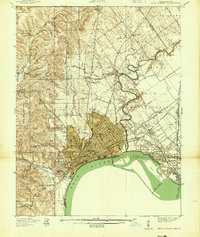 1939 New Albany1939 Print · USGSThe industrial riverfront of southern Indiana comes alive in this pre-war survey of the Ohio River bend. Genealogists and historians can trace the early footprints of New Albany and Clarksville, locating the County Infirmary, St Marys Cem, and the massive Jeffersonville Military Reservation.
 - 1941 Map of Borden
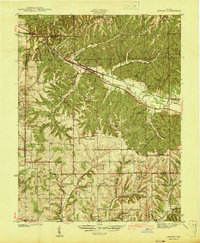 1941 Borden1941 Print · USGSIn the hills of Clark and Floyd counties just before the war, small crossroads like Navilleton and Starlight were the heart of rural life. Genealogists can trace early homesteads through family landmarks like Fisher Cem and Goss Sch near the Muddy Fork railroad line.
 - 1946 Map of Jeffersonville
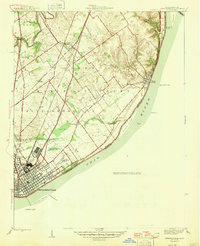 1946 Jeffersonville1946 Print · USGSSouthern Indiana sits at a crossroads of river and rail during the mid-1940s, as the industrial grid of Jeffersonville meets the rural Clark Military Grant. Researchers can trace family roots at Walnut Ridge Cem or locate vanished schoolhouses like Lane Sch and Middle Road Sch.2 unique versions available
 - 1946 Map of New Albany
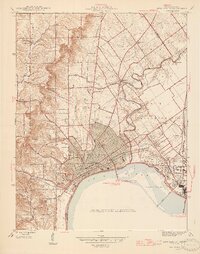 1946 New Albany1946 Print · USGSThe Indiana shoreline of the Ohio River bustles with mid-century activity as railroads and bridges connect New Albany to the south. Researchers can trace historic local sites like Blackiston Mill, the County Infirmary, and Graceland Cem near the Falls of the Ohio.2 unique versions available
 - 1947 Map of Speed
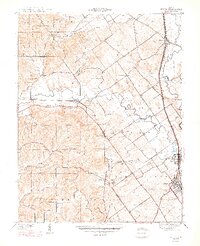 1947 Speed1947 Print · USGSClark County's southern corridor comes alive in the late 1930s and 40s, featuring a dense network of interurban and steam railroads. Trace family roots through rural landmarks like College Hill Sch, Ebenezer Ch, and Smith Cem near the rail-side town of Speed.2 unique versions available
 - 1948 Map of Bethlehem
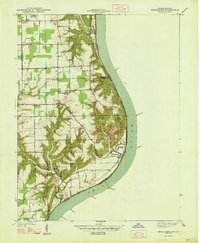 1948 Bethlehem1948 Print · USGSThe Indiana-Kentucky borderlands along the great bend of the Ohio River appear here in the late thirties. Local historians can trace the foundations of riverside life at Bethlehem and Miles Point, or find family-named landmarks like Turner Cem and Elizabeth Ch.2 unique versions available
 - 1948 Map of Owen
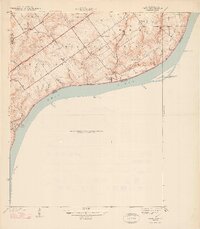 1948 Owen1948 Print · USGSThe Indiana shoreline of the Ohio River is captured here in the late thirties, just as the local landscape was beginning to shift for the war effort. Genealogists can locate family-named landmarks and institutions like Runyantown, Beech Grove Sch, and Rose Island Park.2 unique versions available
 - 1949 Map of Henryville
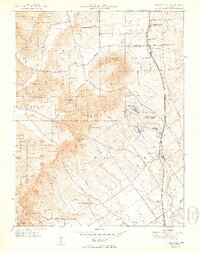 1949 Henryville1949 Print · USGSSouthern Indiana's timbered hills and rural townships are captured here just after the war, showing the deep integration of state conservation and local settlement. Trace family roots at Mt Zion Ch and Mountain Grove Cem, or follow the Pennsylvania rail line through Henryville and Underwood.2 unique versions available
 - 1950 Map of Charlestown, 1952 Print
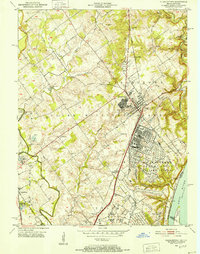 1950 Charlestown1952 Print · USGSSouthern Indiana was undergoing a major industrial and military transformation at mid-century as the Cold War intensified. Local researchers can trace the massive Indiana Arsenal, the path of the Pennsylvania RR, and family history at St Michael Ch or Pleasant Grove Cem.
 - 1950 Map of New Albany, 1955 Print
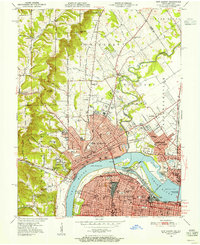 1950 New Albany1955 Print · USGSThe riverfront communities of Indiana and Kentucky meet at the Ohio River during a mid-century period of heavy industry and rail expansion. Genealogists and local historians can locate early burial grounds like Portland Cem, institutional landmarks such as the County Infirmary, and long-standing schools including McCulloch Sch.
 - 1951 Map of Jeffersonville
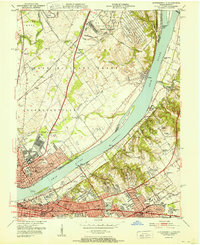 1951 Jeffersonville1951 Print · USGSThe Ohio River corridor near the Falls was a bustling hub of mid-century industry and suburban growth just after the war. Local historians can trace the footprints of the Indiana Arsenal, the Big Four RR Bridge, and old family landmarks from Claysburg to St Matthews.
 - 1951 Map of New Albany
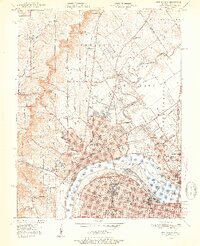 1951 New Albany1951 Print · USGSThe Ohio River waterfront at mid-century shows the industrial heart of New Albany and Louisville linked by massive river and rail works. Genealogists can trace family roots through neighborhood landmarks like Blackiston Mill, Portland Cem, and the Silvercrest State Hospital.2 unique versions available
 - 1953 Map of Bethlehem, 1955 Print
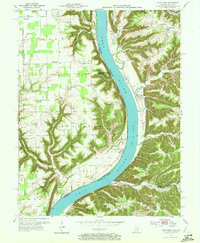 1953 Bethlehem1955 Print · USGSThe Ohio River border between Indiana and Kentucky is documented here in the early fifties, showing the ferry and landing points of the era. Researchers can locate family landmarks like Elizabeth Ch, Wises Landing, and the Mahoney Cem.6 unique versions available
 - 1954 Map of La Grange, 1956 Print
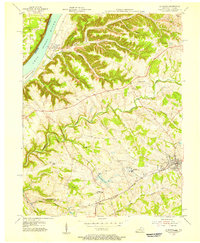 1954 La Grange1956 Print · USGSMid-century Oldham County is captured here as a landscape of rail-connected towns and riverfront settlements. Genealogists and historians can trace the foundations of La Grange and Buckner, alongside landmarks like Valley Rest Cem and the La Grange State Reformatory.
 - 1954 Map of Owen, 1956 Print
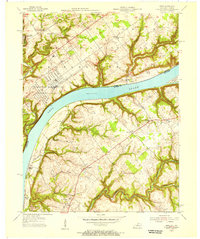 1954 Owen1956 Print · USGSThe Ohio River corridor comes alive in the mid-1950s, bridging the gap between Indiana military sites and Kentucky ridge-top communities. Researchers can locate family landmarks such as Salem Cem, the Tunnel Mill Scout Camp, and Liberty Sch.
 - 1955 Map of South Boston, 1956 Print
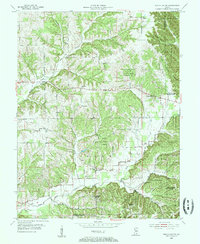 1955 South Boston1956 Print · USGSThe rural borderlands of Washington and Clark Counties are captured here in the mid-fifties, during a time of active country parishes and small local schools. Genealogists and historians can locate vanished landmarks like Polk Sch, the Mead Cem, and the village of South Boston.4 unique versions available
 - 1955 Map of New Albany, 1956 Print
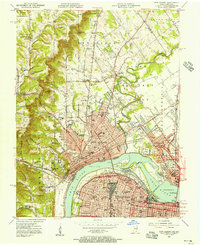 1955 New Albany1956 Print · USGSThe Ohio River separates the growing industrial hubs of New Albany and Louisville in the mid-fifties. Researchers can trace the extensive rail networks and local institutions of the day, from the Falls of the Ohio to the Silvercrest State Hospital.
Showing maps 1-25 of 110
Top cities of Clark County
- Jeffersonville historical maps
- Clarksville historical maps
- Charlestown historical maps
- Sellersburg historical maps
- Henryville historical maps
- Owen historical maps
See more
Frequently asked questions
- What are the different types of historical maps available for Clark County?
- What is the oldest map of Clark County?
- Where can I purchase historical maps of Clark County for my home or office?
- Where can I download high-res historical maps of Clark County?
- Are there historical topographic maps available for Clark County?
- Is there historical aerial imagery available for Clark County?
- Where are historical maps of Clark County sourced from?