1950s Maps of Clark County, Indiana
Explore 15 historic maps of Clark County from the 1950s. These maps offer a rare glimpse into what life looked like during the 1950s — showing old roads, neighborhoods, homes, and landmarks that have changed or disappeared over time.
Whether you're researching your family's past, planning a metal detecting trip, or studying how Clark County's landscape evolved across the 1950s, these high-resolution maps are a powerful tool for exploring the history of this region.
- Focus on a specific era: All maps on this page are from the 1950s, giving you a focused view of this time period.
- See what’s changed: Compare century-old streets, trails, and buildings to today's modern landscape using overlays and satellite layers.
- Research with precision: Use these maps for genealogy, historical research, land use analysis, or educational projects.
- View, download, or print: Maps are fully viewable online in high resolution, and can be downloaded or printed for your own records.
Start exploring Clark County's history through authentic maps from the 1950s. This is your window into the past.
Clark County, IN maps
(15)- 1950 Map of Charlestown, 1952 Print
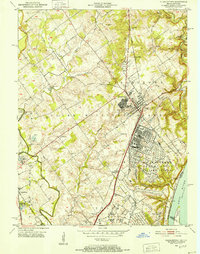 1950 Charlestown1952 Print · USGSSouthern Indiana was undergoing a major industrial and military transformation at mid-century as the Cold War intensified. Local researchers can trace the massive Indiana Arsenal, the path of the Pennsylvania RR, and family history at St Michael Ch or Pleasant Grove Cem.
 - 1950 Map of New Albany, 1955 Print
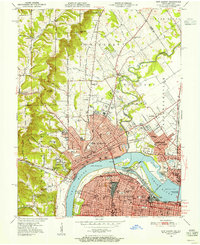 1950 New Albany1955 Print · USGSThe riverfront communities of Indiana and Kentucky meet at the Ohio River during a mid-century period of heavy industry and rail expansion. Genealogists and local historians can locate early burial grounds like Portland Cem, institutional landmarks such as the County Infirmary, and long-standing schools including McCulloch Sch.
 - 1951 Map of Jeffersonville
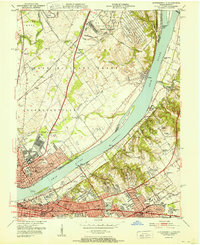 1951 Jeffersonville1951 Print · USGSThe Ohio River corridor near the Falls was a bustling hub of mid-century industry and suburban growth just after the war. Local historians can trace the footprints of the Indiana Arsenal, the Big Four RR Bridge, and old family landmarks from Claysburg to St Matthews.
 - 1951 Map of New Albany
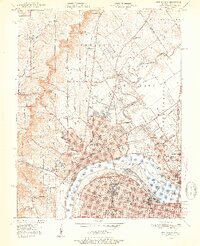 1951 New Albany1951 Print · USGSThe Ohio River waterfront at mid-century shows the industrial heart of New Albany and Louisville linked by massive river and rail works. Genealogists can trace family roots through neighborhood landmarks like Blackiston Mill, Portland Cem, and the Silvercrest State Hospital.2 unique versions available
 - 1953 Map of Bethlehem, 1955 Print
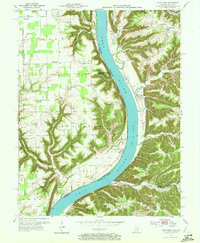 1953 Bethlehem1955 Print · USGSThe Ohio River border between Indiana and Kentucky is documented here in the early fifties, showing the ferry and landing points of the era. Researchers can locate family landmarks like Elizabeth Ch, Wises Landing, and the Mahoney Cem.6 unique versions available
 - 1954 Map of La Grange, 1956 Print
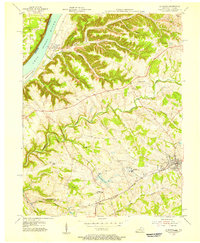 1954 La Grange1956 Print · USGSMid-century Oldham County is captured here as a landscape of rail-connected towns and riverfront settlements. Genealogists and historians can trace the foundations of La Grange and Buckner, alongside landmarks like Valley Rest Cem and the La Grange State Reformatory.
 - 1954 Map of Owen, 1956 Print
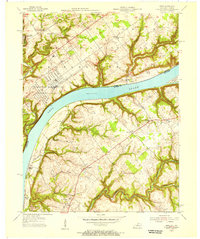 1954 Owen1956 Print · USGSThe Ohio River corridor comes alive in the mid-1950s, bridging the gap between Indiana military sites and Kentucky ridge-top communities. Researchers can locate family landmarks such as Salem Cem, the Tunnel Mill Scout Camp, and Liberty Sch.
 - 1955 Map of South Boston, 1956 Print
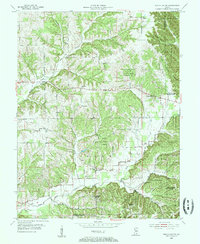 1955 South Boston1956 Print · USGSThe rural borderlands of Washington and Clark Counties are captured here in the mid-fifties, during a time of active country parishes and small local schools. Genealogists and historians can locate vanished landmarks like Polk Sch, the Mead Cem, and the village of South Boston.4 unique versions available
 - 1955 Map of New Albany, 1956 Print
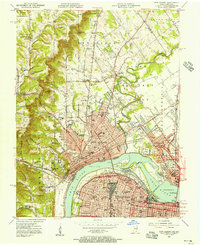 1955 New Albany1956 Print · USGSThe Ohio River separates the growing industrial hubs of New Albany and Louisville in the mid-fifties. Researchers can trace the extensive rail networks and local institutions of the day, from the Falls of the Ohio to the Silvercrest State Hospital.
 - 1955 Map of Jeffersonville, 1957 Print
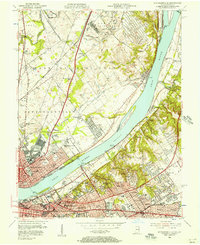 1955 Jeffersonville1957 Print · USGSIn the mid-fifties, the riverfronts of Jeffersonville and Louisville were hubs of industry and suburban expansion. Researchers can trace family sites from Asbury Chapel to the Zachary Taylor National Cemetery, alongside the massive Indiana Arsenal.
 - 1956 Map of Otisco, 1957 Print
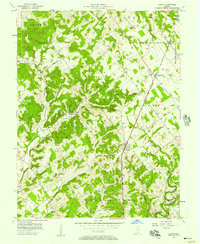 1956 Otisco1957 Print · USGSMid-century Clark County is defined here by the unique diagonal boundaries of the Clark Military Grant and the busy Baltimore and Ohio rail line. Genealogists can locate family sites at Walnut Hill Cem, Clegg Sch, and the small settlement of Marysville.3 unique versions available
 - 1956 Map of New Washington, 1957 Print
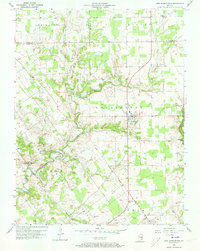 1956 New Washington1957 Print · USGSSouthern Indiana's rural landscape comes into focus during the mid-fifties, showing the township lines and creek-carved valleys of Clark and Scott counties. Researchers can trace ancestral property near New Washington or locate remote sites like Barries Cem and the Pleasant View Ch.4 unique versions available
 - 1956 Map of Louisville, 1971 Print
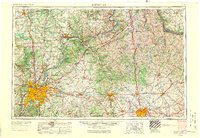 1956 Louisville1971 Print · USGSThe Ohio River valley and the Kentucky Bluegrass are captured here during a period of rapid mid-century growth and industrial activity. Genealogists and historians can trace rail-centered towns and military land use at Fort Knox and the Jefferson Proving Ground.2 unique versions available
 - 1957 Map of Borden, 1958 Print
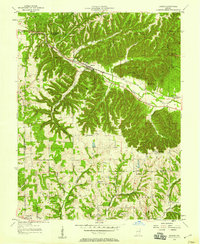 1957 Borden1958 Print · USGSSouthern Indiana in the late fifties shows a landscape of deep hollows and high ridges centered on the MONON rail line. Genealogists can trace rural family roots through landmarks like St Johns Sch, Bear Hill Ch, and the settlement of Starlight.
 - 1957 Map of Speed, 1958 Print
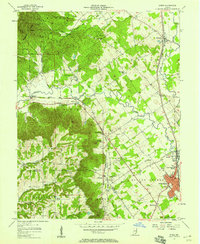 1957 Speed1958 Print · USGSMid-century Clark County comes into focus here as the industrial and rail corridors of Sellersburg and Memphis meet the wooded ridges of the Knobs. Genealogists and historians can trace local landmarks like Atkins Chapel, Hickory Grove Cem, and the old Monon rail line.
End of results
Showing maps 1-15 of 15
Top cities of Clark County
- Jeffersonville historical maps
- Clarksville historical maps
- Charlestown historical maps
- Sellersburg historical maps
- Henryville historical maps
- Owen historical maps
See more
Frequently asked questions
- What are the different types of historical maps available for Clark County?
- What is the oldest map of Clark County?
- Where can I purchase historical maps of Clark County for my home or office?
- Where can I download high-res historical maps of Clark County?
- Are there historical topographic maps available for Clark County?
- Is there historical aerial imagery available for Clark County?
- Where are historical maps of Clark County sourced from?