1900s (20th Century) Maps of Crossroad Temple, Indianapolis
Explore 9 historic maps of Crossroad Temple from the 1900s (20th Century). These maps offer a rare glimpse into what life looked like during the 1900s — showing old roads, neighborhoods, homes, and landmarks that have changed or disappeared over time.
Whether you're researching your family's past, planning a metal detecting trip, or studying how Crossroad Temple's landscape evolved across the 1900s, these high-resolution maps are a powerful tool for exploring the history of this region.
- Focus on a specific era: All maps on this page are from the 1900s, giving you a focused view of this time period.
- See what’s changed: Compare century-old streets, trails, and buildings to today's modern landscape using overlays and satellite layers.
- Research with precision: Use these maps for genealogy, historical research, land use analysis, or educational projects.
- View, download, or print: Maps are fully viewable online in high resolution, and can be downloaded or printed for your own records.
Start exploring Crossroad Temple's history through authentic maps from the 1900s. This is your window into the past.
Crossroad Temple, Indianapolis maps
(9)- 1948 Map of Indianapolis East
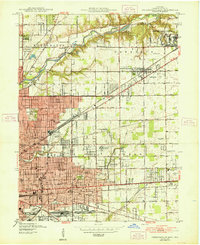 1948 Indianapolis East1948 Print · USGSNortheast Marion County is documented here during the post-war industrial boom, showing the expansion of Indianapolis toward Lawrence. Researchers can locate vanished landmarks like Brightwood Airport, the Naval Ordnance Plant, and numerous local sites like Browning Sch.2 unique versions available
 - 1953 Map of Indianapolis, 1965 Print
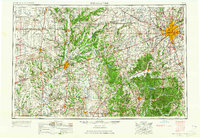 1953 Indianapolis1965 Print · USGSCentral Indiana and the Illinois borderlands are captured in the mid-sixties, showing the growth of Indianapolis and its industrial rail corridors. Genealogists and historians can trace the development of outlying towns like Zionsville or Beech Grove and find landmarks such as Atterbury AAF and Turkey Run State Park.4 unique versions available
 - 1956 Map of Indianapolis
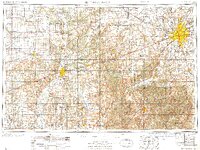 1956 Indianapolis1956 Print · USGSCentral Indiana in the mid-fifties is captured during a period of industrial growth and military presence. Genealogists and historians can trace the rail networks of the New York Central or locate regional landmarks like Fort Benjamin Harrison and Camp Atterbury.
 - 1957 Map of Indianapolis
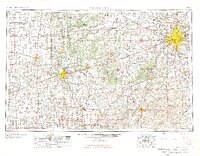 1957 Indianapolis1957 Print · USGSCentral Indiana in the mid-fifties is captured here as a crossroads of major rail lines and nascent federal highways. Genealogists and historians can trace family-named ridges like Poplar Ridge or locate strategic sites like Camp Atterbury and Speedway.2 unique versions available
 - 1959 Map of Indianapolis East, 1961 Print
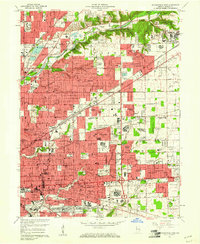 1959 Indianapolis East1961 Print · USGSThe eastern suburbs of Indianapolis were rapidly expanding in the late fifties as residential neighborhoods grew around established military and industrial hubs. Researchers can trace local heritage through numerous parochial sites like Holy Spirit Sch & Ch and major landmarks including the Fort Benjamin Harrison Military Reservation.
 - 1962 Map of Indianapolis
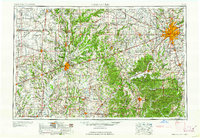 1962 Indianapolis1962 Print · USGSCentral Indiana and the Illinois borderlands are captured here in the early sixties, showing the region's dense rail networks and growing urban centers. Genealogists and historians can locate family-named landmarks and institutions like Crown Hill Cem, Indiana University, and the Indianapolis Motor Speedway.
 - 1967 Map of Indianapolis East, 1970 Print
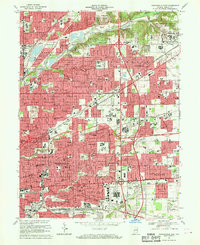 1967 Indianapolis East1970 Print · USGSMarion County's eastern neighborhoods and military grounds are captured here in the late sixties as suburban development expands toward the Lawrence area. Researchers can trace local genealogy through numerous institutions like Scecina High Sch or find industrial roots at the Hawthorne Yards.3 unique versions available
 - 1986 Map of Indianapolis
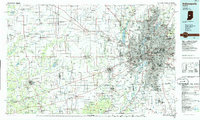 1986 Indianapolis1986 Print · USGSThe Indiana capital and its surrounding counties are captured here in the mid-1980s, showcasing the height of its orbital highway development and suburban growth. Researchers can trace the legacy of the Fort Benjamin Harrison Military Reservation, follow the Conrail lines, or locate family roots in Beech Grove, Greencastle, and Zionsville.2 unique versions available
 - 1998 Map of Indianapolis East, 2001 Print
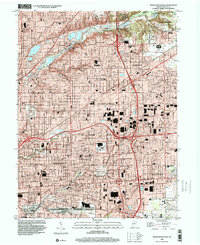 1998 Indianapolis East2001 Print · USGSMarion County’s eastern suburbs and urban neighborhoods are captured here in the late nineties as a fully realized landscape of industry and community. Researchers can locate dozens of parish schools and historic burial grounds like Fall Creek Cemetery or trace the sprawling U S Naval Reservation.
End of results
Showing maps 1-9 of 9
Top cities near Crossroad Temple
- Indianapolis historical maps
- Carmel historical maps
- Fishers historical maps
- Greenwood historical maps
- Lawrence historical maps
- Franklin historical maps
See more
Frequently asked questions
- What are the different types of historical maps available for Crossroad Temple?
- What is the oldest map of Crossroad Temple?
- Where can I purchase historical maps of Crossroad Temple for my home or office?
- Where can I download high-res historical maps of Crossroad Temple?
- Are there historical topographic maps available for Crossroad Temple?
- Is there historical aerial imagery available for Crossroad Temple?
- Where are historical maps of Crossroad Temple sourced from?