1900s (20th Century) Maps of Evansville, Indiana
Explore 28 historic maps of Evansville from the 1900s (20th Century). These maps offer a rare glimpse into what life looked like during the 1900s — showing old roads, neighborhoods, homes, and landmarks that have changed or disappeared over time.
Whether you're researching your family's past, planning a metal detecting trip, or studying how Evansville's landscape evolved across the 1900s, these high-resolution maps are a powerful tool for exploring the history of this region.
- Focus on a specific era: All maps on this page are from the 1900s, giving you a focused view of this time period.
- See what’s changed: Compare century-old streets, trails, and buildings to today's modern landscape using overlays and satellite layers.
- Research with precision: Use these maps for genealogy, historical research, land use analysis, or educational projects.
- View, download, or print: Maps are fully viewable online in high resolution, and can be downloaded or printed for your own records.
Start exploring Evansville's history through authentic maps from the 1900s. This is your window into the past.
Evansville, IN maps
(28)- 1901 Map of Haubstadt, 1955 Print
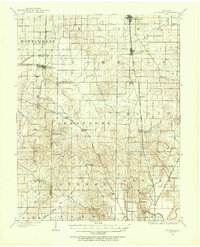 1901 Haubstadt1955 Print · USGSSouthwestern Indiana thrived as a rail-centric farming region at the turn of the century. Genealogists and historians can trace old property lines and rural crossroads like Parker's Settlement, St. Wendells, and the thriving rail hub at Haubstadt.
 - 1902 Map of Ditney
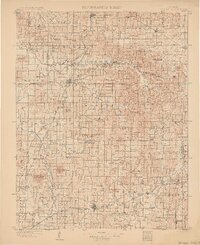 1902 Ditney1902 Print · USGSSouthern Indiana at the start of the century was a landscape of expanding railroads and rural hamlets. Family historians can trace ancestral roots through dozens of small settlements like Coats Springs, Dongola, and Boonville along the Southern RR.3 unique versions available
 - 1902 Map of Boonville
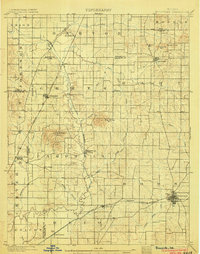 1902 Boonville1902 Print · USGSWarrick and Gibson Counties at the opening of the twentieth century reveal a landscape of evolving transport and established rural life. Trace the path of the Wabash and Erie Canal or locate family roots in Boonville, Millersburg, and Lynnville.4 unique versions available
 - 1903 Map of Haubstadt
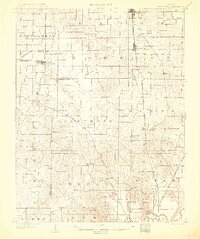 1903 Haubstadt1903 Print · USGSSouthern Indiana at the start of the century shows a landscape of busy rail junctions and tight-knit crossroads. Genealogists can trace family footprints across Parker's Settlement, St. Wendells, and McCutchanville as they appeared before modern road expansion.2 unique versions available
 - 1903 Map of Patoka
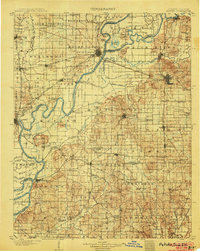 1903 Patoka1903 Print · USGSThe lower Wabash Valley at the start of the twentieth century was a vital crossroads of river trade and rail expansion. Genealogists can trace family roots through settlements like New Harmony and Parker's Settlement or locate the County Farm and Grand Rapids.2 unique versions available
 - 1905 Map of Newburg
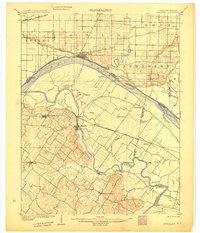 1905 Newburg1905 Print · USGSThe Ohio River bottomlands of Indiana and Kentucky are captured here in the early twentieth century, showing a world defined by river transit and rail. Genealogists can locate river-town homesteads near Newburg or trace family river crossings at MASON FERRY and HAMILTON FERRY.3 unique versions available
 - 1914 Map of Henderson
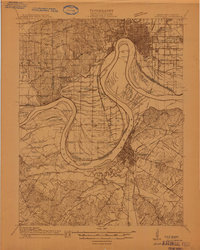 1914 Henderson1914 Print · USGSThe Ohio River borderlands between Indiana and Kentucky are captured here in the years before the Great War. Genealogists can trace family farms near St Vincents Church or locate long-gone rural schoolhouses like Corkie School and Three Mile School.
 - 1916 Map of Henderson
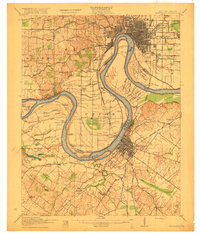 1916 Henderson1916 Print · USGSThe Ohio River borderlands between Indiana and Kentucky thrived on a mix of river commerce and rail power during the early twentieth century. Genealogists and historians can trace numerous rural districts and schools such as Corkie School, St Vincent, and the riverfront at Mc Donalds Landing.3 unique versions available
 - 1952 Map of Evansville, 1953 Print
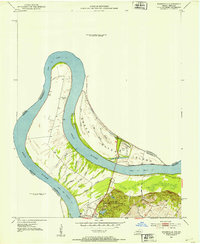 1952 Evansville1953 Print · USGSThe Ohio River floodplain at the Indiana-Kentucky border comes alive in this early 1950s survey. Genealogists and local historians can trace family landholdings like Mc Clair and Bennett alongside landmarks such as Dade Park and White City.
 - 1952 Map of Newburgh, 1953 Print
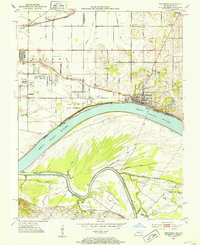 1952 Newburgh1953 Print · USGSThe Indiana-Kentucky borderlands along the Ohio River come to life in the early fifties, showing the transition from agricultural bottomlands to riverfront settlements. Researchers can trace family roots at Rose Hill Cem or locate the historic Angel Mounds State Memorial and Lock No 47.2 unique versions available
 - 1954 Map of Evansville
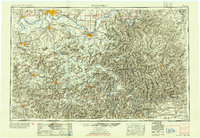 1954 Evansville1954 Print · USGSThe Ohio River borderlands between Indiana and Kentucky appear here during a period of robust industrial and military growth. Genealogists and researchers can trace the rail corridors of the Illinois Central and find landmarks like US Lock and Dam No 48 or Camp Breckinridge.
 - 1956 Map of Vincennes, 1967 Print
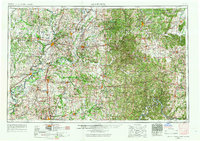 1956 Vincennes1967 Print · USGSSouthern Indiana and the Illinois borderlands are captured here in the mid-fifties, showing the region's dense network of river towns and rail lines. Researchers can trace historic river crossings along the Wabash River or locate landmarks like Wyandotte Cave and Lincoln State Park.4 unique versions available
 - 1957 Map of Vincennes
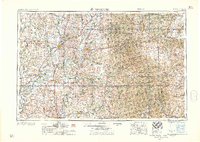 1957 Vincennes1957 Print · USGSSouthwest Indiana and the Illinois borderlands come alive in the late 1950s, a period of heavy rail traffic and expanding state forests. Genealogists and historians can trace the riverfronts and rail lines of Vincennes, New Harmony, and the vast Crane Naval Ammunition Depot.
 - 1957 Map of West Franklin, 1959 Print
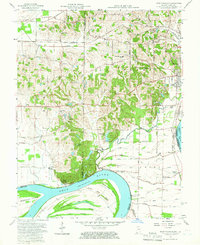 1957 West Franklin1959 Print · USGSSouthwestern Indiana and the Kentucky borderlands meet along the Ohio River in the late fifties. Genealogists can trace family names across Nashville Hollow and locate rural landmarks like St Peters Ch, West Franklin, and Diamond Island.2 unique versions available
 - 1957 Map of Evansville, 1959 Print
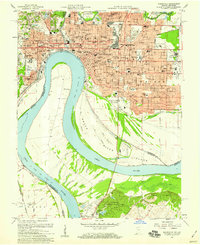 1957 Evansville1959 Print · USGSEvansville is seen in a period of significant postwar growth, where the industrial riverfront meets a rapidly expanding network of neighborhoods and schools. Researchers can trace family roots through numerous local landmarks like Evansville College, Bosse Field, and the St Marys Hospital.2 unique versions available
 - 1957 Map of Evansville, 1969 Print
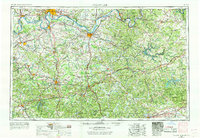 1957 Evansville1969 Print · USGSIndiana and Kentucky meet along the Ohio River in this mid-century survey of a vital industrial and transport corridor. Genealogists and historians can trace the development of river towns like Owensboro and Newburgh or locate old rail lines like the Southern Ry.3 unique versions available
 - 1958 Map of Vincennes
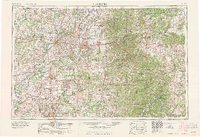 1958 Vincennes1958 Print · USGSSouthern Indiana and the Illinois borderlands are captured during a mid-century period of heavy rail traffic and military activity. Researchers can trace the sprawling bounds of the Crane Naval Ammunition Depot or locate historic settlements like New Harmony and French Lick.2 unique versions available
 - 1961 Map of Evansville
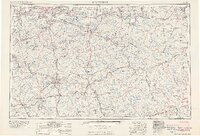 1961 Evansville1961 Print · USGSThe Ohio River valley and its surrounding coalfields are captured here during the late fifties and early sixties. Trace the industrial rail networks of the Illinois Central RR and explore regional landmarks like Mammoth Cave National Park and Angel Mounds State Memorial.2 unique versions available
 - 1961 Map of Daylight, 1963 Print
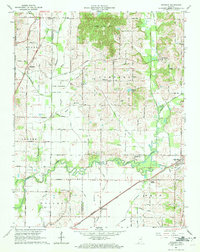 1961 Daylight1963 Print · USGSWarrick and Vanderburgh counties are shown in the early sixties as rural life centered on the rail corridors of the New York Central. Researchers can trace the legacy of the Wabash and Erie Canal or locate local landmarks like Daylight Sch and Blue Grass Cem.4 unique versions available
 - 1961 Map of Evansville North, 1963 Print
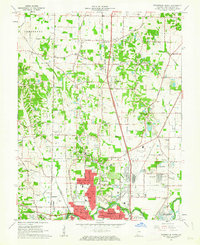 1961 Evansville North1963 Print · USGSNorth of the city in the early sixties, this area shows the transition from rural Vanderburgh County to suburban neighborhoods and industrial sites. Genealogists can locate family sites near St Joseph Cemetery, Darmstadt, and schools like Rex Mundi High Sch.
 - 1964 Map of Newburgh, 1966 Print
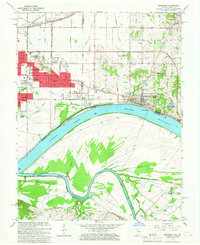 1964 Newburgh1966 Print · USGSThe Indiana-Kentucky borderlands at the bend of the Ohio River come into focus in the mid-1960s as Evansville's suburbs meet older river towns. Researchers can locate the historic Angel Mounds State Memorial, trace the Louisville and Nashville rail line, and find family markers at Rose Hill Cem.3 unique versions available
 - 1981 Map of West Franklin
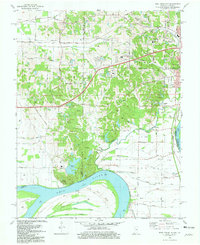 1981 West Franklin1981 Print · USGSThe rural stretches of Posey and Vanderburgh counties meet the Ohio River here in the early eighties. Genealogists and local historians can trace family-named roads and landmarks like St Pauls Ch, Burdette Park, and the riverfront at West Franklin.2 unique versions available
 - 1981 Map of Evansville South, 1982 Print
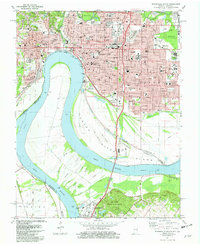 1981 Evansville South1982 Print · USGSEvansville stands as a major river-and-rail hub along the Ohio River at the start of the eighties. Researchers can trace institutional history at Evansville University and Evansville State Hospital, or locate family sites at Oak Hill Cemetery.2 unique versions available
 - 1981 Map of Evansville North, 1982 Print
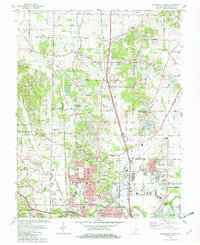 1981 Evansville North1982 Print · USGSNorth of the Ohio River in the early eighties, this survey captures the residential and industrial growth of the Evansville area. Researchers can trace family history through sites like Locust Hill Cemetery, Richter Cem, and the rural enclave of Darmstadt.3 unique versions available
 - 1986 Map of Evansville
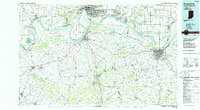 1986 Evansville1986 Print · USGSThe Ohio River valley thrives in the mid-1980s as a hub of river commerce, industry, and natural preservation spanning the Indiana-Kentucky border. Genealogists and historians can locate remote landmarks like Dead Mans Cem, Lippe Church, and the riverside community of Scuffletown.
Showing maps 1-25 of 28
Top cities near Evansville
- Henderson historical maps
- Boonville historical maps
- Newburgh historical maps
- Chandler historical maps
- Armstrong historical maps
- Haubstadt historical maps
See more
Top neighborhoods of Evansville
- Highland historical maps
- Kratzville historical maps
- Mud Center historical maps
- Red Bank historical maps
- Smythe historical maps
- Erskine Station historical maps
See more
Frequently asked questions
- What are the different types of historical maps available for Evansville?
- What is the oldest map of Evansville?
- Where can I purchase historical maps of Evansville for my home or office?
- Where can I download high-res historical maps of Evansville?
- Are there historical topographic maps available for Evansville?
- Is there historical aerial imagery available for Evansville?
- Where are historical maps of Evansville sourced from?