Old Maps of Vermillion County, Indiana for Hiking & Exploration
Hike through history with 120 historic maps of Vermillion County. Explore old trails, ghost towns, and forgotten backroads — perfect for outdoor adventurers and local explorers.
- Rediscover forgotten places: Map out old mining camps, roads, and footpaths that no longer exist on modern maps.
- Layer with modern tools: Combine with LiDAR or satellite views to plan hikes through historical terrain.
- Made for exploration: Popular among hikers, overlanders, and local history lovers.
Use these maps to find adventure and explore the hidden past of Vermillion County.
Vermillion County, IN maps
(120)- 1899 Map of Danville
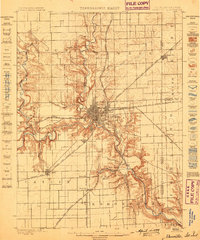 1899 Danville1899 Print · USGSDanville and the surrounding Vermilion County townships thrived at a massive rail intersection before the turn of the century. Genealogists and historians can trace the early layouts of Batestown, Catlin, and Rileysburg along the Vermilion River.
 - 1900 Map of Danville
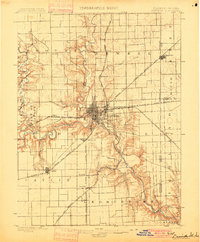 1900 Danville1900 Print · USGSVermilion County at the turn of the century is a bustling rail center defined by the junction of major freight lines and the Vermilion River. Genealogists can trace family footprints in early settlements like Westville, Batestown, and the border community of State Line.7 unique versions available
 - 1947 Map of Ridge Farm
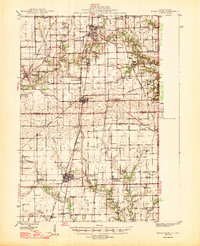 1947 Ridge Farm1947 Print · USGSEastern Illinois and the Indiana border appear here just after the war, showcasing a landscape of rail-connected towns and country school districts. Researchers can trace family history through dozens of landmarks like Scotland Sta, Vermilion Grove, and Harrison Consolidated Sch.3 unique versions available
 - 1947 Map of Paris, 1967 Print
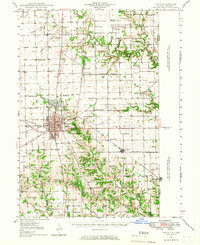 1947 Paris1967 Print · USGSPost-war Edgar County and the Indiana borderlands are captured here at a time when rural schoolhouses and small family cemeteries still marked nearly every section. Genealogists can locate Edgar Cem, the Old Indian Boundary Line, and dozens of local schools like Plum Grove Sch.
 - 1949 Map of Paris
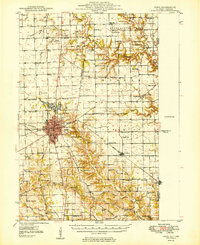 1949 Paris1949 Print · USGSEastern Illinois and the Indiana borderlands are captured here in the late 1940s, centered on the rail hub of Paris. Researchers can trace dozens of rural schoolhouses and family cemeteries, including St Aloysius Ch, Edgar Cem, and the path of the Old Indian Boundary Line.2 unique versions available
 - 1950 Map of New Goshen, 1952 Print
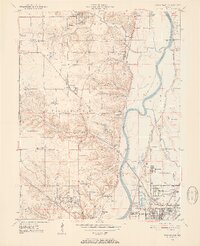 1950 New Goshen1952 Print · USGSVigo County in the early fifties is captured here as a landscape of river-side industry and emerging suburbs north of Terre Haute. Researchers can locate the historic St Mary-of-the-Woods College or trace the path of the Erie Canal (Abandoned) past Shepardsville and Tecumseh.3 unique versions available
 - 1950 Map of Sandford, 1956 Print
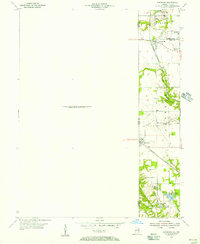 1950 Sandford1956 Print · USGSStraddling the Illinois and Indiana border at the middle of the century, this area reveals a landscape shaped by coal mining and heavy rail. Genealogists can trace family roots in Sandford or Libertyville, or locate Pisgah Ch and the Green Valley Mine.
 - 1950 Map of Danville SE, 1960 Print
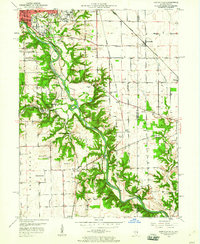 1950 Danville SE1960 Print · USGSThe Illinois-Indiana borderlands at mid-century reveal a landscape defined by the winding Vermilion River and the expansion of southern Danville. Genealogists and local researchers can trace a dense network of family landmarks and rural institutions, from Sandhill Memorial Park to the Willow Springs Sch and Morey Chapel.
 - 1950 Map of Danville NE, 1962 Print
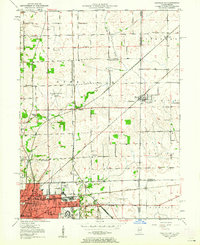 1950 Danville NE1962 Print · USGSDanville and the surrounding Illinois-Indiana borderlands are captured here at a mid-century peak of rail and industry. Researchers can trace family roots through numerous rural institutions like Grange Hall Sch, Spring Hill Cemetery, and the Hopewell Ch.
 - 1951 Map of Danville NE
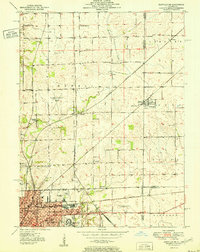 1951 Danville NE1951 Print · USGSThe Illinois and Indiana state line comes alive in the early 1950s as Danville's rail-and-road network reaches toward the border. Researchers can trace family history at Oaklawn Cem and Bryley Cem or locate vanished rural schoolhouses like Lamb Sch and Ash Corner Sch.
 - 1951 Map of Danville SE
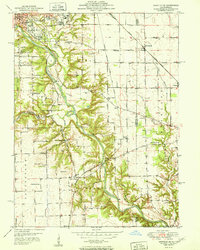 1951 Danville SE1951 Print · USGSVermilion County at mid-century reveals a landscape balancing heavy industry with deep-rooted rural communities. Genealogists and historians can trace family landmarks like Morey Chapel, the Langley Cemetery, and numerous country schools from Grape Creek Sch to Jenkins Sch.
 - 1951 Map of Clinton, 1953 Print
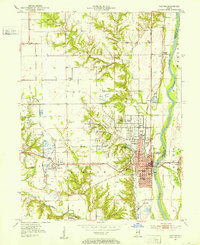 1951 Clinton1953 Print · USGSClinton and the Wabash River valley are captured in the early fifties, a time when coal extraction and rail transport defined the local economy. Researchers can trace family landmarks and schools like Higgins Mathews Sch and Glendale Sch, or locate the many Strip Mine sites that once dotted the landscape near Centenary and Klondyke.2 unique versions available
 - 1951 Map of Saint Bernice, 1956 Print
 1951 Saint Bernice1956 Print · USGSThe Illinois-Indiana borderlands are captured here in the early 1950s, showcasing a landscape shaped by coal extraction and heavy rail. Researchers can trace the heritage of mining towns like Saint Bernice and Blanford alongside the Chicago Milwaukee St Paul and Pacific tracks.
 - 1953 Map of Danville, 1965 Print
 1953 Danville1965 Print · USGSIndiana and Illinois crossroads come to life in this mid-century survey as the interstate era begins to reshape the river-and-rail landscape. Genealogists and collectors can trace the historic paths of the Nickel Plate railroad or locate smaller communities like Veedersburg, Goodland, and Bismarck.3 unique versions available
 - 1953 Map of Indianapolis, 1965 Print
 1953 Indianapolis1965 Print · USGSCentral Indiana and the Illinois borderlands are captured in the mid-sixties, showing the growth of Indianapolis and its industrial rail corridors. Genealogists and historians can trace the development of outlying towns like Zionsville or Beech Grove and find landmarks such as Atterbury AAF and Turkey Run State Park.4 unique versions available
 - 1955 Map of Danville
 1955 Danville1955 Print · USGSThe Indiana-Illinois borderlands during the mid-fifties reveal a landscape of thriving rail hubs and university towns. Researchers can trace the legacy of Purdue University, the Tippecanoe Battlefield, and the path of the Pennsylvania RR.
 - 1955 Map of Kingman, 1956 Print
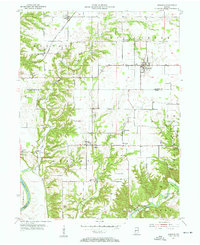 1955 Kingman1956 Print · USGSFountain and Parke Counties are mapped in the mid-1950s as a network of rail-connected towns and deep creek valleys. Genealogists can trace family landmarks like Bethel Cem, Township Sch, and the rail junction at Kingman.2 unique versions available
 - 1955 Map of Humrick, 1956 Print
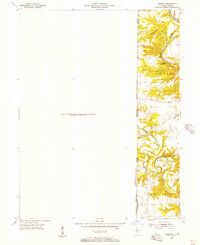 1955 Humrick1956 Print · USGSThe Illinois and Indiana borderlands come alive in the mid-fifties along the winding Vermilion River and the tracks of the Chicago and St Louis railroad. Genealogists can trace family names at Brown Cem and Patrick Cem or explore the sharp terrain of Devils Backbone.
 - 1955 Map of Scottland, 1957 Print
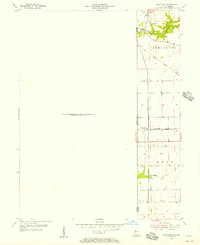 1955 Scottland1957 Print · USGSThe Illinois-Indiana state line during the mid-fifties shows a landscape of rural rail junctions and early pioneer landmarks. Trace family history and regional industry through the Old Hopewell Cem, the village of Quaker, and the Baltimore and Ohio railroad corridor.
 - 1955 Map of Montezuma, 1957 Print
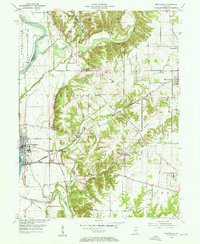 1955 Montezuma1957 Print · USGSWestern Parke County comes alive in the mid-1950s, showing a river-and-rail landscape where historical boundaries meet industrial growth. Trace the path of the Abandoned Canal and locate family landmarks like Linebarger Chapel and Hethcoe Cem.2 unique versions available
 - 1955 Map of Dana, 1957 Print
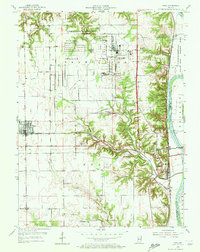 1955 Dana1957 Print · USGSVermillion County mid-century life centers on the massive Wabash River Ordnance Works and the rail-side town of Dana. Genealogists and historians can locate numerous small burial grounds like Carmack Cem and trace the path of the Abandoned Canal along the river.2 unique versions available
 - 1955 Map of Newport, 1957 Print
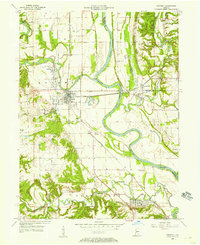 1955 Newport1957 Print · USGSVermillion and Fountain counties meet at the Wabash River during the mid-fifties, showing a landscape shaped by rail and river commerce. Genealogists can trace family names at the Collette Orphanage or find rural burial grounds like Groenendyke Cem and Isle Cem.
 - 1956 Map of Danville
 1956 Danville1956 Print · USGSMid-century Indiana and Illinois are captured here as the river-and-rail economy evolved into the modern highway era. Researchers can trace ancestral roots and old transport lines through Logansport, Battle Ground, and the dams at Lake Shafer.
 - 1956 Map of Indianapolis
 1956 Indianapolis1956 Print · USGSCentral Indiana in the mid-fifties is captured during a period of industrial growth and military presence. Genealogists and historians can trace the rail networks of the New York Central or locate regional landmarks like Fort Benjamin Harrison and Camp Atterbury.
 - 1957 Map of Indianapolis
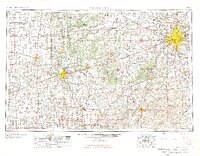 1957 Indianapolis1957 Print · USGSCentral Indiana in the mid-fifties is captured here as a crossroads of major rail lines and nascent federal highways. Genealogists and historians can trace family-named ridges like Poplar Ridge or locate strategic sites like Camp Atterbury and Speedway.2 unique versions available
Showing maps 1-25 of 120
Top cities of Vermillion County
- Clinton historical maps
- Eugene historical maps
- Highland historical maps
- Fairview Park historical maps
- Cayuga historical maps
- Dana historical maps
See more
Frequently asked questions
- What are the different types of historical maps available for Vermillion County?
- What is the oldest map of Vermillion County?
- Where can I purchase historical maps of Vermillion County for my home or office?
- Where can I download high-res historical maps of Vermillion County?
- Are there historical topographic maps available for Vermillion County?
- Is there historical aerial imagery available for Vermillion County?
- Where are historical maps of Vermillion County sourced from?