Old Maps of Rolling Hills, Carroll
Explore 11 old maps of Rolling Hills, spanning from 1954 to today. These high-resolution historic maps reveal how streets, neighborhoods, landmarks, and natural features evolved over time — perfect for genealogy, metal detecting, research, and local history exploration.
What you can do with these maps:
- See how Rolling Hills changed over time: Compare historical maps to modern-day views to trace roads, homesites, rail lines & more.
- View detailed metadata: Each map includes creators, publishers, year, scale, and archive source.
- Overlay maps with satellite & LiDAR: Visualize the past alongside modern tools to explore terrain & human change.
- Trusted historical sources: Maps sourced from the USGS, Library of Congress, and other archives.
- Access maps your way: View online, download high-res files, or order prints for personal or research use.
Start exploring old maps of Rolling Hills to uncover forgotten places, hidden landmarks, and the deep history beneath your feet.
Rolling Hills, Carroll maps
(11)- 1954 Map of Fort Dodge, 1968 Print
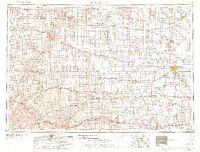 1954 Fort Dodge1968 Print · USGSNorthwest Iowa is shown here during a period of steady industrial and rail activity in the mid-fifties. Researchers can trace the extensive rail lines connecting Fort Dodge to mining and manufacturing sites like Gypsum and Industry Station.3 unique versions available
 - 1957 Map of Fort Dodge
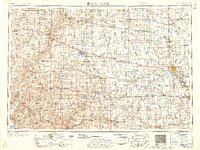 1957 Fort Dodge1957 Print · USGSWest-central Iowa thrived as a network of rail-linked agricultural hubs and river towns during the mid-fifties. Researchers can trace the development of the Des Moines River valley and locate historic landmarks in Fort Dodge, Storm Lake, and Lehigh.
 - 1958 Map of Fort Dodge
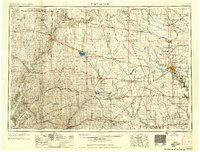 1958 Fort Dodge1958 Print · USGSWestern Iowa in the mid-1950s reveals a productive landscape of river-valley industry and prairie agricultural hubs. Researchers can trace the development of the Des Moines River corridor through Fort Dodge and locate vanished local landmarks near Coalville or Storm Lake.
 - 1980 Map of Carroll East
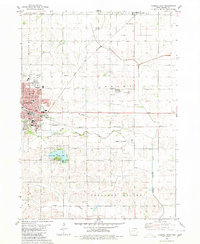 1980 Carroll East1980 Print · USGSThe eastern half of Carroll and the village of Lidderdale are captured here during a period of steady growth in the 1980s. Researchers can locate specific community sites like Kuemper High Sch, the ARTHUR N NEU AIRPORT, and the wooded shoreline of SWAN LAKE STATE PARK.
 - 1985 Map of Carroll
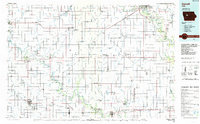 1985 Carroll1985 Print · USGSWest-Central Iowa in the mid-eighties shows a landscape of highly engineered farmland and river-valley conservation. Researchers can trace the drainage patterns of Purgatory Creek or locate local landmarks like Dolliver Memorial State Park and the rail-junction town of Gowrie.
 - 1993 Map of Carroll
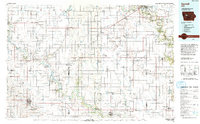 1993 Carroll1993 Print · USGSCentral Iowa's river valleys and rail corridors are captured here in the early nineties, showing a landscape shaped by the Raccoon River and Des Moines River. Genealogists can trace family connections to the many county seats, from Sac City to Jefferson, and locate rural landmarks like Pilot Mound or North Twin Lake.
 - 2010 Map of Carroll East, 2010 Print
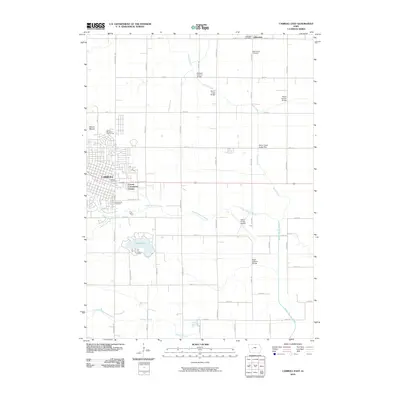 2010 Carroll East2010 Print · USGSCarroll and Lidderdale sit at the heart of this Iowa agricultural landscape during the first decade of the new millennium. Genealogists and local historians can trace family locations near Holy Family Cemetery, the waters of Swan Lake, and the winding Middle Raccoon River.
 - 2013 Map of Carroll East, 2013 Print
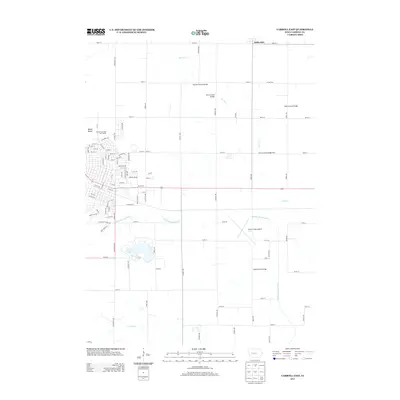 2013 Carroll East2013 Print · USGSCarroll County's eastern outskirts and rural townships are captured here in the early 2010s, showing the town's growth alongside traditional farmland. Researchers can trace local landmarks like Lidderdale, the Arthur N Neu Airport, and the waters of Swan Lake.
 - 2015 Map of Carroll East, 2015 Print
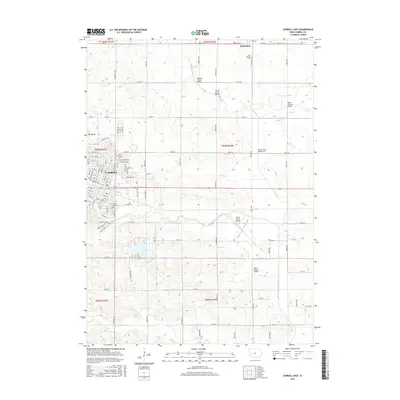 2015 Carroll East2015 Print · USGSThe eastern edges of Carroll and the town of Lidderdale are captured here during the mid-2010s. Researchers can trace local landmarks like the Arthur N Neu Airport, Carroll City Cem, and several historic crossings over the Middle Raccoon River.
 - 2018 Map of Carroll East, 2018 Print
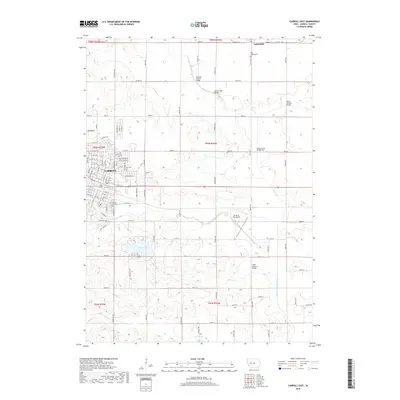 2018 Carroll East2018 Print · USGSThe eastern edges of Carroll and the quiet village of Lidderdale are shown here in the late twenty-teens as the town meets the Iowa prairie. Researchers can trace local burial sites at Carroll City Cem or follow the winding Middle Raccoon River past Swan Lake.
 - 2022 Map of Carroll East, 2022 Print
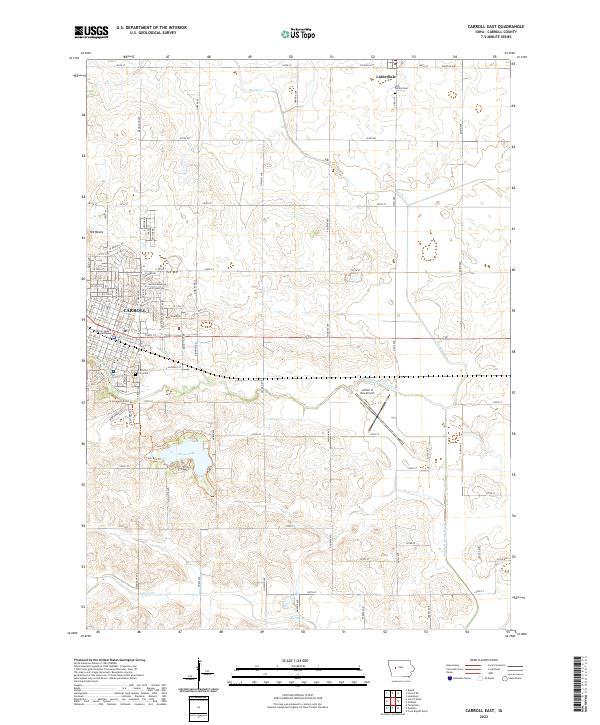 2022 Carroll East2022 Print · USGSThe city of Carroll and the village of Lidderdale are shown in this contemporary study of central Iowa. Researchers can trace local landmarks like the Carroll County Courthouse, Swan Lake, and the rural Holy Family Cemetery.
End of results
Showing maps 1-11 of 11
Frequently asked questions
- What are the different types of historical maps available for Rolling Hills?
- What is the oldest map of Rolling Hills?
- Where can I purchase historical maps of Rolling Hills for my home or office?
- Where can I download high-res historical maps of Rolling Hills?
- Are there historical topographic maps available for Rolling Hills?
- Is there historical aerial imagery available for Rolling Hills?
- Where are historical maps of Rolling Hills sourced from?