1950s Maps of Dubuque County, Iowa
Explore 11 historic maps of Dubuque County from the 1950s. These maps offer a rare glimpse into what life looked like during the 1950s — showing old roads, neighborhoods, homes, and landmarks that have changed or disappeared over time.
Whether you're researching your family's past, planning a metal detecting trip, or studying how Dubuque County's landscape evolved across the 1950s, these high-resolution maps are a powerful tool for exploring the history of this region.
- Focus on a specific era: All maps on this page are from the 1950s, giving you a focused view of this time period.
- See what’s changed: Compare century-old streets, trails, and buildings to today's modern landscape using overlays and satellite layers.
- Research with precision: Use these maps for genealogy, historical research, land use analysis, or educational projects.
- View, download, or print: Maps are fully viewable online in high resolution, and can be downloaded or printed for your own records.
Start exploring Dubuque County's history through authentic maps from the 1950s. This is your window into the past.
Dubuque County, IA maps
(11)- 1955 Map of Menominee, 1956 Print
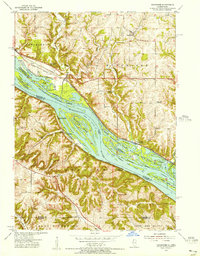 1955 Menominee1956 Print · USGSThe tri-state border region along the Mississippi River appears here in the mid-fifties, showing a landscape of river-bottom refuges and blufftop farms. Genealogists can locate several schools and rural settlements like Menominee and Shawondasse, or trace the tracks of the Illinois Central railroad.3 unique versions available
 - 1955 Map of Cassville, 1957 Print
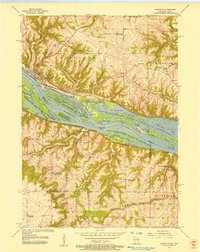 1955 Cassville1957 Print · USGSMid-century life along the Mississippi River bluffs is captured here as the transition from one-room schools to larger districts begins. Genealogists can trace family roots at St Charles Cem and Advent Ch or locate discontinued sites like Hefel Sch.2 unique versions available
 - 1955 Map of Dubuque South, 1957 Print
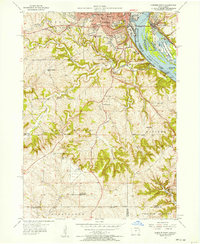 1955 Dubuque South1957 Print · USGSMid-century Dubuque and its Illinois neighbor across the river are shown at a time of significant transition and growth. Genealogists can trace family roots through numerous local landmarks, including Mount Olivet Cemetery, Ballyclough, and several rural schoolhouses like Smith Sch.3 unique versions available
 - 1955 Map of Balltown, 1957 Print
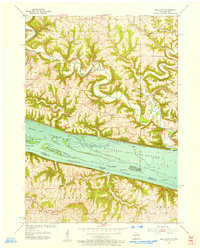 1955 Balltown1957 Print · USGSThe Upper Mississippi River corridor at the Iowa-Wisconsin border is shown here in the mid-1950s, split by the winding Grant River and heavy rail traffic. Genealogists can trace family footprints in Balltown or find local landmarks like Sinners Creek Sch and Burton.2 unique versions available
 - 1956 Map of Dubuque North, 1958 Print
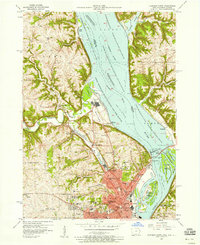 1956 Dubuque North1958 Print · USGSThe tri-state border region around Dubuque comes alive in the mid-1950s, revealing a landscape defined by river industry and deep-rooted community institutions. Researchers can trace the heritage of Loras College, find the old Eagle Point Bridge (Toll), and locate family sites near Linwood Cemetery.5 unique versions available
 - 1956 Map of Sherrill, 1958 Print
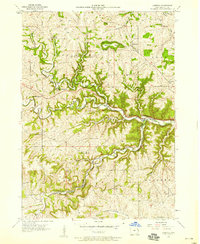 1956 Sherrill1958 Print · USGSDubuque County in the mid-fifties remains a landscape of tightly-knit rural communities and family-named hollows. Researchers can trace the legacy of local education and faith at St Johns Ch, Bloody Run Sch, and the riverside crossing at Redford Bridge.2 unique versions available
 - 1957 Map of Turkey River, 1959 Print
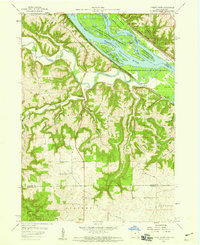 1957 Turkey River1959 Print · USGSNortheast Iowa at the confluence of the Turkey and Mississippi Rivers shows a landscape of deep hollows and river-bottom railroads in the late fifties. Genealogists can locate family landmarks like St Johns Cem, the settlement of Millville, and the Goshen Ch.3 unique versions available
 - 1957 Map of Colesburg, 1959 Print
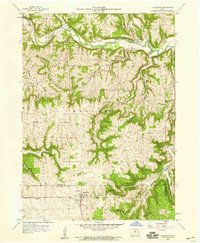 1957 Colesburg1959 Print · USGSThe tri-county border area of Northeast Iowa is captured here during the late 1950s, showing the rural landscape around Colesburg. Family historians can locate several burial sites and country churches, including Oak Hill Cem, Zion Ch, and the remote Hanna Cem.2 unique versions available
 - 1957 Map of Holy Cross, 1959 Print
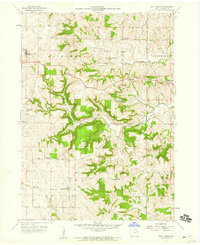 1957 Holy Cross1959 Print · USGSDubuque County is shown here in the mid-1950s, during a period of significant change for its rural school districts. Researchers can trace the exact locations of several former landmarks like the Flanagan Sch, Cottage Hill, and Rickardsville.
 - 1957 Map of Potosi, 1967 Print
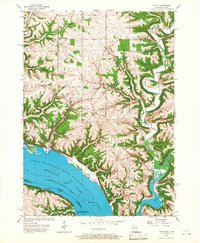 1957 Potosi1967 Print · USGSThe bluffs of Grant County meet the Mississippi River in the mid-1950s, revealing a landscape shaped by lead mining and river commerce. Genealogists can locate family landmarks like St Thomas Cem, Spechts Ferry, and the old Rigsby Sch.2 unique versions available
 - 1959 Map of Dubuque, 1982 Print
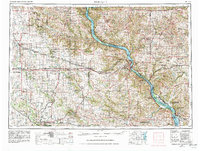 1959 Dubuque1982 Print · USGSThe Tri-State region comes alive in the mid-twentieth century as a hub of river commerce and rail transit. Genealogists and historians can trace the paths of the Illinois Central Gulf through Dubuque or locate the Savanna Ordnance Depot and Lock and Dam No 11.
End of results
Showing maps 1-11 of 11
Top cities of Dubuque County
- Dubuque historical maps
- Asbury historical maps
- Cascade historical maps
- Epworth historical maps
- Peosta historical maps
- Farley historical maps
See more
Frequently asked questions
- What are the different types of historical maps available for Dubuque County?
- What is the oldest map of Dubuque County?
- Where can I purchase historical maps of Dubuque County for my home or office?
- Where can I download high-res historical maps of Dubuque County?
- Are there historical topographic maps available for Dubuque County?
- Is there historical aerial imagery available for Dubuque County?
- Where are historical maps of Dubuque County sourced from?