Old Maps of Pleasant Prairie, Iowa for Hiking & Exploration
Hike through history with 15 historic maps of Pleasant Prairie. Explore old trails, ghost towns, and forgotten backroads — perfect for outdoor adventurers and local explorers.
- Rediscover forgotten places: Map out old mining camps, roads, and footpaths that no longer exist on modern maps.
- Layer with modern tools: Combine with LiDAR or satellite views to plan hikes through historical terrain.
- Made for exploration: Popular among hikers, overlanders, and local history lovers.
Use these maps to find adventure and explore the hidden past of Pleasant Prairie.
Pleasant Prairie, IA maps
(15)- 1890 Map of Durant
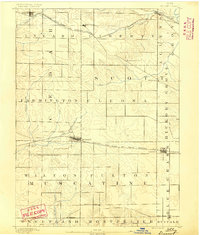 1890 Durant1890 Print · USGSEastern Iowa's rail-dependent farming communities are documented in the late nineteenth century as the grid of townships began to mature. Genealogists and historians can trace the early footprints of Durant, Walcott, and the remote Round Grove P.O. along established rail lines.
 - 1894 Map of Durant
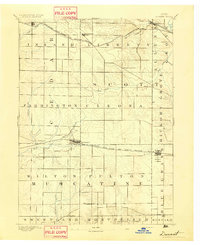 1894 Durant1894 Print · USGSAgricultural towns and pioneering rail lines define this Iowa landscape in the 1890s. Family historians can trace early settlements and transit hubs from Durant and Walcott to the rural Round Grove P.O. and Pleasant Prairie.2 unique versions available
 - 1901 Map of Rock Island
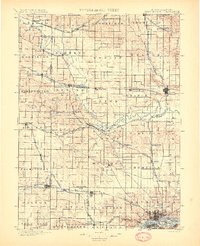 1901 Rock Island1901 Print · USGSThe eastern Iowa borderlands and the Mississippi River confluence thrive during the rail boom of the late nineteenth century. Genealogists and historians can trace family roots through numerous small settlements like Lost Nation, Grand Mound, and the vital U. S. Arsenal grounds.2 unique versions available
 - 1910 Map of Rock Island, 1949 Print
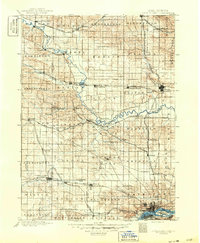 1910 Rock Island1949 Print · USGSEastern Iowa and the Illinois borderlands come alive in this late nineteenth-century survey of the river valleys and rail hubs. Genealogists and historians can trace old homesteads near Lost Nation, the early streets of Dewitt, and the sprawling U.S. Arsenal.
 - 1953 Map of Walcott, 1958 Print
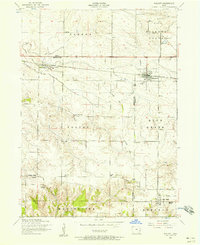 1953 Walcott1958 Print · USGSThe rural landscape of Scott and Muscatine counties thrived in the early 1950s around a busy network of country schools and the Rock Island railroad. Researchers can trace family ties at Parr Cemetery, Stockton Consolidated School, and the community of Blue Grass.2 unique versions available
 - 1958 Map of Davenport, 1968 Print
 1958 Davenport1968 Print · USGSEastern Iowa and western Illinois thrive along the river during the late fifties, defined by the industrial Quad Cities and a robust rail network. Genealogists can trace family roots through settlements like Oasis and Stanwood or along the Cedar River.2 unique versions available
 - 1961 Map of Davenport
 1961 Davenport1961 Print · USGSThe Quad Cities and the eastern Iowa riverlands are captured here in the early sixties, showing the region's transition into a modern industrial and transit hub. Genealogists and historians can trace the paths of major railroads and find river landmarks like Rock Island Arsenal, Huron Island, and the Coralville Reservoir.
 - 1962 Map of Davenport
 1962 Davenport1962 Print · USGSThe Quad Cities and the Mississippi River corridor are shown at their industrial peak just before the interstate era fully transformed the region. Researchers can trace the sprawling rail networks of the Chicago Rock Island and Pacific and find landmarks like the Rock Island Arsenal and Wild Cat Den State Park.
 - 1984 Map of Davenport, 1985 Print
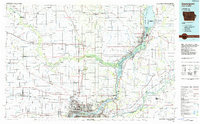 1984 Davenport1985 Print · USGSThe Quad Cities and the eastern Iowa riverlands are captured in the mid-eighties as industry and conservation converged along the Mississippi. Genealogists and local historians can trace rural roots through Stender Church, Oxford Mills, and the Elmwood Cem burial grounds.2 unique versions available
 - 1991 Map of Walcott, 1992 Print
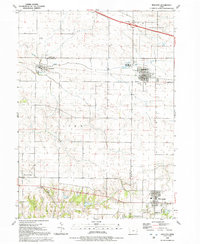 1991 Walcott1992 Print · USGSIowan prairie and evolving towns appear here in the early nineties as modern transit intersects with rural heritage. Genealogists and local historians can trace family ties at Parr Cem or explore the layouts of Walcott and Blue Grass.
 - 2010 Map of Walcott, 2010 Print
 2010 Walcott2010 Print · USGSCovers Pleasant Prairie, including Blue Grass, Walcott, and other nearby areas
 - 2013 Map of Walcott, 2013 Print
 2013 Walcott2013 Print · USGSCovers Pleasant Prairie, including Blue Grass, Walcott, and other nearby areas
 - 2015 Map of Walcott, 2015 Print
 2015 Walcott2015 Print · USGSCovers Pleasant Prairie, including Blue Grass, Walcott, and other nearby areas
 - 2018 Map of Walcott, 2018 Print
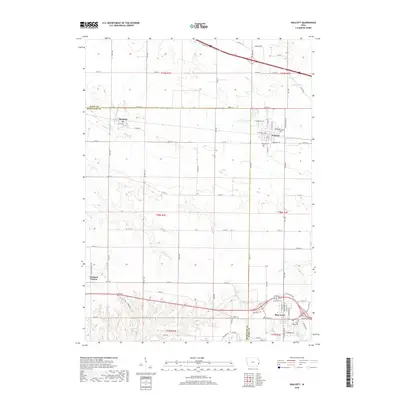 2018 Walcott2018 Print · USGSCovers Pleasant Prairie, including Blue Grass, Walcott, and other nearby areas
 - 2022 Map of Walcott, 2022 Print
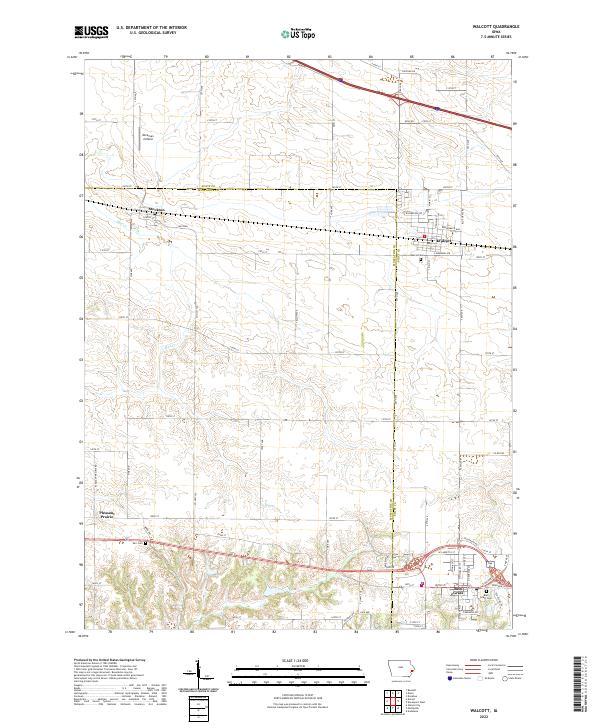 2022 Walcott2022 Print · USGSThe borderlands of Scott and Muscatine counties are shown in this modern survey of eastern Iowa. Researchers can locate family roots at Walcott Cemetery or Parr Cemetery and trace the agricultural development surrounding Stockton and Blue Grass.
End of results
Showing maps 1-15 of 15
Top cities near Pleasant Prairie
- Davenport historical maps
- Rock Island historical maps
- Muscatine historical maps
- Wilton historical maps
- Durant historical maps
- Blue Grass historical maps
See more
Frequently asked questions
- What are the different types of historical maps available for Pleasant Prairie?
- What is the oldest map of Pleasant Prairie?
- Where can I purchase historical maps of Pleasant Prairie for my home or office?
- Where can I download high-res historical maps of Pleasant Prairie?
- Are there historical topographic maps available for Pleasant Prairie?
- Is there historical aerial imagery available for Pleasant Prairie?
- Where are historical maps of Pleasant Prairie sourced from?