1900s (20th Century) Maps of Winchester, Iowa
Explore 6 historic maps of Winchester from the 1900s (20th Century). These maps offer a rare glimpse into what life looked like during the 1900s — showing old roads, neighborhoods, homes, and landmarks that have changed or disappeared over time.
Whether you're researching your family's past, planning a metal detecting trip, or studying how Winchester's landscape evolved across the 1900s, these high-resolution maps are a powerful tool for exploring the history of this region.
- Focus on a specific era: All maps on this page are from the 1900s, giving you a focused view of this time period.
- See what’s changed: Compare century-old streets, trails, and buildings to today's modern landscape using overlays and satellite layers.
- Research with precision: Use these maps for genealogy, historical research, land use analysis, or educational projects.
- View, download, or print: Maps are fully viewable online in high resolution, and can be downloaded or printed for your own records.
Start exploring Winchester's history through authentic maps from the 1900s. This is your window into the past.
Winchester, IA maps
(6)- 1958 Map of Burlington, 1968 Print
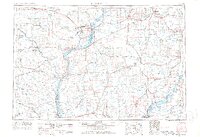 1958 Burlington1968 Print · USGSThe tri-state river country of Iowa, Illinois, and Missouri is captured here in the mid-fifties, dominated by the Mississippi River and major rail lines. Genealogists and historians can trace the development of river towns like Keokuk or locate the sprawling Iowa Army Ammunition Plant.4 unique versions available
 - 1961 Map of Burlington
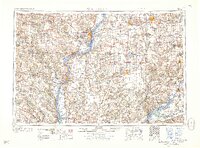 1961 Burlington1961 Print · USGSThe tri-state borderlands along the Mississippi River are captured here during the late fifties and early sixties, showing the vital river-and-rail economy of Iowa, Illinois, and Missouri. Genealogists and historians can trace the development of major hubs like Galesburg and Macomb alongside landmark sites such as the Iowa Ordnance Plant and the historic river town of Nauvoo.
 - 1963 Map of Burlington
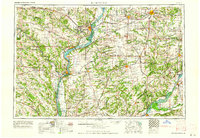 1963 Burlington1963 Print · USGSThe tri-state river country of the Mississippi and Illinois valleys comes alive in this mid-century survey. Genealogists and historians can trace the industrial and academic growth of the region, from the Iowa Ordnance Plant to campuses like Knox College and Western Illinois University.
 - 1981 Map of Mount Zion
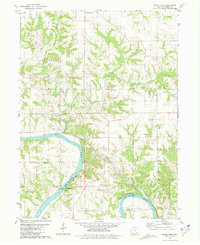 1981 Mount Zion1981 Print · USGSVan Buren County's river-cut landscape is captured here in the early eighties as the Chicago Rock Island and Pacific railroad still traced the Des Moines River. Genealogists can locate several family-named landmarks including Forbes Cem, Leech Cem, and the community at Winchester.
 - 1985 Map of Burlington
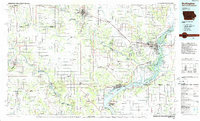 1985 Burlington1985 Print · USGSThe Tri-State region during the mid-eighties shows a landscape shaped by the Mississippi River and a dense network of railroads. Genealogists and local historians can trace family sites near Aspen Grove Cem or locate community landmarks in Burlington, Fort Madison, and Mount Pleasant.2 unique versions available
 - 1990 Map of Burlington
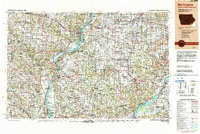 1990 Burlington1990 Print · USGSThe tri-state confluence of Iowa, Illinois, and Missouri is mapped here at the end of the twentieth century. Genealogists and historians can trace the riverfront heritage of Burlington, Keokuk, and Fort Madison, or locate sites like the Battle of Athens State Historic Site.2 unique versions available
End of results
Showing maps 1-6 of 6
Top cities near Winchester
- Fairfield historical maps
- Keosauqua historical maps
- Farmington historical maps
- Birmingham historical maps
- Bonaparte historical maps
- Maharishi Vedic City historical maps
See more
Frequently asked questions
- What are the different types of historical maps available for Winchester?
- What is the oldest map of Winchester?
- Where can I purchase historical maps of Winchester for my home or office?
- Where can I download high-res historical maps of Winchester?
- Are there historical topographic maps available for Winchester?
- Is there historical aerial imagery available for Winchester?
- Where are historical maps of Winchester sourced from?