Old Maps of Agency, Iowa for Genealogy
Trace your family roots with 23 historic maps of Agency. These high-res maps reveal old neighborhoods, homesites, landmarks, and streets — helping you uncover where your ancestors lived and how the area evolved over time.
- Explore historic neighborhoods: Identify where your relatives may have lived in the 1800s or 1900s.
- Compare maps over time: Trace the changes in streets, buildings, and landmarks for multi-generational research.
- Perfect for genealogy & ancestry research: Used by family historians and researchers to map out lineage and migration.
These maps are an incredible resource for exploring your personal connection to Agency's past.
Agency, IA maps
(23)- 1954 Map of Centerville, 1967 Print
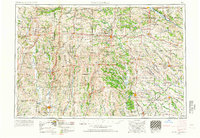 1954 Centerville1967 Print · USGSThe Iowa-Missouri borderlands at mid-century reveal a landscape shaped by river valleys and the height of the regional rail network. Genealogists and historians can trace the paths of the Wabash railroad and locate old townsites like Mystic, Moulton, and Greentop.3 unique versions available
 - 1954 Map of Des Moines, 1973 Print
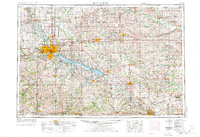 1954 Des Moines1973 Print · USGSCentral Iowa's evolving landscape is captured here in the early seventies, just as major reservoirs were reshaping the river valleys. Genealogists and historians can trace the rail corridors of the Burlington Northern or locate family roots near Pella, Indianola, and Knoxville.2 unique versions available
 - 1956 Map of Des Moines
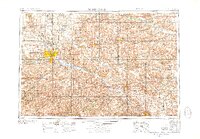 1956 Des Moines1956 Print · USGSCentral Iowa in the mid-fifties shows a landscape defined by bustling rail hubs and deep-rooted agricultural research. Genealogists and researchers can trace the growth of Des Moines and Ames, locate the Sac and Fox Indian Reservation, or study the paths of the Skunk River and South Skunk River.
 - 1956 Map of Farson, 1958 Print
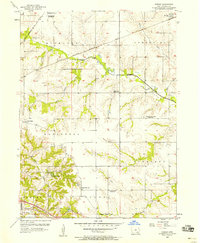 1956 Farson1958 Print · USGSWapello County farming townships are captured here in the mid-fifties during a wave of rural school consolidation. Genealogists can locate family sites near Highland Center, the McCormick Cem, and several sites marked as Nasby Sch (Abandoned).2 unique versions available
 - 1956 Map of Agency, 1958 Print
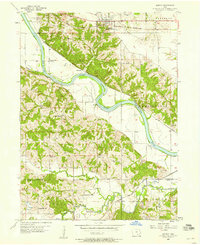 1956 Agency1958 Print · USGSSoutheastern Iowa's river valleys and rail lines come alive in this mid-century portrait of Wapello County. Researchers can trace rural life through numerous one-room schoolhouses like O'Connor Sch and historic sites such as Alpine Log Ch.2 unique versions available
 - 1956 Map of Ottumwa North, 1958 Print
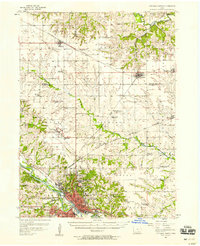 1956 Ottumwa North1958 Print · USGSMid-century Ottumwa and its surrounding townships show a bustling river-and-rail economy as the region expanded in the fifties. Genealogists can trace family sites at Memorial Lawn Cemetery and locate vanished rural landmarks like Shiloh Church.
 - 1956 Map of Ottumwa South, 1958 Print
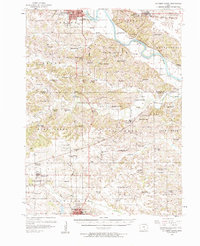 1956 Ottumwa South1958 Print · USGSSouthern Iowa in the mid-fifties reveals a landscape of transition where rural schoolhouses and busy rail lines connected small farming communities. Researchers can trace family history at sites like Mars Hill Ch, Lester Cem, and the old rail stop at Drakesville (Station).2 unique versions available
 - 1957 Map of Des Moines
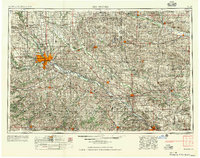 1957 Des Moines1957 Print · USGSCentral Iowa's post-war landscape is defined here by the converging rail lines and river valleys that shaped its earliest settlements. Genealogists and historians can trace the paths of the Rock Island Railroad and locate community landmarks in Des Moines, Ames, and Newton.
 - 1957 Map of Centerville
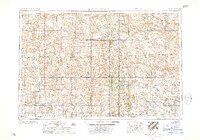 1957 Centerville1957 Print · USGSThe Iowa-Missouri borderlands in the mid-fifties reveal a landscape of river-valley agriculture and vital rail corridors. Genealogists and historians can trace family-named landmarks and small-town growth in Centerville, Kirksville, and along the Wabash railroad line.
 - 1958 Map of Centerville
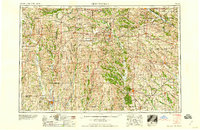 1958 Centerville1958 Print · USGSThe Iowa-Missouri borderlands come into focus during the mid-fifties, showing a landscape defined by river valleys and intersecting rail lines. Genealogists and local historians can trace family roots through dozens of rural hubs like Bloomfield, Unionville, and Corydon.
 - 1969 Map of Des Moines
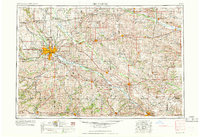 1969 Des Moines1969 Print · USGSCentral Iowa's fertile plains and growing capital are captured here during the late sixties, a time of major highway expansion and reservoir construction. Genealogists and researchers can trace rural township boundaries, local cemeteries, and rail lines serving towns like Pella, Grinnell, and Oskaloosa.
 - 1981 Map of Centerville, 1982 Print
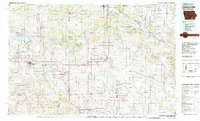 1981 Centerville1982 Print · USGSThe borderlands of southern Iowa and northern Missouri are captured here in the early eighties as Rathbun Lake and the Chariton River define the local geography. Researchers can trace historic rail lines like the Norfolk and Western and locate vanished hamlets such as Coal City and Glenwood Junction.
 - 1982 Map of Oskaloosa
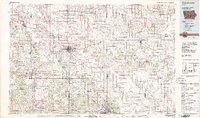 1982 Oskaloosa1982 Print · USGSSoutheast Iowa's river valleys and rail hubs are meticulously detailed in the early eighties, showing a landscape of productive farmland and growing municipal centers. Researchers can trace the legacy of small-town life and local industry through features like Union Mills, What Cheer, and the extensive Burlington Northern rail network.
 - 2010 Map of Farson, 2010 Print
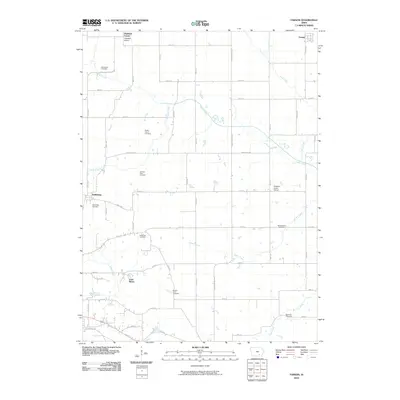 2010 Farson2010 Print · USGSWapello County's rural townships are documented in the early twenty-first century, featuring a landscape of section-line roads and creek bottoms. Genealogists can trace numerous family burial sites such as Nasby Corner Cemetery and Garrison Rock Cemetery, alongside the Pleasant Grove School.
 - 2010 Map of Agency, 2010 Print
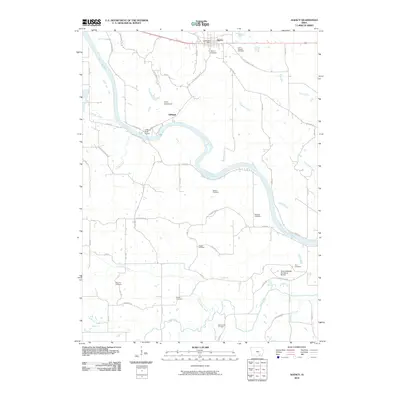 2010 Agency2010 Print · USGSWapello County's river-carved landscape comes into focus in the years after the turn of the millennium, centered on the historic town of Agency. Researchers can trace early family sites through numerous burial grounds like Chief Wapello Cemetery and Mars Hill Cemetery.
 - 2013 Map of Agency, 2013 Print
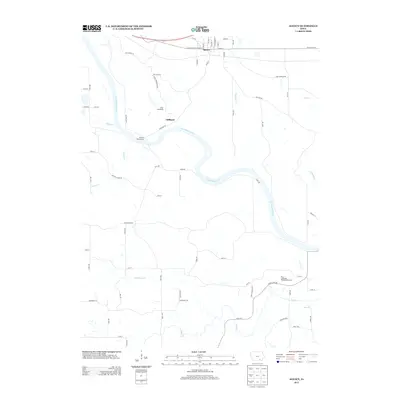 2013 Agency2013 Print · USGSSoutheast Iowa's riverine landscape is captured here in the early twenty-first century, centered on the historic town of Agency and the Des Moines River. Researchers can trace local landmarks like Camp Arrowhead, the Cliffland settlement, and the New Laddsdale Woodland Retreat.
 - 2013 Map of Farson, 2013 Print
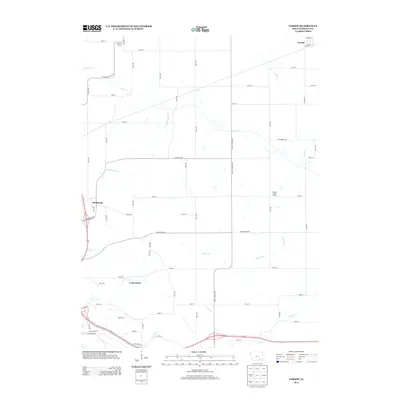 2013 Farson2013 Print · USGSWapello County in the early twenty-first century remains a landscape of deep-rooted agriculture and small rural centers. Genealogists and local historians can trace the schoolhouse sites of Highland School and Pleasant Grove School or the quiet streets of Farson and Dahlonega.
 - 2015 Map of Agency, 2015 Print
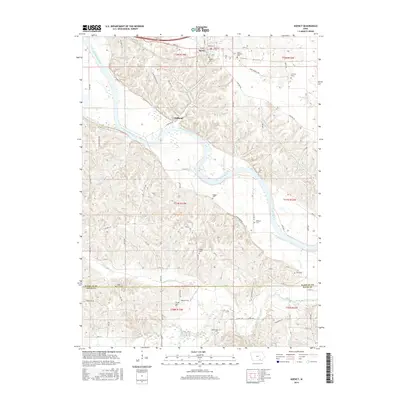 2015 Agency2015 Print · USGSSoutheast Iowa's river bluffs and rural townships appear in high detail during the mid-2010s, centering on the historic Agency area. Genealogists and historians can locate numerous pioneer burial sites including Chief Wapello Cem, Hackney Grave, and Mars Hill Cem.
 - 2015 Map of Farson, 2015 Print
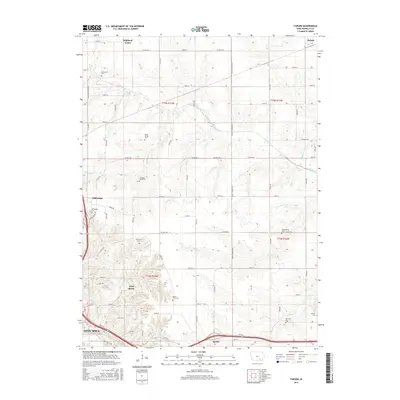 2015 Farson2015 Print · USGSWapello County townships and the northern reaches of Ottumwa are captured in this mid-2010s survey of southeastern Iowa. Researchers can trace numerous local burial sites and rural settlements, including Dahlonega Cemetery, Highland Center, and Bladensburg Cemetery.
 - 2018 Map of Farson, 2018 Print
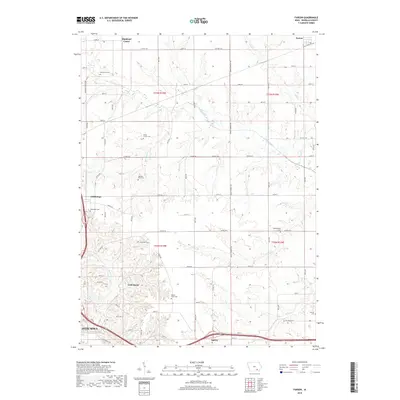 2018 Farson2018 Print · USGSSoutheast Iowa farming townships and the northern outskirts of Ottumwa are captured here in the late 2010s. Researchers can trace numerous rural burial sites including Garrison Rock Cem, Nasby Corner Cem, and the settlement of Dahlonega.
 - 2018 Map of Agency, 2018 Print
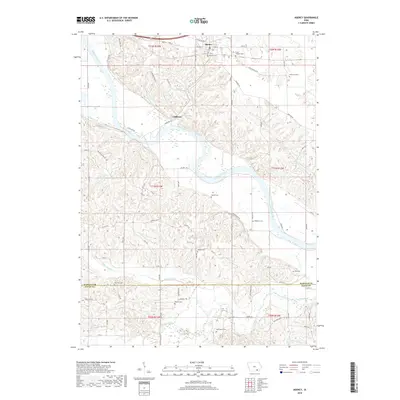 2018 Agency2018 Print · USGSSoutheastern Iowa's river bluffs and rolling farmland are meticulously detailed in this survey of the Des Moines River valley. Genealogists can trace family roots at numerous rural burial sites including Chief Wapello Cem, Mars Hill Cem, and Hackney Grave.
 - 2022 Map of Farson, 2022 Print
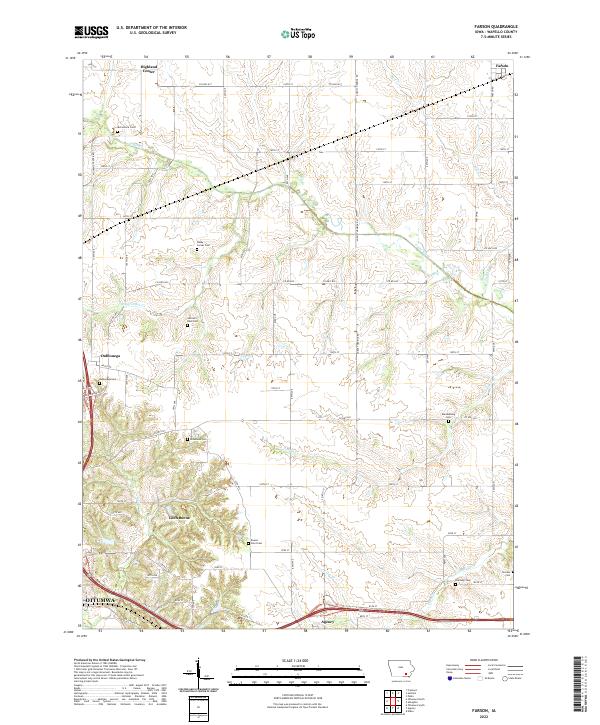 2022 Farson2022 Print · USGSSoutheast Iowa in the early 2020s reveals a structured landscape of rural townships and evolving residential clusters near Ottumwa. Researchers can locate many historical burial sites and small communities including Loch Burns, Highland Center, and the Dahlonega Cem.
 - 2022 Map of Agency, 2022 Print
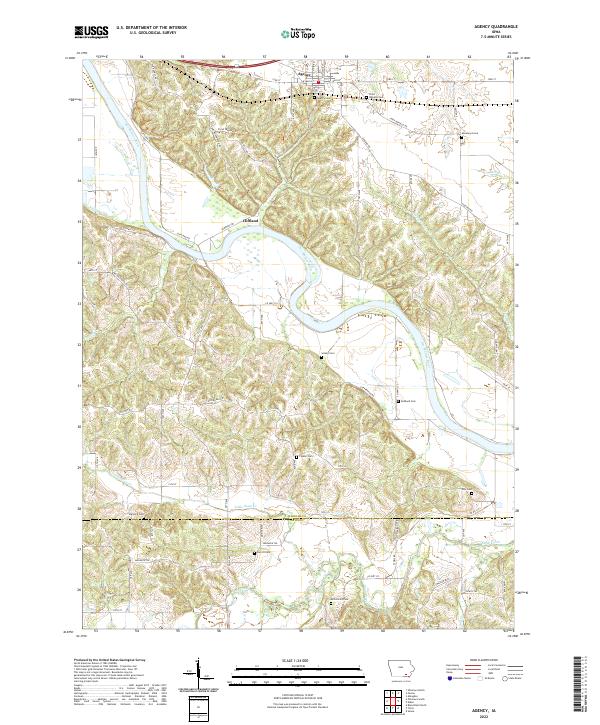 2022 Agency2022 Print · USGSSoutheast Iowa's river bluffs and rural townships are captured here in the contemporary era. Researchers can trace family history through a remarkable concentration of burial sites, including Agency Cem, the Hackney Grave, and the Mars Hill Cem near the Wapello and Davis County line.
End of results
Showing maps 1-23 of 23
Top cities near Agency
- Ottumwa historical maps
- Eldon historical maps
- Hedrick historical maps
- Fremont historical maps
- Batavia historical maps
- Ollie historical maps
See more
Frequently asked questions
- What are the different types of historical maps available for Agency?
- What is the oldest map of Agency?
- Where can I purchase historical maps of Agency for my home or office?
- Where can I download high-res historical maps of Agency?
- Are there historical topographic maps available for Agency?
- Is there historical aerial imagery available for Agency?
- Where are historical maps of Agency sourced from?