Old Maps of Wonsevu, Kansas for Academic Research
Study the evolution of Wonsevu with 11 high-resolution historic maps. Whether you're teaching, researching, or modeling changes in land use, these maps provide essential visual documentation of urban, environmental, and geographic change.
- Analyze long-term change: Track patterns in development, transportation, and natural features.
- Ideal for environmental or urban studies: Support academic projects with primary historical map data.
- Use in the classroom or lab: Educators and researchers rely on these maps to bring historical context to life.
These maps are a powerful tool for teaching, research, and visualizing how Wonsevu has changed over the decades.
Wonsevu, KS maps
(11)- 1898 Map of Cottonwood Falls
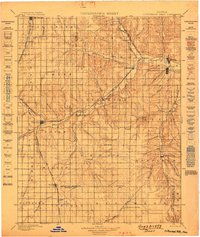 1898 Cottonwood Falls1898 Print · USGSChase and Marion counties thrive in the late 1890s as the railroad and river valleys define the region's development. Researchers can trace the early rail paths of the Atchison Topeka and Santa Fe RR and locate settlements like Cottonwood Falls, Cedar Point, and Wonsevu.4 unique versions available
 - 1955 Map of Hutchinson, 1967 Print
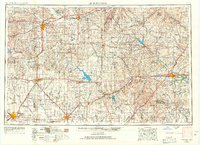 1955 Hutchinson1967 Print · USGSCentral Kansas in the mid-sixties reveals a landscape of growing reservoirs and evolving transportation corridors. Trace the development of towns like Hutchinson and Abilene alongside the Union Pacific Railroad and the expanding Interstate 70.3 unique versions available
 - 1957 Map of Wonsevu, 1958 Print
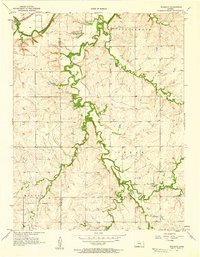 1957 Wonsevu1958 Print · USGSChase and Marion County farmland is captured here in the late fifties, showing the rural crossroads and creek-side settlements of the Kansas prairie. Genealogists and local historians can locate Wonsevu Cem, the Clothier Landing Field, and the winding Cedar Creek drainage.2 unique versions available
 - 1959 Map of Hutchinson
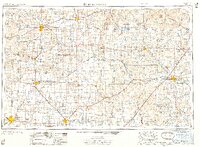 1959 Hutchinson1959 Print · USGSCentral Kansas thrives at the intersection of rail and river in the mid-1950s, as post-war aviation infrastructure reshapes the prairie. Genealogists and historians can trace the paths of the AT&SF RR through Newton and Hutchinson, or locate military sites like Smoky Hill Air Force Base.2 unique versions available
 - 1985 Map of Emporia
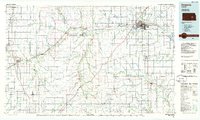 1985 Emporia1985 Print · USGSThe Flint Hills of central Kansas appear in high detail during the 1980s, centering on the convergence of the Cottonwood and Neosho rivers. Researchers can trace the Old Indian Treaty Boundary or locate prairie outposts like Matfield Green, Saffordville, and Bazaar.2 unique versions available
 - 1989 Map of Wonsevu, 1990 Print
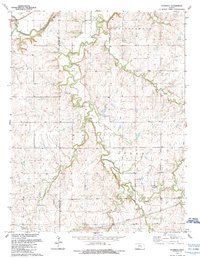 1989 Wonsevu1990 Print · USGSChase County, Kansas, is captured here in the late eighties as a quiet rural landscape defined by the winding Cottonwood River. Genealogists and local researchers can trace the vicinity of Wonsevu and the paths of Coon Creek and Martin Creek through the terrain.
 - 2010 Map of Wonsevu, 2010 Print
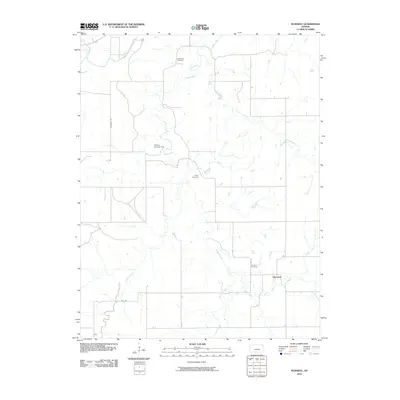 2010 Wonsevu2010 Print · USGSChase County, Kansas, is documented here in the early 2000s, showing a landscape defined by prairie waterways and scattered rural homesteads. Genealogists can locate family landmarks such as Wonsevu Cemetery, Griffith Cemetery, and the small settlement of Wonsevu.
 - 2012 Map of Wonsevu, 2012 Print
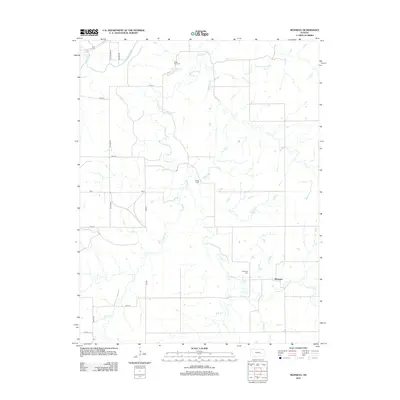 2012 Wonsevu2012 Print · USGSChase County, Kansas, is documented here in the early twenty-first century, showing the rural layout of the Wonsevu area. Researchers can trace family history through the locations of Wonsevu Cem and Griffith Cem or follow the path of the Cottonwood River.
 - 2015 Map of Wonsevu, 2015 Print
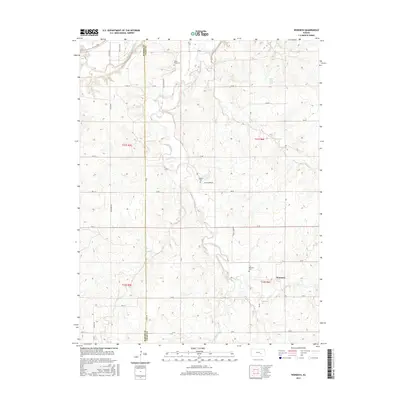 2015 Wonsevu2015 Print · USGSChase County, Kansas, is shown in the mid-2010s at a time when its quiet rural character and creek-fed valleys remained largely unchanged. Local researchers can pinpoint family burial sites like Griffith Cem and follow the winding courses of Turkey Cr or Bills Cr.
 - 2018 Map of Wonsevu, 2018 Print
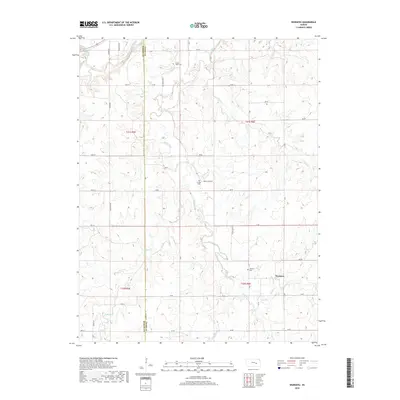 2018 Wonsevu2018 Print · USGSThe rural landscape of Chase County is captured here in the late 2010s, centered on the small settlement of Wonsevu. Genealogists can locate family landmarks at the Wonsevu Cem, Griffith Cem, and along the winding banks of Cedar Cr.
 - 2022 Map of Wonsevu, 2022 Print
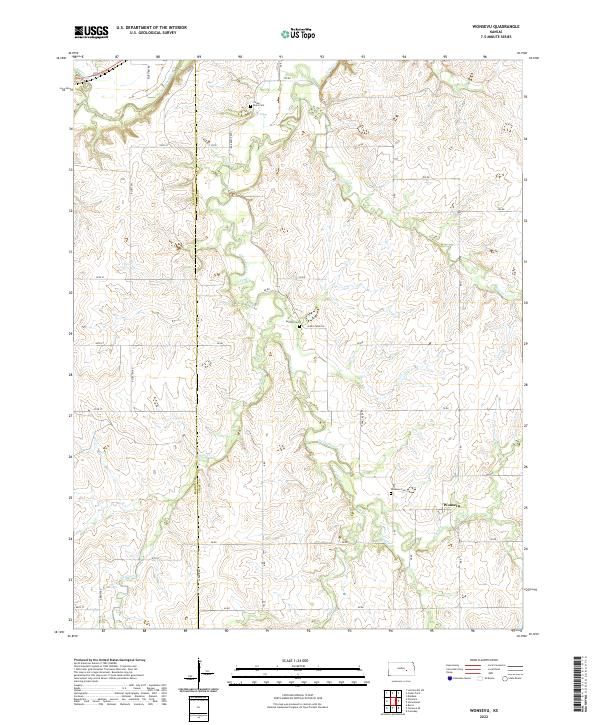 2022 Wonsevu2022 Print · USGSCentral Kansas ranching and farm country is captured here across the Marion and Chase county line, where Wonsevu sits among the Flint Hills. Genealogists and historians can trace local family markers at Wonsevu Cem, Griffith Cem, and Cedar Point Cem.
End of results
Showing maps 1-11 of 11
Top cities near Wonsevu
- Marion historical maps
- Cottonwood Falls historical maps
- Florence historical maps
- Burns historical maps
- Cassoday historical maps
- Matfield Green historical maps
See more
Frequently asked questions
- What are the different types of historical maps available for Wonsevu?
- What is the oldest map of Wonsevu?
- Where can I purchase historical maps of Wonsevu for my home or office?
- Where can I download high-res historical maps of Wonsevu?
- Are there historical topographic maps available for Wonsevu?
- Is there historical aerial imagery available for Wonsevu?
- Where are historical maps of Wonsevu sourced from?