Old Maps of Rice County, Kansas for Academic Research
Study the evolution of Rice County with 136 high-resolution historic maps. Whether you're teaching, researching, or modeling changes in land use, these maps provide essential visual documentation of urban, environmental, and geographic change.
- Analyze long-term change: Track patterns in development, transportation, and natural features.
- Ideal for environmental or urban studies: Support academic projects with primary historical map data.
- Use in the classroom or lab: Educators and researchers rely on these maps to bring historical context to life.
These maps are a powerful tool for teaching, research, and visualizing how Rice County has changed over the decades.
Rice County, KS maps
(136)- 1891 Map of Hutchinson
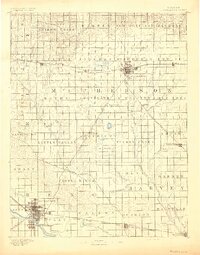 1891 Hutchinson1891 Print · USGSCentral Kansas at the close of the frontier era was a landscape of burgeoning rail towns and organized townships. Genealogists and local historians can trace the early footprints of Hutchinson and Mc Pherson alongside vanished locales like King City and Aiken.
 - 1892 Map of Salina
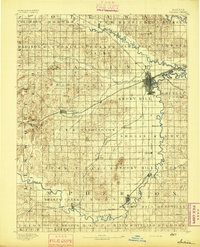 1892 Salina1892 Print · USGSCentral Kansas at the close of the nineteenth century centers on the booming rail junctions and river valleys of the Smoky Hill region. Genealogists can trace family footprints in riverside settlements like Lindsborg and Assaria or the rail stops of Bavaria and Terra Cotta.6 unique versions available
 - 1893 Map of Hutchinson
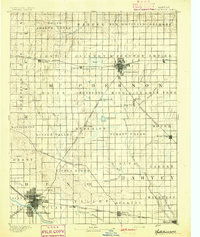 1893 Hutchinson1893 Print · USGSCentral Kansas at the close of the nineteenth century reveals a landscape undergoing a total transformation through railroad expansion and township settlement. Genealogists can trace early homestead patterns and family-named districts like Lone Tree and Garden while locating vanished stops along the Missouri Pacific Railway.5 unique versions available
 - 1894 Map of Ellsworth
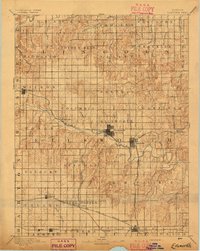 1894 Ellsworth1894 Print · USGSCentral Kansas was undergoing a period of rapid railway expansion in the late nineteenth century, transforming the prairie into a network of grid-organized townships. Genealogists and historians can trace early town sites and rail junctions like Ellsworth, Holyrood, and the path of the Union Pacific Railway.4 unique versions available
 - 1894 Map of Lyons
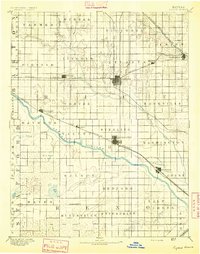 1894 Lyons1894 Print · USGSRice County during the late nineteenth-century rail boom shows a landscape organized by townships and expanding prairie towns. Researchers can trace the early development of Lyons and Sterling or locate vanished landmarks like Huntsville P.O. and the Black Marsh.5 unique versions available
 - 1942 Map of Salina
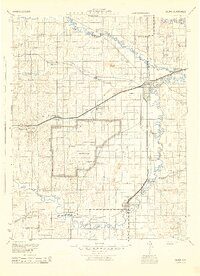 1942 Salina1942 Print · USGSCentral Kansas during the early 1940s reveals a landscape transitioning between its deep agricultural roots and a massive new wartime footing. Researchers can trace the development of the Military Reservation and locate small rail-side settlements like Terra Cotta and Smolan.
 - 1955 Map of Great Bend, 1966 Print
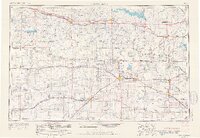 1955 Great Bend1966 Print · USGSCentral Kansas during the mid-sixties transition reveals a landscape defined by new reservoirs and enduring rail corridors. Researchers can trace the development of towns like Hays and Great Bend or locate natural landmarks such as Round Mound and the wetlands of the Quivira National Wildlife Refuge.3 unique versions available
 - 1955 Map of Hutchinson, 1967 Print
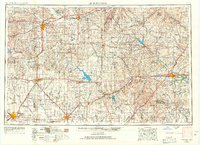 1955 Hutchinson1967 Print · USGSCentral Kansas in the mid-sixties reveals a landscape of growing reservoirs and evolving transportation corridors. Trace the development of towns like Hutchinson and Abilene alongside the Union Pacific Railroad and the expanding Interstate 70.3 unique versions available
 - 1957 Map of Great Bend
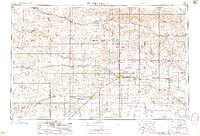 1957 Great Bend1957 Print · USGSCentral Kansas at the peak of the postwar era shows a landscape of growing rail hubs and massive new water projects. Trace the routes of the Union Pacific through Hays or locate the newly formed shorelines of Cedar Bluff Reservoir and Kanopolis Reservoir.
 - 1958 Map of Great Bend
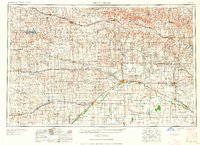 1958 Great Bend1958 Print · USGSCentral Kansas in the late fifties reveals a landscape of high-plains agriculture and vital river crossings. Researchers can trace the development of regional hubs like Hays and Russell, or locate historic sites such as Fort Larned and the Cheyenne Bottoms wildlife area.2 unique versions available
 - 1959 Map of Hutchinson
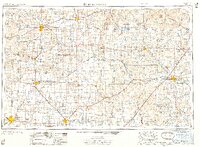 1959 Hutchinson1959 Print · USGSCentral Kansas thrives at the intersection of rail and river in the mid-1950s, as post-war aviation infrastructure reshapes the prairie. Genealogists and historians can trace the paths of the AT&SF RR through Newton and Hutchinson, or locate military sites like Smoky Hill Air Force Base.2 unique versions available
 - 1964 Map of Holyrood, 1965 Print
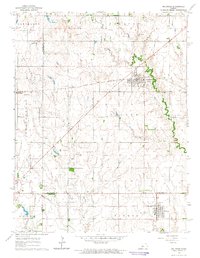 1964 Holyrood1965 Print · USGSCentral Kansas during the mid-sixties reveals a landscape defined by the convergence of major rail lines and a dense network of petroleum production. Researchers can trace the Atchison Topeka and Santa Fe tracks through Holyrood and locate the Bushton Cem near the Missouri Pacific line.
 - 1964 Map of Crawford, 1965 Print
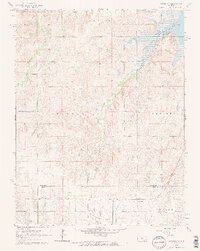 1964 Crawford1965 Print · USGSCentral Kansas agriculture meets the petroleum industry in the mid-1960s as the MISSOURI PACIFIC railroad connects rural townships. Genealogists can trace family footprints across several rural burial sites, including Scaife Cem and Forest Grove Cem, near the Click Southeast Oil Field.2 unique versions available
 - 1964 Map of Geneseo, 1965 Print
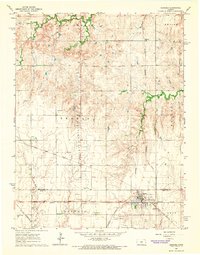 1964 Geneseo1965 Print · USGSMid-century Rice County is defined by a dense network of competing railroads and expanding energy production. Genealogists and historians can trace family roots at the Kansas Center Cem or explore the infrastructure of the Geneseo-Edwards Oil Field and the settlement at Galt.3 unique versions available
 - 1964 Map of Lorraine, 1965 Print
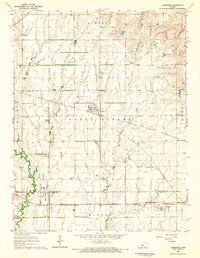 1964 Lorraine1965 Print · USGSRailroads and oil fields dominate this mid-century Kansas landscape, where the towns of Lorraine and Frederick served as vital rural hubs. Genealogists and historians can trace rail lines like the St Louis - San Francisco and locate the Lorraine Cem.2 unique versions available
 - 1964 Map of Langley, 1965 Print
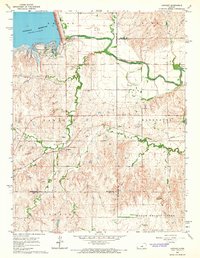 1964 Langley1965 Print · USGSThe rural borderlands of Ellsworth and McPherson counties are captured here in the mid-1960s. Genealogists can trace family footprints around the village of Langley, the Langley Sch, and the riverside Sandpits along the Smoky Hill River.2 unique versions available
 - 1964 Map of Windom SW, 1966 Print
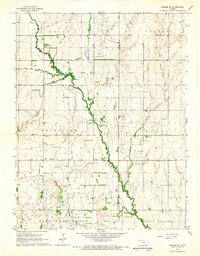 1964 Windom SW1966 Print · USGSThe rural intersection of Rice and McPherson counties is captured here in the mid-1960s as a landscape of structured townships and prairie waterways. Researchers can locate community anchors like Rockville Sch, Andover Cem, and a Quarry near the Little Arkansas River.2 unique versions available
 - 1965 Map of Hutchinson NW, 1966 Print
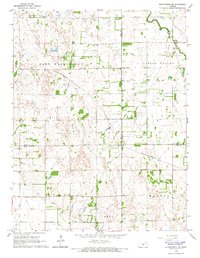 1965 Hutchinson NW1966 Print · USGSThe rural borderlands of Rice, Reno, and McPherson counties are captured here in the mid-1960s as a landscape of prairie agriculture and energy production. Researchers can locate the Welch Bornholdt Oil Field, the Thomas Grove Sch, and the winding Little Arkansas River.2 unique versions available
 - 1965 Map of Windom, 1966 Print
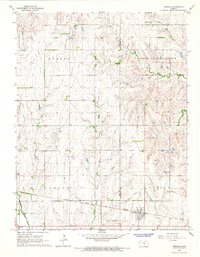 1965 Windom1966 Print · USGSCentral Kansas prairie life is captured here in the mid-sixties, where the Little Arkansas River meets the oil fields. Genealogists can locate Bean Cem and the Townhall while tracing rail history along the Atchison Topeka and Santa Fe.2 unique versions available
 - 1967 Map of Alden, 1968 Print
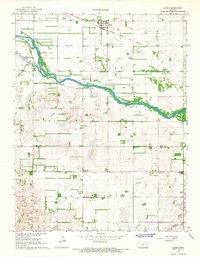 1967 Alden1968 Print · USGSThe Arkansas Valley in the late 1960s was a landscape defined by the convergence of rail, river, and energy production. Genealogists and local historians can trace rural family roots through landmarks like Triumph Ch, Peace Valley Cem, and Kilbourns Corner.
 - 1967 Map of Alden NW, 1968 Print
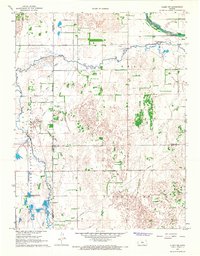 1967 Alden NW1968 Print · USGSCentral Kansas wetlands and energy development meet in the late sixties at the border of Rice, Stafford, and Reno counties. Local historians can trace the early boundaries of Quivira National Wildlife Refuge and locate old Oil Wells near Dead Horse Slough.
 - 1967 Map of Sterling, 1968 Print
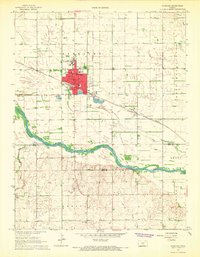 1967 Sterling1968 Print · USGSSterling thrives as a college town and rail junction during the late sixties, where the Missouri Pacific and Santa Fe lines converge. Researchers can trace local landmarks like Sterling College, Sterling Cemetery, and the industrial Sandpits near the Arkansas River.
 - 1970 Map of Lyons, 1972 Print
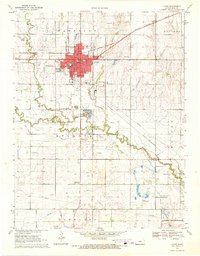 1970 Lyons1972 Print · USGSLyons stood as a critical Kansas rail junction in the early seventies, where three major railroads met amidst a landscape shaped by petroleum and agriculture. Genealogists and local historians can trace family-named schools and sites like Saxman, Municipal Cemetery, and the Shumway Oil Field.
 - 1970 Map of Chase NE, 1972 Print
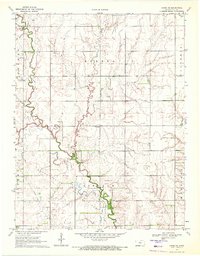 1970 Chase NE1972 Print · USGSRice County agriculture meets energy production in the early seventies, as the petroleum industry reshaped this prairie landscape. Genealogists and historians can trace rural school districts like Sunny Four Sch and the church community at Ebenezer Ch.
 - 1970 Map of Lyons SE, 1972 Print
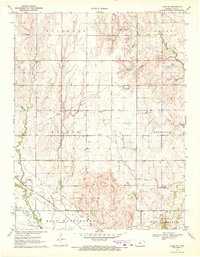 1970 Lyons SE1972 Print · USGSRice County at the start of the seventies reveals a landscape defined by petroleum production and rail transit. Researchers can trace the St Louis - San Francisco line past the Welch Bornholdt Oil Field and the small settlement of Saxman.
Showing maps 1-25 of 136
Top cities of Rice County
- Lyons historical maps
- Sterling historical maps
- Little River historical maps
- Chase historical maps
- Bushton historical maps
- Geneseo historical maps
See more
Frequently asked questions
- What are the different types of historical maps available for Rice County?
- What is the oldest map of Rice County?
- Where can I purchase historical maps of Rice County for my home or office?
- Where can I download high-res historical maps of Rice County?
- Are there historical topographic maps available for Rice County?
- Is there historical aerial imagery available for Rice County?
- Where are historical maps of Rice County sourced from?