Old Maps of Saline County, Kansas
Explore 152 old maps of Saline County, spanning from 1889 to today. These high-resolution historic maps reveal how streets, neighborhoods, landmarks, and natural features evolved over time — perfect for genealogy, metal detecting, research, and local history exploration.
What you can do with these maps:
- See how Saline County changed over time: Compare historical maps to modern-day views to trace roads, homesites, rail lines & more.
- View detailed metadata: Each map includes creators, publishers, year, scale, and archive source.
- Overlay maps with satellite & LiDAR: Visualize the past alongside modern tools to explore terrain & human change.
- Trusted historical sources: Maps sourced from the USGS, Library of Congress, and other archives.
- Access maps your way: View online, download high-res files, or order prints for personal or research use.
Start exploring old maps of Saline County to uncover forgotten places, hidden landmarks, and the deep history beneath your feet.
Saline County, KS maps
(152)- 1889 Map of Abilene
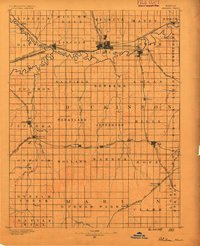 1889 Abilene1889 Print · USGSAbilene and Dickinson County appear here in the late 1880s during the height of the Kansas railroad expansion. Genealogists and historians can trace the early development of Enterprise, Gypsum City, and Navarre along the complex network of the Union Pacific Railroad and competing lines.
 - 1892 Map of Salina
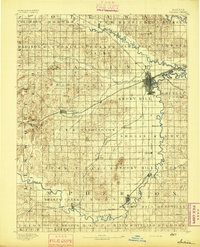 1892 Salina1892 Print · USGSCentral Kansas at the close of the nineteenth century centers on the booming rail junctions and river valleys of the Smoky Hill region. Genealogists can trace family footprints in riverside settlements like Lindsborg and Assaria or the rail stops of Bavaria and Terra Cotta.6 unique versions available
 - 1894 Map of Abilene
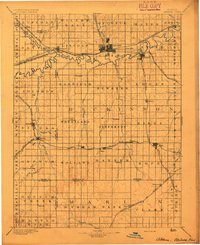 1894 Abilene1894 Print · USGSCentral Kansas at the peak of the railroad era shows a landscape transformed by competing iron rails and river commerce. Genealogists and historians can trace family roots through early settlements like Abilene, Enterprise, and Hope, or locate old stops along the Missouri Pacific Railroad.6 unique versions available
 - 1942 Map of Salina
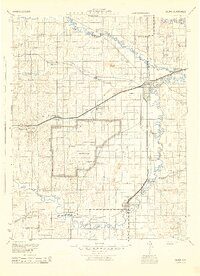 1942 Salina1942 Print · USGSCentral Kansas during the early 1940s reveals a landscape transitioning between its deep agricultural roots and a massive new wartime footing. Researchers can trace the development of the Military Reservation and locate small rail-side settlements like Terra Cotta and Smolan.
 - 1955 Map of Salina, 1956 Print
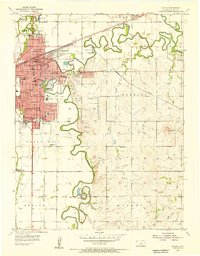 1955 Salina1956 Print · USGSMid-century Salina is captured here as a bustling educational and military hub at the height of the Cold War. Genealogists and local historians can trace neighborhood growth through numerous local schools like Hawthorne Sch and locate ancestors at Mt Calvary Cem or Memorial Park Cemetery.2 unique versions available
 - 1955 Map of Assaria, 1956 Print
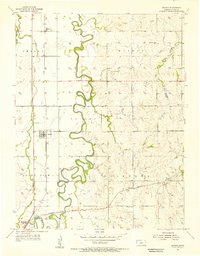 1955 Assaria1956 Print · USGSSaline County’s river-and-rail corridor is captured here in the mid-fifties as the local economy balanced agriculture with growing energy interests. Genealogists and historians can trace rail-side settlements like Assaria and Mentor, or locate rural school sites such as Summit Hill Sch and Wheeler Sch.2 unique versions available
 - 1955 Map of Salina SW, 1956 Print
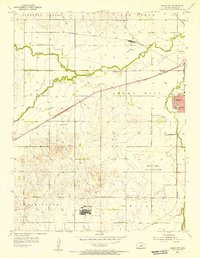 1955 Salina SW1956 Print · USGSThe outskirts of Salina are captured here in the mid-fifties during a period of significant military and suburban expansion. Researchers can trace the development of Phillips Village, the grounds of the Smoky Hill Air Force Base, and local landmarks like St Francis Boys Home.3 unique versions available
 - 1955 Map of Trenton, 1956 Print
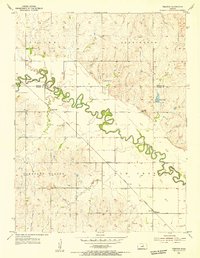 1955 Trenton1956 Print · USGSIn the mid-fifties, the Saline River and the Union Pacific railroad shaped the rural economy of central Kansas. Genealogists and researchers can locate the small communities of Marydel and Shipton, along with local landmarks like Shiloh Sch and Walnut Hill Cem.2 unique versions available
 - 1955 Map of Smolan, 1956 Print
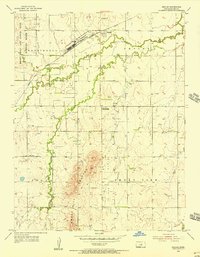 1955 Smolan1956 Print · USGSMid-century Saline County is captured here during a period of transition between agricultural life and military expansion. Local researchers can trace the historic Missouri Pacific rail line and locate community landmarks like Salemsborg and the Rose Hill Cemetery.2 unique versions available
 - 1955 Map of Brookville, 1956 Print
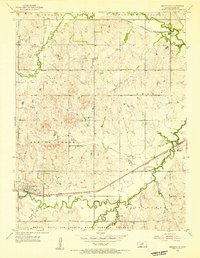 1955 Brookville1956 Print · USGSMid-century Saline County is defined here by the meeting of the Union Pacific and Atchison Topeka and Santa Fe railroads. Researchers can trace the development of Brookville and Bavaria or locate the boundaries of the Smoky Hill Air Force Base Bombing Range.3 unique versions available
 - 1955 Map of Niles, 1956 Print
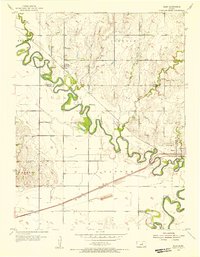 1955 Niles1956 Print · USGSMid-century Kansas life unfolds along the winding Solomon River and the critical Union Pacific railroad line. Researchers can locate early schools and cemeteries like the Red Brick Sch (Abandoned) and Greenville Cem within the townships of Buckeye and Dayton.2 unique versions available
 - 1955 Map of Culver, 1956 Print
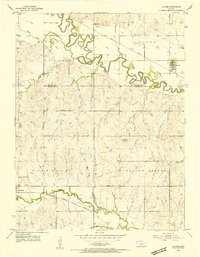 1955 Culver1956 Print · USGSOttawa and Saline counties are captured in the mid-1950s, showing a landscape shaped by the Saline River and dual rail lines. Researchers can trace rural life through landmarks like Tripp Sch, Franklin Cem, and the tracks of the Union Pacific.2 unique versions available
 - 1955 Map of New Cambria, 1956 Print
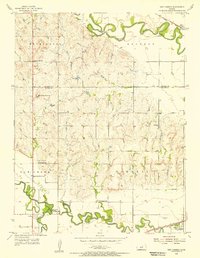 1955 New Cambria1956 Print · USGSThe confluence of the Solomon and Saline rivers defines this Kansas landscape in the mid-fifties, just as the local rail and radio infrastructure was maturing. Researchers can trace rural landmarks like the Saline Valley Gem Humbargar Sch, Highland Cem, and North Pole Mound.2 unique versions available
 - 1955 Map of Falun, 1956 Print
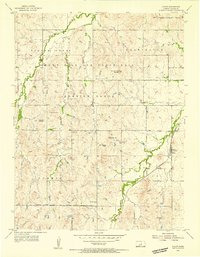 1955 Falun1956 Print · USGSMid-century Saline County is captured here as the Cold War begins to reshape the rural landscape. Researchers can trace the sprawling Smoky Hill Air Force Base Bombing Range alongside rail-era features like Falun and Dry Creek Cem.3 unique versions available
 - 1955 Map of Kipp, 1956 Print
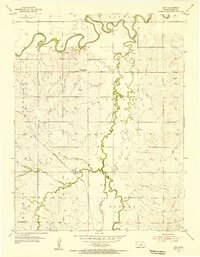 1955 Kipp1956 Print · USGSSaline County farming communities are shown here in the mid-fifties as the rail-and-river economy centered on Kipp remained in place. Genealogists and researchers can trace family roots at St Pauls Ch, Pohata Cem, and the site of the Mt Tabor Sch (Abandoned).2 unique versions available
 - 1955 Map of Gypsum, 1956 Print
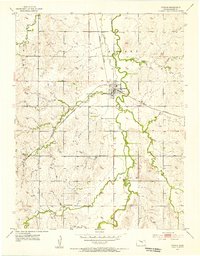 1955 Gypsum1956 Print · USGSThe Saline County landscape at the mid-century mark centers on the rail-served town of Gypsum during a period of established rural settlement. Researchers can trace family history through sites like St Patrick Cem, the German Temple, and the Stag Creek Sch.3 unique versions available
 - 1955 Map of Hutchinson, 1967 Print
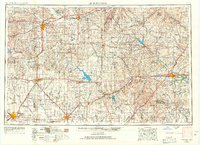 1955 Hutchinson1967 Print · USGSCentral Kansas in the mid-sixties reveals a landscape of growing reservoirs and evolving transportation corridors. Trace the development of towns like Hutchinson and Abilene alongside the Union Pacific Railroad and the expanding Interstate 70.3 unique versions available
 - 1957 Map of Brookville SW, 1958 Print
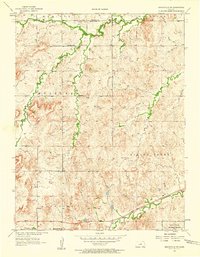 1957 Brookville SW1958 Print · USGSThe rural landscape of central Kansas in the mid-fifties shows a transition from traditional farming communities to Cold War military use. Genealogists and historians can trace local roots at Mulberry Cem or follow the Union Pacific rails past Arcola.3 unique versions available
 - 1957 Map of Venango, 1958 Print
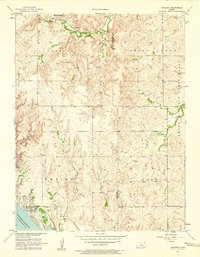 1957 Venango1958 Print · USGSThe central Kansas landscape near the Smoky Hills is captured here just as the newly formed Kanopolis Reservoir was reshaping the region. Local researchers can trace the Union Pacific rail corridor through the now-quiet sites of Terra Cotta and Arcola, alongside family landmarks like Summit Cemetery.4 unique versions available
 - 1959 Map of Hutchinson
 1959 Hutchinson1959 Print · USGSCentral Kansas thrives at the intersection of rail and river in the mid-1950s, as post-war aviation infrastructure reshapes the prairie. Genealogists and historians can trace the paths of the AT&SF RR through Newton and Hutchinson, or locate military sites like Smoky Hill Air Force Base.2 unique versions available
 - 1963 Map of Juniata, 1964 Print
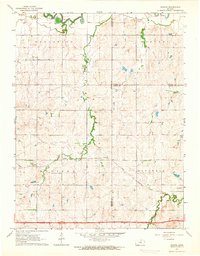 1963 Juniata1964 Print · USGSCentral Kansas at the start of the 1960s shows a landscape defined by the convergence of three counties and steady rail traffic. Genealogists and local historians can trace the paths of the Atchison Topeka and Santa Fe through Juniata and find the rural Monroe Cem.2 unique versions available
 - 1963 Map of Holland, 1965 Print
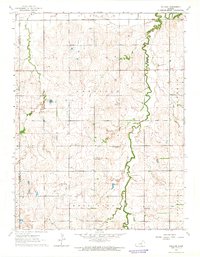 1963 Holland1965 Print · USGSDickinson County farming communities are documented here in the early sixties, showing the rural townships of Lincoln and Garfield. Genealogists can locate Green Lawn Cem, while local historians can trace the sites of Acme and the Grace & Truth Gospel Chapel.
 - 1963 Map of Solomon, 1965 Print
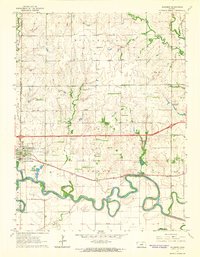 1963 Solomon1965 Print · USGSThe confluence of the Smoky Hill River and two major railroads defined life in central Kansas during the early sixties. Researchers can trace family landmarks like Willowdale Ch, Prairie Mound Cem, and the King Solomon Camp as the interstate era began.3 unique versions available
 - 1964 Map of Carlton, 1965 Print
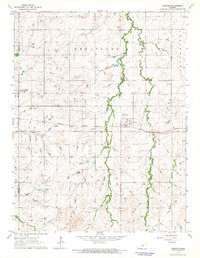 1964 Carlton1965 Print · USGSThe rural border of Dickinson and Saline counties is captured here in the mid-1960s, centered on the village of Carlton. Genealogists and local historians can trace the Missouri Pacific rail line and locate family burial sites at Fairview Cem and Woodlawn Cem.3 unique versions available
 - 1964 Map of Marquette, 1965 Print
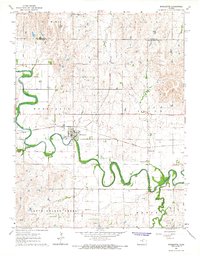 1964 Marquette1965 Print · USGSMarquette and the surrounding McPherson County plains appear here in the mid-1960s, defined by the winding Smoky Hill River. Researchers can trace the Missouri Pacific rail line and locate community landmarks like Freemount Ch and Mackie.2 unique versions available
Showing maps 1-25 of 152
Top cities of Saline County
- Salina historical maps
- Assaria historical maps
- Gypsum historical maps
- Falun historical maps
- Brookville historical maps
- Smolan historical maps
See more
Frequently asked questions
- What are the different types of historical maps available for Saline County?
- What is the oldest map of Saline County?
- Where can I purchase historical maps of Saline County for my home or office?
- Where can I download high-res historical maps of Saline County?
- Are there historical topographic maps available for Saline County?
- Is there historical aerial imagery available for Saline County?
- Where are historical maps of Saline County sourced from?