1950s Maps of Hopkinsville, Kentucky
Explore 15 historic maps of Hopkinsville from the 1950s. These maps offer a rare glimpse into what life looked like during the 1950s — showing old roads, neighborhoods, homes, and landmarks that have changed or disappeared over time.
Whether you're researching your family's past, planning a metal detecting trip, or studying how Hopkinsville's landscape evolved across the 1950s, these high-resolution maps are a powerful tool for exploring the history of this region.
- Focus on a specific era: All maps on this page are from the 1950s, giving you a focused view of this time period.
- See what’s changed: Compare century-old streets, trails, and buildings to today's modern landscape using overlays and satellite layers.
- Research with precision: Use these maps for genealogy, historical research, land use analysis, or educational projects.
- View, download, or print: Maps are fully viewable online in high resolution, and can be downloaded or printed for your own records.
Start exploring Hopkinsville's history through authentic maps from the 1950s. This is your window into the past.
Hopkinsville, KY maps
(15)- 1950 Map of Pembroke, 1968 Print
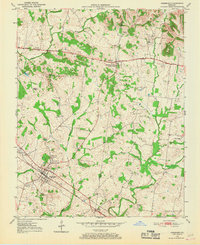 1950 Pembroke1968 Print · USGSAgricultural Christian County comes alive in this mid-century portrait, showing the area as it transitioned from rail-focused trade to highway travel. Genealogists can trace family lines through numerous sites like Rosedale Cem, Barnetts Chapel, and the County Home.2 unique versions available
 - 1951 Map of Pembroke
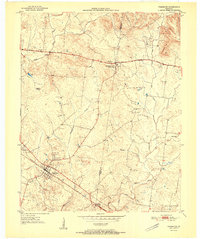 1951 Pembroke1951 Print · USGSChristian and Todd counties are shown here in the early fifties, where the railroad and highway networks intersect. Genealogists can trace family names and rural landmarks like Rosedale Cem, Barnetts Chapel, and the Jefferson Davis State Park monument.2 unique versions available
 - 1951 Map of Church Hill
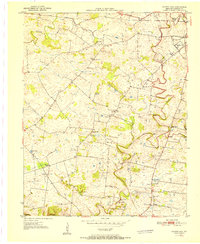 1951 Church Hill1951 Print · USGSChristian County farmland south of Hopkinsville is captured here in the early fifties, showing a rural landscape tied together by country roads and the Little River. Genealogists can locate family landmarks like the Mcclain Chapel, Hebron Ch, and Walnut Grove Sch.
 - 1951 Map of Hopkinsville
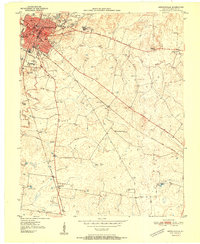 1951 Hopkinsville1951 Print · USGSChristian County at mid-century was a bustling rail junction centered on the growth of Hopkinsville. Genealogists and historians can trace the foundations of the community through landmarks like Riverside Cem, Bethel College, and the sprawling Western State Hospital.
 - 1951 Map of Oak Grove, 1953 Print
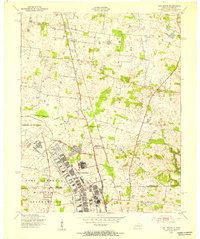 1951 Oak Grove1953 Print · USGSThe Kentucky and Tennessee borderlands are captured here in the early fifties as military expansion meets rural life. Researchers can trace the development of Fort Campbell alongside old community hubs like Fidelio, St Elmo, and the Tennessee Central Railroad.
 - 1952 Map of Pleasant Green Hill, 1953 Print
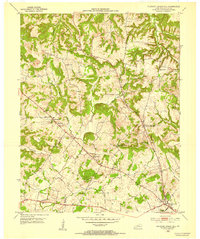 1952 Pleasant Green Hill1953 Print · USGSChristian County at the dawn of the fifties reveals a landscape defined by a network of rural churches and family cemeteries. Genealogists can trace local heritage through sites like Harmony Grove Ch, Fuller Cem, and the old Mt Zoar Sch.
 - 1952 Map of Kelly, 1953 Print
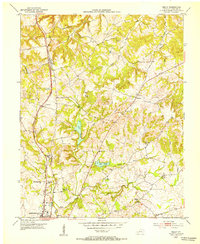 1952 Kelly1953 Print · USGSChristian County's rural landscape is captured here in the early fifties as the Louisville and Nashville railroad serviced local communities like Kelly. Genealogists can trace family roots through several small burial grounds and churches, including Boyd Cem and Wolf Chapel.
 - 1956 Map of Church Hill, 1958 Print
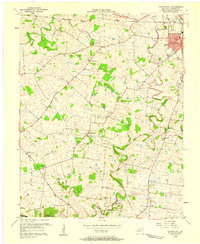 1956 Church Hill1958 Print · USGSChristian County in the mid-fifties reveals a landscape of thriving rural communities and the southwestern expansion of the county seat. Genealogists and local historians can trace family roots through numerous country landmarks like South Union Ch, McClain Chapel, and Merrittstown.2 unique versions available
 - 1956 Map of Hopkinsville, 1958 Print
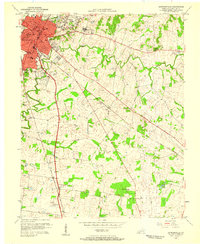 1956 Hopkinsville1958 Print · USGSHopkinsville in the mid-1950s is a key rail hub for Christian County, centered at the crossing of two major lines. Genealogists and historians can trace the town's growth alongside rural landmarks like Riverside Cem, Bethel College, and the Tennessee Central railroad corridor.3 unique versions available
 - 1956 Map of Nashville, 1971 Print
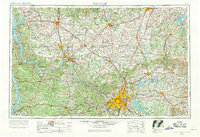 1956 Nashville1971 Print · USGSThe Tennessee-Kentucky borderlands come into focus in the mid-1960s as major reservoir projects transformed the Cumberland and Tennessee river valleys. Researchers can trace the rail networks of the Louisville and Nashville and visit sites like Fort Campbell and Fort Donelson National Military Park.2 unique versions available
 - 1957 Map of Pleasant Green Hill, 1958 Print
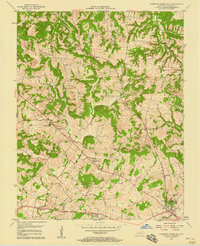 1957 Pleasant Green Hill1958 Print · USGSChristian County's rural landscape is captured here in the mid-fifties, showing a network of small farming settlements and crossroads churches. Researchers can locate family heritage sites like Mt Zion Cem & Ch, Palestine, and the Drive-in Theater near the Jeff Davis Highway.3 unique versions available
 - 1957 Map of Kelly, 1958 Print
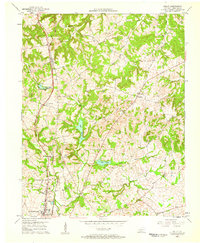 1957 Kelly1958 Print · USGSChristian County's rural landscape in the late fifties shows the shift from northern Hopkinsville into the quiet farming communities of Kelly and Dogwood. Genealogists and historians can trace family burial grounds like Foster Cem and early local landmarks such as Cleveland Spring Ch.
 - 1957 Map of Oak Grove, 1960 Print
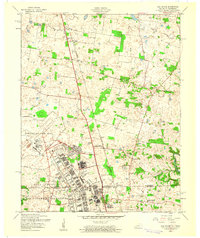 1957 Oak Grove1960 Print · USGSThe Kentucky-Tennessee borderlands are captured here in the late fifties as military expansion at Fort Campbell meets the rural farming country of Christian County. Genealogists and local historians can trace small settlements like Fidelio, visit country churches like Salem Ch, and locate the Drive-in Theater near Oak Grove.
 - 1957 Map of Clarksville, 1963 Print
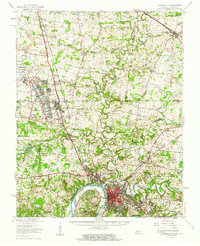 1957 Clarksville1963 Print · USGSThe Clarksville region and the Kentucky-Tennessee border are shown here during the mid-century expansion of Fort Campbell. Researchers can trace old family sites and rural landmarks like Barkers Mill, St Bethlehem, and the Tennessee Central railroad.
 - 1959 Map of Nashville
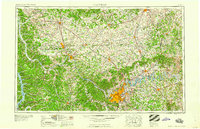 1959 Nashville1959 Print · USGSMiddle Tennessee and Southern Kentucky come into focus during the late fifties, showing the region's transition into a modern transportation and military hub. Researchers can trace the sprawling Fort Campbell Military Reservation or locate historic rail stops along the Tennessee Central Ry and Illinois Central RR.
End of results
Showing maps 1-15 of 15
Top cities near Hopkinsville
- Clarksville historical maps
- Oak Grove historical maps
- Pembroke historical maps
- Trenton historical maps
- LaFayette historical maps
Top neighborhoods of Hopkinsville
Frequently asked questions
- What are the different types of historical maps available for Hopkinsville?
- What is the oldest map of Hopkinsville?
- Where can I purchase historical maps of Hopkinsville for my home or office?
- Where can I download high-res historical maps of Hopkinsville?
- Are there historical topographic maps available for Hopkinsville?
- Is there historical aerial imagery available for Hopkinsville?
- Where are historical maps of Hopkinsville sourced from?