Old Maps of Crittenden County, Kentucky for Genealogy
Trace your family roots with 125 historic maps of Crittenden County. These high-res maps reveal old neighborhoods, homesites, landmarks, and streets — helping you uncover where your ancestors lived and how the area evolved over time.
- Explore historic neighborhoods: Identify where your relatives may have lived in the 1800s or 1900s.
- Compare maps over time: Trace the changes in streets, buildings, and landmarks for multi-generational research.
- Perfect for genealogy & ancestry research: Used by family historians and researchers to map out lineage and migration.
These maps are an incredible resource for exploring your personal connection to Crittenden County's past.
Crittenden County, KY maps
(125)- 1907 Map of Morganfield
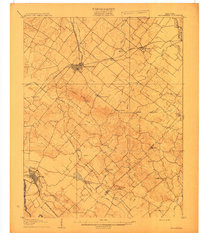 1907 Morganfield1907 Print · USGSUnion County during the first decade of the twentieth century shows a landscape transitioning between its agrarian roots and a growing rail economy. Genealogists can locate family landmarks like Waggoner Church, the remote Topeka Crossroads, and the settlement at Seven Gums.3 unique versions available
 - 1909 Map of Providence
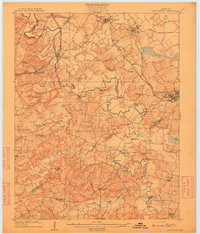 1909 Providence1909 Print · USGSWestern Kentucky's coal and river country comes alive in the early 1900s as railroads begin to reshape the Tradewater Valley. Genealogists and researchers can trace old river crossings like Rices Mill Jericho Ford or locate lost community landmarks such as Numms Sta Gladstone PO and Rock Spring Church.3 unique versions available
 - 1916 Map of Shawneetown
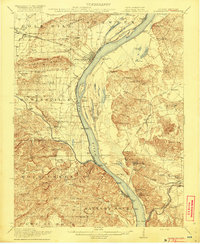 1916 Shawneetown1916 Print · USGSThe Illinois-Kentucky borderlands thrived as a river-and-rail corridor during the early twentieth century. Genealogists and historians can trace the foundations of local life through dozens of rural schools and industrial sites like Saline Mines, Caseyville, and Westwood Cemetery.5 unique versions available
 - 1916 Map of Fords Ferry
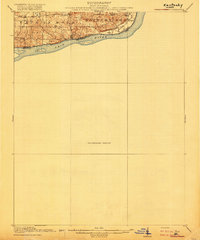 1916 Fords Ferry1916 Print · USGSThe Illinois-Kentucky borderlands along the Ohio River come alive in this survey from the mid-1910s. Genealogists can trace the rural school system through Double Box School and Love School or locate early commerce at Fraileys Store.2 unique versions available
 - 1916 Map of Golconda
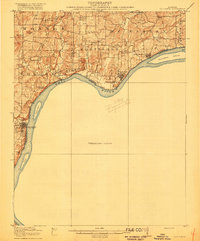 1916 Golconda1916 Print · USGSSouthern Illinois river life is frozen in time during this mid-1910s survey of the Ohio River frontier. Researchers can trace the early development of Golconda and Elizabethtown, or locate rural landmarks like Miller Cem and Cavins Store.
 - 1920 Map of Goloonda
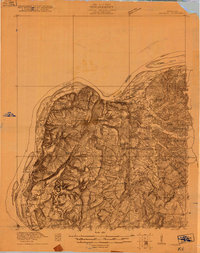 1920 Goloonda1920 Print · USGSThe Ohio River bottomlands of Livingston County are captured here just after the Great War, when river ferries and rural schoolhouses still anchored local life. Genealogists and researchers can trace family lands near Berry Ferry, Mt Pisgah Church, or the many district schools like Trimble School.
 - 1921 Map of Fords Ferry
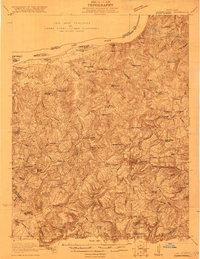 1921 Fords Ferry1921 Print · USGSCrittenden County in the early twenties shows a landscape of river-dependent commerce and small rural hamlets connected by the Illinois Central. Genealogists can trace family footprints through dozens of local landmarks like Shelby Store, Hurricane Church, and the Seminary School.
 - 1921 Map of Golconda
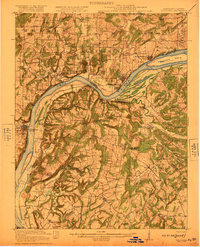 1921 Golconda1921 Print · USGSThe Ohio River valley at the start of the 1920s reveals a bustling corridor of small river towns and rural school districts spanning Illinois and Kentucky. Genealogists and historians can trace family roots through dozens of local landmarks like Berrys Ferry, Cammens Store, and the Bethel Church.3 unique versions available
 - 1925 Map of Cave In Rock
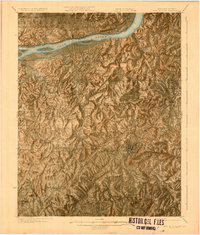 1925 Cave In Rock1925 Print · USGSCrittenden County's river-and-rail landscape is captured here in the mid-1920s, during a time of thriving rural school districts and mining operations. Researchers can trace ancestral locations near Fords Ferry, the Franklin Mines, or Hurricane Church.3 unique versions available
 - 1928 Map of Eddyville
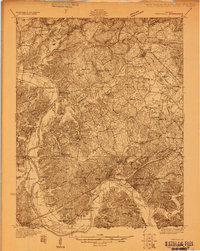 1928 Eddyville1928 Print · USGSWestern Kentucky's river valleys and mining districts are captured here in the late twenties before modern dams reshaped the Cumberland. Trace the old ferry crossings, family-run stops like Shelby's Store, and vanished school sites like Cherry Sch and Wilson Sch.
 - 1931 Map of Eddyville
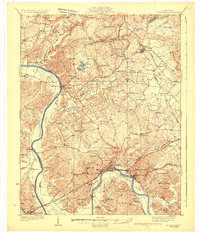 1931 Eddyville1931 Print · USGSWestern Kentucky life along the winding Cumberland River is captured here in the late twenties, before the landscape was altered by massive dam projects. Genealogists and historians can trace family roots through dozens of rural landmarks like Shelby's Store, the Nancy Hanks Mine, and Williams Chapel Sch.
 - 1936 Map of Eddyville
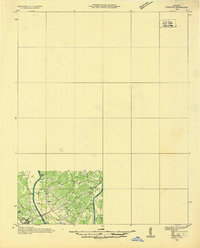 1936 Eddyville1936 Print · USGSWestern Kentucky's river valleys appear here in the mid-1930s, showing the narrow land between the Tennessee and Cumberland rivers before the creation of major reservoirs. Genealogists can locate family landmarks like Sevenee Furnace Ch, Poplar Creek Sch, and the riverside Eureka Ferry.
 - 1949 Map of Paducah
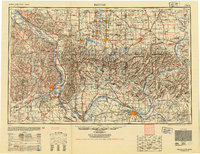 1949 Paducah1949 Print · USGSThe confluence of the Ohio, Mississippi, Tennessee, and Cumberland rivers at the close of the 1940s reveals a region bound by water and rail. Researchers can trace historic river landings, timberlands in the Shawnee National Forest, and the coal-mining infrastructure around West Frankfort and Herrin.2 unique versions available
 - 1950 Map of Paducah
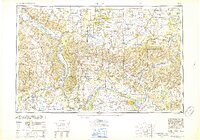 1950 Paducah1950 Print · USGSThe confluence of the great midwestern rivers defines this mid-century landscape at the intersection of Illinois, Kentucky, and Missouri. Genealogists and historians can trace the rail-and-river economy through the hubs of Paducah, Cairo, and Metropolis or locate family roots near the Wildcat Hills.
 - 1951 Map of Sturgis
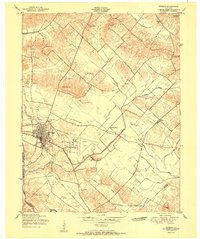 1951 Sturgis1951 Print · USGSThe coal and rail hub of Sturgis thrives in the early fifties at the meeting of the Illinois Central and Western Kentucky lines. Trace local heritage through the Poplar Ridge Mine, Pythian Ridge Cem, and Bethany Church.
 - 1953 Map of Dekoven, 1954 Print
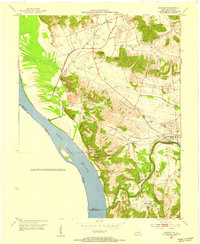 1953 Dekoven1954 Print · USGSWestern Kentucky coal and river culture meet in the early fifties along the Ohio River. Researchers can trace the rail networks of the West Kentucky Coal Company and locate old sites like Caseyville, Dekoven, and St Ambrose Ch.
 - 1954 Map of Evansville
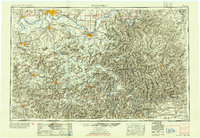 1954 Evansville1954 Print · USGSThe Ohio River borderlands between Indiana and Kentucky appear here during a period of robust industrial and military growth. Genealogists and researchers can trace the rail corridors of the Illinois Central and find landmarks like US Lock and Dam No 48 or Camp Breckinridge.
 - 1954 Map of Paducah
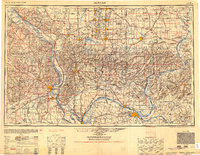 1954 Paducah1954 Print · USGSSouthern Illinois and Western Kentucky intersect at the great river confluences during this mid-century era of rail and river industry. Genealogists and historians can trace family roots and commerce through river towns like Cairo, Metropolis, and Golconda, or along the tracks of the Illinois Central Railroad.2 unique versions available
 - 1954 Map of Shady Grove, 1955 Print
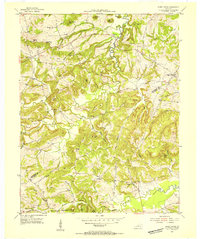 1954 Shady Grove1955 Print · USGSCrittenden and Caldwell counties are captured in the mid-1950s, showing a traditional landscape of upland farms and rural crossroads. Genealogists can locate family landmarks like Pickens Cem, Sugar Grove Ch, and the high point at The Pinnacle.3 unique versions available
 - 1954 Map of Repton, 1955 Print
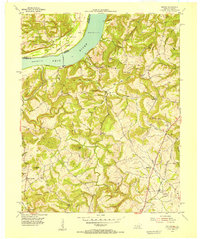 1954 Repton1955 Print · USGSCrittenden County, Kentucky, and the Illinois borderlands appear here in the mid-fifties, centered on the river-and-rail corridor. Researchers can trace old family sites and rural schools like Browns Sch near the Illinois Central or visit the riverside history of Fords Ferry.3 unique versions available
 - 1954 Map of Fredonia, 1955 Print
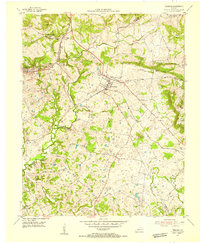 1954 Fredonia1955 Print · USGSMid-century Caldwell County centers on the fluorite mining hub of Fredonia as it appeared in the fifties. Genealogists and historians can locate family landmarks such as Campbell Cem, the community at Mexico, and local institutions like New Bethel Ch.2 unique versions available
 - 1954 Map of Providence, 1955 Print
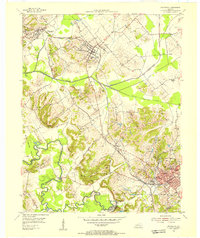 1954 Providence1955 Print · USGSThe Western Kentucky coalfields and rail hubs of Webster and Hopkins counties come alive in the mid-fifties. Researchers can trace family roots at New Harmony Cem and Wynn Cem or locate industrial sites like Mine No 10 and the ILLINOIS CENTRAL rail lines.
 - 1954 Map of Cave In Rock, 1955 Print
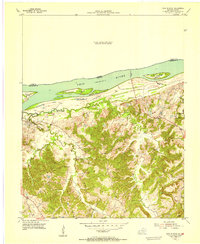 1954 Cave In Rock1955 Print · USGSCrittenden County sat at a crossroads of river travel and rural industry in the mid-fifties, with the Ohio River shaping its northern border. Genealogists can locate family sites near Tolu or trace connections at the Hebron Sch and the Cave in Rock Ferry.
 - 1954 Map of Marion, 1955 Print
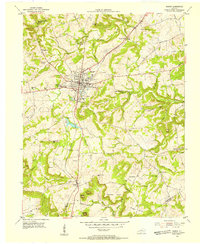 1954 Marion1955 Print · USGSCrittenden County’s heart is captured here in the mid-fifties, showing the hub of Marion and its surrounding rural communities. Genealogists and local historians can trace family landmarks like the Aunt Jane Underdown Tabernacle, Mapleview Cemetery, and the old Lone Star School.
 - 1954 Map of Dycusburg, 1955 Print
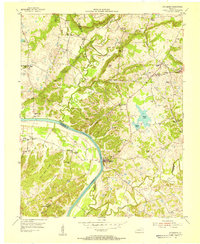 1954 Dycusburg1955 Print · USGSThe Cumberland River loops through the western Kentucky fluorspar district during the mid-fifties, when small-scale mining shaped the local economy. Researchers can locate active operations like the Nancy Hanks Mine and rural landmarks such as Shelbys Store and Groves Chapel.2 unique versions available
Showing maps 1-25 of 125
Top cities of Crittenden County
Frequently asked questions
- What are the different types of historical maps available for Crittenden County?
- What is the oldest map of Crittenden County?
- Where can I purchase historical maps of Crittenden County for my home or office?
- Where can I download high-res historical maps of Crittenden County?
- Are there historical topographic maps available for Crittenden County?
- Is there historical aerial imagery available for Crittenden County?
- Where are historical maps of Crittenden County sourced from?