Old Maps of Oliver Station, Kentucky
Explore 15 old maps of Oliver Station, spanning from 1926 to today. These high-resolution historic maps reveal how streets, neighborhoods, landmarks, and natural features evolved over time — perfect for genealogy, metal detecting, research, and local history exploration.
What you can do with these maps:
- See how Oliver Station changed over time: Compare historical maps to modern-day views to trace roads, homesites, rail lines & more.
- View detailed metadata: Each map includes creators, publishers, year, scale, and archive source.
- Overlay maps with satellite & LiDAR: Visualize the past alongside modern tools to explore terrain & human change.
- Trusted historical sources: Maps sourced from the USGS, Library of Congress, and other archives.
- Access maps your way: View online, download high-res files, or order prints for personal or research use.
Start exploring old maps of Oliver Station to uncover forgotten places, hidden landmarks, and the deep history beneath your feet.
Oliver Station, KY maps
(15)- 1926 Map of Greenup
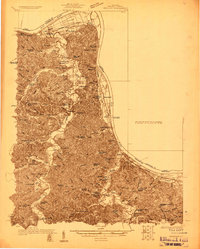 1926 Greenup1926 Print · USGSGreenup County in the mid-1920s is a landscape of riverfront rail towns and a high density of rural schoolhouses tucked into the Kentucky hollows. Genealogists and historians can trace family locations near Old Steam Furnace School, Nonchalanta, and Taylor Sta McCall PO.3 unique versions available
 - 1930 Map of Greenup
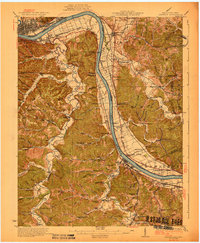 1930 Greenup1930 Print · USGSThe industrial corridor of the Ohio River valley is captured here in the early twentieth century, showing the borderlands of Greenup County and southern Ohio. Researchers can trace the legacy of iron production at Franklin Furnace or locate family roots near Tongs P O and Wurtland.3 unique versions available
 - 1953 Map of Greenup, 1955 Print
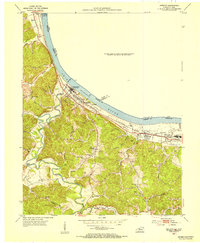 1953 Greenup1955 Print · USGSThe riverfront of Greenup County is captured here in the early fifties, showing the busy industrial corridor along the Ohio River. Researchers can trace old family burials at Cochran Cem, locate Biggs Sch, or follow the Chesapeake and Ohio rail line through Wurtland.
 - 1957 Map of Huntington, 1966 Print
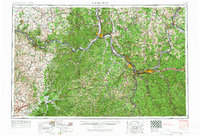 1957 Huntington1966 Print · USGSThe industrial heart of the Ohio River valley is captured here in the mid-sixties, showing the growth of Huntington and Ashland. Researchers can trace the extensive rail networks of the Chesapeake and Ohio RR and locate sites like the Chief Cornstalk Hunting Ground.3 unique versions available
 - 1958 Map of Greenup, 1959 Print
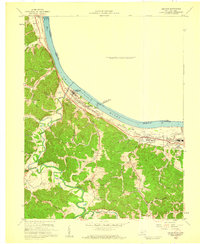 1958 Greenup1959 Print · USGSGreenup County at the close of the 1950s shows a landscape of busy riverfront rail towns and deep interior hollows. Genealogists can locate family burial grounds like Heaberlin Cem or trace the early paths of the Chesapeake and Ohio and its impact on Wurtland and Riverton.
 - 1960 Map of Huntington
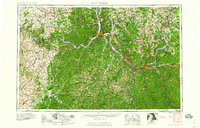 1960 Huntington1960 Print · USGSThe tri-state river valley thrived in the late fifties as a hub of heavy industry and Appalachian rail transit. Genealogists and historians can trace the connection between river towns like Ashland and Portsmouth or locate family homesteads near Coleman Ridge.
 - 1961 Map of Greenup, 1963 Print
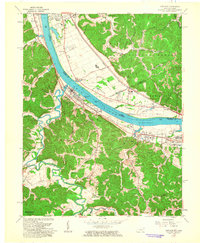 1961 Greenup1963 Print · USGSThe Ohio River valley in the early sixties was a bustling nexus of rail traffic and river commerce connecting Kentucky and Ohio. Genealogists can trace family roots through numerous hill-country burial sites like Womack Cemetery or locate landmarks such as Our Lady of Fatima Shrine and the Drive-in Theatre.
 - 1972 Map of Greenup, 1973 Print
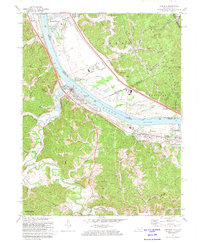 1972 Greenup1973 Print · USGSThe Ohio River valley in the early seventies reveals a landscape of river-and-rail industry and hillside mining. Trace family roots at Gilruth-Davisson Cem and explore old rail hubs like Raceland Junction and Wurtland.3 unique versions available
 - 1981 Map of Ironton, 1982 Print
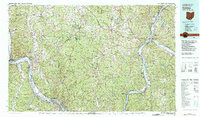 1981 Ironton1982 Print · USGSThe tri-state river valley at the start of the eighties shows a landscape shaped by heavy industry, atomic energy, and sprawling national forests. Researchers can trace the legacy of iron production at Harrison Furnace or follow the historic rail lines of the C & O RR and N & W RR.
 - 2002 Map of Greenup, 2006 Print
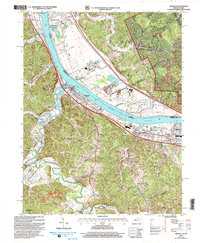 2002 Greenup2006 Print · USGSThe Ohio River valley at the turn of the millennium shows a landscape defined by heavy rail, river industry, and deep-hollow settlements. Genealogists can trace family names at Gilruth-Davisson Cem or locate old rail hubs like Oliver Station and Raceland Junction.
 - 2011 Map of Greenup, 2011 Print
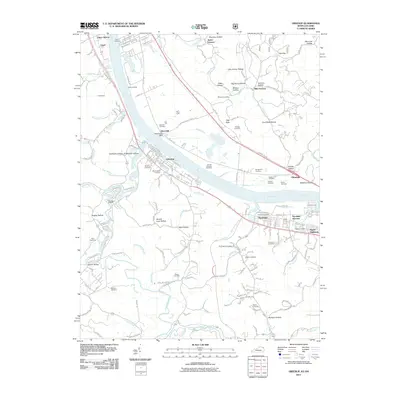 2011 Greenup2011 Print · USGSThe riverfront communities of Greenup County and the southern Ohio hills are shown here in the early twenty-first century. Genealogists and local historians can trace family plots at Worthington and Cochran or explore the industrial legacy of Ohio and Junior Furnace.
 - 2013 Map of Greenup, 2013 Print
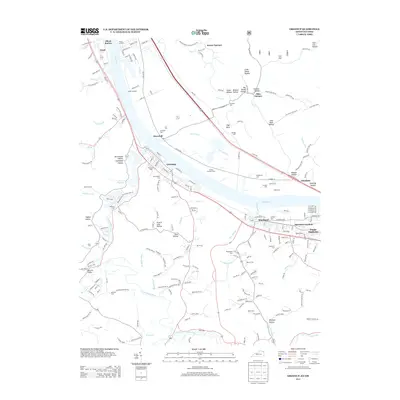 2013 Greenup2013 Print · USGSThe riverfront communities of Greenup County and the adjacent Ohio shore appear in detail during the early twenty-first century. Researchers can trace family history through numerous burial sites like Worthington Cem and Cochran Cem, or locate historic industrial sites at Ohio Furnace and Oliver Station.
 - 2016 Map of Greenup, 2016 Print
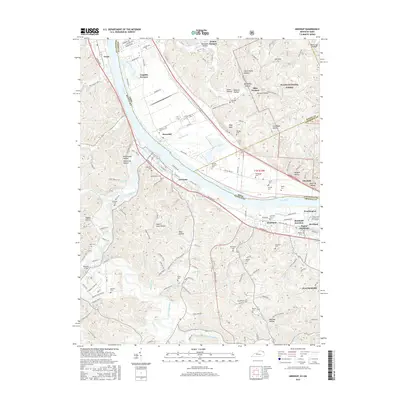 2016 Greenup2016 Print · USGSThe Ohio River valley near the Kentucky and Ohio border shows a landscape of industrial furnace towns and riverfront settlements in the mid-2010s. Researchers can trace family roots at Riverview Cem or locate the historic sites of Franklin Furnace and Ohio Furnace.
 - 2019 Map of Greenup, 2019 Print
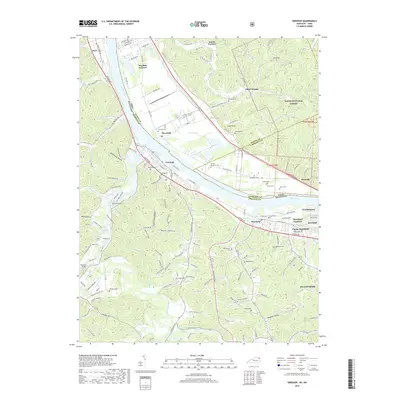 2019 Greenup2019 Print · USGSThe Ohio River valley near the Kentucky-Ohio border is captured here during a time of modern industrial and residential growth. Researchers can trace family sites like Bumgarner Cem, follow the CSX Transportation line, or locate early industrial landmarks such as Ohio Furnace.
 - 2022 Map of Greenup, 2022 Print
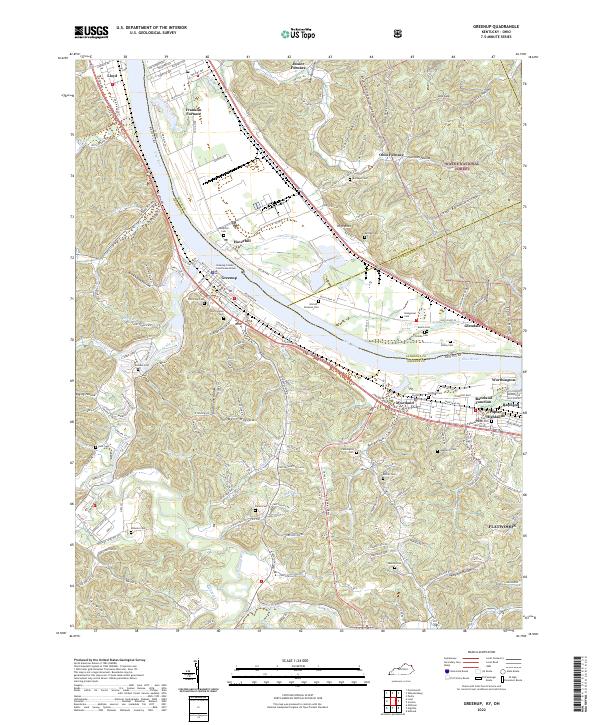 2022 Greenup2022 Print · USGSThe Ohio River borderlands between Kentucky and Ohio are shown here in the 2020s, highlighting a landscape shaped by iron furnaces and river commerce. Researchers can trace family history at Riverview Cem or explore the sites of Ohio Furnace and Junior Furnace.
End of results
Showing maps 1-15 of 15
Top cities near Oliver Station
- Ashland historical maps
- Portsmouth historical maps
- Ironton historical maps
- Flatwoods historical maps
- Russell historical maps
- Lawrence historical maps
See more
Frequently asked questions
- What are the different types of historical maps available for Oliver Station?
- What is the oldest map of Oliver Station?
- Where can I purchase historical maps of Oliver Station for my home or office?
- Where can I download high-res historical maps of Oliver Station?
- Are there historical topographic maps available for Oliver Station?
- Is there historical aerial imagery available for Oliver Station?
- Where are historical maps of Oliver Station sourced from?