1900s (20th Century) Maps of Lincoln County, Kentucky
Explore 28 historic maps of Lincoln County from the 1900s (20th Century). These maps offer a rare glimpse into what life looked like during the 1900s — showing old roads, neighborhoods, homes, and landmarks that have changed or disappeared over time.
Whether you're researching your family's past, planning a metal detecting trip, or studying how Lincoln County's landscape evolved across the 1900s, these high-resolution maps are a powerful tool for exploring the history of this region.
- Focus on a specific era: All maps on this page are from the 1900s, giving you a focused view of this time period.
- See what’s changed: Compare century-old streets, trails, and buildings to today's modern landscape using overlays and satellite layers.
- Research with precision: Use these maps for genealogy, historical research, land use analysis, or educational projects.
- View, download, or print: Maps are fully viewable online in high resolution, and can be downloaded or printed for your own records.
Start exploring Lincoln County's history through authentic maps from the 1900s. This is your window into the past.
Lincoln County, KY maps
(28)- 1905 Map of Harrodsburg
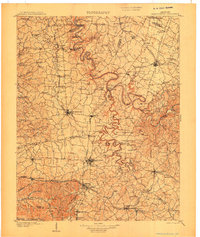 1905 Harrodsburg1905 Print · USGSCentral Kentucky's Bluegrass region is captured here in the early twentieth century, showing a landscape defined by the deep gorges of the Kentucky River. Researchers can trace the era's vital rail networks and river commerce through features like Lock No 7 and the Louisville and Nashville RR.3 unique versions available
 - 1935 Map of Somerset
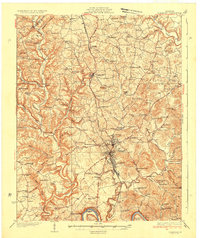 1935 Somerset1935 Print · USGSIn the mid-1930s, the rural landscapes around Somerset were a dense network of one-room schools and river crossings. Genealogists can trace family connections through numerous landmarks like Mt Zion Sch, Waitsboro Ferry, and the Mills Springs National Cem.
 - 1950 Map of Bryantsville, 1953 Print
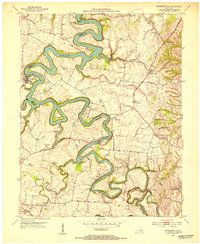 1950 Bryantsville1953 Print · USGSGarrard County and the winding Dix River are shown in the early fifties at the meeting of three counties. Local researchers can trace the Wilderness Trail and locate family landmarks like Robinson Reed Cem or the community of Bryantsville.
 - 1952 Map of Halls Gap, 1953 Print
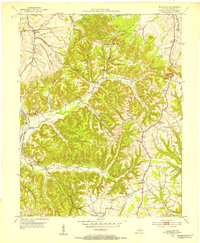 1952 Halls Gap1953 Print · USGSLincoln County in the early fifties is mapped here as a network of ridge-top settlements and creek-side farms. Genealogists and local historians can trace family locations through Campbell Cem, the South Fork Arabia Post Office, and Kings Mountain.
 - 1952 Map of Eubank, 1953 Print
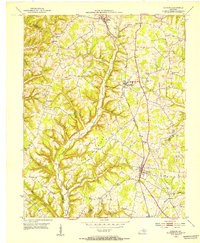 1952 Eubank1953 Print · USGSThe Eubank area and the southern Lincoln County borderlands appear here in the early fifties, following the path of the Southern railroad. Researchers can trace rural lineages through numerous landmarks like Phillips Chapel, Double Spring Cem, and Walnut Grove Sch.
 - 1952 Map of Crab Orchard, 1953 Print
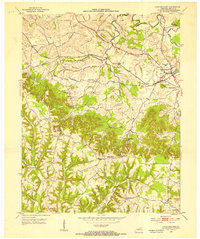 1952 Crab Orchard1953 Print · USGSLincoln County comes into focus in the early fifties, showing the historic crossing of the rail lines and old pioneer routes. Researchers can trace family roots through numerous rural landmarks like Ottenheim, the William Whitley House State Shrine, and the Boone Cem.2 unique versions available
 - 1952 Map of Hustonville, 1953 Print
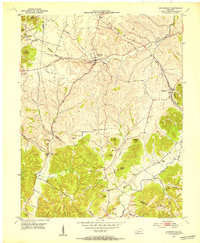 1952 Hustonville1953 Print · USGSCentral Kentucky's rural landscape at the dawn of the 1950s shows a region of small farm hubs and railroad towns. Genealogists can trace local roots at Kidds Store, the SOUTHERN railroad stop in Mc Kinney, and schools like Stapp Sch.3 unique versions available
 - 1952 Map of Paint Lick, 1953 Print
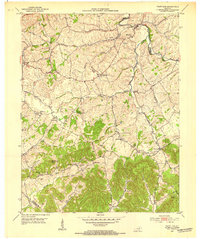 1952 Paint Lick1953 Print · USGSGarrard County's rolling hills and winding creeks are documented here in the early fifties, showing a landscape of small farmsteads and rural crossroads. Local historians can trace family roots through numerous sites like Old Paint Lick Ch, Carpenter Cem, and Oakdale Sch.2 unique versions available
 - 1952 Map of Lancaster, 1953 Print
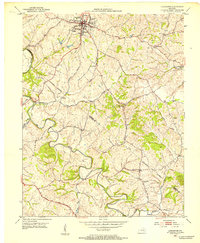 1952 Lancaster1953 Print · USGSGarrard and Lincoln counties are captured here in the early fifties, where the winding Dix River cuts through traditional Kentucky farm country. Researchers can trace the path of the Wilderness Trail and locate family landmarks like Ashlock Cem or Lawsons Chapel.
 - 1952 Map of Bryantsville, 1953 Print
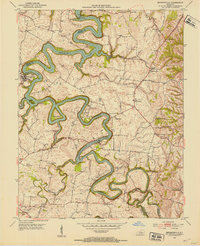 1952 Bryantsville1953 Print · USGSGarrard County in the early fifties shows a landscape shaped by the winding Herrington Lake and the historic Wilderness Trail. Researchers can trace the layout of Bryantsville, the grounds of Camp Dick Robinson, and the State Hospital.3 unique versions available
 - 1952 Map of Yosemite, 1953 Print
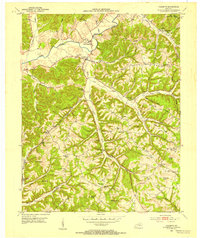 1952 Yosemite1953 Print · USGSIn the early fifties, the hilly terrain of Casey County was dotted with family-named ridges and small country schools. Genealogists can trace rural life through landmarks like Old Willow Springs Cem, Freedom Sch, and Middleburg.3 unique versions available
 - 1952 Map of Stanford, 1953 Print
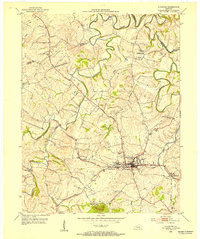 1952 Stanford1953 Print · USGSLincoln County at the start of the 1950s shows a landscape still defined by its historic transit routes and small crossroads. Researchers can trace the Wilderness Trail, locate family plots at Buffalo Spring Cemetery, and find the Hubble Sch.
 - 1952 Map of Junction City, 1954 Print
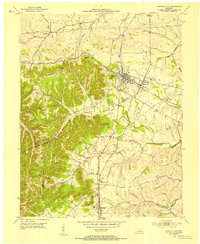 1952 Junction City1954 Print · USGSCentral Kentucky's rail-and-river landscape is captured here in the early fifties, where the Southern and L&N lines intersect. Genealogists can trace family landmarks like Goodall Airfield, Gray Cem, and the rural community of Milledgeville before modern development shifted the region.2 unique versions available
 - 1952 Map of Woodstock, 1954 Print
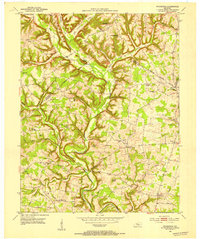 1952 Woodstock1954 Print · USGSThe rural uplands of Pulaski and Lincoln counties are captured here in the early fifties, showing a landscape of high knobs and deep hollows. Researchers can trace ancestral locations through numerous country schools and churches like Penobscot Sch and Sweetgum Ch.2 unique versions available
 - 1953 Map of Maretburg, 1954 Print
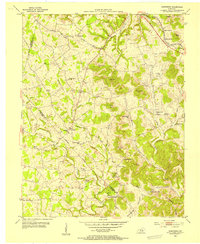 1953 Maretburg1954 Print · USGSRockcastle County in the early 1950s is a landscape of high knobs and creek-bottom settlements centered on the historic Wilderness Road. Genealogists can locate family landmarks like Sayers Cem, Double Springs, and many rural schoolhouses including Ottawa Sch.3 unique versions available
 - 1953 Map of Brodhead, 1954 Print
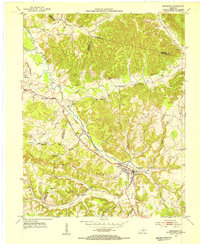 1953 Brodhead1954 Print · USGSBrodhead and the surrounding Kentucky hills are captured here in the early fifties, showing a landscape shaped by the Louisville and Nashville railroad. You can trace the historic Wilderness Road and locate family landmarks like Watts Chapel, Turkeytown, and the Gum Grove Sch.
 - 1954 Map of Science Hill, 1955 Print
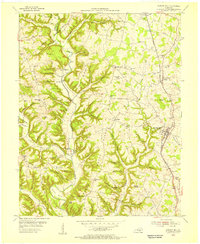 1954 Science Hill1955 Print · USGSMid-century Pulaski County is defined here by the Southern railroad line and a dense network of ridge-top farms and schools. Researchers can trace family history through dozens of localized landmarks like Center Post Sch, Freedom Ch, and the Van Hook Cem.
 - 1957 Map of Winchester, 1968 Print
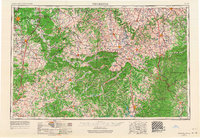 1957 Winchester1968 Print · USGSCentral Kentucky's landscape in the mid-twentieth century features the sprawling Fort Knox and the early parkway system. Genealogists and historians can trace rail lines like the Southern Railway and find landmarks from Bernheim Forest to Pilot Knob.3 unique versions available
 - 1960 Map of Winchester
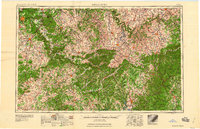 1960 Winchester1960 Print · USGSCentral Kentucky's diverse landscape is shown here at mid-century, from the bluegrass plains to the rugged Pottsville Escarpment. Genealogists and historians can trace the rail-and-river network connecting towns like Bardstown and Stanford alongside landmarks like Lake Cumberland.
 - 1961 Map of Halls Gap
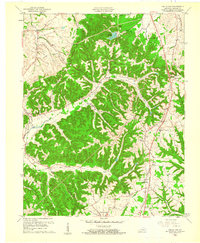 1961 Halls Gap1961 Print · USGSLincoln County in the early sixties was defined by its railroad hamlets and the winding headwaters of the Green River. Researchers can locate ancestral sites like Turnersville, Jumbo, and the Memorial High Sch among the ridgelines.2 unique versions available
 - 1961 Map of Stanford, 1962 Print
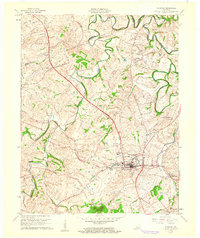 1961 Stanford1962 Print · USGSStanford and the surrounding Lincoln County countryside are captured here in the early sixties, showing the convergence of history and industry. Researchers can trace the Wilderness Road, locate several family burial sites like Blackerby Cem, and find the vanished Hubble Sch.3 unique versions available
 - 1961 Map of Science Hill, 1962 Print
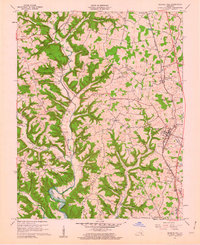 1961 Science Hill1962 Print · USGSThe rural landscapes of northern Pulaski County are captured in the early sixties as the Southern railroad connects small Kentucky towns. Researchers can trace family history through numerous landmarks like Center Post Ch, Science Hill Cem, and Hogue Sch.2 unique versions available
 - 1961 Map of Eubank, 1962 Print
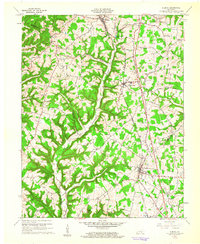 1961 Eubank1962 Print · USGSThe rural landscapes of Lincoln and Pulaski counties come alive in this early 1960s record of the Cumberland plateau. Genealogists can trace homesteads and local landmarks like Double Spring Cem, Phillips Chapel, and the old Pond Sch site.2 unique versions available
 - 1961 Map of Lancaster, 1962 Print
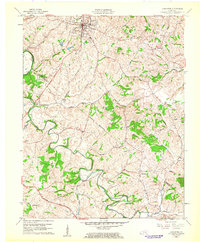 1961 Lancaster1962 Print · USGSGarrard County during the early sixties centers on the town of Lancaster and the historic path of the Wilderness Road. Researchers can trace the Louisville and Nashville rail line to settlements like Hyattsville and Preachersville.2 unique versions available
 - 1982 Map of Somerset, 1983 Print
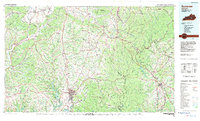 1982 Somerset1983 Print · USGSThe Lake Cumberland region and the Daniel Boone National Forest appear here in the early eighties. Researchers can trace rural lineages through Broughtontown, Science Hill, and Sinking Valley Church while exploring the rail lines of the Southern Railway.
Showing maps 1-25 of 28
Top cities of Lincoln County
Frequently asked questions
- What are the different types of historical maps available for Lincoln County?
- What is the oldest map of Lincoln County?
- Where can I purchase historical maps of Lincoln County for my home or office?
- Where can I download high-res historical maps of Lincoln County?
- Are there historical topographic maps available for Lincoln County?
- Is there historical aerial imagery available for Lincoln County?
- Where are historical maps of Lincoln County sourced from?