Old Maps of Shelby County, Kentucky for Academic Research
Study the evolution of Shelby County with 95 high-resolution historic maps. Whether you're teaching, researching, or modeling changes in land use, these maps provide essential visual documentation of urban, environmental, and geographic change.
- Analyze long-term change: Track patterns in development, transportation, and natural features.
- Ideal for environmental or urban studies: Support academic projects with primary historical map data.
- Use in the classroom or lab: Educators and researchers rely on these maps to bring historical context to life.
These maps are a powerful tool for teaching, research, and visualizing how Shelby County has changed over the decades.
Shelby County, KY maps
(95)- 1906 Map of Lockport
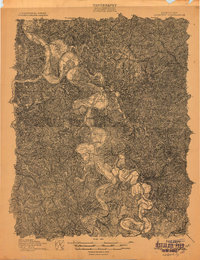 1906 Lockport1906 Print · USGSOwen and Franklin Counties are surveyed here during the first decade of the century, following the dramatic bends of the Kentucky River. Researchers can trace the river-based economy through Lock & Dam No 1 and old crossings like Manfords Ferry.2 unique versions available
 - 1908 Map of Lockport
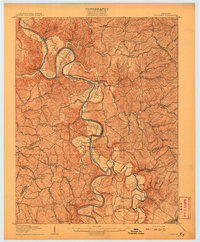 1908 Lockport1908 Print · USGSLife along the Kentucky River in the early twentieth century centered on the water and the rich flats of the river bottoms. Genealogists can trace family footprints through numerous river crossings like Harpers Ferry and rural landmarks such as Tackitts Mill or the Falling Rock School.3 unique versions available
 - 1923 Map of Waddy
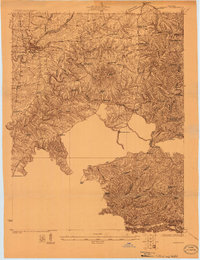 1923 Waddy1923 Print · USGSShelby County and Anderson County are captured here in the early 1920s, showing a rural landscape organized around the Midland Trail and regional rail lines. Genealogists can trace family connections to numerous landmarks like Buffalo Lick Church, Jeptha Knob, and small settlements including Waddy and Glensboro.
 - 1925 Map of Mount Eden
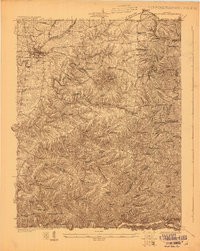 1925 Mount Eden1925 Print · USGSThe rolling hills between Shelbyville and the Salt River are captured here in the mid-twenties, showing a landscape tied to the rails and old turnpikes. Researchers can find dozens of rural landmarks, from Jeptha Knob to family-named sites like Martin School and Browns Store.
 - 1927 Map of Mount Eden
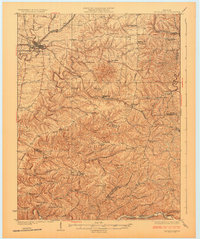 1927 Mount Eden1927 Print · USGSShelby County and its neighbors at the height of the 1920s reveal a landscape of ridge-top schools and bustling rail towns. Genealogists and local historians can trace family locations near landmarks like Jeptha Knob, the Buffalo Lick Church, or the community of Mount Eden.
 - 1928 Map of New Castle
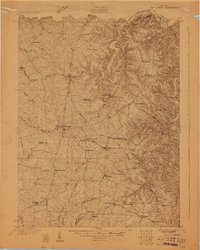 1928 New Castle1928 Print · USGSThe rolling uplands of Henry and Shelby County appear here in the late 1920s, just as the regional rail and pike network reached its peak. Genealogists can trace a remarkable number of family-named landmarks and rural institutions, from Sewell Sch to the Indian Fork Ch.
 - 1929 Map of Taylorsville
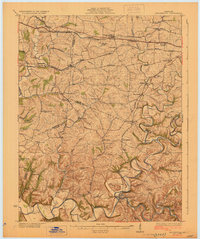 1929 Taylorsville1929 Print · USGSSpencer and Shelby counties are shown here in the late twenties, where the Salt River meets a network of early rail and pike roads. Genealogists can trace family lands near Shiloh Church, Beechwood School, and the settlement of Simpsonville.2 unique versions available
 - 1932 Map of New Castle
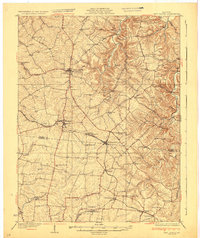 1932 New Castle1932 Print · USGSHenry and Shelby Counties are captured here between the world wars as the rail and river economy thrived. Genealogists can trace family landmarks and rural schoolhouses like Hill Spring Sch, Burks Branch Sch, and the stop at Bellview Hill Spring Sta.
 - 1932 Map of La Grange
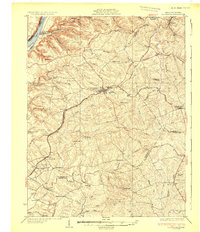 1932 La Grange1932 Print · USGSThe Bluegrass region in the early thirties reveals a landscape defined by the Louisville and Nashville Railroad and the Ohio River. Genealogists can locate family landmarks like Henrysville Cemetery and several rural schoolhouses including Sweeney Sch.
 - 1951 Map of Crestwood
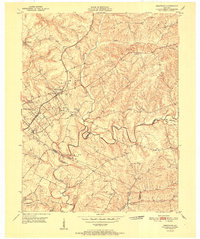 1951 Crestwood1951 Print · USGSThe railroad corridor between Oldham and Jefferson counties is well-established in the early fifties, centering on the growth of Crestwood and Pewee Valley. Researchers can locate historic institutions like the Pewee Valley Sanitarium and State Prison, or trace old family land near Pleasant Hill Cem and Glenarm.
 - 1951 Map of Fisherville
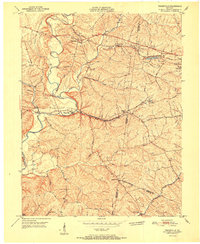 1951 Fisherville1951 Print · USGSEastern Jefferson County and the neighboring borderlands of Shelby and Spencer counties are captured here in the early fifties. Genealogists and local historians can trace the foundations of Fisherville, the grounds of the Lincoln Institute, and rural landmarks like Bethlehem Ch.
 - 1953 Map of Polsgrove, 1955 Print
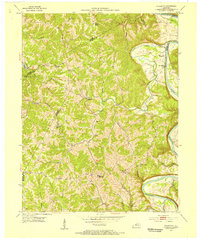 1953 Polsgrove1955 Print · USGSNorthern Kentucky's river valleys and ridge-top settlements are meticulously detailed in this early 1950s survey. Researchers can trace family roots at Harpers Ferry, locate the Bald Knob High Sch, and find local landmarks like Ottusville or Mt Carmel Ch.4 unique versions available
 - 1954 Map of Ballardsville, 1955 Print
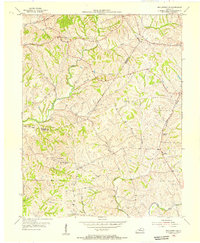 1954 Ballardsville1955 Print · USGSThe rural borderlands of Shelby and Oldham Counties are shown in the mid-fifties during a period of steady agricultural tradition. Researchers can locate community hubs like Ballardsville, trace family roots at Fairview Cem, and find local landmarks such as Gleneyrie Sch.
 - 1954 Map of Glensboro, 1955 Print
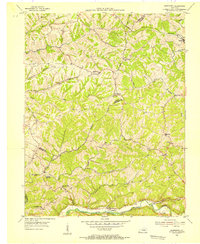 1954 Glensboro1955 Print · USGSThe Salt River valley and the ridges of Anderson County are captured here in the mid-fifties. Genealogists can locate family landmarks like Petty Cem, Marlowe Sch, and several rural churches including Pleasant Hill Ch.
 - 1954 Map of Taylorsville, 1955 Print
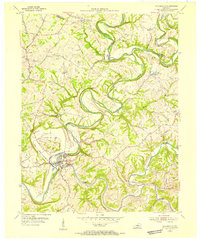 1954 Taylorsville1955 Print · USGSSpencer County and the Salt River valley come into focus during the early fifties, showing the area's rural transition and river-bend geography. Genealogists and local historians can trace family roots through Little Mount Cem and find old centers like Rivals or Normandy.
 - 1954 Map of Eminence, 1955 Print
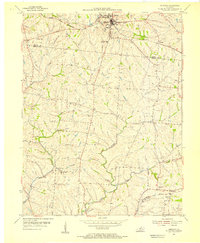 1954 Eminence1955 Print · USGSThe Henry and Shelby county border comes to life in the mid-fifties, centered on the rail hub of Eminence. Genealogists and historians can trace rural roots through landmarks like Pleasant View Ch, the Shady Grove Sanitorium, and the Mulberry Sch.3 unique versions available
 - 1954 Map of Waddy, 1955 Print
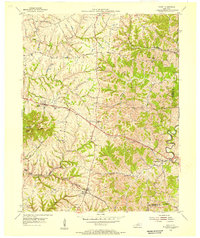 1954 Waddy1955 Print · USGSShelby and Franklin counties are shown here in the mid-fifties, dominated by the high ground of Jeptha Knob. Genealogists and historians can trace the rural communities of Clay Village, Peytona, and Waddy, as well as the Buffalo Lick Ch.
 - 1954 Map of Shelbyville, 1955 Print
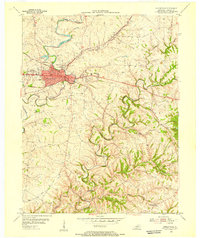 1954 Shelbyville1955 Print · USGSShelbyville in the mid-fifties is captured at a point of growth, showing the transition from its dense urban core to the rolling creek valleys of Shelby County. Researchers can trace the path of the Midland Trail or locate family sites near Rockbridge Ch and Veachland.
 - 1954 Map of Mount Eden, 1955 Print
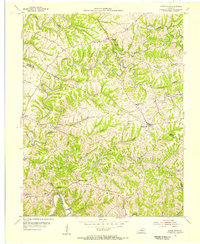 1954 Mount Eden1955 Print · USGSSpencer and Shelby counties are captured in the mid-fifties, showing a rural landscape defined by ridge-top farming and winding river valleys. Genealogists can locate family homesteads near Mount Eden, Salem Ch, and the Upper Brier Ridge Ch.4 unique versions available
 - 1954 Map of North Pleasureville, 1955 Print
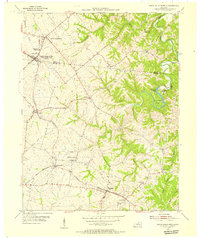 1954 North Pleasureville1955 Print · USGSThe rural border of Shelby and Henry counties comes alive in the mid-1950s as the rail line connects small agricultural hubs. Genealogists can trace family names at Old Christianburg, Bagdad, and the Consolidated High Sch near North Pleasureville.3 unique versions available
 - 1954 Map of Simpsonville, 1956 Print
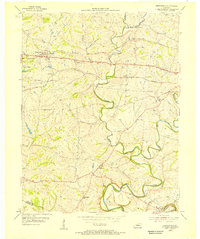 1954 Simpsonville1956 Print · USGSShelby County agriculture and transit dominate this mid-century portrait of the Kentucky countryside. Researchers can trace family roots at Buck Creek Sch or find old rail stops at Veechdale and along the Louisville and Nashville line.
 - 1956 Map of Louisville, 1971 Print
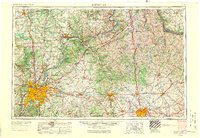 1956 Louisville1971 Print · USGSThe Ohio River valley and the Kentucky Bluegrass are captured here during a period of rapid mid-century growth and industrial activity. Genealogists and historians can trace rail-centered towns and military land use at Fort Knox and the Jefferson Proving Ground.2 unique versions available
 - 1960 Map of Simpsonville
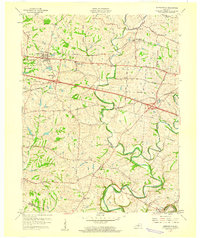 1960 Simpsonville1960 Print · USGSShelby County farmland was defined by its creeks and competing rail lines during the mid-twentieth century. Researchers can trace the development of Simpsonville and Lincoln Ridge or locate family landmarks like Shiloh Ch and Buck Creek Sch.3 unique versions available
 - 1960 Map of Taylorsville
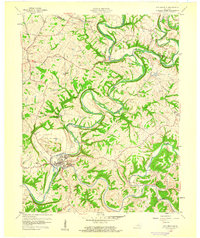 1960 Taylorsville1960 Print · USGSSpencer County at the start of the 1960s shows a landscape of winding river valleys and tight-knit rural hamlets. Researchers can trace family history through local sites like Little Mount Cem or explore the river-side settings of Taylorsville, Normandy, and Rivals.3 unique versions available
 - 1960 Map of Crestwood, 1961 Print
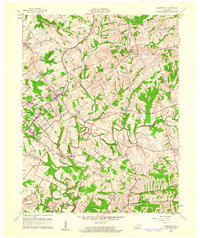 1960 Crestwood1961 Print · USGSThe rail towns of the Louisville and Nashville line prosper in the 1960s along the Oldham and Jefferson county border. Genealogists can trace family names at Pleasant Hill Cem, find the St Aloysius Sch, and locate the Pewee Valley Sanatorium.2 unique versions available
Showing maps 1-25 of 95
Top cities of Shelby County
Frequently asked questions
- What are the different types of historical maps available for Shelby County?
- What is the oldest map of Shelby County?
- Where can I purchase historical maps of Shelby County for my home or office?
- Where can I download high-res historical maps of Shelby County?
- Are there historical topographic maps available for Shelby County?
- Is there historical aerial imagery available for Shelby County?
- Where are historical maps of Shelby County sourced from?