Old Maps of Pawnee County, Kansas
Explore 137 old maps of Pawnee County, spanning from 1889 to today. These high-resolution historic maps reveal how streets, neighborhoods, landmarks, and natural features evolved over time — perfect for genealogy, metal detecting, research, and local history exploration.
What you can do with these maps:
- See how Pawnee County changed over time: Compare historical maps to modern-day views to trace roads, homesites, rail lines & more.
- View detailed metadata: Each map includes creators, publishers, year, scale, and archive source.
- Overlay maps with satellite & LiDAR: Visualize the past alongside modern tools to explore terrain & human change.
- Trusted historical sources: Maps sourced from the USGS, Library of Congress, and other archives.
- Access maps your way: View online, download high-res files, or order prints for personal or research use.
Start exploring old maps of Pawnee County to uncover forgotten places, hidden landmarks, and the deep history beneath your feet.
Pawnee County, KS maps
(137)- 1889 Map of Larned, 1957 Print
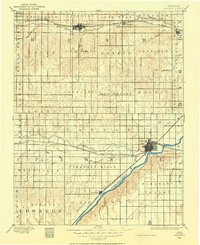 1889 Larned1957 Print · USGSWestern Kansas at the close of the frontier era shows a landscape being rapidly transformed by the iron rail and river commerce. Genealogists and historians can trace early township growth and rail stations like Rush Centre, Roselle, and the hub at Larned.
 - 1889 Map of Kinsley, 1962 Print
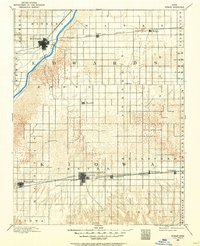 1889 Kinsley1962 Print · USGSEdwards and Kiowa counties were in the midst of a railroad-driven expansion in the late 1880s as new townsites emerged along the prairie. Researchers can trace early township lines and settlements like Greensburg, Kinsley, and the whistle-stop at Brenham.
 - 1891 Map of Great Bend
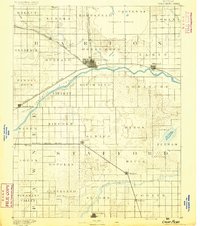 1891 Great Bend1891 Print · USGSThe Arkansas River valley comes alive in the late nineteenth century as railroads transform the Kansas prairie. Genealogists and historians can trace the early growth of Great Bend, the salt-spring landscapes of Byron, and rail stops like Seward and Heizer.
 - 1891 Map of Larned
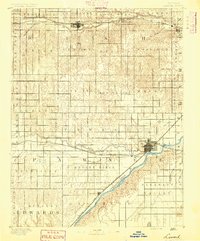 1891 Larned1891 Print · USGSLarned and the surrounding Kansas plains were undergoing a rapid transformation into a rail-and-river economy in the late 1880s. Local researchers can trace the growth of Larned at the river forks or follow the path of the Atchison Topeka and Santa Fe Railroad through towns like Rush Centre and Garfield.5 unique versions available
 - 1892 Map of Ness
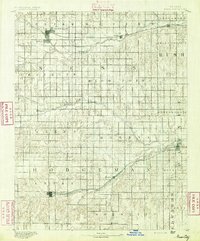 1892 Ness1892 Print · USGSWestern Kansas at the turn of the century reveals a landscape shaped by the Atchison Topeka and Santa Fe Railroad and prairie watercourses. Researchers can locate early post offices and rail stops like Schoharie P.O., Bazine, and Jetmore.
 - 1892 Map of Kinsley
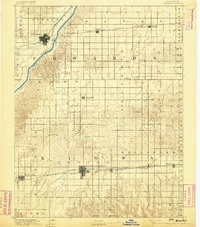 1892 Kinsley1892 Print · USGSThe Kansas prairie of Edwards and Kiowa counties is captured here in the late nineteenth century as new railroads transformed the plains into a network of agricultural hubs. Genealogists and historians can trace the early footprints of Greensburg and Kinsley, along with smaller sidings like Mullenville and Brenham.
 - 1893 Map of Great Bend
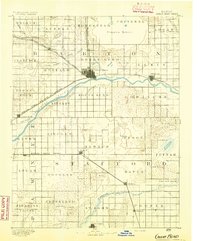 1893 Great Bend1893 Print · USGSCentral Kansas was undergoing rapid settlement in the late nineteenth century as the railroads moved across the prairie. Genealogists and historians can trace early townships and station stops like Great Bend, Pawnee Rock, and Ellinwood along the Arkansas River.5 unique versions available
 - 1894 Map of Kinsley
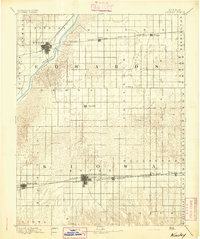 1894 Kinsley1894 Print · USGSEdwards and Kiowa Counties are seen here during the rail-driven expansion of the 1890s. Genealogists can trace the early township grids and burgeoning prairie towns like Kinsley, Mullenville, and Haviland along the Arkansas River corridor.8 unique versions available
 - 1894 Map of Ness
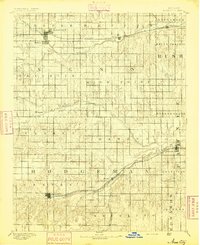 1894 Ness1894 Print · USGSWestern Kansas at the close of the nineteenth century was a land of new rail towns and high plains homesteads. Genealogists and historians can trace the early development of Ness City and Jetmore, alongside smaller stops like Schoharie P.O. and Bazine.5 unique versions available
 - 1955 Map of Great Bend, 1966 Print
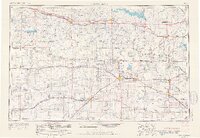 1955 Great Bend1966 Print · USGSCentral Kansas during the mid-sixties transition reveals a landscape defined by new reservoirs and enduring rail corridors. Researchers can trace the development of towns like Hays and Great Bend or locate natural landmarks such as Round Mound and the wetlands of the Quivira National Wildlife Refuge.3 unique versions available
 - 1955 Map of Pratt, 1968 Print
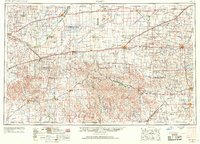 1955 Pratt1968 Print · USGSSouth-central Kansas during the mid-fifties presents a landscape of sprawling oil fields and critical rail junctions. Researchers can trace the paths of the Atchison Topeka and Santa Fe railroad or locate local landmarks like the Blue Ridge Community House and Camp Carlisle.3 unique versions available
 - 1957 Map of Great Bend
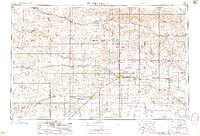 1957 Great Bend1957 Print · USGSCentral Kansas at the peak of the postwar era shows a landscape of growing rail hubs and massive new water projects. Trace the routes of the Union Pacific through Hays or locate the newly formed shorelines of Cedar Bluff Reservoir and Kanopolis Reservoir.
 - 1958 Map of Great Bend
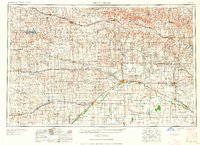 1958 Great Bend1958 Print · USGSCentral Kansas in the late fifties reveals a landscape of high-plains agriculture and vital river crossings. Researchers can trace the development of regional hubs like Hays and Russell, or locate historic sites such as Fort Larned and the Cheyenne Bottoms wildlife area.2 unique versions available
 - 1959 Map of Pratt
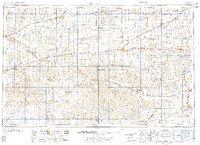 1959 Pratt1959 Print · USGSSouth-central Kansas thrived as a rail and agricultural hub in the late fifties, where the Arkansas River meets a vast grid of section roads. Researchers can trace the path of the Missouri Pacific railroad through settlements like Turon and Stafford, or locate family landmarks like the Prairie Oak School.2 unique versions available
 - 1960 Map of Pawnee Rock, 1961 Print
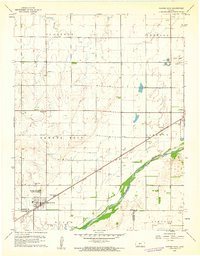 1960 Pawnee Rock1961 Print · USGSThe Kansas river valley near Pawnee Rock was a landscape of rail-driven transit and early oil exploration in the 1960s. Genealogists and historians can locate rural landmarks like Bergtal Ch, the namesake Pawnee Rock State Park, and the tracks of the Atchison Topeka and Santa Fe.2 unique versions available
 - 1969 Map of Radium, 1971 Print
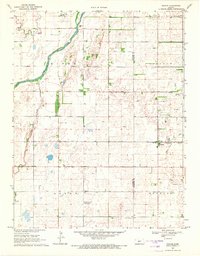 1969 Radium1971 Print · USGSStafford and Pawnee counties during the late sixties show a prairie landscape shaped by the Missouri Pacific railroad and early oil exploration. Genealogists can locate family sites near Pleasant Ridge Cem or trace the development of the Radium Townsite.
 - 1970 Map of Fort Larned, 1971 Print
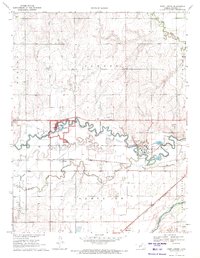 1970 Fort Larned1971 Print · USGSPawnee County is captured in the early 1970s as a landscape shaped by historical preservation and institutional growth along the river. Trace the grounds of the Fort Larned National Historic Site and the rail-side settlements of Frizell and Hamburg.
 - 1970 Map of Rozel, 1971 Print
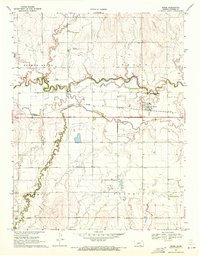 1970 Rozel1971 Print · USGSPawnee County farming communities thrive along the river valleys in the early seventies. Genealogists and local historians can trace the town of Rozel, the Rozel Cem, and the regional influence of the Atchison Topeka and Santa Fe railroad.
 - 1970 Map of Sanford, 1971 Print
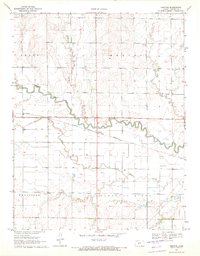 1970 Sanford1971 Print · USGSPawnee County's agricultural and rail corridor is captured here in the early seventies, centered on the Pawnee River. Trace local genealogy and land use through the settlement at Sanford, the Bert-Wettar site, and landmarks like Moffet Bridge.
 - 1970 Map of Burdett, 1971 Print
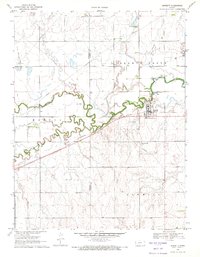 1970 Burdett1971 Print · USGSThe rural landscape around the Pawnee River is captured here during the 1970s, showing the intersection of rail, water, and local aviation. Researchers can locate the Browns Grove Cem and trace the Atchison Topeka and Santa Fe line through Burdett.
 - 1970 Map of Rush Center SW, 1972 Print
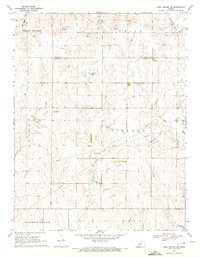 1970 Rush Center SW1972 Print · USGSThe Rush and Pawnee County borderlands are shown here in the early 1970s, at a time when petroleum production was reshaping the prairie. Researchers can trace the development of the Shiley Oil Field and Oro Oil Field or locate the local Townhall.
 - 1970 Map of Bazine SE, 1972 Print
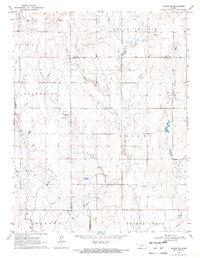 1970 Bazine SE1972 Print · USGSPawnee and Ness Counties are captured here during a peak era of petroleum production in the early seventies. Genealogists and local historians can trace the specific locations of the Schadel Oil Field, Steffen Oil Field, and landmarks like High Point.
 - 1970 Map of Albert SE, 1972 Print
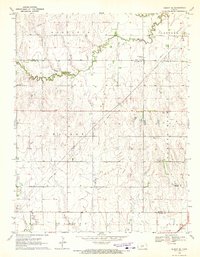 1970 Albert SE1972 Print · USGSPawnee County agricultural and oil lands are captured here in the early seventies as the energy industry expanded across the Kansas plains. Researchers can locate the Rutherford Oil Field, a rural Cem, and the winding path of Walnut Creek.
 - 1970 Map of Larned, 1972 Print
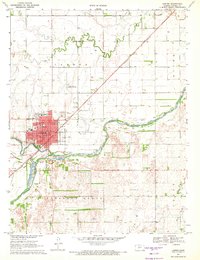 1970 Larned1972 Print · USGSLarned and its surrounding Pawnee County landscape are captured here in the early seventies as a thriving rail and river hub. Local researchers can pinpoint numerous schools like Hillside Sch, the Drive-in Theater, and the Ash Valley Grange Hall.
 - 1970 Map of Ash Valley, 1972 Print
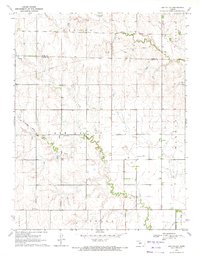 1970 Ash Valley1972 Print · USGSPawnee and Rush Counties are captured in the early 1970s, showcasing a rural Kansas landscape defined by shifting infrastructure and quiet settlements. Researchers can locate the Ash Valley Cem and trace the path of an Old Railroad Grade and regional Pipeline routes.
Showing maps 1-25 of 137
Top cities of Pawnee County
- Larned historical maps
- Burdett historical maps
- Garfield historical maps
- Rozel historical maps
- Ash Valley historical maps
Frequently asked questions
- What are the different types of historical maps available for Pawnee County?
- What is the oldest map of Pawnee County?
- Where can I purchase historical maps of Pawnee County for my home or office?
- Where can I download high-res historical maps of Pawnee County?
- Are there historical topographic maps available for Pawnee County?
- Is there historical aerial imagery available for Pawnee County?
- Where are historical maps of Pawnee County sourced from?