Old Maps of Frank Bell Subdivision, Louisiana for Metal Detecting
Plan your next treasure hunt with 16 historic maps of Frank Bell Subdivision. Find old homesites, ghost towns, trails, and gathering spots that may be lost to time — perfect for identifying promising metal detecting locations.
- Locate forgotten sites: Uncover places like long-lost settlements, abandoned rail lines, or gathering spots.
- Plan better hunts: Use map overlays combined with LiDAR or satellite views to narrow in on historically rich areas.
- Made for detectorists: Thousands of hobbyists use these maps to discover relics, coins, and hidden history.
Use these historic maps to boost your research and find new opportunities beneath the surface of Frank Bell Subdivision.
Frank Bell Subdivision, LA maps
(16)- 1941 Map of Leesville
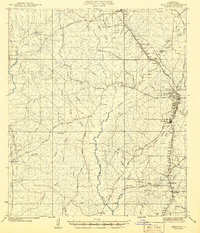 1941 Leesville1941 Print · USGSVernon Parish at the start of the 1940s reveals a transition from a logging-dependent economy to a more established network of rural towns. Researchers can trace family roots at Bill Cem, locate the old Cooper Sch, or follow the path of the Kansas City Southern Railroad through Newllano.
 - 1943 Map of Leesville
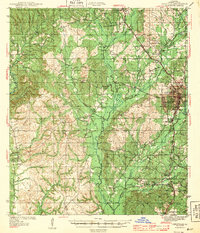 1943 Leesville1943 Print · USGSVernon Parish during the early 1940s reveals a landscape of timber-driven growth and rural crossroads. Genealogists and historians can trace family locations near Leesville, identify old cemetery sites like Kay Cem, and locate the Old Logging Railroad grades.
 - 1946 Map of Leesville
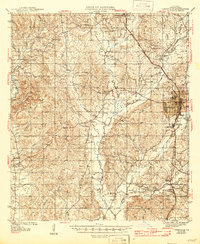 1946 Leesville1946 Print · USGSVernon Parish at the height of the 1940s reveals a landscape still defined by its timber heritage and rural crossroads. Genealogists and historians can locate vanished landmarks like the Old Logging Railroad, family burial sites at Kay Cem, and early schools like Pickering Sch.
 - 1948 Map of Leesville, 1954 Print
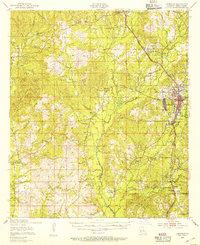 1948 Leesville1954 Print · USGSVernon Parish at the dawn of the fifties shows a landscape shaped by the Kansas City Southern Railway and military growth. Genealogists can trace family roots through rural landmarks like Pickering Sch, Beech Grove Ch Cem, and Anacoco.
 - 1953 Map of Alexandria, 1963 Print
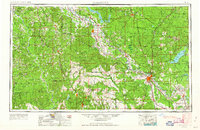 1953 Alexandria1963 Print · USGSCentral Louisiana during the early fifties is mapped here at the intersection of the piney woods and the Red River valley. Genealogists and historians can trace the rail-and-river network connecting towns like Alexandria, Natchitoches, and the grounds of Camp Beauregard.3 unique versions available
 - 1954 Map of Leesville, 1956 Print
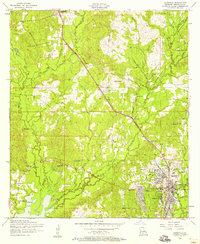 1954 Leesville1956 Print · USGSVernon Parish at the mid-century mark reveals a landscape defined by growing towns and a web of rural community centers. Genealogists and historians can locate family landmarks such as Smith Cemetery, Holly Grove Church, and the Leonidas Polk Memorial Church near the heart of Leesville.6 unique versions available
 - 1954 Map of Leesville, 1958 Print
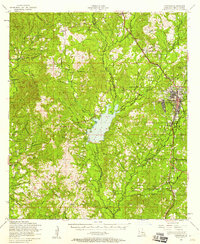 1954 Leesville1958 Print · USGSVernon Parish at the height of the mid-fifties is captured here, from the growing streets of Leesville to the wide waters of Anacoco Lake. Genealogists and historians can trace local family landmarks like Mt Pleasant Cem, the Pickering Sch, and the Leesville Lookout Tower.4 unique versions available
 - 1955 Map of Alexandria
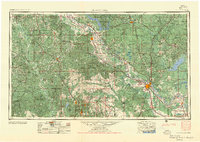 1955 Alexandria1955 Print · USGSCentral Louisiana in the mid-fifties is a landscape of river-port cities, sprawling timberlands, and massive military reservations. Genealogists and historians can trace the rail networks of the Texas & Pacific RR and locate sites like Camp Polk Military Reservation and Natchitoches.
 - 1957 Map of Leesville, 1959 Print
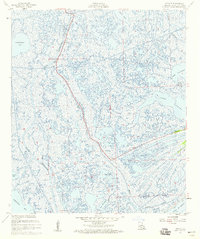 1957 Leesville1959 Print · USGSLafourche Parish marshes meet the Gulf of Mexico during the mid-century oil boom. Genealogists and researchers can trace the settlement at Leeville and locate numerous Oil Wells and a local Cem among the waters of Hackberry Bay.3 unique versions available
 - 1986 Map of Leesville, 1988 Print
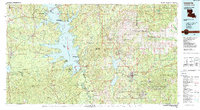 1986 Leesville1988 Print · USGSThe Louisiana-Texas borderlands in the mid-eighties centered on the vast Toledo Bend Reservoir and the timber-rich piney woods. Researchers can trace the Kansas City Southern RR corridor or locate old communities like Wiergate, Rosevine, and Sandel.
 - 1994 Map of Leesville, 1997 Print
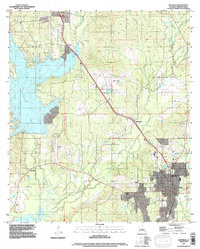 1994 Leesville1997 Print · USGSLeesville and Vernon Parish appear here in the mid-nineties, showing a landscape shaped by large reservoirs and the Kansas City Southern rail line. Genealogists and local historians can trace the sites of Kay Cem, Shady Grove Cem, and the small community of Anacoco.
 - 2012 Map of Leesville, 2012 Print
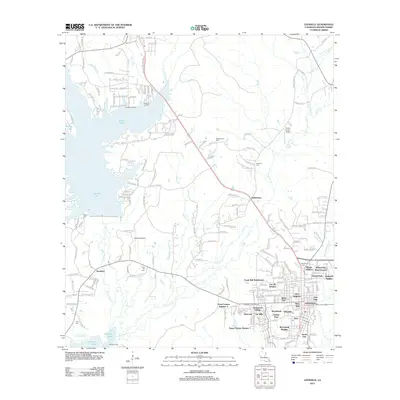 2012 Leesville2012 Print · USGSLeesville and the surrounding Louisiana piney woods appear in the early 21st century as a landscape of large reservoirs and growing subdivisions. Trace local family history and infrastructure through Leesville Cemetery, Thaxtons Landing, and the Leesville Lookout Tower.
 - 2015 Map of Leesville, 2015 Print
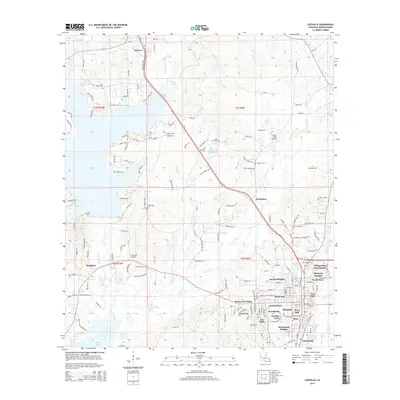 2015 Leesville2015 Print · USGSLeesville and the surrounding Vernon Parish countryside are shown here in the mid-2010s, framed by the expansive Vernon Lake and Anacoco Lake. Researchers can trace local roots through numerous sites like Pine Hill Church, Leesville Cem, and the community of Anacoco.
 - 2018 Map of Leesville, 2018 Print
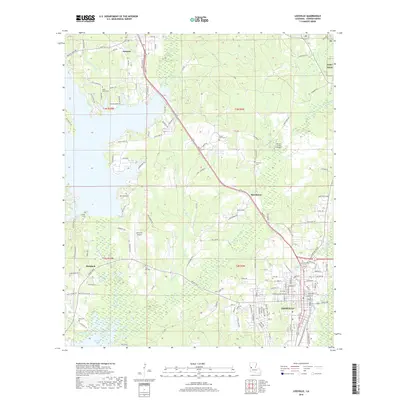 2018 Leesville2018 Print · USGSLeesville and the surrounding Louisiana piney woods are documented here during a period of steady growth near the military installations of the late twenty-teens. Researchers can trace family history through several local burial grounds like Holly Grove Cem and Pine Hill Cem or follow the path of the Kansas City Southern railroad.
 - 2020 Map of Leesville, 2020 Print
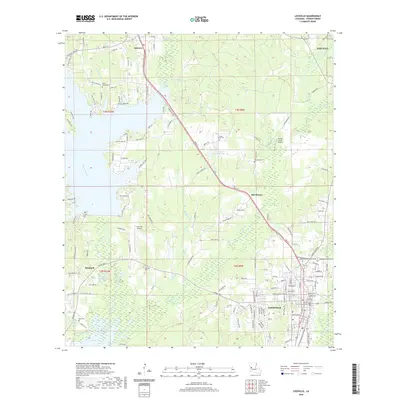 2020 Leesville2020 Print · USGSLeesville and the surrounding Vernon Parish countryside are shown here at the start of the 2020s, centered on the parish seat. Researchers can trace family sites at Holly Grove Cem and Anacoco Cem or explore the developed shores of Vernon Lake.
 - 2024 Map of Leesville, 2024 Print
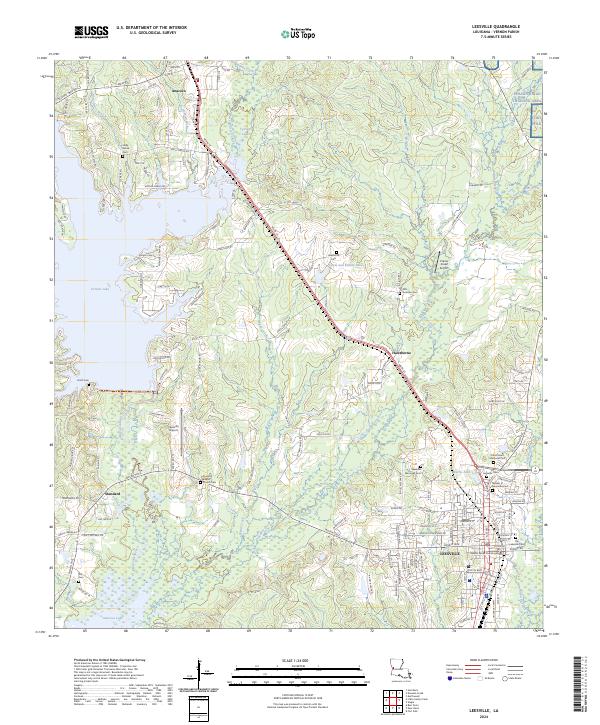 2024 Leesville2024 Print · USGSThe Vernon Parish seat of Leesville and the surrounding Louisiana piney woods are captured here during the 2020s. Researchers can locate family roots at the Leesville Cem, Hawthorne Cem, and the historic Vernon Parish Courthouse.
End of results
Showing maps 1-16 of 16
Top cities near Frank Bell Subdivision
- Leesville historical maps
- New Llano historical maps
- Rosepine historical maps
- Anacoco historical maps
- Hornbeck historical maps
Frequently asked questions
- What are the different types of historical maps available for Frank Bell Subdivision?
- What is the oldest map of Frank Bell Subdivision?
- Where can I purchase historical maps of Frank Bell Subdivision for my home or office?
- Where can I download high-res historical maps of Frank Bell Subdivision?
- Are there historical topographic maps available for Frank Bell Subdivision?
- Is there historical aerial imagery available for Frank Bell Subdivision?
- Where are historical maps of Frank Bell Subdivision sourced from?