1900s (20th Century) Maps of Falmouth, Maine
Explore 28 historic maps of Falmouth from the 1900s (20th Century). These maps offer a rare glimpse into what life looked like during the 1900s — showing old roads, neighborhoods, homes, and landmarks that have changed or disappeared over time.
Whether you're researching your family's past, planning a metal detecting trip, or studying how Falmouth's landscape evolved across the 1900s, these high-resolution maps are a powerful tool for exploring the history of this region.
- Focus on a specific era: All maps on this page are from the 1900s, giving you a focused view of this time period.
- See what’s changed: Compare century-old streets, trails, and buildings to today's modern landscape using overlays and satellite layers.
- Research with precision: Use these maps for genealogy, historical research, land use analysis, or educational projects.
- View, download, or print: Maps are fully viewable online in high resolution, and can be downloaded or printed for your own records.
Start exploring Falmouth's history through authentic maps from the 1900s. This is your window into the past.
Falmouth, ME maps
(28)- 1914 Map of Portland
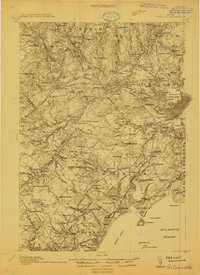 1914 Portland1914 Print · USGSCoastal Maine at the start of the twentieth century shows a landscape tied together by industrial rivers and an expanding network of electric railroads. Genealogists can locate family names at Hillside Cemetery or trace old rural schoolhouses like the Babb School and Beech Ridge School.
 - 1914 Map of Casco Bay
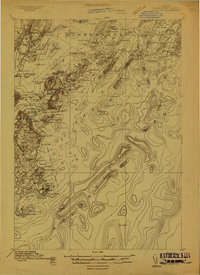 1914 Casco Bay1914 Print · USGSCumberland County's coastline and islands are shown in 1914, featuring a landscape of active coastal defenses and bustling maritime travel. Researchers can locate prominent landmarks such as Fort Mc Kinley, the Portland Head Light, and various steamer stops like Eastern Landing.
 - 1916 Map of Portland
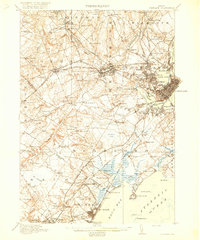 1916 Portland1916 Print · USGSGreater Portland and the Cumberland County coast are documented here during the height of the trolley and rail era. Researchers can trace ancestral property near the Evergreen Cemetery, early industries at Cumberland Mills, and vanished local sites like the State Reform School.7 unique versions available
 - 1916 Map of Casco Bay
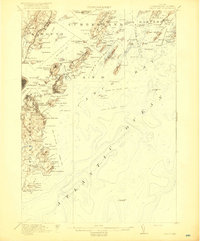 1916 Casco Bay1916 Print · USGSCumberland County’s shoreline was a landscape of strategic military forts and busy steamboat landings in the years before the Great War. Genealogists and historians can trace coastal heritage through landmarks like Fort Williams, Pine Grove School, and the scattered piers of Falmouth Foreside.8 unique versions available
 - 1916 Map of Portland And Vicinity
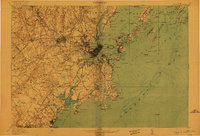 1916 Portland And Vicinity1916 Print · USGSCoastal Maine at the start of the Great War reveals a landscape of heavy coastal fortifications and bustling rail terminals. Trace old neighborhood boundaries and family landmarks like Milliken Mills, Hillside Cemetery, and the Portland Head lighthouse.
 - 1918 Map of Portland And Vicinity, 1926 Print
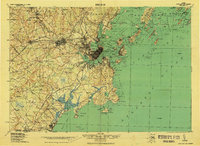 1918 Portland And Vicinity1926 Print · USGSCoastal Maine at the height of the Great War reveals a landscape of harbor forts, railroad junctions, and seaside settlements. Genealogists and historians can trace family roots through labels for Evergreen Cemetery, Spurwink Church, and dozens of rural schoolhouses like Babb School.
 - 1941 Map of Casco Bay
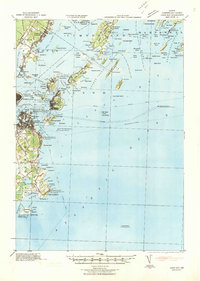 1941 Casco Bay1941 Print · USGSCasco Bay and its vital harbor defenses are captured here just as the nation prepared for war. Military historians and genealogists can locate Fort McKinley and Fort Williams alongside local landmarks like Pine Grove Sch.
 - 1941 Map of Portland
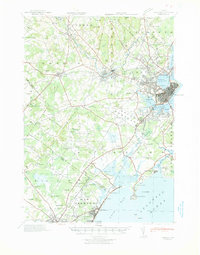 1941 Portland1941 Print · USGSCoastal Maine at the start of the 1940s reveals a bustling corridor of river mills and seaside settlements. Genealogists and historians can trace family roots through numerous local schools and landmarks like Cumberland Mills, Spurwink Ch, and Prouts Neck.
 - 1941 Map of Freeport, 1957 Print
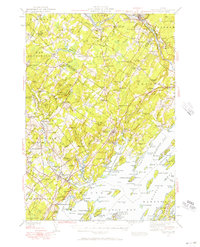 1941 Freeport1957 Print · USGSCumberland County at the dawn of the 1940s shows a landscape defined by the Androscoggin River and the rugged shoreline of Casco Bay. Local researchers can trace family roots through numerous burial grounds like Elmlawn Cem or locate forgotten schoolhouses like Hacker Sch and Hicks Sch.
 - 1942 Map of Gray, 1956 Print
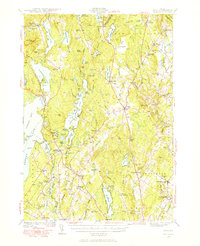 1942 Gray1956 Print · USGSCumberland County’s interior landscape comes into focus during the early 1940s, revealing a network of rail-side stations and crossroads hamlets. Genealogists and historians can trace family locations near Suckerville, Purinton Cem, and the Friends Ch.
 - 1944 Map of Gray
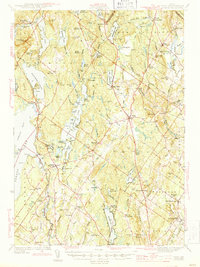 1944 Gray1944 Print · USGSCumberland County village life and the rail-and-water economy are captured here just after the war. You can trace the Maine Central line through several depots or locate historic family landmarks like Purinton Cem and the Opportunity Sch.3 unique versions available
 - 1944 Map of Portland East
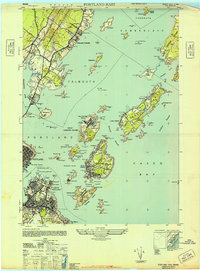 1944 Portland East1944 Print · USGSCasco Bay was a fortified maritime hub during the 1940s, balancing naval defense with thriving island communities. Researchers can trace coastal military history through Fort McKinley and Fort Gorges, or find family landmarks in Falmouth Foreside and Peak Island.2 unique versions available
 - 1944 Map of Freeport
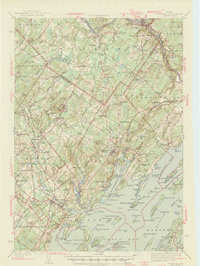 1944 Freeport1944 Print · USGSCumberland County’s rugged shoreline and industrial river valleys are captured during the early 1940s, from the mills of the Androscoggin River to the islands of Casco Bay. Researchers can trace the legacy of local families through landmarks like Plummer Mill, Hacker Sch, and the Lunt Memorial Cem.3 unique versions available
 - 1944 Map of Portland West, 1948 Print
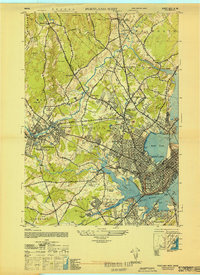 1944 Portland West1948 Print · USGSCoastal Maine during the mid-forties reveals a bustling network of rail yards and expanding neighborhoods west of the harbor. Researchers can trace the layout of the Portland Airport, find the historic Barker School, and locate vanished rail stops like West Falmouth Station.
 - 1948 Map of Portland West
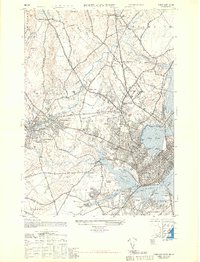 1948 Portland West1948 Print · USGSCoastal Maine during the late 1940s reveals a bustling intersection of rail and river industry between the city and its growing suburbs. Genealogists and historians can trace old neighborhoods like Woodfords or locate ancestors at Evergreen Cemetery and the State Reform School.
 - 1949 Map of Portland
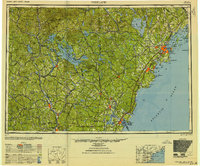 1949 Portland1949 Print · USGSCoastal Maine and the New Hampshire interior are shown in detail during the late forties, from the bustling harbors to the lakeside villages. Researchers can trace historical rail networks like the Boston & Maine RR and locate coastal defenses such as Fort Preble.3 unique versions available
 - 1956 Map of Portland East, 1958 Print
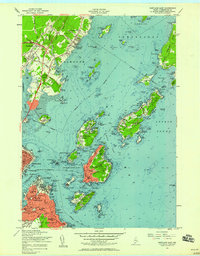 1956 Portland East1958 Print · USGSCasco Bay and its island communities are captured here in the mid-fifties as coastal Maine's military and residential landscapes evolved. Researchers can trace historic harbor defenses at Fort McKinley and locate family landmarks from Waites Landing to the Pine Grove Sch.5 unique versions available
 - 1956 Map of Portland West, 1958 Print
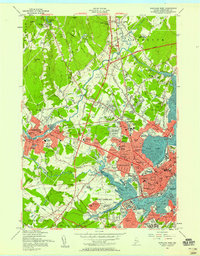 1956 Portland West1958 Print · USGSGreater Portland and Westbrook are seen here during the mid-century peak of their rail and river industries. Genealogists and historians can trace neighborhood growth through local schools like Longfellow Sch, industrial sites along the Fore River, and numerous burial grounds including Evergreen Cemetery.6 unique versions available
 - 1956 Map of Portland, 1963 Print
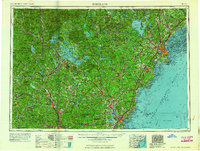 1956 Portland1963 Print · USGSSouthern Maine and eastern New Hampshire are captured here in the mid-fifties, during a time of major highway expansion and military growth. You can trace the path of the Maine Turnpike and locate landmarks like the Portsmouth Naval Shipyard and Sebago Lake.4 unique versions available
 - 1957 Map of Cumberland Center, 1959 Print
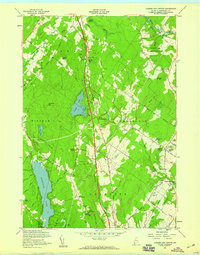 1957 Cumberland Center1959 Print · USGSCoastal Maine townships show their mid-century character as the new turnpike era begins to reshape the local geography. Genealogists and historians can trace family-named sites like Farris Cem, Dutton Hill, and the historic Greely Institute campus.4 unique versions available
 - 1957 Map of Yarmouth, 1959 Print
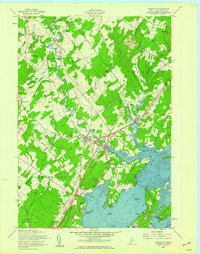 1957 Yarmouth1959 Print · USGSCumberland County coastal life and transportation networks are caught in detail during the late fifties. Genealogists and local historians can trace family-named sites like Crockett Corner, locate the Pine Grove Cem, and see the rail junctions at Royal Junction.3 unique versions available
 - 1957 Map of Gray, 1960 Print
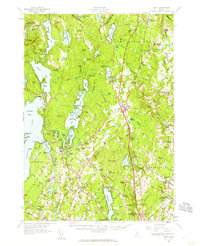 1957 Gray1960 Print · USGSCumberland County during the mid-fifties shows a landscape of established rail towns and growing turnpike access. Genealogists and historians can trace family locations near crossroads like Ireland Corner, find old schools such as Gloucester Hill School, and locate rural landmarks like Windham Plains Chapel.5 unique versions available
 - 1957 Map of Casco Bay, 1960 Print
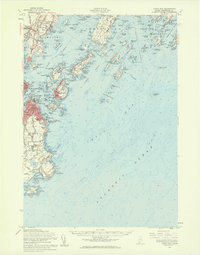 1957 Casco Bay1960 Print · USGSThe Maine coast near Portland appears here in the late fifties, featuring a landscape defined by historic harbor defenses and island communities. Genealogists and historians can trace rail lines like the Grand Trunk or locate landmarks such as the Maine School for the Deaf and Fort Williams Military Res.3 unique versions available
 - 1957 Map of Portland, 1960 Print
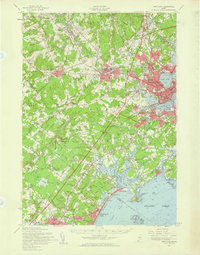 1957 Portland1960 Print · USGSCoastal Maine during the mid-fifties shows the transition from historic maritime centers to the suburban era. Researchers can trace family roots through numerous sites like Evergreen Cem, Thornton Academy, and the State Reformatory for Men.3 unique versions available
 - 1957 Map of Freeport, 1961 Print
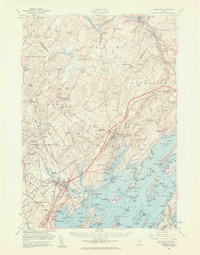 1957 Freeport1961 Print · USGSCoastal and rural Maine intersect in the late fifties as the turnpike begins to reshape the landscape from the Androscoggin River to Casco Bay. Genealogists can trace family names at Lunt Memorial Cem or explore the settlements of Shiloh and Durham Southwest Bend.3 unique versions available
Showing maps 1-25 of 28
Top cities near Falmouth
- Portland historical maps
- South Portland historical maps
- Biddeford historical maps
- Scarborough historical maps
- Brunswick historical maps
- Westbrook historical maps
See more
Top neighborhoods of Falmouth
- Falmouth Foreside historical maps
- Waites Landing historical maps
- York Landing historical maps
- North Falmouth historical maps
- Pleasant Hill historical maps
- West Falmouth Corner historical maps
See more
Frequently asked questions
- What are the different types of historical maps available for Falmouth?
- What is the oldest map of Falmouth?
- Where can I purchase historical maps of Falmouth for my home or office?
- Where can I download high-res historical maps of Falmouth?
- Are there historical topographic maps available for Falmouth?
- Is there historical aerial imagery available for Falmouth?
- Where are historical maps of Falmouth sourced from?