Old Maps of Gorham, Maine for Genealogy
Trace your family roots with 61 historic maps of Gorham. These high-res maps reveal old neighborhoods, homesites, landmarks, and streets — helping you uncover where your ancestors lived and how the area evolved over time.
- Explore historic neighborhoods: Identify where your relatives may have lived in the 1800s or 1900s.
- Compare maps over time: Trace the changes in streets, buildings, and landmarks for multi-generational research.
- Perfect for genealogy & ancestry research: Used by family historians and researchers to map out lineage and migration.
These maps are an incredible resource for exploring your personal connection to Gorham's past.
Gorham, ME maps
(61)- 1891 Map of Portland
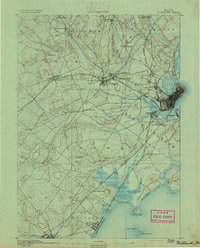 1891 Portland1891 Print · USGSCoastal Maine at the height of its rail-and-milling era shows the rapid development of the Portland suburbs and industrial waterfront. Genealogists can trace early homesteads and rail stops like Cape Elizabeth Depot, Saccarappa, and Prout's Neck.
 - 1891 Map of Buxton
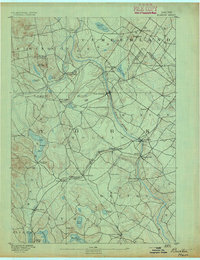 1891 Buxton1891 Print · USGSThe Saco River valley at the end of the nineteenth century is captured here in detail, showcasing a network of mill villages and early rail lines. Researchers can trace the path of the Portland and Rochester Railroad and locate historic sites like Shaker Village, Salmon Falls, and Nasons Mills.
 - 1892 Map of Buxton, 1913 Print
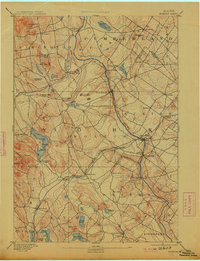 1892 Buxton1913 Print · USGSSouthern Maine's mill towns and river valleys are captured here in the late nineteenth century as the industrial economy thrived along the Saco River. Genealogists and historians can trace the early layouts of Shaker Village, Nasons Mills, and Salmon Falls before modern development changed these rural landscapes.4 unique versions available
 - 1893 Map of Portland
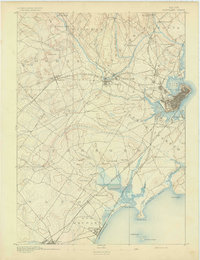 1893 Portland1893 Print · USGSCumberland County at the close of the nineteenth century centers on the bustling rail hub of Portland and its surrounding mill towns. Researchers can trace the Victorian-era development of Saccarappa, the seaside sprawl of Old Orchard, and the river industry at Cumberland Mills.6 unique versions available
 - 1893 Map of Buxton
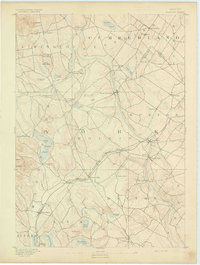 1893 Buxton1893 Print · USGSThe York County interior flourished in the late nineteenth century as a hub of river-powered industry and rail transport. Genealogists and historians can trace family-named sites and vanished mill hamlets like Shaker Village, Nasons Mills, and Salmon Falls.3 unique versions available
 - 1894 Map of Gray
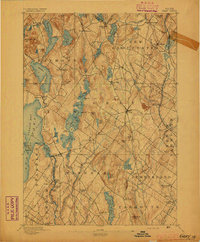 1894 Gray1894 Print · USGSMaine's Sebago Lake region at the close of the nineteenth century shows a network of mill towns and early rail lines. Trace family roots and vanished landmarks through New Gloucester, Sabbathday Lake, and the depots along the Maine Central R. R.
 - 1896 Map of Sebago
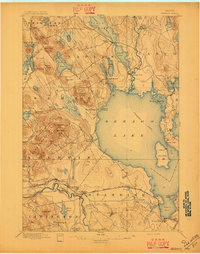 1896 Sebago1896 Print · USGSCumberland County’s lake country thrived on a network of water and rail transport at the end of the Victorian era. Researchers can trace the Steamboat Route through Sebago Lake and locate old industrial sites like Songo Lock, Cooks Mills, and Steep Falls.8 unique versions available
 - 1898 Map of Gray
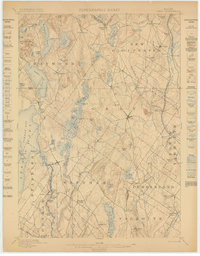 1898 Gray1898 Print · USGSIn the 1890s, this area of southern Maine was a landscape of evolving rail connections and traditional mill towns. Genealogists can trace family roots through settlements like New Gloucester and Cumberland Center, or locate early landmarks such as Webbs Mills and Sabbathday Lake.7 unique versions available
 - 1914 Map of Portland
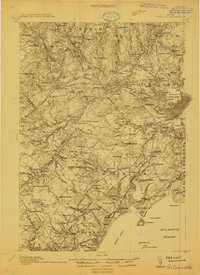 1914 Portland1914 Print · USGSCoastal Maine at the start of the twentieth century shows a landscape tied together by industrial rivers and an expanding network of electric railroads. Genealogists can locate family names at Hillside Cemetery or trace old rural schoolhouses like the Babb School and Beech Ridge School.
 - 1916 Map of Portland
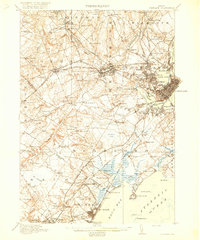 1916 Portland1916 Print · USGSGreater Portland and the Cumberland County coast are documented here during the height of the trolley and rail era. Researchers can trace ancestral property near the Evergreen Cemetery, early industries at Cumberland Mills, and vanished local sites like the State Reform School.7 unique versions available
 - 1916 Map of Portland And Vicinity
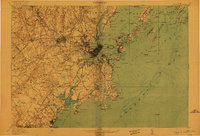 1916 Portland And Vicinity1916 Print · USGSCoastal Maine at the start of the Great War reveals a landscape of heavy coastal fortifications and bustling rail terminals. Trace old neighborhood boundaries and family landmarks like Milliken Mills, Hillside Cemetery, and the Portland Head lighthouse.
 - 1918 Map of Portland And Vicinity, 1926 Print
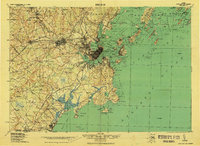 1918 Portland And Vicinity1926 Print · USGSCoastal Maine at the height of the Great War reveals a landscape of harbor forts, railroad junctions, and seaside settlements. Genealogists and historians can trace family roots through labels for Evergreen Cemetery, Spurwink Church, and dozens of rural schoolhouses like Babb School.
 - 1941 Map of Portland
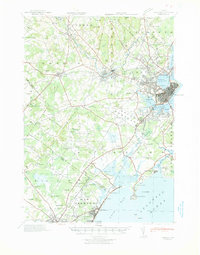 1941 Portland1941 Print · USGSCoastal Maine at the start of the 1940s reveals a bustling corridor of river mills and seaside settlements. Genealogists and historians can trace family roots through numerous local schools and landmarks like Cumberland Mills, Spurwink Ch, and Prouts Neck.
 - 1942 Map of Gray, 1956 Print
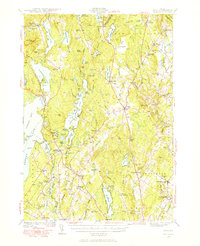 1942 Gray1956 Print · USGSCumberland County’s interior landscape comes into focus during the early 1940s, revealing a network of rail-side stations and crossroads hamlets. Genealogists and historians can trace family locations near Suckerville, Purinton Cem, and the Friends Ch.
 - 1942 Map of Buxton, 1958 Print
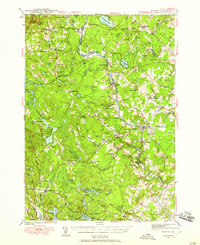 1942 Buxton1958 Print · USGSIn the early 1940s, the river valleys of southern Maine were defined by a tight-knit network of mill towns and rail corridors. Trace family roots and local industry through features like Salmon Falls, Shaw Mills, and the Chadbourne Cem.3 unique versions available
 - 1942 Map of Sebago Lake, 1959 Print
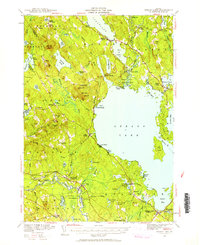 1942 Sebago Lake1959 Print · USGSCumberland County’s lakes and ridges were well-established as a summer destination in the early 1940s, centered around the expanse of Sebago Lake. Researchers can trace old rail routes at East Baldwin Mattocks Sta, find the historic Potter Academy, or locate family sites near South Naples.3 unique versions available
 - 1943 Map of Sebago Lake
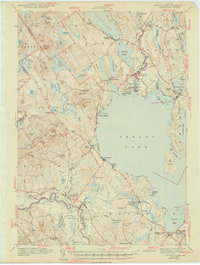 1943 Sebago Lake1943 Print · USGSMaine's lake country thrived during the early 1940s as a hub of rail commerce and early recreation. You can trace the Maine Central Railroad through Steep Falls or find local landmarks like Potter Academy and Songo Lock.3 unique versions available
 - 1944 Map of Buxton
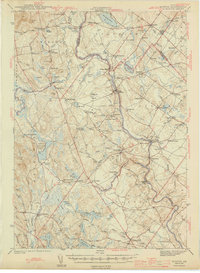 1944 Buxton1944 Print · USGSThe Saco River valley during the mid-forties reveals a landscape of mill towns and interconnected rural hamlets. Genealogists and local historians can trace the foundations of Bar Mills, locate the Chadbourne Cem, or follow the path of the Boston and Maine railroad.3 unique versions available
 - 1944 Map of Gray
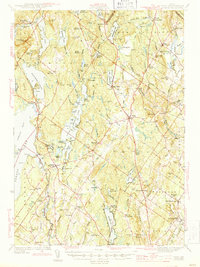 1944 Gray1944 Print · USGSCumberland County village life and the rail-and-water economy are captured here just after the war. You can trace the Maine Central line through several depots or locate historic family landmarks like Purinton Cem and the Opportunity Sch.3 unique versions available
 - 1944 Map of Gorham
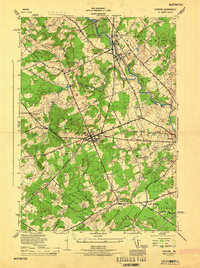 1944 Gorham1944 Print · USGSCumberland County during the mid-forties reveals a network of mill towns and crossroads communities linked by rail. Genealogists can trace family footprints near Hillside Cemetery or the State Normal School, while finding old rural routes through Newhall and South Gorham.
 - 1944 Map of Old Orchard Beach
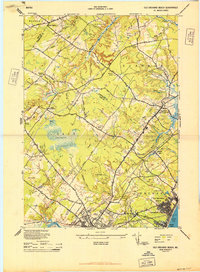 1944 Old Orchard Beach1944 Print · USGSCoastal Maine during the mid-forties reveals a landscape of summer resorts, rural schoolhouses, and working mills. Genealogists and historians can trace the foundations of Old Orchard Beach and find landmarks like Milliken Mills, the Heath Meetinghouse, and Ocean Park.
 - 1949 Map of Portland
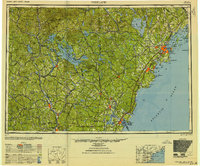 1949 Portland1949 Print · USGSCoastal Maine and the New Hampshire interior are shown in detail during the late forties, from the bustling harbors to the lakeside villages. Researchers can trace historical rail networks like the Boston & Maine RR and locate coastal defenses such as Fort Preble.3 unique versions available
 - 1950 Map of Gorham
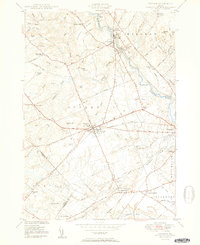 1950 Gorham1950 Print · USGSCumberland County at mid-century reveals a bustling network of river-powered mill towns and railroad corridors. Genealogists can locate family landmarks like Winship Corner, local institutions such as the State Normal Sch, and several rural burial sites including Browns Cem.2 unique versions available
 - 1956 Map of Old Orchard Beach, 1958 Print
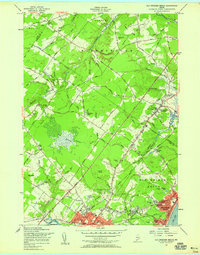 1956 Old Orchard Beach1958 Print · USGSThe Maine coast in the mid-fifties shows a bustling transition from rail-era resort life to the modern turnpike age. Researchers can trace family landmarks and civic centers like Thornton Academy, the Campground Tabernacle, and Beech Ridge Speedway.4 unique versions available
 - 1956 Map of Portland, 1963 Print
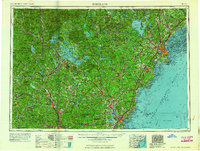 1956 Portland1963 Print · USGSSouthern Maine and eastern New Hampshire are captured here in the mid-fifties, during a time of major highway expansion and military growth. You can trace the path of the Maine Turnpike and locate landmarks like the Portsmouth Naval Shipyard and Sebago Lake.4 unique versions available
Showing maps 1-25 of 61
Top cities near Gorham
- Portland historical maps
- South Portland historical maps
- Biddeford historical maps
- Scarborough historical maps
- Sanford historical maps
- Westbrook historical maps
See more
Top neighborhoods of Gorham
- Little Falls historical maps
- Gag Corner historical maps
- Mosher Corner historical maps
- Dog Corner historical maps
- White Rock historical maps
- South Gorham historical maps
See more
Frequently asked questions
- What are the different types of historical maps available for Gorham?
- What is the oldest map of Gorham?
- Where can I purchase historical maps of Gorham for my home or office?
- Where can I download high-res historical maps of Gorham?
- Are there historical topographic maps available for Gorham?
- Is there historical aerial imagery available for Gorham?
- Where are historical maps of Gorham sourced from?