1900s (20th Century) Maps of The Hamlet, Westbrook
Explore 15 historic maps of The Hamlet from the 1900s (20th Century). These maps offer a rare glimpse into what life looked like during the 1900s — showing old roads, neighborhoods, homes, and landmarks that have changed or disappeared over time.
Whether you're researching your family's past, planning a metal detecting trip, or studying how The Hamlet's landscape evolved across the 1900s, these high-resolution maps are a powerful tool for exploring the history of this region.
- Focus on a specific era: All maps on this page are from the 1900s, giving you a focused view of this time period.
- See what’s changed: Compare century-old streets, trails, and buildings to today's modern landscape using overlays and satellite layers.
- Research with precision: Use these maps for genealogy, historical research, land use analysis, or educational projects.
- View, download, or print: Maps are fully viewable online in high resolution, and can be downloaded or printed for your own records.
Start exploring The Hamlet's history through authentic maps from the 1900s. This is your window into the past.
The Hamlet, Westbrook maps
(15)- 1914 Map of Portland
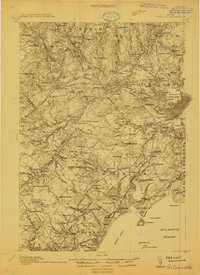 1914 Portland1914 Print · USGSCoastal Maine at the start of the twentieth century shows a landscape tied together by industrial rivers and an expanding network of electric railroads. Genealogists can locate family names at Hillside Cemetery or trace old rural schoolhouses like the Babb School and Beech Ridge School.
 - 1916 Map of Portland
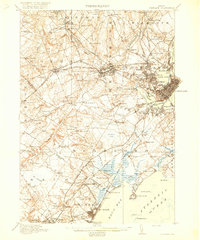 1916 Portland1916 Print · USGSGreater Portland and the Cumberland County coast are documented here during the height of the trolley and rail era. Researchers can trace ancestral property near the Evergreen Cemetery, early industries at Cumberland Mills, and vanished local sites like the State Reform School.7 unique versions available
 - 1916 Map of Portland And Vicinity
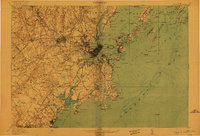 1916 Portland And Vicinity1916 Print · USGSCoastal Maine at the start of the Great War reveals a landscape of heavy coastal fortifications and bustling rail terminals. Trace old neighborhood boundaries and family landmarks like Milliken Mills, Hillside Cemetery, and the Portland Head lighthouse.
 - 1918 Map of Portland And Vicinity, 1926 Print
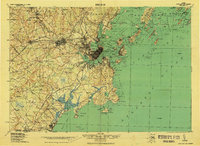 1918 Portland And Vicinity1926 Print · USGSCoastal Maine at the height of the Great War reveals a landscape of harbor forts, railroad junctions, and seaside settlements. Genealogists and historians can trace family roots through labels for Evergreen Cemetery, Spurwink Church, and dozens of rural schoolhouses like Babb School.
 - 1941 Map of Portland
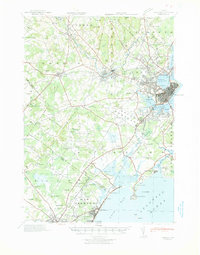 1941 Portland1941 Print · USGSCoastal Maine at the start of the 1940s reveals a bustling corridor of river mills and seaside settlements. Genealogists and historians can trace family roots through numerous local schools and landmarks like Cumberland Mills, Spurwink Ch, and Prouts Neck.
 - 1944 Map of Gorham
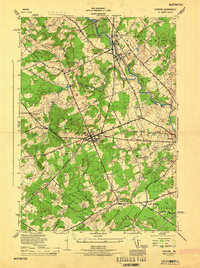 1944 Gorham1944 Print · USGSCumberland County during the mid-forties reveals a network of mill towns and crossroads communities linked by rail. Genealogists can trace family footprints near Hillside Cemetery or the State Normal School, while finding old rural routes through Newhall and South Gorham.
 - 1949 Map of Portland
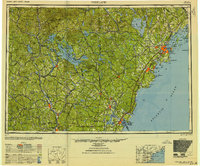 1949 Portland1949 Print · USGSCoastal Maine and the New Hampshire interior are shown in detail during the late forties, from the bustling harbors to the lakeside villages. Researchers can trace historical rail networks like the Boston & Maine RR and locate coastal defenses such as Fort Preble.3 unique versions available
 - 1950 Map of Gorham
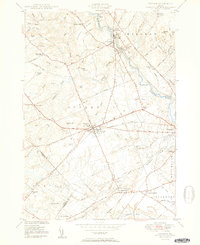 1950 Gorham1950 Print · USGSCumberland County at mid-century reveals a bustling network of river-powered mill towns and railroad corridors. Genealogists can locate family landmarks like Winship Corner, local institutions such as the State Normal Sch, and several rural burial sites including Browns Cem.2 unique versions available
 - 1956 Map of Portland, 1963 Print
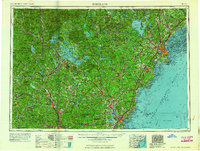 1956 Portland1963 Print · USGSSouthern Maine and eastern New Hampshire are captured here in the mid-fifties, during a time of major highway expansion and military growth. You can trace the path of the Maine Turnpike and locate landmarks like the Portsmouth Naval Shipyard and Sebago Lake.4 unique versions available
 - 1957 Map of Gorham, 1958 Print
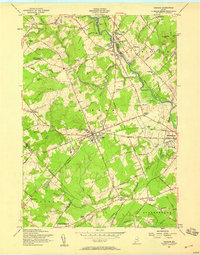 1957 Gorham1958 Print · USGSCumberland County in the late fifties shows a landscape of classic New England town centers and rural corners. Researchers can locate the State Teachers College, early schools like Whitney Sch, and family sites at Gag Corner or Fort Hill Cem.3 unique versions available
 - 1957 Map of Portland, 1960 Print
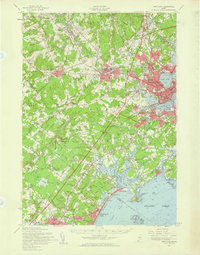 1957 Portland1960 Print · USGSCoastal Maine during the mid-fifties shows the transition from historic maritime centers to the suburban era. Researchers can trace family roots through numerous sites like Evergreen Cem, Thornton Academy, and the State Reformatory for Men.3 unique versions available
 - 1959 Map of Portland
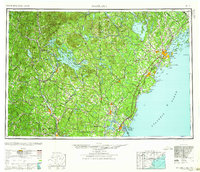 1959 Portland1959 Print · USGSThe Maine and New Hampshire coastlines meet in this mid-century portrait of maritime commerce and inland rail networks. Researchers can trace the legacy of coastal defense at Fort Williams and follow the historic path of the Maine Central RR through the White Mountain National Forest.2 unique versions available
 - 1963 Map of Portland
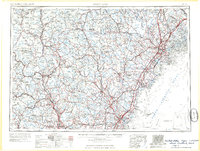 1963 Portland1963 Print · USGSCoastal Maine and New Hampshire thrived as maritime and industrial hubs during the mid-sixties, linked by a dense network of rail and river. Researchers can trace historic transit corridors like the Maine Central RR and locate key sites such as the Portsmouth Naval Shipyard or Pease Air Force Base.3 unique versions available
 - 1975 Map of Gorham, 1979 Print
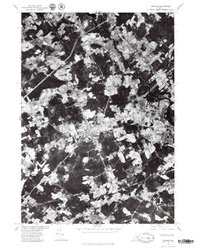 1975 Gorham1979 Print · USGSCumberland County communities are seen in transition during the mid-seventies as suburban patterns emerge among older farmsteads. Researchers can trace land use near Gorham and Westbrook or follow the courses of the Presumpscot River and Nonesuch River.
 - 1985 Map of Portland, 1986 Print
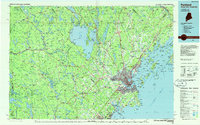 1985 Portland1986 Print · USGSThe Maine coast and Sebago Lake region are captured in the mid-1980s, showcasing the transition from traditional maritime centers to a modern transportation hub. Genealogists and historians can trace rail lines like the Grand Trunk RR and find local landmarks such as the U.S. Marine Hospital or Old Orchard Beach.2 unique versions available
End of results
Showing maps 1-15 of 15
Frequently asked questions
- What are the different types of historical maps available for The Hamlet?
- What is the oldest map of The Hamlet?
- Where can I purchase historical maps of The Hamlet for my home or office?
- Where can I download high-res historical maps of The Hamlet?
- Are there historical topographic maps available for The Hamlet?
- Is there historical aerial imagery available for The Hamlet?
- Where are historical maps of The Hamlet sourced from?