1900s (20th Century) Maps of Sullivan, Maine
Explore 23 historic maps of Sullivan from the 1900s (20th Century). These maps offer a rare glimpse into what life looked like during the 1900s — showing old roads, neighborhoods, homes, and landmarks that have changed or disappeared over time.
Whether you're researching your family's past, planning a metal detecting trip, or studying how Sullivan's landscape evolved across the 1900s, these high-resolution maps are a powerful tool for exploring the history of this region.
- Focus on a specific era: All maps on this page are from the 1900s, giving you a focused view of this time period.
- See what’s changed: Compare century-old streets, trails, and buildings to today's modern landscape using overlays and satellite layers.
- Research with precision: Use these maps for genealogy, historical research, land use analysis, or educational projects.
- View, download, or print: Maps are fully viewable online in high resolution, and can be downloaded or printed for your own records.
Start exploring Sullivan's history through authentic maps from the 1900s. This is your window into the past.
Sullivan, ME maps
(23)- 1904 Map of Bar Harbor
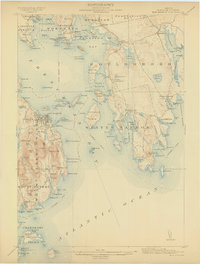 1904 Bar Harbor1904 Print · USGSThe granite coast of Maine appears at the height of its maritime era, with a dense network of steamboat routes and ferry crossings. Genealogists and historians can trace the early layout of Bar Harbor, the rail terminus at Mount Desert Ferry, and the fishing outposts of Islesford and Sorrento.6 unique versions available
 - 1911 Map of Ellsworth
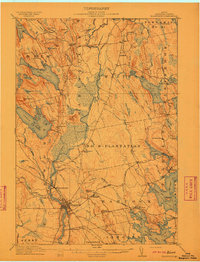 1911 Ellsworth1911 Print · USGSCoastal Hancock County at the turn of the century shows a landscape of busy rail junctions and remote plantation schools. Genealogists can trace family names at Washington Junction or locate the old Beechland School and Morrison School.5 unique versions available
 - 1930 Map of Tunk Lake
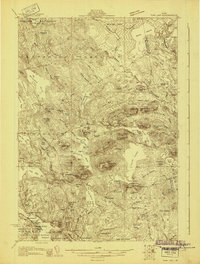 1930 Tunk Lake1930 Print · USGSHancock County was a landscape of timber and tide in the early 1930s, where the Maine Central rail line linked small coastal villages to the deep woods. Genealogists and historians can trace old homesteads in Donnells, rural education at Tunk Lake Sch, and the locations of sporting retreats like the Wichyup Club.
 - 1932 Map of Tunk Lake
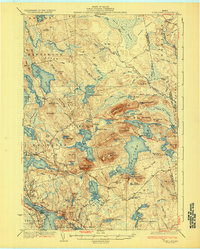 1932 Tunk Lake1932 Print · USGSThe coastal inlets and glacial highlands of Hancock County are meticulously detailed in the early 1930s. Researchers can trace the Maine Central rail line through Sullivan and locate vanished local landmarks like the Think Lake Sch and Wickypup Club.4 unique versions available
 - 1940 Map of Ellsworth, 1957 Print
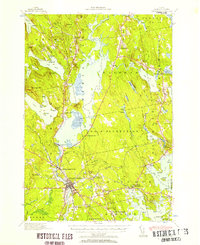 1940 Ellsworth1957 Print · USGSHancock County at the start of the 1940s reveals a landscape of tidal bays and timbered ridges surrounding the hub of Ellsworth. Genealogists and local historians can trace rail lines at Washington Junction, find rural schoolhouses like Beechland Sch, and locate the old Franklin Road North Hancock Post Office.
 - 1942 Map of Bar Harbor
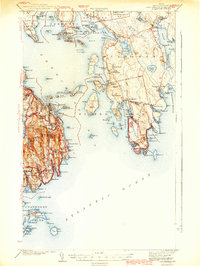 1942 Bar Harbor1942 Print · USGSMount Desert Island and the Schoodic Peninsula are shown just before the war in this detailed coastal survey. Genealogists and historians can trace the foundations of Bar Harbor, locate the village of Islesford, and explore landmarks like Chicken Mill Pond.4 unique versions available
 - 1942 Map of Ellsworth
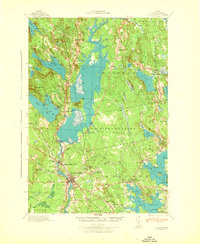 1942 Ellsworth1942 Print · USGSHancock County enters the early years of the war with its rail and river networks fully matured. Genealogists and historians can trace the foundations of local life through rural landmarks like the No 8 Plantation Sch, the rail hub at Washington Junction, and the post office at North Hancock P O.
 - 1942 Map of Tunk Lake
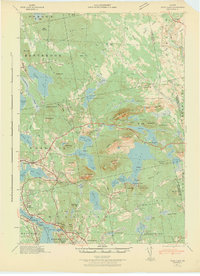 1942 Tunk Lake1942 Print · USGSHancock County’s inland peaks and coastal villages are captured here during the early 1940s, just as aerial photography began to modernize regional mapping. Researchers can locate the Tunk Lake Sch, coastal rail stops at Waukeag, and the prominent Fire Tower on Schoodic Mtn.
 - 1948 Map of Bangor
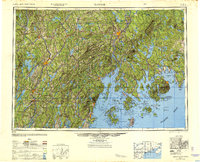 1948 Bangor1948 Print · USGSThe Maine coast and its industrial river valleys are captured here shortly after the war, showing the vital shipping and rail hubs of the late 1940s. Genealogists and historians can trace the tracks of the Maine Central RR connecting Bangor, Augusta, and Old Town.
 - 1956 Map of Bar Harbor, 1960 Print
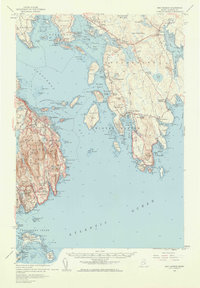 1956 Bar Harbor1960 Print · USGSThe Maine coast in the mid-1950s reveals a landscape defined by seafaring villages and the protected peaks of Acadia National Park. Genealogists and historians can trace coastal life from the streets of Bar Harbor to remote island settlements like Islesford and Gerrishville.3 unique versions available
 - 1956 Map of Bangor, 1966 Print
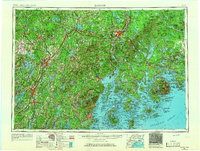 1956 Bangor1966 Print · USGSMid-century Maine comes alive in this survey of the rugged coast and river valleys during the 1950s. Genealogists and historians can trace the vital rail corridors of the Maine Central RR connecting timber towns like Old Town to the coast at Bar Harbor.3 unique versions available
 - 1957 Map of Tunk Lake, 1959 Print
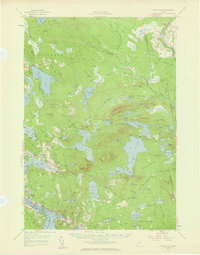 1957 Tunk Lake1959 Print · USGSCoastal Maine in the late 1950s shows a landscape defined by the Maine Central RR and tidal waters like Hog Bay. Local historians can trace family locations near Bayview Cem, the Union Ch, and settlements from Deblois to East Sullivan.4 unique versions available
 - 1957 Map of Ellsworth, 1959 Print
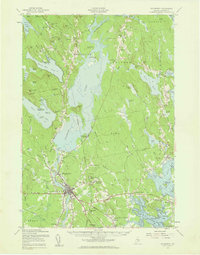 1957 Ellsworth1959 Print · USGSHancock County at the end of the fifties shows the critical transition from rail-dependent industry to the modern highway era. Researchers can trace historic family burial sites and rural schoolhouses, including Hillside Cem, Stetson Sch, and the junctions of the Maine Central Railroad.3 unique versions available
 - 1960 Map of Bangor
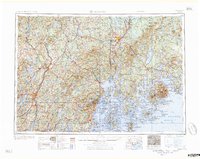 1960 Bangor1960 Print · USGSCentral Maine in the sixties reveals a landscape of river-powered industry and sprawling coastal island chains. Researchers can trace the rail corridors of the Maine Central or locate mid-century aviation landmarks like Dow Air Force Base.
 - 1961 Map of Bangor
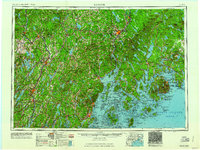 1961 Bangor1961 Print · USGSMid-century Maine comes alive through its busy river ports and rocky archipelagoes during a period of steady maritime and rail commerce. Researchers can trace the path of the Maine Central railroad and locate coastal landmarks from Acadia National Park to Vinalhaven Island.
 - 1981 Map of Hancock, 1982 Print
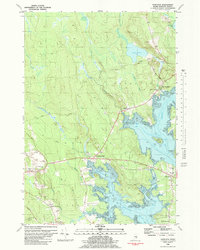 1981 Hancock1982 Print · USGSCoastal Hancock County and the Taunton Bay shoreline appear in detail during the early eighties as the local economy balanced rail transport and maritime life. Genealogists and researchers can trace family landmarks like Abbott Cem, the Hancock Sch, and the winding path of the Maine Central Railroad.
 - 1982 Map of Bar Harbor, 1983 Print
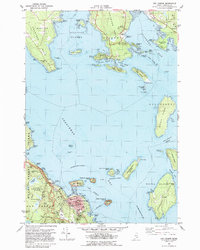 1982 Bar Harbor1983 Print · USGSCoastal Maine in the early eighties reveals a bustling maritime landscape centered on the Bar Harbor waterfront and the protected lands of Acadia National Park. Genealogists and historians can trace local landmarks like the Holy Redeemer Ch, the Bragdon Cem, and the old Sorrento Sch.2 unique versions available
 - 1982 Map of Sullivan, 1983 Print
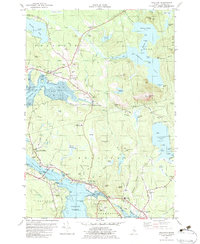 1982 Sullivan1983 Print · USGSCoastal Hancock County in the early eighties shows a landscape shaped by tidal bays and the MAINE CENTRAL RAILROAD. Genealogists and historians can trace local family roots through sites like York Hill Cemetery, Sullivan Harbor Church, and the many Quarries near North Sullivan.2 unique versions available
 - 1982 Map of Tunk Lake, 1983 Print
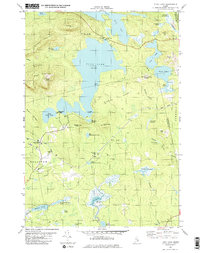 1982 Tunk Lake1983 Print · USGSHancock and Washington Counties are captured in the early 1980s, centered on the vast waters of Tunk Lake. Researchers can trace the path of the Maine Central railroad and locate historical sites like Big Chief Camps or Goodwin Siding.
 - 1984 Map of Winter Harbor, 1985 Print
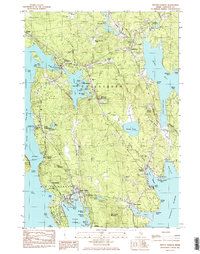 1984 Winter Harbor1985 Print · USGSCoastal Hancock County at the mid-eighties shows a landscape of fishing villages and early conservation efforts. Researchers can locate family landmarks like Taft Cem, the historic Gouldsboro Sch, and the Prospect Harbor Point Lighthouse.2 unique versions available
 - 1985 Map of Bangor
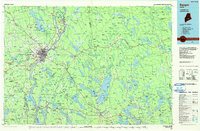 1985 Bangor1985 Print · USGSMid-Maine during the mid-eighties centers on the industrial pulse of the Penobscot River and its critical rail connections. Genealogists and historians can trace the development of river towns from Old Town to Ellsworth and locate regional landmarks like Fort Knox State Park.
 - 1985 Map of Bar Harbor
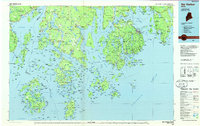 1985 Bar Harbor1985 Print · USGSCoastal Hancock County in the mid-eighties shows an intricate landscape of island communities and protected wilderness. Trace the boundaries of Acadia National Park or locate seafaring hubs like Stonington and Bar Harbor.2 unique versions available
 - 1994 Map of Bangor
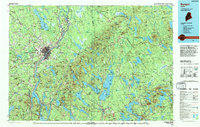 1994 Bangor1994 Print · USGSThe Penobscot River valley and the coastal highlands of eastern Maine are captured here in the mid-1990s. Researchers can trace the industrial rail corridors of the Maine Central Railroad or explore the landscape around Old Town, Bucksport, and Graham Lake.
End of results
Showing maps 1-23 of 23
Top cities near Sullivan
- Ellsworth historical maps
- Bar Harbor historical maps
- Hancock historical maps
- Mount Desert historical maps
- Southwest Harbor historical maps
- Lamoine historical maps
See more
Top neighborhoods of Sullivan
- Tunk Lake historical maps
- North Sullivan historical maps
- Schoodic historical maps
- West Sullivan historical maps
- East Sullivan historical maps
Frequently asked questions
- What are the different types of historical maps available for Sullivan?
- What is the oldest map of Sullivan?
- Where can I purchase historical maps of Sullivan for my home or office?
- Where can I download high-res historical maps of Sullivan?
- Are there historical topographic maps available for Sullivan?
- Is there historical aerial imagery available for Sullivan?
- Where are historical maps of Sullivan sourced from?