Old Maps of Brownfield, Maine for Hiking & Exploration
Hike through history with 34 historic maps of Brownfield. Explore old trails, ghost towns, and forgotten backroads — perfect for outdoor adventurers and local explorers.
- Rediscover forgotten places: Map out old mining camps, roads, and footpaths that no longer exist on modern maps.
- Layer with modern tools: Combine with LiDAR or satellite views to plan hikes through historical terrain.
- Made for exploration: Popular among hikers, overlanders, and local history lovers.
Use these maps to find adventure and explore the hidden past of Brownfield.
Brownfield, ME maps
(34)- 1909 Map of Fryeburg, 1960 Print
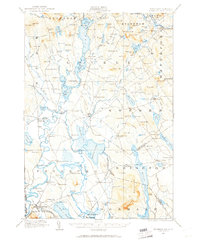 1909 Fryeburg1960 Print · USGSOxford County and the borderlands of Maine and New Hampshire were defined by the shifting waters of the Saco and the Kezar at the century's turn. Genealogists can trace family homesteads near the Battle Monument or locate rural schoolhouses like Foxboro School and Menotomy School.3 unique versions available
 - 1910 Map of Kezar Falls
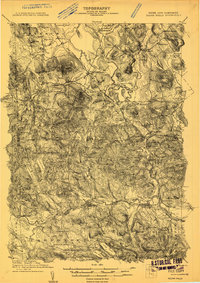 1910 Kezar Falls1910 Print · USGSMaine and New Hampshire borderlands are captured here at the height of the railroad era, as the Maine Central linked river towns. Genealogists can trace family footprints through sites like the Parsonsfield Seminary, Merrill Corner, and the Haley School.5 unique versions available
 - 1911 Map of Fryeburg
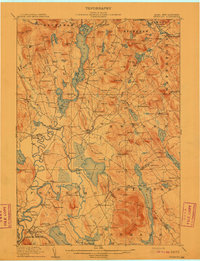 1911 Fryeburg1911 Print · USGSOxford County at the start of the century shows a landscape of lake-fed valleys and the bustling rail corridor of the Maine Central RR. Genealogists and historians can trace old school districts like Foxboro School, local landmarks like the Battle Monument, and early settlements at Slab City and Lynchville.6 unique versions available
 - 1911 Map of Kezar Falls
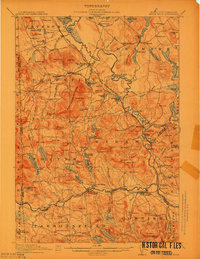 1911 Kezar Falls1911 Print · USGSThe Saco River valley at the turn of the century shows a landscape defined by riverside industry and mountain schools. Genealogists and historians can trace rail depots like Bridgton Junction and early landmarks such as Parsonsfield Seminary and Rankins Mill.5 unique versions available
 - 1941 Map of Fryeburg
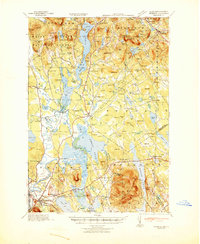 1941 Fryeburg1941 Print · USGSOxford County and the Maine-New Hampshire borderlands are captured here just before the war, showcasing a landscape of isolated hills and interconnected lakes. Genealogists can locate family-named landmarks like Mc Daniels Hill and numerous rural schools including Plummer Sch and Black Mountain Sch.
 - 1949 Map of Portland
 1949 Portland1949 Print · USGSCoastal Maine and the New Hampshire interior are shown in detail during the late forties, from the bustling harbors to the lakeside villages. Researchers can trace historical rail networks like the Boston & Maine RR and locate coastal defenses such as Fort Preble.3 unique versions available
 - 1950 Map of Lewiston
 1950 Lewiston1950 Print · USGSThe Maine and New Hampshire borderlands come alive in this post-war survey of the White Mountains and Androscoggin valley. Genealogists and historians can trace rail lines like the Maine Central Railroad and find high-altitude landmarks from Mount Washington to Bretton Woods.2 unique versions available
 - 1956 Map of Portland, 1963 Print
 1956 Portland1963 Print · USGSSouthern Maine and eastern New Hampshire are captured here in the mid-fifties, during a time of major highway expansion and military growth. You can trace the path of the Maine Turnpike and locate landmarks like the Portsmouth Naval Shipyard and Sebago Lake.4 unique versions available
 - 1956 Map of Lewiston, 1975 Print
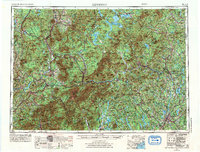 1956 Lewiston1975 Print · USGSThe Northern New England interior is documented here in the mid-fifties, from the industrial Androscoggin River to the high peaks of the White Mountains. Trace the Grand Trunk Railway through mountain passes or locate family landmarks near Sabbathday Lake and Bretton Woods.
 - 1959 Map of Portland
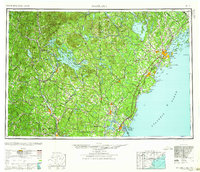 1959 Portland1959 Print · USGSThe Maine and New Hampshire coastlines meet in this mid-century portrait of maritime commerce and inland rail networks. Researchers can trace the legacy of coastal defense at Fort Williams and follow the historic path of the Maine Central RR through the White Mountain National Forest.2 unique versions available
 - 1961 Map of Lewiston
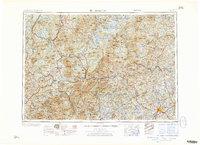 1961 Lewiston1961 Print · USGSWestern Maine and the White Mountains appear here during the early sixties, showing the industrial river towns and vast timberlands before the modern interstate era. Genealogists and historians can trace the Grand Trunk RR through Berlin or locate landmarks like Old Speck Mountain and Elephant Mountain.
 - 1962 Map of Lewiston
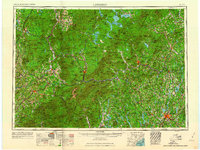 1962 Lewiston1962 Print · USGSThe industrial river valleys and high peaks of Maine and New Hampshire define the region in the early sixties. Trace the rail-and-river network from Lewiston to the White Mountains, passing through mill towns like Berlin and Rumford.
 - 1963 Map of Portland
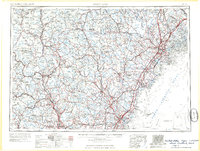 1963 Portland1963 Print · USGSCoastal Maine and New Hampshire thrived as maritime and industrial hubs during the mid-sixties, linked by a dense network of rail and river. Researchers can trace historic transit corridors like the Maine Central RR and locate key sites such as the Portsmouth Naval Shipyard or Pease Air Force Base.3 unique versions available
 - 1963 Map of Fryeburg, 1965 Print
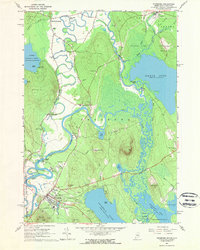 1963 Fryeburg1965 Print · USGSOxford County settlement and the meandering Saco River define this mid-century survey of the Maine-New Hampshire border. Genealogists and local historians can locate numerous family burial grounds like Riverside Cem and Wiley Cem, along with landmarks like Fryeburg Academy.2 unique versions available
 - 1964 Map of Hiram, 1966 Print
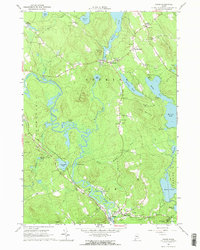 1964 Hiram1966 Print · USGSOxford County in the 1960s reveals a landscape of river-tied commerce and quiet lakeside settlements. Researchers can locate numerous family burial sites like Harnden Cem, trace the Maine Central Railroad, and explore historic locales like Rankins Mill or Heads Corner.2 unique versions available
 - 1964 Map of Brownfield, 1966 Print
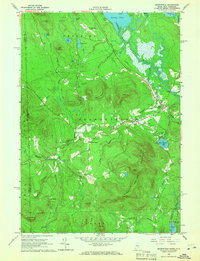 1964 Brownfield1966 Print · USGSOxford County settlement and the Saco River valley are captured here in the mid-sixties. Genealogists and local historians can trace family burial sites at Merrill Cem and Wentworth Cem or follow the path of the Maine Central Railroad.2 unique versions available
 - 1969 Map of Lewiston
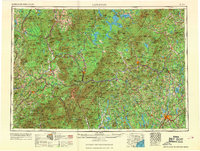 1969 Lewiston1969 Print · USGSThe northern New England highlands come into focus during the mid-fifties, showing the vital rail and river networks connecting industrial centers to the deep woods. Researchers can trace the path of the Grand Trunk RR or locate landmarks like Mt Washington and Rangeley Lake.
 - 1985 Map of Portland, 1986 Print
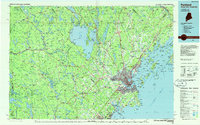 1985 Portland1986 Print · USGSThe Maine coast and Sebago Lake region are captured in the mid-1980s, showcasing the transition from traditional maritime centers to a modern transportation hub. Genealogists and historians can trace rail lines like the Grand Trunk RR and find local landmarks such as the U.S. Marine Hospital or Old Orchard Beach.2 unique versions available
 - 1986 Map of Lewiston
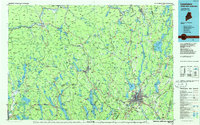 1986 Lewiston1986 Print · USGSMaine’s industrial river valleys and western mountain foothills are captured here in the mid-eighties as rail and road networks tied the region together. Genealogists and historians can trace the development of mill towns and lakefront settlements from Lisbon to Bethel, following the Androscoggin River and the path of the Maine Central Railroad.2 unique versions available
 - 2011 Map of Hiram, 2011 Print
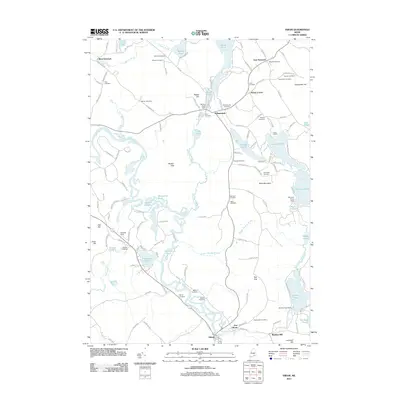 2011 Hiram2011 Print · USGSMaine's lake country and the winding Saco River are captured here in the early twenty-first century. Genealogists can trace family heritage across more than a dozen local burial sites, including the Gilman Cemetery, Holt Cemetery, and Bean Cemetery.
 - 2011 Map of Fryeburg, 2011 Print
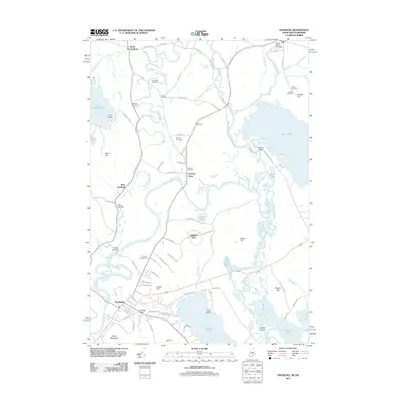 2011 Fryeburg2011 Print · USGSThe Saco River valley at the start of the 2010s reveals a landscape shaped by water and longstanding community roots. Genealogists and local historians can trace family ties at the Abbot Cemeteries, locate the Fryeburg Fairgrounds, and identify industrial relics like the Kezar River Mill Dam.
 - 2011 Map of Brownfield, 2011 Print
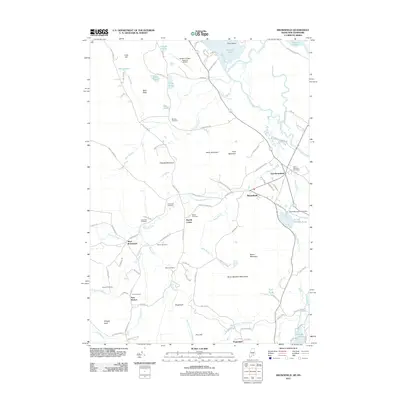 2011 Brownfield2011 Print · USGSThe Saco River valley and its surrounding peaks define this portion of Oxford County in the early twenty-first century. Genealogists can locate numerous burial sites such as Marston Cemetery and Greenlaw Cemetery near the village of Brownfield.
 - 2014 Map of Hiram, 2014 Print
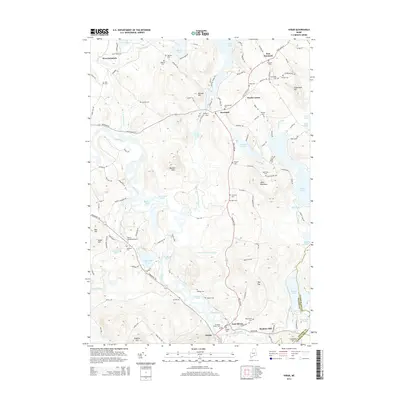 2014 Hiram2014 Print · USGSThe Saco River valley at the turn of the 21st century reveals a landscape of enduring rural hamlets and deep family roots. Genealogists can locate over a dozen burial sites like Gilman Cem and Schoolhouse Cem near the villages of Denmark and Hiram.
 - 2014 Map of Brownfield, 2014 Print
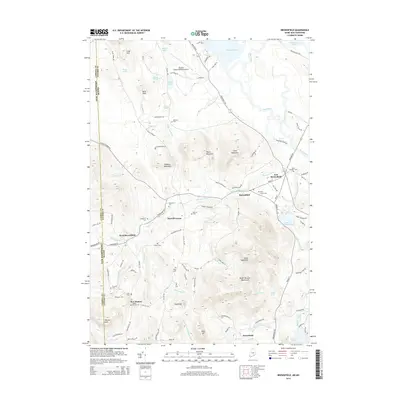 2014 Brownfield2014 Print · USGSThe Maine and New Hampshire borderlands come into focus during the early twenty-first century, showing the rural character of Oxford and Carroll counties. Genealogists can locate several family-named burial sites including Walker Rounds Cem and Blake Cem, alongside the village centers of Merrill Corner and West Brownfield.
 - 2014 Map of Fryeburg, 2014 Print
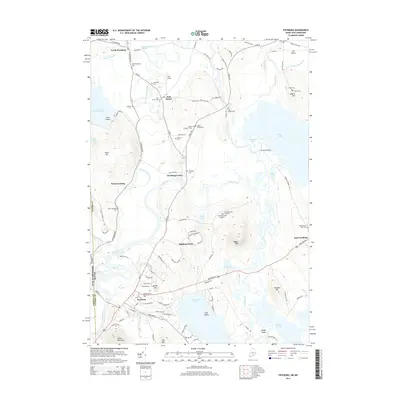 2014 Fryeburg2014 Print · USGSThe Maine-New Hampshire borderlands are captured here in the early twenty-first century, centered on the Saco River valley. Genealogists can locate numerous historic burial sites, including Menotomy Yard Number 1, Wiley Cem, and the Schoolhouse Yard Cem.
Showing maps 1-25 of 34
Top cities near Brownfield
- Bridgton historical maps
- Norway historical maps
- Ossipee historical maps
- Naples historical maps
- Limington historical maps
- Conway historical maps
See more
Top neighborhoods of Brownfield
- New Boston historical maps
- West Brownfield historical maps
- East Brownfield historical maps
- Merrill Corner historical maps
Frequently asked questions
- What are the different types of historical maps available for Brownfield?
- What is the oldest map of Brownfield?
- Where can I purchase historical maps of Brownfield for my home or office?
- Where can I download high-res historical maps of Brownfield?
- Are there historical topographic maps available for Brownfield?
- Is there historical aerial imagery available for Brownfield?
- Where are historical maps of Brownfield sourced from?