Old Maps of Surfside, Old Orchard Beach for Academic Research
Study the evolution of Surfside with 22 high-resolution historic maps. Whether you're teaching, researching, or modeling changes in land use, these maps provide essential visual documentation of urban, environmental, and geographic change.
- Analyze long-term change: Track patterns in development, transportation, and natural features.
- Ideal for environmental or urban studies: Support academic projects with primary historical map data.
- Use in the classroom or lab: Educators and researchers rely on these maps to bring historical context to life.
These maps are a powerful tool for teaching, research, and visualizing how Surfside has changed over the decades.
Surfside, Old Orchard Beach maps
(22)- 1891 Map of Portland
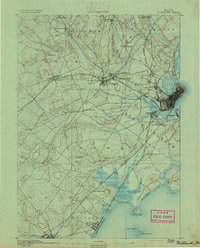 1891 Portland1891 Print · USGSCoastal Maine at the height of its rail-and-milling era shows the rapid development of the Portland suburbs and industrial waterfront. Genealogists can trace early homesteads and rail stops like Cape Elizabeth Depot, Saccarappa, and Prout's Neck.
 - 1893 Map of Portland
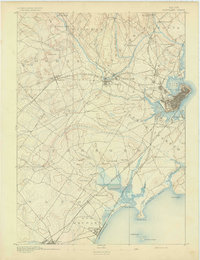 1893 Portland1893 Print · USGSCumberland County at the close of the nineteenth century centers on the bustling rail hub of Portland and its surrounding mill towns. Researchers can trace the Victorian-era development of Saccarappa, the seaside sprawl of Old Orchard, and the river industry at Cumberland Mills.6 unique versions available
 - 1914 Map of Portland
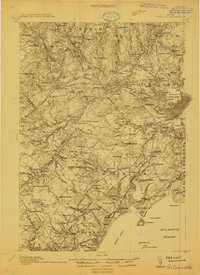 1914 Portland1914 Print · USGSCoastal Maine at the start of the twentieth century shows a landscape tied together by industrial rivers and an expanding network of electric railroads. Genealogists can locate family names at Hillside Cemetery or trace old rural schoolhouses like the Babb School and Beech Ridge School.
 - 1916 Map of Portland
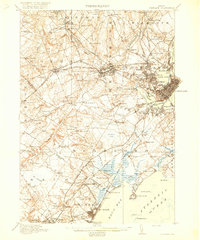 1916 Portland1916 Print · USGSGreater Portland and the Cumberland County coast are documented here during the height of the trolley and rail era. Researchers can trace ancestral property near the Evergreen Cemetery, early industries at Cumberland Mills, and vanished local sites like the State Reform School.7 unique versions available
 - 1916 Map of Portland And Vicinity
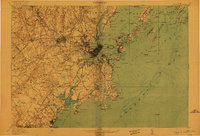 1916 Portland And Vicinity1916 Print · USGSCoastal Maine at the start of the Great War reveals a landscape of heavy coastal fortifications and bustling rail terminals. Trace old neighborhood boundaries and family landmarks like Milliken Mills, Hillside Cemetery, and the Portland Head lighthouse.
 - 1918 Map of Portland And Vicinity, 1926 Print
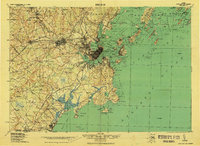 1918 Portland And Vicinity1926 Print · USGSCoastal Maine at the height of the Great War reveals a landscape of harbor forts, railroad junctions, and seaside settlements. Genealogists and historians can trace family roots through labels for Evergreen Cemetery, Spurwink Church, and dozens of rural schoolhouses like Babb School.
 - 1941 Map of Portland
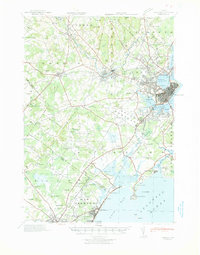 1941 Portland1941 Print · USGSCoastal Maine at the start of the 1940s reveals a bustling corridor of river mills and seaside settlements. Genealogists and historians can trace family roots through numerous local schools and landmarks like Cumberland Mills, Spurwink Ch, and Prouts Neck.
 - 1944 Map of Prouts Neck
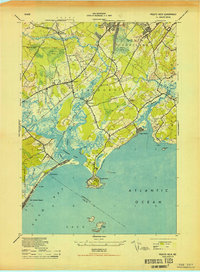 1944 Prouts Neck1944 Print · USGSCumberland County's coastline at the peak of the Second World War reveals a blend of seaside resorts and strategic military defense. Genealogists and historians can locate legacy sites like the Buggy Meetinghouse, the Observation Post at Prouts Neck, and the rail stops at West Scarboro Sta.
 - 1949 Map of Portland
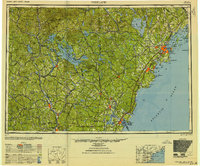 1949 Portland1949 Print · USGSCoastal Maine and the New Hampshire interior are shown in detail during the late forties, from the bustling harbors to the lakeside villages. Researchers can trace historical rail networks like the Boston & Maine RR and locate coastal defenses such as Fort Preble.3 unique versions available
 - 1956 Map of Portland, 1963 Print
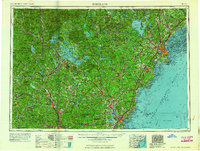 1956 Portland1963 Print · USGSSouthern Maine and eastern New Hampshire are captured here in the mid-fifties, during a time of major highway expansion and military growth. You can trace the path of the Maine Turnpike and locate landmarks like the Portsmouth Naval Shipyard and Sebago Lake.4 unique versions available
 - 1957 Map of Portland, 1960 Print
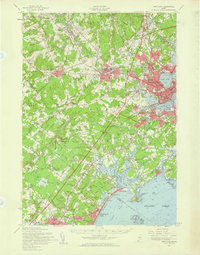 1957 Portland1960 Print · USGSCoastal Maine during the mid-fifties shows the transition from historic maritime centers to the suburban era. Researchers can trace family roots through numerous sites like Evergreen Cem, Thornton Academy, and the State Reformatory for Men.3 unique versions available
 - 1957 Map of Prouts Neck, 1965 Print
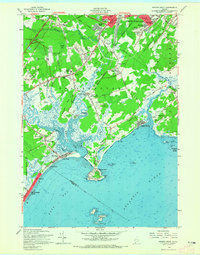 1957 Prouts Neck1965 Print · USGSCoastal Cumberland County is mapped here during the late fifties, showing the evolution of its shoreline communities and rail corridors. Trace the local landscape from Old Orchard Beach to the maritime history at Prouts Neck and the Black Point Post Office.4 unique versions available
 - 1959 Map of Prouts Neck
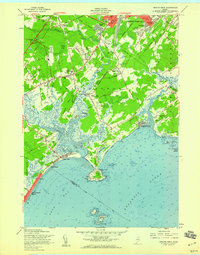 1959 Prouts Neck1959 Print · USGSThe Maine coast south of Portland comes to life in the late fifties, showing a mix of established seaside resorts and emerging suburban growth. Genealogists and local historians can trace family-named landmarks like Scottow Hill, visit the Black Point Cem, or locate mid-century sites like Scarborough Downs.
 - 1959 Map of Portland
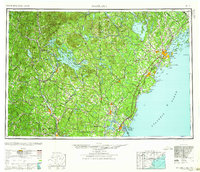 1959 Portland1959 Print · USGSThe Maine and New Hampshire coastlines meet in this mid-century portrait of maritime commerce and inland rail networks. Researchers can trace the legacy of coastal defense at Fort Williams and follow the historic path of the Maine Central RR through the White Mountain National Forest.2 unique versions available
 - 1963 Map of Portland
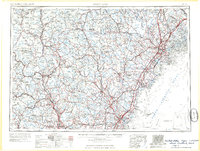 1963 Portland1963 Print · USGSCoastal Maine and New Hampshire thrived as maritime and industrial hubs during the mid-sixties, linked by a dense network of rail and river. Researchers can trace historic transit corridors like the Maine Central RR and locate key sites such as the Portsmouth Naval Shipyard or Pease Air Force Base.3 unique versions available
 - 1975 Map of Prouts Neck, 1979 Print
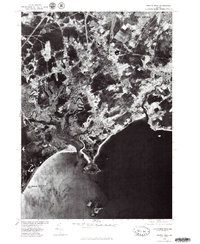 1975 Prouts Neck1979 Print · USGSCoastal Cumberland County is shown in the mid-seventies, featuring the winding tidal marshes of the Nonesuch River. Researchers can trace the development of beach communities at Prouts Neck, Higgins Beach, and the historic grid of Old Orchard Beach.
 - 1985 Map of Portland, 1986 Print
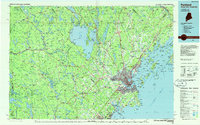 1985 Portland1986 Print · USGSThe Maine coast and Sebago Lake region are captured in the mid-1980s, showcasing the transition from traditional maritime centers to a modern transportation hub. Genealogists and historians can trace rail lines like the Grand Trunk RR and find local landmarks such as the U.S. Marine Hospital or Old Orchard Beach.2 unique versions available
 - 2011 Map of Prouts Neck, 2011 Print
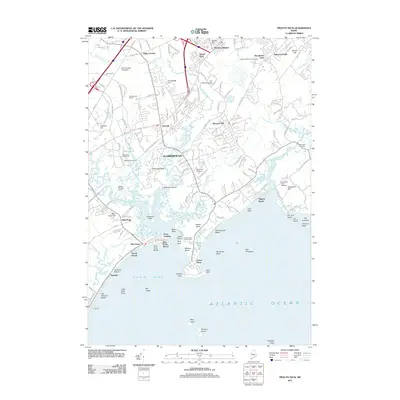 2011 Prouts Neck2011 Print · USGSCoastal Maine at the start of the 2010s reveals a shoreline defined by tidal rivers, salt marshes, and historic seaside neighborhoods. Genealogists and historians can trace the developments of Scarborough, locate Riverside Cemetery, or explore the maritime reaches of Prouts Neck and Higgins Beach.
 - 2014 Map of Prouts Neck, 2014 Print
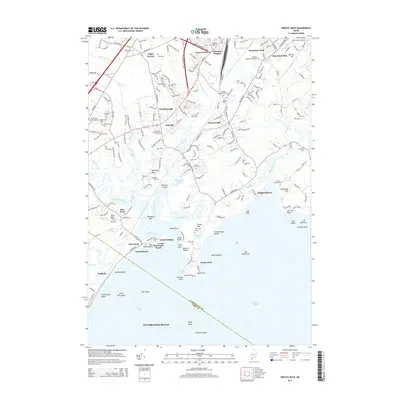 2014 Prouts Neck2014 Print · USGSCoastal Maine at the turn of the millennium reveals a blend of historic family lands and modern seaside communities. Genealogists and historians can trace numerous ancestral sites like the Eben Libby Farm Cem, The Great Grave, and Winnocks Neck.
 - 2018 Map of Prouts Neck, 2018 Print
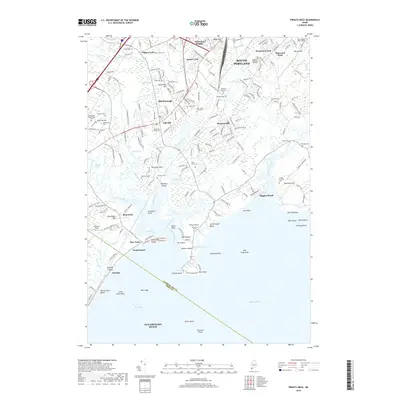 2018 Prouts Neck2018 Print · USGSCoastal Cumberland County is mapped here in the late 2010s, showing the intricate tidal landscape of Scarborough Marshes. Genealogists will find a wealth of family burial sites including Plummer Libby Cem and Jordan Hanscom Cem near Higgins Beach.
 - 2021 Map of Prouts Neck, 2021 Print
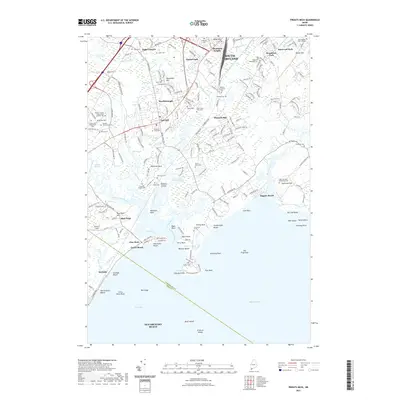 2021 Prouts Neck2021 Print · USGSCoastal Maine near the turn of the 21st century reveals a landscape of tidal marshes and deep-rooted family history. Genealogists can trace small burial sites like Eben Libby Farm Cem and Plummer Family Cem or find landmarks like The Great Grave and Higgins Beach.
 - 2024 Map of Prouts Neck, 2024 Print
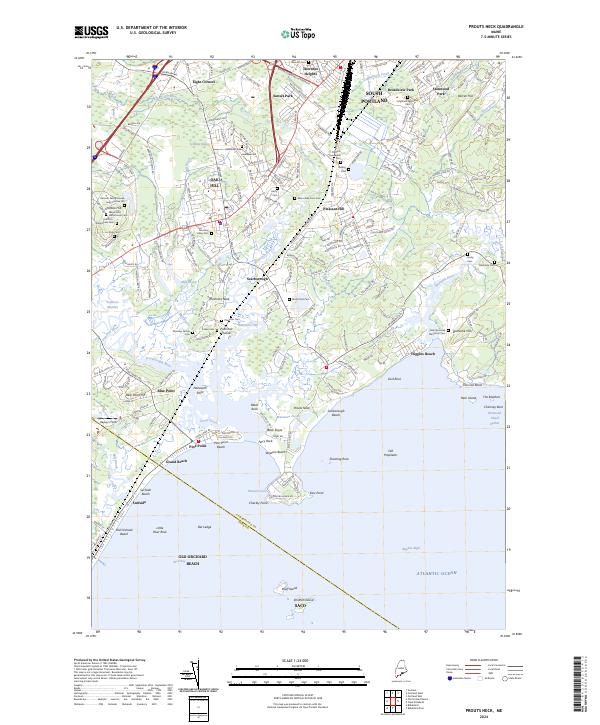 2024 Prouts Neck2024 Print · USGSCoastal Maine transitions from the suburbs of South Portland to the marshes of Scarborough in this detailed modern survey. Genealogists can locate unique family burial sites like Olde Spurwink Plantation Cem and the Harmon - Waterhouse Cem.
End of results
Showing maps 1-22 of 22
Frequently asked questions
- What are the different types of historical maps available for Surfside?
- What is the oldest map of Surfside?
- Where can I purchase historical maps of Surfside for my home or office?
- Where can I download high-res historical maps of Surfside?
- Are there historical topographic maps available for Surfside?
- Is there historical aerial imagery available for Surfside?
- Where are historical maps of Surfside sourced from?