1890s Maps of Governor Run, Maryland
Explore 7 historic maps of Governor Run from the 1890s. These maps offer a rare glimpse into what life looked like during the 1890s — showing old roads, neighborhoods, homes, and landmarks that have changed or disappeared over time.
Whether you're researching your family's past, planning a metal detecting trip, or studying how Governor Run's landscape evolved across the 1890s, these high-resolution maps are a powerful tool for exploring the history of this region.
- Focus on a specific era: All maps on this page are from the 1890s, giving you a focused view of this time period.
- See what’s changed: Compare century-old streets, trails, and buildings to today's modern landscape using overlays and satellite layers.
- Research with precision: Use these maps for genealogy, historical research, land use analysis, or educational projects.
- View, download, or print: Maps are fully viewable online in high resolution, and can be downloaded or printed for your own records.
Start exploring Governor Run's history through authentic maps from the 1890s. This is your window into the past.
Governor Run, MD maps
(7)- 1892 Map of Leonardtown
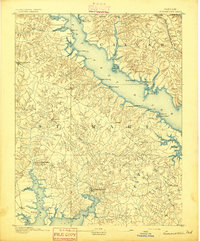 1892 Leonardtown1892 Print · USGSSt. Mary's County at the end of the nineteenth century was a world of river wharves and tobacco landings. Trace the path of the Proposed Drum Point R.R. and locate family landmarks like Sotterly or Reeder Wharf along the Patuxent River.
 - 1892 Map of Prince Frederick
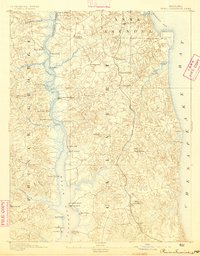 1892 Prince Frederick1892 Print · USGSCalvert County at the end of the Victorian era is captured here as a landscape of tobacco landings and emerging rail. Researchers can trace the Drum Point Railroad Proposed or locate old water-access points like Magruder Ferry and Leitches Wharf.
 - 1895 Map of Prince Frederick
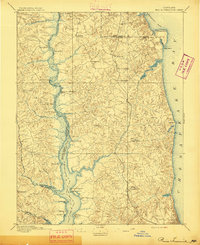 1895 Prince Frederick1895 Print · USGSMaryland's tobacco country and river-bound peninsulas are captured in the late nineteenth century before modern bridges spanned the waters. You can trace the path of the Drum Point Proposed R. R. or locate historic river landings like Magruder Ferry and Leitches Wharf.
 - 1895 Map of Leonardtown
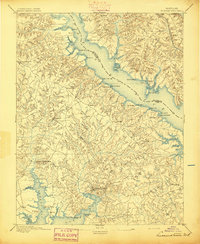 1895 Leonardtown1895 Print · USGSSouthern Maryland in the 1890s is captured here as a river-centric landscape of wharves and crossroads. Researchers can trace the early maritime economy through landings like Reeder Wharf and Forest Wharf, or locate family sites in Hollywood and Leonardtown.
 - 1895 Map of Nomini
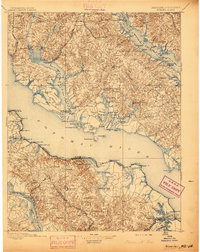 1895 Nomini1895 Print · USGSSouthern Maryland and the Virginia tidewater shores meet along the Potomac in this late nineteenth-century survey. Genealogists can trace family holdings and river landings from Charlotte Hall down to Sotterly and the Nomini Ferry.
 - 1898 Map of Nomini
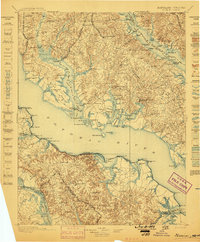 1898 Nomini1898 Print · USGSMaryland and Virginia's Tidewater region comes alive in the late nineteenth century as a world of river landings, rail terminals, and rural crossroads. Researchers can trace the maritime economy through Nomini Ferry and Stone Wharf, or locate ancestral homesteads near Charlotte Hall and Potomac Mills.5 unique versions available
 - 1899 Map of Patuxent
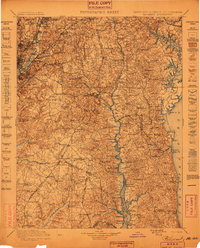 1899 Patuxent1899 Print · USGSSouthern Maryland in the late nineteenth century was a world of river wharves and emerging rail lines. Genealogists can trace family names across landings and settlements like Bladensburg, Upper Marlboro, and Piscataway Reform School before the landscape was modernised.3 unique versions available
End of results
Showing maps 1-7 of 7
Frequently asked questions
- What are the different types of historical maps available for Governor Run?
- What is the oldest map of Governor Run?
- Where can I purchase historical maps of Governor Run for my home or office?
- Where can I download high-res historical maps of Governor Run?
- Are there historical topographic maps available for Governor Run?
- Is there historical aerial imagery available for Governor Run?
- Where are historical maps of Governor Run sourced from?