Old Maps of Masons, Maryland for Genealogy
Trace your family roots with 18 historic maps of Masons. These high-res maps reveal old neighborhoods, homesites, landmarks, and streets — helping you uncover where your ancestors lived and how the area evolved over time.
- Explore historic neighborhoods: Identify where your relatives may have lived in the 1800s or 1900s.
- Compare maps over time: Trace the changes in streets, buildings, and landmarks for multi-generational research.
- Perfect for genealogy & ancestry research: Used by family historians and researchers to map out lineage and migration.
These maps are an incredible resource for exploring your personal connection to Masons's past.
Masons, MD maps
(18)- 1892 Map of Brandywine
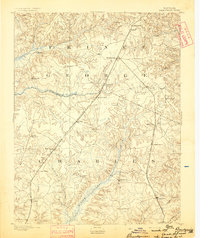 1892 Brandywine1892 Print · USGSSouthern Maryland in the early 1890s shows a landscape of rail-driven growth and scattered crossroads. Genealogists can trace family landmarks and rail stops from Waldorf down to La Plata, including Zekiah Swamp and the Port Tobacco Sta.
 - 1895 Map of Brandywine
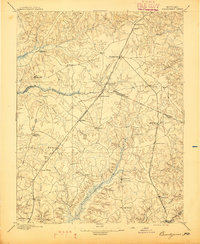 1895 Brandywine1895 Print · USGSSouthern Maryland was a landscape of rail-driven market towns and deep wetlands in the late nineteenth century. Genealogists can trace the early layout of Waldorf, follow the Pope Creek Branch, or locate family sites near Beantown and Zekiah Swamp.2 unique versions available
 - 1899 Map of Patuxent
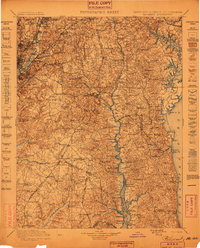 1899 Patuxent1899 Print · USGSSouthern Maryland in the late nineteenth century was a world of river wharves and emerging rail lines. Genealogists can trace family names across landings and settlements like Bladensburg, Upper Marlboro, and Piscataway Reform School before the landscape was modernised.3 unique versions available
 - 1906 Map of Patuxent
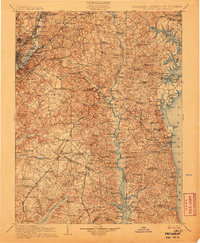 1906 Patuxent1906 Print · USGSThe Tidewater region of Maryland and the outskirts of the District of Columbia are shown here at the turn of the century. Researchers can trace the early footprints of Maryland Agril. College, find riverfront infrastructure at Milltown Landing, and follow long-established routes like the Marlboro Turnpike.4 unique versions available
 - 1911 Map of Brandywine, 1962 Print
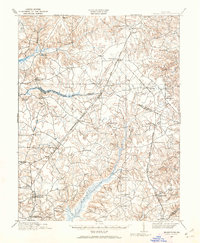 1911 Brandywine1962 Print · USGSSouthern Maryland at the turn of the century shows a landscape of rail-connected farming towns and expansive wetlands. Researchers can trace ancestral locations near LA PLATA, the old Reform School, or country parishes like St Peters Church and Piney Church.
 - 1913 Map of Brandywine
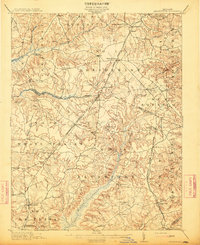 1913 Brandywine1913 Print · USGSSouthern Maryland at the turn of the century shows a landscape transitioning through early rail and rural growth. Genealogists can trace family roots through landmarks like St Peters Church, Winkler Shop School, and old stops such as Malcolm Woodville Station.3 unique versions available
 - 1944 Map of Hughesville
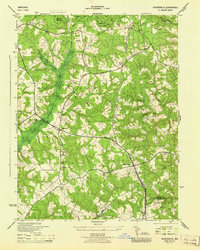 1944 Hughesville1944 Print · USGSSouthern Maryland during the mid-forties remained a land of sprawling wetlands and rural crossroads at the intersection of three counties. Genealogists and historians can trace family locations near St Marys Ch, the old Burnt Store settlement, and along the U S Navy rail corridor.
 - 1948 Map of Washington
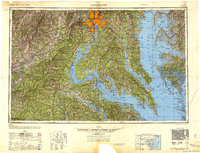 1948 Washington1948 Print · USGSThe Potomac and Chesapeake regions in the late 1940s reveal a landscape of expanding military reach and deep-rooted Tidewater settlements. Trace old rail corridors like the Richmond Fredericksburg & Potomac RR or locate landmarks like the Wakefield Washington Monument and St. Marys College.2 unique versions available
 - 1956 Map of Hughesville, 1958 Print
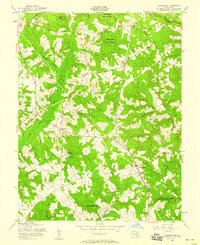 1956 Hughesville1958 Print · USGSSouthern Maryland in the mid-fifties is defined by rural crossroads and the expansive Cedarville State Forest. Genealogists and historians can trace community roots through landmarks like Old Field Cem, Burnt Store, and the cluster of schools near Bryantown.4 unique versions available
 - 1957 Map of Washington, 1966 Print
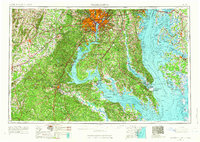 1957 Washington1966 Print · USGSThe mid-Atlantic region during the mid-fifties and early sixties reveals a landscape of growing suburbs and vital military outposts. Researchers can trace historic river towns and shorelines from Alexandria to the Hooper Islands and St Clements Island.5 unique versions available
 - 1961 Map of Washington
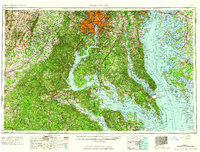 1961 Washington1961 Print · USGSThe mid-Atlantic region in the late fifties is presented in remarkable detail, from the Blue Ridge foothills to the Chesapeake Eastern Shore. Researchers can trace historic river landings and military sites like Mount Vernon, Fort Belvoir, and Point Lookout.2 unique versions available
 - 1983 Map of Washington East, 1984 Print
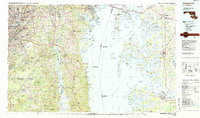 1983 Washington East1984 Print · USGSThe Chesapeake Bay region in the early eighties shows the Maryland capital and its suburbs meeting the maritime traditions of the Eastern Shore. Researchers can trace land patterns from Andrews Air Force Base to waterfront settlements like Oxford and Chesapeake Beach.2 unique versions available
 - 1989 Map of Washington
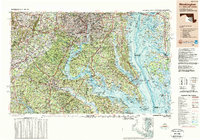 1989 Washington1989 Print · USGSThe Potomac River valley and Chesapeake Bay are shown in comprehensive detail during the late 1980s. Genealogists and historians can trace the transition from urban Alexandria to the rural Northern Neck, locating landmarks like Mount Vernon and Stratford Hall.
 - 2011 Map of Hughesville, 2011 Print
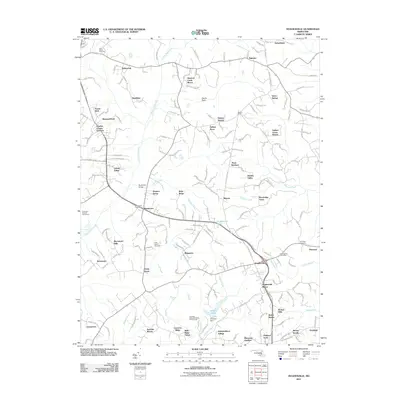 2011 Hughesville2011 Print · USGSMaryland's southern interior reveals a landscape of established towns and growing neighborhoods in the early twenty-first century. Researchers can trace local heritage through Saint Marys Cemetery, the Bryantown Post Office, and the rugged territory of Devils Nest.
 - 2014 Map of Hughesville, 2014 Print
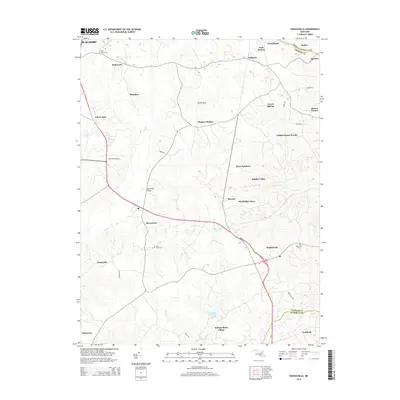 2014 Hughesville2014 Print · USGSSouthern Maryland's rural character remains evident in the early twenty-first century as small settlements and residential enclaves expand along historic corridors. Researchers can trace family history through local landmarks like Saint Marys Cem, Bryantown, and the old Old Field Cem.
 - 2016 Map of Hughesville, 2016 Print
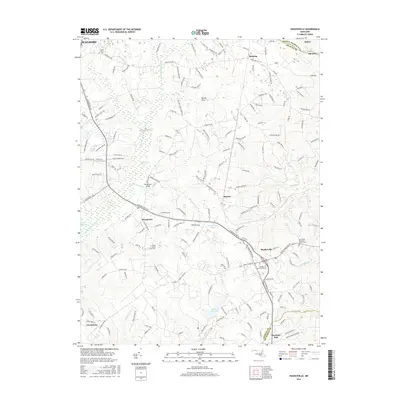 2016 Hughesville2016 Print · USGSSouthern Maryland's agricultural and wetland landscapes are documented here in the mid-2010s, centered on the historic Bryantown and Hughesville corridor. Researchers can trace family sites at Saint Mary's Cem or locate local landmarks like Jameson Reservoir and the Bryantown Bridge.
 - 2019 Map of Hughesville, 2019 Print
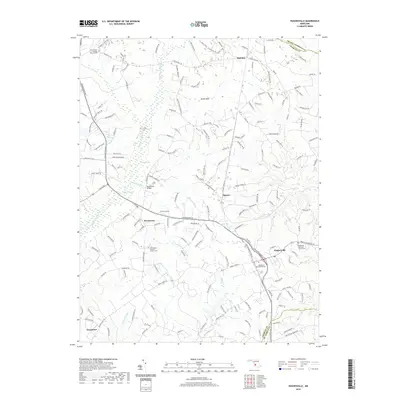 2019 Hughesville2019 Print · USGSCharles County and the fringes of St. Mary's and Prince George's counties are captured here in the late 2010s. Researchers can trace ancestral sites at Saint Mary's Catholic Church Cem or the Society of Friends Cem near Hughesville.
 - 2023 Map of Hughesville, 2023 Print
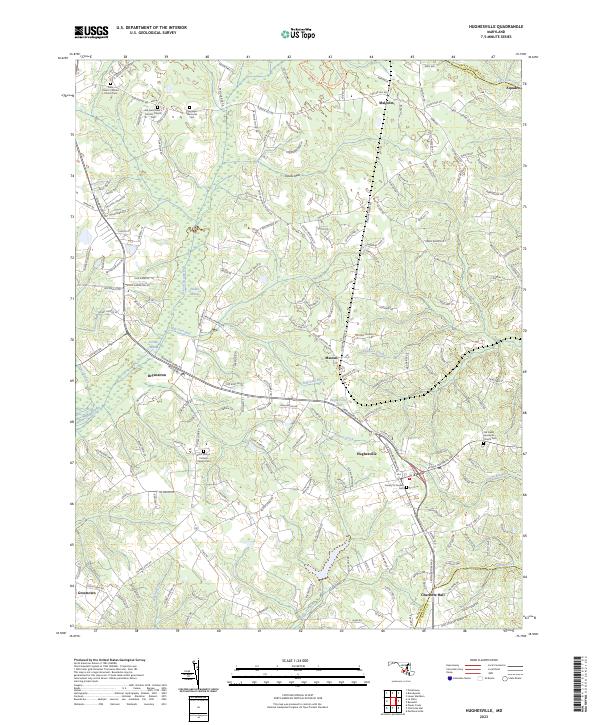 2023 Hughesville2023 Print · USGSCharles County at the start of the 2020s remains a landscape of historic parishes and extensive wetlands. Researchers can trace family sites from Charlotte Hall to Bryantown, including the Old Saint Peter's Catholic Church Cem and Zekiah Swamp.
End of results
Showing maps 1-18 of 18
Top cities near Masons
- Waldorf historical maps
- Clinton historical maps
- Fort Washington historical maps
- Bennsville historical maps
- Accokeek historical maps
- Rosaryville historical maps
See more
Frequently asked questions
- What are the different types of historical maps available for Masons?
- What is the oldest map of Masons?
- Where can I purchase historical maps of Masons for my home or office?
- Where can I download high-res historical maps of Masons?
- Are there historical topographic maps available for Masons?
- Is there historical aerial imagery available for Masons?
- Where are historical maps of Masons sourced from?