1900s (20th Century) Maps of Camp Russell, Richmond
Explore 16 historic maps of Camp Russell from the 1900s (20th Century). These maps offer a rare glimpse into what life looked like during the 1900s — showing old roads, neighborhoods, homes, and landmarks that have changed or disappeared over time.
Whether you're researching your family's past, planning a metal detecting trip, or studying how Camp Russell's landscape evolved across the 1900s, these high-resolution maps are a powerful tool for exploring the history of this region.
- Focus on a specific era: All maps on this page are from the 1900s, giving you a focused view of this time period.
- See what’s changed: Compare century-old streets, trails, and buildings to today's modern landscape using overlays and satellite layers.
- Research with precision: Use these maps for genealogy, historical research, land use analysis, or educational projects.
- View, download, or print: Maps are fully viewable online in high resolution, and can be downloaded or printed for your own records.
Start exploring Camp Russell's history through authentic maps from the 1900s. This is your window into the past.
Camp Russell, Richmond maps
(16)- 1900 Map of Housatonic
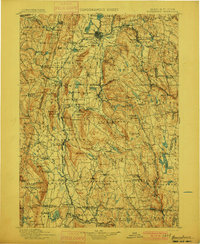 1900 Housatonic1900 Print · USGSThe Berkshires and the Housatonic Valley are captured here at a moment of industrial and social transition during the late Victorian era. Genealogists and historians can trace the early rail networks of the Boston and Albany R.R. through old settlements like Shaker Village and Lenox Furnace.5 unique versions available
 - 1943 Map of Housatonic
 1943 Housatonic1943 Print · USGSThe Berkshires and the Housatonic Valley are captured during the war years, showing a landscape of traditional Shaker settlements and growing industrial centers. Trace the routes of the NY NH & H RR and explore sites like Shaker Village, Richmond Furnace, and Rockdale Mills.
 - 1944 Map of Pittsfield West, 1958 Print
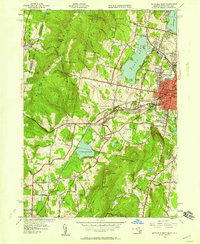 1944 Pittsfield West1958 Print · USGSThe western Berkshires and the edge of Pittsfield are captured here in the mid-1940s as a landscape of rail-linked villages and highland trails. Researchers can locate family roots near Shaker Village or trace early infrastructure at the Pittsfield Airport and Barkerville.
 - 1946 Map of Pittsfield West
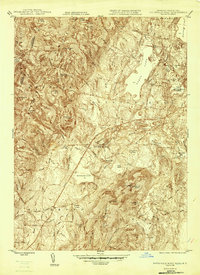 1946 Pittsfield West1946 Print · USGSThe western Berkshires of the mid-1940s are shown here at a moment when communal history and industrial growth converged. Researchers can trace the layout of Shaker Village, locate ancestors at St Josephs Cem, or follow the New York Central RR past Barkerville.
 - 1947 Map of Pittsfield West
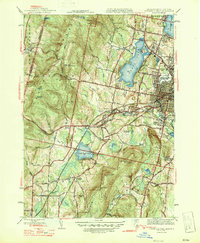 1947 Pittsfield West1947 Print · USGSThe Berkshire foothills in the late 1940s reveal a landscape of growing towns and industrial rail corridors. Genealogists and local historians can trace family-named sites from Lebanon Springs to Barkerville, or locate burials in the St Josephs Cem.2 unique versions available
 - 1948 Map of Albany, 1951 Print
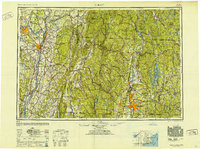 1948 Albany1951 Print · USGSThe Hudson and Connecticut River valleys are captured here in the late 1940s, showing the vital rail and water corridors of the Northeast. You can trace the Boston and Maine tracks past Mt Greylock or locate early settlements like Great Barrington and Bennington.
 - 1956 Map of Albany, 1968 Print
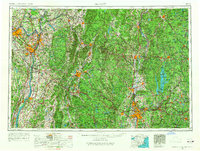 1956 Albany1968 Print · USGSThe industrial heart of the Northeast is revealed in the mid-1950s, from the Hudson Valley to the Connecticut River. Researchers can trace the legacy of the Quabbin Reservoir, locate Westover Air Force Base, or follow the Rutland RR through the Green Mountains.2 unique versions available
 - 1957 Map of Albany
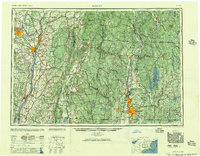 1957 Albany1957 Print · USGSThe Tri-State region and Connecticut River Valley are captured here during a period of significant postwar growth and infrastructure expansion. Genealogists and historians can trace the rail-and-river economy through landmarks like the Boston and Maine railroad, Quabbin Reservoir, and Westover Air Force Base.
 - 1959 Map of Albany
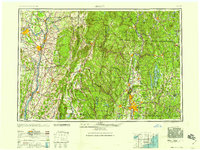 1959 Albany1959 Print · USGSThe Hudson and Connecticut River valleys are captured here during the late fifties, showing the region's dense rail networks and massive water projects. Researchers can trace the New York State Thruway or locate local landmarks like Mt Greylock and the Quabbin Reservoir.
 - 1959 Map of Pittsfield West, 1960 Print
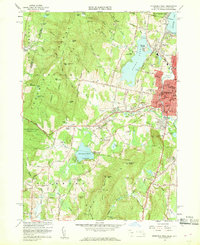 1959 Pittsfield West1960 Print · USGSThe eastern Berkshires and the city of Pittsfield appear here in the late fifties as urban growth reaches toward the Taconic Range. Researchers can trace local heritage through sites like Shaker Village, the New York Central tracks, and family plots in St Josephs Cemetery.2 unique versions available
 - 1962 Map of Albany
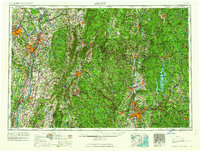 1962 Albany1962 Print · USGSThe Hudson and Connecticut River valleys meet the Green Mountains and Berkshires in this mid-century overview of the Northeast. Genealogists and historians can trace the industrial hearts of Albany and Springfield or locate features like Quabbin Reservoir and Westover Air Force Base.
 - 1973 Map of Pittsfield West, 1975 Print
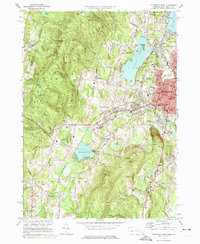 1973 Pittsfield West1975 Print · USGSThe Berkshires meet the Taconic Range in the 1970s as urban growth pushes west into the mountains. Genealogists and local historians can trace the foundations of Shaker Village, locate St Josephs Cemetery, and find old camps like Camp Marion White.4 unique versions available
 - 1975 Map of Pittsfield West, 1981 Print
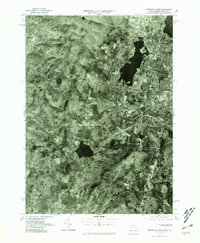 1975 Pittsfield West1981 Print · USGSThe Berkshires in the mid-seventies reveal a landscape of growing urban centers and preserved rural enclaves. Researchers can trace the development of Pittsfield or locate historic footprints at Shaker Village and Stevens Corner.
 - 1986 Map of Pittsfield
 1986 Pittsfield1986 Print · USGSThe Berkshires and the Hudson Valley meet in the mid-1980s, documenting a cross-border landscape of mountain forests and river towns. Genealogists and historians can trace the paths of Conrail and the Taconic State Parkway as they pass through Stockbridge, Great Barrington, and Kinderhook.2 unique versions available
 - 1988 Map of Pittsfield West
 1988 Pittsfield West1988 Print · USGSThe Massachusetts-New York state line runs through the Taconic Range in the late eighties, where the urban expansion of Pittsfield meets rural Berkshire landscapes. Researchers can trace historic cemeteries and schools alongside recreation sites like Lebanon Valley Speedway and Richmond Pond.2 unique versions available
 - 1998 Map of Pittsfield West, 2000 Print
 1998 Pittsfield West2000 Print · USGSThe Berkshires and the Taconic Range meet along the state line in the late nineties, showing the western expansion of Pittsfield and the quiet New York hill towns. Trace local heritage through sites like Shaker Village, Cornwall Tilden Cem, and the old rail lines of Conrail.
End of results
Showing maps 1-16 of 16
Top cities near Camp Russell
- Pittsfield historical maps
- Sand Lake historical maps
- Adams historical maps
- Williamstown historical maps
- Great Barrington historical maps
- Dalton historical maps
See more
Frequently asked questions
- What are the different types of historical maps available for Camp Russell?
- What is the oldest map of Camp Russell?
- Where can I purchase historical maps of Camp Russell for my home or office?
- Where can I download high-res historical maps of Camp Russell?
- Are there historical topographic maps available for Camp Russell?
- Is there historical aerial imagery available for Camp Russell?
- Where are historical maps of Camp Russell sourced from?