1940s Maps of Greenfield, Massachusetts
Explore 11 historic maps of Greenfield from the 1940s. These maps offer a rare glimpse into what life looked like during the 1940s — showing old roads, neighborhoods, homes, and landmarks that have changed or disappeared over time.
Whether you're researching your family's past, planning a metal detecting trip, or studying how Greenfield's landscape evolved across the 1940s, these high-resolution maps are a powerful tool for exploring the history of this region.
- Focus on a specific era: All maps on this page are from the 1940s, giving you a focused view of this time period.
- See what’s changed: Compare century-old streets, trails, and buildings to today's modern landscape using overlays and satellite layers.
- Research with precision: Use these maps for genealogy, historical research, land use analysis, or educational projects.
- View, download, or print: Maps are fully viewable online in high resolution, and can be downloaded or printed for your own records.
Start exploring Greenfield's history through authentic maps from the 1940s. This is your window into the past.
Greenfield, MA maps
(11)- 1941 Map of Shelburne Falls
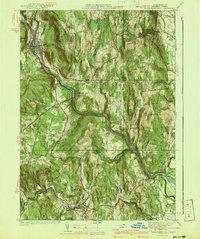 1941 Shelburne Falls1941 Print · USGSFranklin County's hill towns and river valleys are captured here during the early 1940s, showing the intersection of industry and rural life. Trace the path of the Mohawk Trail and find local landmarks such as Arms Cem, Union Ch, and the settlement of Burkville.3 unique versions available
 - 1941 Map of Greenfield
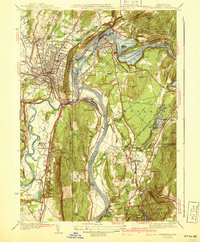 1941 Greenfield1941 Print · USGSFranklin County's river-driven industry and academic centers are on full display in this pre-war survey of the Pioneer Valley. Researchers can trace the rail networks and find local landmarks like Deerfield Academy, Lake Pleasant, and the High St Cem.3 unique versions available
 - 1941 Map of Bernardston
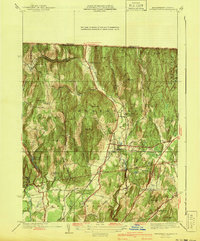 1941 Bernardston1941 Print · USGSFranklin County's rural landscape is captured here in the early 1940s as rail lines still defined the local economy. Researchers can locate numerous district schools and historic family landmarks like Hales Crossing, West Gill, and the Sunnyside Sch.3 unique versions available
 - 1941 Map of Colrain
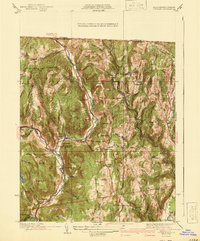 1941 Colrain1941 Print · USGSThe hill towns of Franklin County appear here in the early 1940s, showing the tight-knit industrial and farming hamlets along the North River. Genealogists and historians can trace colonial-era frontier sites like the Site of Fort Morrison or locate family roots near Griswoldville and West Leyden.2 unique versions available
 - 1943 Map of Brattleboro
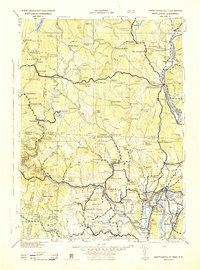 1943 Brattleboro1943 Print · USGSSouthern Vermont and the Massachusetts border area appear in this mid-century survey as a landscape of timbered peaks and river-connected villages. Genealogists can trace family roots through markers like Arms Cem or follow the rails at Dummerston Sta and Putney Sta.
 - 1945 Map of Bernardston, 1958 Print
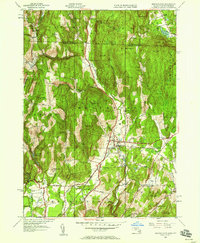 1945 Bernardston1958 Print · USGSFranklin County at the end of the Second World War remains a landscape of hill-country schools and river-valley rails. Genealogists can trace family footprints at The Old Chapel, Hales Crossing, and numerous rural schoolhouses like Sunnyside Sch and Baker Sch.
 - 1945 Map of Colrain, 1958 Print
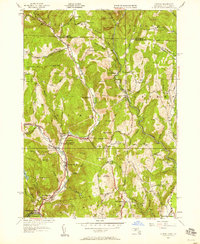 1945 Colrain1958 Print · USGSFranklin County's river-valley settlements and upland farms are captured here in the mid-1940s as industry and agriculture defined the region. Researchers can trace the North River through Griswoldville, find colonial landmarks like the Site of Fort Lucas, or locate family sites at Chandler Hill Cem.
 - 1946 Map of Colrain
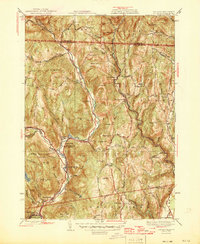 1946 Colrain1946 Print · USGSFranklin County and the Vermont border are shown just after the war, where industrial villages like Griswoldville and Shattuckville line the river valleys. Genealogists can trace early homesteads and colonial history through sites like the Site of Fort Morris and West Leyden Cem.2 unique versions available
 - 1946 Map of Bernardston
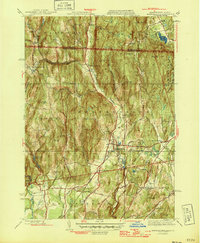 1946 Bernardston1946 Print · USGSFranklin County communities were firmly established along the rail lines and river valleys just after the war. Researchers can locate family landmarks like the Old Chapel, several rural schools, and the Old Cem near the Falls River.2 unique versions available
 - 1948 Map of Albany, 1951 Print
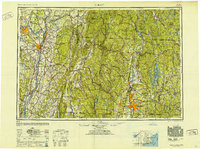 1948 Albany1951 Print · USGSThe Hudson and Connecticut River valleys are captured here in the late 1940s, showing the vital rail and water corridors of the Northeast. You can trace the Boston and Maine tracks past Mt Greylock or locate early settlements like Great Barrington and Bennington.
 - 1949 Map of Shelburne Falls
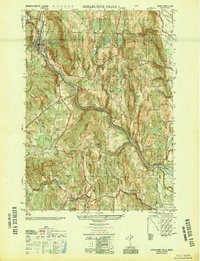 1949 Shelburne Falls1949 Print · USGSFranklin County's highland terrain and river valleys are shown here in the late Forties, when the village of Shelburne Falls served as a vital regional hub. Researchers can trace historic family burial sites like Pine Grove Cem and follow the route of the Boston and Maine Railroad.2 unique versions available
End of results
Showing maps 1-11 of 11
Top cities near Greenfield
- Amherst historical maps
- Montague historical maps
- Brattleboro historical maps
- Swanzey historical maps
- Hadley historical maps
- Deerfield historical maps
See more
Top neighborhoods of Greenfield
Frequently asked questions
- What are the different types of historical maps available for Greenfield?
- What is the oldest map of Greenfield?
- Where can I purchase historical maps of Greenfield for my home or office?
- Where can I download high-res historical maps of Greenfield?
- Are there historical topographic maps available for Greenfield?
- Is there historical aerial imagery available for Greenfield?
- Where are historical maps of Greenfield sourced from?