1900s (20th Century) Maps of Village of Nagog Woods, Acton
Explore 16 historic maps of Village of Nagog Woods from the 1900s (20th Century). These maps offer a rare glimpse into what life looked like during the 1900s — showing old roads, neighborhoods, homes, and landmarks that have changed or disappeared over time.
Whether you're researching your family's past, planning a metal detecting trip, or studying how Village of Nagog Woods's landscape evolved across the 1900s, these high-resolution maps are a powerful tool for exploring the history of this region.
- Focus on a specific era: All maps on this page are from the 1900s, giving you a focused view of this time period.
- See what’s changed: Compare century-old streets, trails, and buildings to today's modern landscape using overlays and satellite layers.
- Research with precision: Use these maps for genealogy, historical research, land use analysis, or educational projects.
- View, download, or print: Maps are fully viewable online in high resolution, and can be downloaded or printed for your own records.
Start exploring Village of Nagog Woods's history through authentic maps from the 1900s. This is your window into the past.
Village of Nagog Woods, Acton maps
(16)- 1918 Map of Lowell
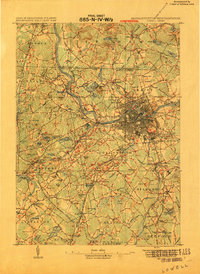 1918 Lowell1918 Print · USGSGreater Lowell and the Merrimack Valley are shown at their industrial peak during the First World War. Genealogists can trace family connections to mill-town life in Middlesex Village or locate rural landmarks like Flat Rock Quarry and the Old Middlesex Canal.
 - 1921 Map of Lowell
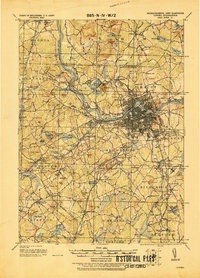 1921 Lowell1921 Print · USGSThe industrial corridor of the Merrimack Valley is captured here during the early twentieth century, showing the dense urban grid of Lowell alongside rural Middlesex County. Researchers can trace the extensive reach of the Boston and Maine Railroad and locate local landmarks like the Poor Farm or Flat Rock Quarry.
 - 1935 Map of Lowell
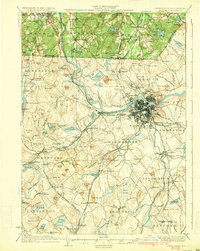 1935 Lowell1935 Print · USGSGreater Lowell and the Merrimack Valley are captured in the mid-1930s, showing a region defined by its industrial riverfront and extensive rail networks. Researchers can trace historic neighborhoods like Wamesit, local landmarks like St Marie Convent, and early industry at Flat Rock Quarry.3 unique versions available
 - 1940 Map of Westford
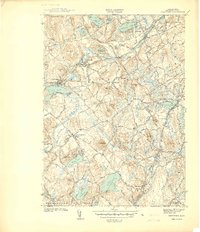 1940 Westford1940 Print · USGSWestford and Littleton appear at the outbreak of World War II as a network of rail-side mill villages and family-held hills. Genealogists can trace old cemeteries like Westlawn Cem, rural depots at Westford Sta, and the layout of Littleton Common.
 - 1941 Map of Westford
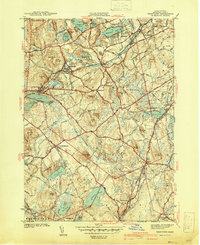 1941 Westford1941 Print · USGSMiddlesex County in the late 1930s shows a landscape of industrious mill villages and hilltop farms connected by the Boston and Maine line. Trace the rail routes through Graniteville, locate the grounds of Westlawn Cem, or explore the shores of Forge Pond.2 unique versions available
 - 1943 Map of Lowell
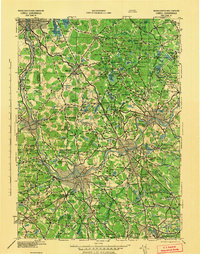 1943 Lowell1943 Print · USGSCentral New England industrial hubs and rural borderlands are mapped here during the early 1940s. Genealogists can trace family names across Mt Misery, Barrett Hill, and small settlements like Collinsville or North Pelham.
 - 1946 Map of Westford
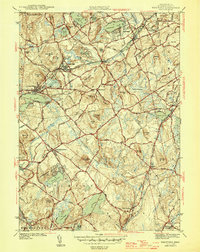 1946 Westford1946 Print · USGSMiddlesex County in the mid-1940s shows a landscape of busy rail corridors and established villages. Researchers can trace historic family names and sites like Fairview Cem, the Clay Pit, and rail stops at Westford Sta or Carlisle Sta.2 unique versions available
 - 1948 Map of Boston
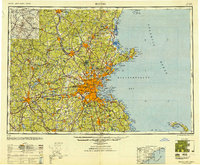 1948 Boston1948 Print · USGSEastern Massachusetts and southern New Hampshire appear at an industrial peak in the late 1940s, just as suburban growth began to accelerate. Genealogists and historians can trace rail lines like the Boston and Albany RR or locate coastal landmarks like Graves Lighthouse and Fort Devens.2 unique versions available
 - 1950 Map of Westford, 1952 Print
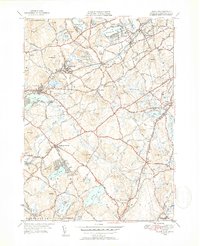 1950 Westford1952 Print · USGSMiddlesex County in the early fifties shows a region defined by its rail heritage and historic village centers. Trace old family lines through Graniteville, Forge Village, and Littleton Common, or locate ancestral burial sites at Russian Cem and Nutting Cem.4 unique versions available
 - 1956 Map of Boston, 1967 Print
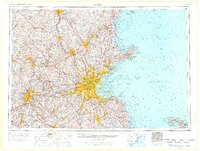 1956 Boston1967 Print · USGSThe Massachusetts coastline and industrial interior are seen here during the mid-century peak of suburban and highway expansion. Researchers can trace historic harbor defenses like Fort Revere, local landmarks such as Faneuil Hall, and the vast Parker River National Wildlife Refuge.6 unique versions available
 - 1958 Map of Boston
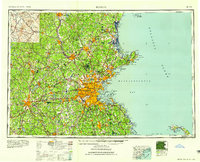 1958 Boston1958 Print · USGSEastern Massachusetts and southern New Hampshire are shown at the height of the industrial era, before the full expansion of the interstate system. Trace coastal defenses at Fort Warren, historic rail lines like the Boston and Maine, and the development of the Mass. 128 corridor.2 unique versions available
 - 1961 Map of Boston
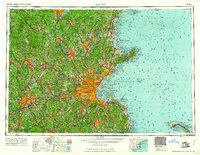 1961 Boston1961 Print · USGSThe Massachusetts coastline and its industrial interior are detailed here in the mid-twentieth century, from the Monadnock highlands to Cape Cod. Researchers can trace the rail routes of the Boston and Maine or locate landmarks like Fort Devens and the Wachusett Reservoir.2 unique versions available
 - 1966 Map of Westford, 1969 Print
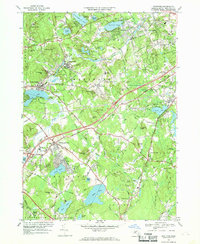 1966 Westford1969 Print · USGSMiddlesex County in the mid-1960s shows a landscape of rail-side industrial villages and expanding school campuses. Genealogists and historians can trace sites like Russian Cem, the Westford Academy, and the old depot at Brookside Station.2 unique versions available
 - 1984 Map of Lowell
 1984 Lowell1984 Print · USGSThe Merrimack Valley industrial corridor is captured here in the mid-eighties, showing the interconnected growth of Lowell, Nashua, and Lawrence. Genealogists and historians can trace the paths of the Boston and Maine railroad or locate institutional landmarks like Merrimack College and the Fort Devens Military Reservation.
 - 1987 Map of Billerica
 1987 Billerica1987 Print · USGSMiddlesex County in the late eighties shows a landscape of historic village centers and expanding suburban corridors. Genealogists and historians can trace lineage and local development through sites like Forefathers Burying Ground, Edson Cem, and the old rail stops at Forge Village and Nabnasset.
 - 1988 Map of Lowell
 1988 Lowell1988 Print · USGSThe industrial corridor of the Merrimack Valley is captured in the late eighties as it transitioned into a modern technological and residential hub. Genealogists and researchers can trace the urban layouts of Lowell and Nashua alongside landmarks like Massabesic Lake and Miller State Park.2 unique versions available
End of results
Showing maps 1-16 of 16
Top cities near Village of Nagog Woods
- Lowell historical maps
- Nashua historical maps
- Newton historical maps
- Framingham historical maps
- Waltham historical maps
- Methuen historical maps
See more
Frequently asked questions
- What are the different types of historical maps available for Village of Nagog Woods?
- What is the oldest map of Village of Nagog Woods?
- Where can I purchase historical maps of Village of Nagog Woods for my home or office?
- Where can I download high-res historical maps of Village of Nagog Woods?
- Are there historical topographic maps available for Village of Nagog Woods?
- Is there historical aerial imagery available for Village of Nagog Woods?
- Where are historical maps of Village of Nagog Woods sourced from?