Old Maps of Plainville, Massachusetts
Explore 67 old maps of Plainville, spanning from 1887 to today. These high-resolution historic maps reveal how streets, neighborhoods, landmarks, and natural features evolved over time — perfect for genealogy, metal detecting, research, and local history exploration.
What you can do with these maps:
- See how Plainville changed over time: Compare historical maps to modern-day views to trace roads, homesites, rail lines & more.
- View detailed metadata: Each map includes creators, publishers, year, scale, and archive source.
- Overlay maps with satellite & LiDAR: Visualize the past alongside modern tools to explore terrain & human change.
- Trusted historical sources: Maps sourced from the USGS, Library of Congress, and other archives.
- Access maps your way: View online, download high-res files, or order prints for personal or research use.
Start exploring old maps of Plainville to uncover forgotten places, hidden landmarks, and the deep history beneath your feet.
Plainville, MA maps
(67)- 1887 Map of Franklin
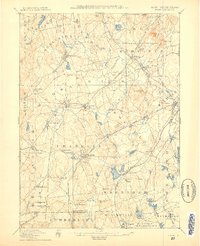 1887 Franklin1887 Print · USGSNorfolk County at the peak of the industrial rail era shows a complex landscape of mill villages and expanding transit lines. Trace the development of City Mills, follow the Old Colony R. R. Wrentham Branch, or locate old landmarks like Burnt Swamp Corner.
 - 1887 Map of Providence
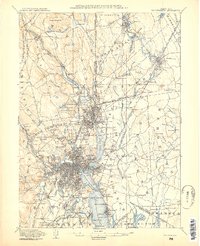 1887 Providence1887 Print · USGSProvidence and its surrounding mill towns are captured here at the height of the industrial era. Trace the rail-and-river infrastructure of the Blackstone River through Lorraine Mills, Saylesville, and the Cranston Print Works.
 - 1889 Map of Providence
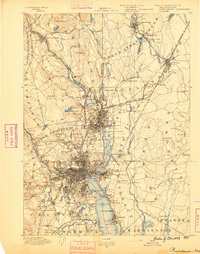 1889 Providence1889 Print · USGSProvidence and its industrial corridors thrive at the close of the nineteenth century as a massive rail-and-water network takes shape. Genealogists and historians can trace the foundations of local industry at the Sayles Bleachery or locate long-standing institutions like Friends School and Dexter Asylum.
 - 1889 Map of Franklin
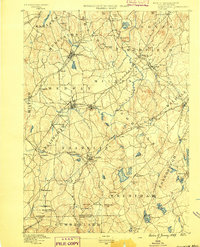 1889 Franklin1889 Print · USGSThe industrial and rail hubs of Norfolk County are detailed in the late 1880s, documenting a time of rapid growth for mill towns and village centers. Researchers can trace historic station stops and hamlets like City Mills, Unionville, and Whitney Sta.
 - 1893 Map of Franklin
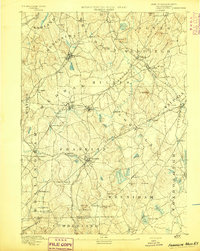 1893 Franklin1893 Print · USGSEastern Massachusetts at the close of the nineteenth century was a landscape of busy rail junctions and riverside mill towns. Researchers can trace the era's industrial footprint through sites like City Mills, Medfield Junc., and the isolated Burnt Swamp Corner.8 unique versions available
 - 1894 Map of Providence
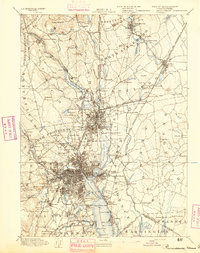 1894 Providence1894 Print · USGSThe industrial corridor from Providence to Pawtucket thrives in the 1890s as a hub of rail and river commerce. Genealogists can trace early neighborhood lines and locate vanished institutions like the Dexter Asylum, Sayles Bleachery, and the Butler Hospital.10 unique versions available
 - 1919 Map of Franklin
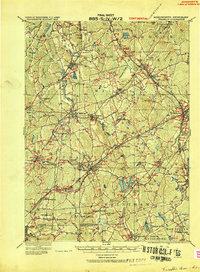 1919 Franklin1919 Print · USGSEastern Massachusetts at the end of the Great War was a landscape defined by its river-powered mill towns and expanding rail corridors. Genealogists and local historians can trace family roots through industrial hamlets like City Mills, Unionville, and Sheldonville.2 unique versions available
 - 1921 Map of Providence
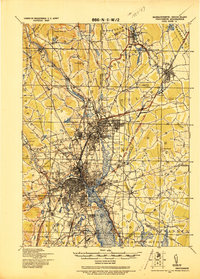 1921 Providence1921 Print · USGSProvidence and its industrial satellites are captured here at the height of the rail-and-mill era. Genealogists and historians can trace old neighborhoods and worksites like Sayles Bleachery, the Dexter Asylum, and Lonsdale Station.
 - 1921 Map of Franklin, 1942 Print
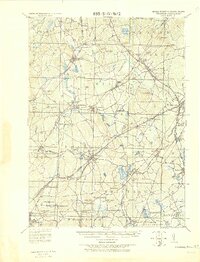 1921 Franklin1942 Print · USGSThe Charles River valley was a network of bustling rail junctions and mill villages in the years following the Great War. You can trace the development of towns like Franklin and Medway or locate smaller centers such as City Mills and Unionville.
 - 1938 Map of Pawtucket, 1941 Print
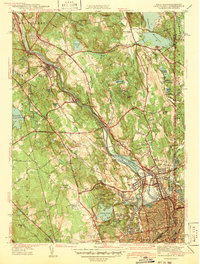 1938 Pawtucket1941 Print · USGSIndustrial Rhode Island at the end of the Depression era is defined here by the river towns of the Blackstone Valley. Genealogists can locate several historic burial sites, including Polish Cem and Clarks Cem, or trace early industrial landmarks like Arnolds Mills.
 - 1939 Map of Franklin, 1942 Print
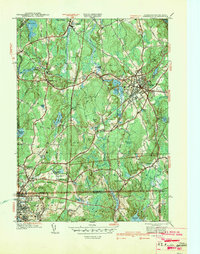 1939 Franklin1942 Print · USGSThe Massachusetts and Rhode Island borderlands are captured here just before the war, showing the industrial nodes of Franklin and Woonsocket. Genealogists can trace family roots at Ballow Meetinghouse, St Marys Cem, and the old campus of Dean Academy.
 - 1940 Map of Franklin
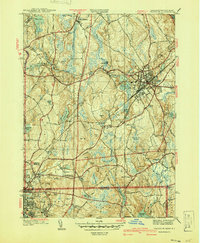 1940 Franklin1940 Print · USGSFranklin and the surrounding border towns of Norfolk County are shown here just before the mid-century. Genealogists can locate specific sites like Dean Academy, St Johns Cem, and the old rail corridors of the New York New Haven and Hartford.2 unique versions available
 - 1940 Map of Wrentham
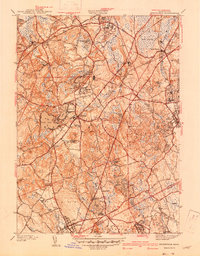 1940 Wrentham1940 Print · USGSNorfolk County in the late 1930s shows a landscape of busy mill villages and expanding state institutions. Genealogists can trace family roots through the Bacon Cem, Quaker Cem, and local schools like Vogel Sch and Everett Sch.2 unique versions available
 - 1942 Map of Pawtucket
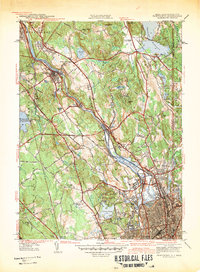 1942 Pawtucket1942 Print · USGSThe Blackstone River valley thrives at the start of the 1940s, showcasing a landscape defined by mill towns and extensive rail infrastructure. Researchers can trace the heritage of local communities through landmarks like the Cistercian Monastery, Lonsdale Sta, and the Moshassuck Cem.
 - 1943 Map of Providence
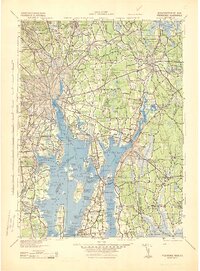 1943 Providence1943 Print · USGSNarragansett Bay and the industrial Blackstone Valley appear here in the midst of the Second World War. Genealogists and researchers can trace local landmarks like Lonsdale Station, the St Marys Reservoir, and the Rhode Island State Airport.
 - 1943 Map of Boston
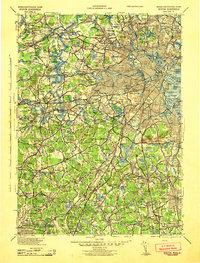 1943 Boston1943 Print · USGSGreater Boston and its southern suburbs appear here during the mobilization of the early 1940s. Genealogists and historians can trace the early footprints of Commonwealth Airport, military sites like Fort Winthrop, and local institutions such as Pondville State Hospital.
 - 1943 Map of Attleboro
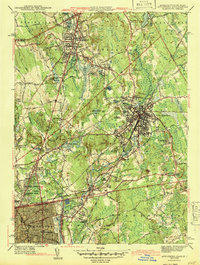 1943 Attleboro1943 Print · USGSAttleboro and its surrounding mill villages are captured here during the Second World War era. Researchers can trace ancestral roots through sites like the Old Town Hall, Newell Cem, and the specialized Attleboro Springs Sanitarium.3 unique versions available
 - 1944 Map of Pawtucket
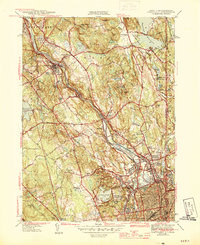 1944 Pawtucket1944 Print · USGSThe industrial corridor of the Blackstone River valley is frozen in time during the mid-1940s, showing the dense rail networks and mill towns of northern Rhode Island. Genealogists and historians can trace family roots through the Moshassuck Cem, find local schools like Garvin Sch, and locate the Cistercian Monastery.3 unique versions available
 - 1945 Map of Franklin, 1956 Print
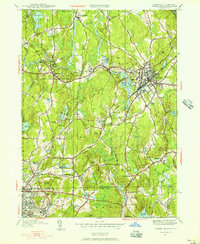 1945 Franklin1956 Print · USGSFranklin and the surrounding borderlands of Massachusetts and Rhode Island are captured here during a period of steady post-war growth. Researchers can trace historic family landmarks such as Ballow Meetinghouse, Dean Academy, and the St Johns Cem.
 - 1945 Map of Wrentham, 1958 Print
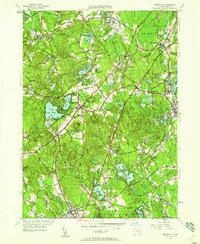 1945 Wrentham1958 Print · USGSIn the mid-1940s, this area of Norfolk County maintained its rural character through small villages and institutional landmarks. Researchers can trace ancestral sites like St Marys Cem and Wampum Corner, or locate early infrastructure such as Wilkins Airport.
 - 1946 Map of Wrentham
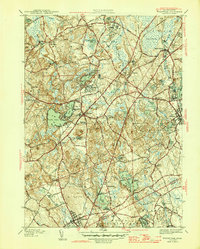 1946 Wrentham1946 Print · USGSThe borderlands of Norfolk and Bristol counties are shown here just after the war, at a time when local institutions and textile-era rail lines defined the landscape. Genealogists and historians can trace family plots at Norfolk Cem or Quaker Cem, and locate early landmarks like Wilkins Airport and Wampum Corner.2 unique versions available
 - 1946 Map of Franklin
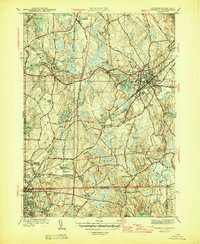 1946 Franklin1946 Print · USGSNorfolk County and the Massachusetts-Rhode Island borderlands are documented here at the end of World War II. Researchers can locate family sites at St Johns Cem, trace the rail lines of the New York New Haven and Hartford Railroad, or find old meeting houses like Ballow Meetinghouse.3 unique versions available
 - 1947 Map of Providence, 1948 Print
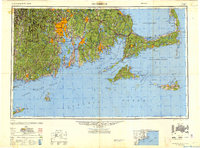 1947 Providence1948 Print · USGSSouthern New England is captured in the mid-1940s, showing a landscape defined by busy industrial ports and expanding military installations. Researchers can trace the rail lines of the N.Y. N.H. & H. RR or locate coastal defenses like Fort Adams and Quonset Point.5 unique versions available
 - 1948 Map of Boston
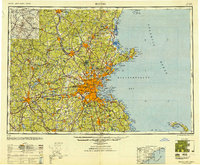 1948 Boston1948 Print · USGSEastern Massachusetts and southern New Hampshire appear at an industrial peak in the late 1940s, just as suburban growth began to accelerate. Genealogists and historians can trace rail lines like the Boston and Albany RR or locate coastal landmarks like Graves Lighthouse and Fort Devens.2 unique versions available
 - 1948 Map of Providence, 1951 Print
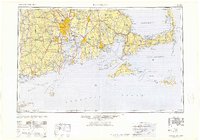 1948 Providence1951 Print · USGSSouthern New England’s coastal reaches are captured here in the late 1940s, from the industrial heart of Providence to the tip of Provincetown. Genealogists and historians can trace rail lines like the Central Vermont Railway and locate active military sites such as Otis Air Force Base and Fort Rodman.
Showing maps 1-25 of 67
Top cities near Plainville
- Boston historical maps
- Providence historical maps
- Cranston historical maps
- Pawtucket historical maps
- Taunton historical maps
- East Providence historical maps
See more
Top neighborhoods of Plainville
Frequently asked questions
- What are the different types of historical maps available for Plainville?
- What is the oldest map of Plainville?
- Where can I purchase historical maps of Plainville for my home or office?
- Where can I download high-res historical maps of Plainville?
- Are there historical topographic maps available for Plainville?
- Is there historical aerial imagery available for Plainville?
- Where are historical maps of Plainville sourced from?