1900s (20th Century) Maps of Sumner Township, Michigan
Explore 11 historic maps of Sumner Township from the 1900s (20th Century). These maps offer a rare glimpse into what life looked like during the 1900s — showing old roads, neighborhoods, homes, and landmarks that have changed or disappeared over time.
Whether you're researching your family's past, planning a metal detecting trip, or studying how Sumner Township's landscape evolved across the 1900s, these high-resolution maps are a powerful tool for exploring the history of this region.
- Focus on a specific era: All maps on this page are from the 1900s, giving you a focused view of this time period.
- See what’s changed: Compare century-old streets, trails, and buildings to today's modern landscape using overlays and satellite layers.
- Research with precision: Use these maps for genealogy, historical research, land use analysis, or educational projects.
- View, download, or print: Maps are fully viewable online in high resolution, and can be downloaded or printed for your own records.
Start exploring Sumner Township's history through authentic maps from the 1900s. This is your window into the past.
Sumner Township, MI maps
(11)- 1935 Map of Alma, 1959 Print
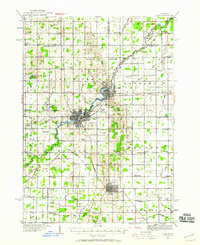 1935 Alma1959 Print · USGSGratiot County thrived as a rail-and-river hub in the mid-thirties, centered on the growing industrial and agricultural corridor between Alma and St Louis. Genealogists and historians can trace dozens of rural schoolhouses and family landmarks, from Jack Day Sch to the County Home near Ithaca.2 unique versions available
 - 1938 Map of Alma
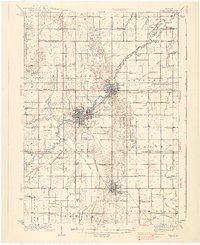 1938 Alma1938 Print · USGSThe Gratiot County landscape at the height of the New Deal era reveals a dense network of country schools and rail lines. Genealogists can trace family roots through numerous named sites like Jack Day Sch, Pine Grove Cem, and the County Home.2 unique versions available
 - 1954 Map of Midland, 1967 Print
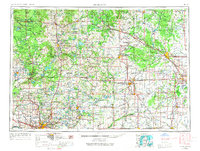 1954 Midland1967 Print · USGSMid-Michigan at the peak of the post-war era shows a landscape balancing industrial growth in Midland with the deep timberlands of the Manistee National Forest. Researchers can trace the legacy of the timber and rail era along the Pennsylvania RR or find family roots in river towns like Chesaning and Big Rapids.4 unique versions available
 - 1958 Map of Midland
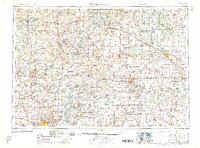 1958 Midland1958 Print · USGSCentral Michigan in the late fifties is captured here during a period of transition for its university towns and industrial hubs. Genealogists and researchers can trace family lines through old rail-stop towns like Breckenridge and Chesaning or locate property near the Muskegon River and Prairie Farm.
 - 1959 Map of Midland
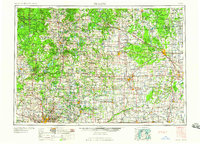 1959 Midland1959 Print · USGSMid-century Michigan comes alive in this survey of the central Lower Peninsula, from the streets of Grand Rapids to the Houghton Lake timberlands. Genealogists and rail fans can trace the Ann Arbor RR and Chesapeake and Ohio RR through towns like Big Rapids and Mount Pleasant.
 - 1965 Map of Sumner, 1966 Print
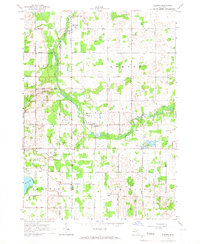 1965 Sumner1966 Print · USGSGratiot and Montcalm counties are captured here in the mid-1960s, showing a rural landscape where the Pine River winds through agricultural townships. Researchers can trace family history through local sites like Spencer Chapel, Elm Hall Cem, and Crystal Sch.2 unique versions available
 - 1965 Map of Riverdale, 1967 Print
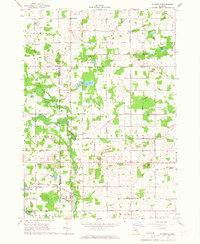 1965 Riverdale1967 Print · USGSThe Pine River valley and the Chesapeake and Ohio railroad define this mid-1960s landscape where Gratiot, Montcalm, and Isabella counties meet. Genealogists and local historians can trace rural roots at Rust and Hay Sch, Jerseyville Ch, and Sibley Cem.
 - 1966 Map of Midland
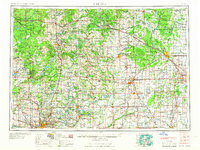 1966 Midland1966 Print · USGSCentral Michigan in the mid-1960s shows a landscape of growing manufacturing hubs and active resource extraction. Genealogists and historians can trace the rail corridors of the Grand Trunk Western or locate family-named landmarks near Oil wells and the Muskegon River.
 - 1973 Map of Alma South, 1976 Print
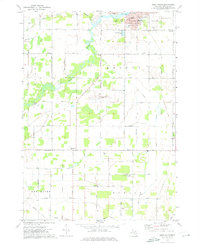 1973 Alma South1976 Print · USGSThe Gratiot County countryside south of Alma comes into focus in the early 1970s, showcasing a landscape of section-line roads and family-named landmarks. Genealogists can trace sites like Pritchard Cem, Newark Ch, and the Migrant Workers Camp.
 - 1973 Map of Alma North, 1976 Print
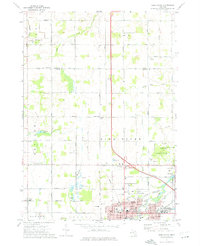 1973 Alma North1976 Print · USGSGratiot County's agricultural and academic heart comes into focus in the early 1970s as Alma and St Louis continue their growth along the Pine River. Genealogists and local historians can locate long-standing rural landmarks like Brady Cem, St Johns Ch, and the outlying village of Elwell.
 - 1985 Map of Alma
 1985 Alma1985 Print · USGSCentral Michigan in the mid-eighties shows a landscape of steady agricultural communities and vital rail corridors. Genealogists and local historians can trace family roots through the detailed grids of Alma, Ithaca, and Chesaning, or locate rural landmarks like Riverside Cem and Lumberjack Land Airport.2 unique versions available
End of results
Showing maps 1-11 of 11
Top cities near Sumner Township
- Alma historical maps
- Saint Louis historical maps
- Crystal historical maps
- Ithaca historical maps
- Coe historical maps
- Sumner historical maps
See more
Top neighborhoods of Sumner Township
Frequently asked questions
- What are the different types of historical maps available for Sumner Township?
- What is the oldest map of Sumner Township?
- Where can I purchase historical maps of Sumner Township for my home or office?
- Where can I download high-res historical maps of Sumner Township?
- Are there historical topographic maps available for Sumner Township?
- Is there historical aerial imagery available for Sumner Township?
- Where are historical maps of Sumner Township sourced from?